
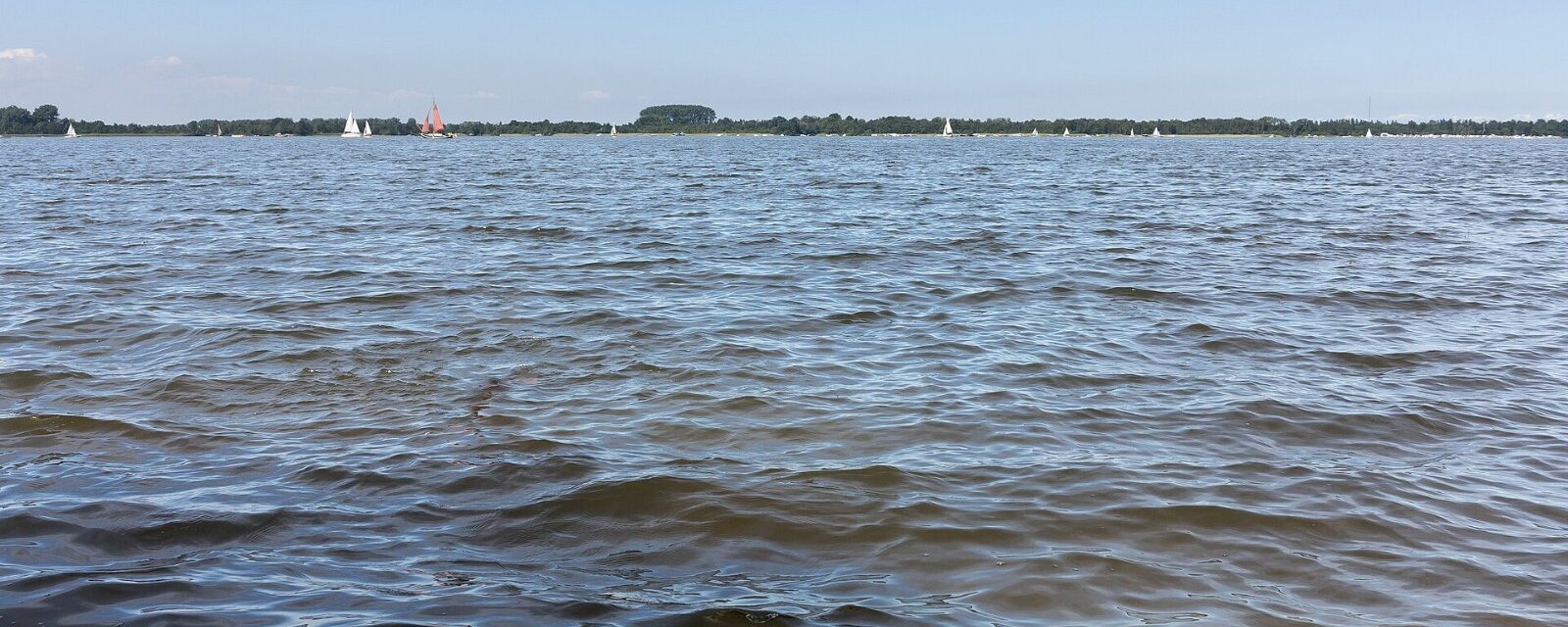
 📷 Foto: Michielverbeek / CC BY-SA 4.0 via Wikimedia Commons.
Oostelijke Vechtplassen: where to see wildlife
Spring and summer for the marsh birds: Eurasian Bittern, Little Bittern, Purple Heron, Great Reed Warbler, Savi's Warbler and Sedge Warbler are all breeding-bird targets. Autumn and winter for the waterbirds: Greater White-fronted Goose, Greylag Goose, Eurasian Wigeon, Gadwall, Northern Shoveler, Common Pochard and Smew are listed as non-breeding targets. We found no explicit seasonal recommendation from Natuurmonumenten itself. Lowland peat marsh and lakes
Oostelijke Vechtplassen — A lowland peat marsh of 6,475 hectares less than ten kilometres from Utrecht, with quaking fen that sways under your feet and with almost the complete Dutch marsh-bird top rank as official Natura 2000 targets. Mainly here: Natura 2000 targets (site 95). Breeding birds: Eurasian Bittern (A021), Little Bittern (A022), Purple Heron (A029), Spotted Crake (A119), Black Tern (A197), Common Kingfisher (A229), Savi's Warbler (A292), Sedge Warbler (A295), Great Reed Warbler (A298). Non-breeding birds: Great Cormorant, Greater White-fronted Goose, Greylag Goose, Eurasian Wigeon, Gadwall, Northern Shoveler, Common Pochard, Smew. Mammals: pond bat (H1318) and root vole (H1340). Dragonfly: Yellow-spotted Whiteface (H1042). Fish: bitterling, European weatherfish, spined loach and bullhead. Also: Desmoulin's whorl snail, the water beetle Graphoderus bilineatus and the little whirlpool ramshorn snail. Natuurmonumenten links roe deer to the Tienhovense Plassen, and Great Reed Warbler, Purple Heron, Savi's Warbler, Bluethroat and roe deer to the Loosdrechtse Plassen. The ANWB route description also names badger, stoat, red squirrel and northern crested newt for the Westbroekse Zodden, and reports that 26 species of dragonfly and damselfly have been recorded. Best period: Spring and summer for the marsh birds: Eurasian Bittern, Little Bittern, Purple Heron, Great Reed Warbler, Savi's Warbler and Sedge Warbler are all breeding-bird targets. Autumn and winter for the waterbirds: Greater White-fronted Goose, Greylag Goose, Eurasian Wigeon, Gadwall, Northern Shoveler, Common Pochard and Smew are listed as non-breeding targets. We found no explicit seasonal recommendation from Natuurmonumenten itself.

Which animals will you see here?
Also reported present in this area (325 species) presence reported
These species are known to occur here (NDFF), but nothing has been recorded yet about your chance of seeing them.
Amphibian (8)
Dragonfly (30)
Reptile (3)
Spider (6)
Grasshopper (25)
Fish (18)
Butterfly (26)
Bird (172)
Mammal (large grazer) (1)
Mammal (land) (25)
Mammal (land/water) (2)
Mammal (bat) (9)
Walking routes
Vredevoetpad
Zompige zoddenroute
Kanoroute Vuntus
Facilities
Natuurmonumenten's central visitor desk is on the Noord-Holland side: Gabrielweg 6, 1394 BL Kortenhoef, 0294 26 82 22. On the Utrecht side: the tea house at Streekmuseum Vredegoed in Tienhoven, Café ’t Kikkertje and restaurant Het Olde Regthuys. In Loosdrecht there is boat and canoe hire; in the summer season there are guided tours through the duck decoy of Breukeleveen. On toilets and public transport we found no source.
Practical information
- Access: Freely accessible on the paths and routes; large parts are marsh and cannot be walked. For the Vechtplassen, Natuurmonumenten lists the labels "suitable for wheelchairs" and "wheelchair with a companion", with one route marked as a wheelchair route. Drones are not allowed. Group activities of more than twenty people need permission in advance. For a breeding-season closure in the Utrecht part we found no source.
- Parking: On the Utrecht side: parking bays along the Laan van Niftarlake, about 150 metres past the junction with the Nieuweweg (ANWB). For Tienhoven, Natuurmonumenten gives only the address Heuvellaan 7 and a route link, no parking information. Birdingplaces names car parks on the Kanaaldijk in Hollandsche Rading and at Kerkdijk 80 in Westbroek. On parking charges we found no source.
- Dogs: Here the Natuurmonumenten sources contradict each other, and we are not going to resolve that for you. Tienhovense Plassen: "dogs not allowed". Vechtplassen information and contact page: under the site characteristics "dogs not allowed", but with a route by the Spiegelplas "dogs may only run free in marked places". Loosdrechtse Plassen information and contact page: under the site rules "dogs are welcome on a lead, on the paths", while the route list on that same page says "dogs not allowed". The ANWB reports: "dogs are not allowed along the Tienhoven lakes". The general Natuurmonumenten policy reads: "in most areas dogs have to be on a lead." So the rules differ per sub-area; read the yellow signs at the entrance, as Natuurmonumenten itself advises. Assistance dogs are allowed.
🌿 Rules in this area
Natuurmonumenten manages the main sub-areas, under the Vechtplassen management unit (over 3,000 hectares). The RVO page for the Natura 2000 site names no managers itself. The province of Noord-Holland leads on the Natura 2000 management plan. sets its own rules here. Stay on the paths, respect refuges and closures, keep dogs on a lead where that applies, and do not fly a drone — they are banned in almost every Dutch nature reserve.
Status: Verified · Last checked: 2026-10-29
Photo: Foto: Michielverbeek / CC BY-SA 4.0 via Wikimedia Commons.