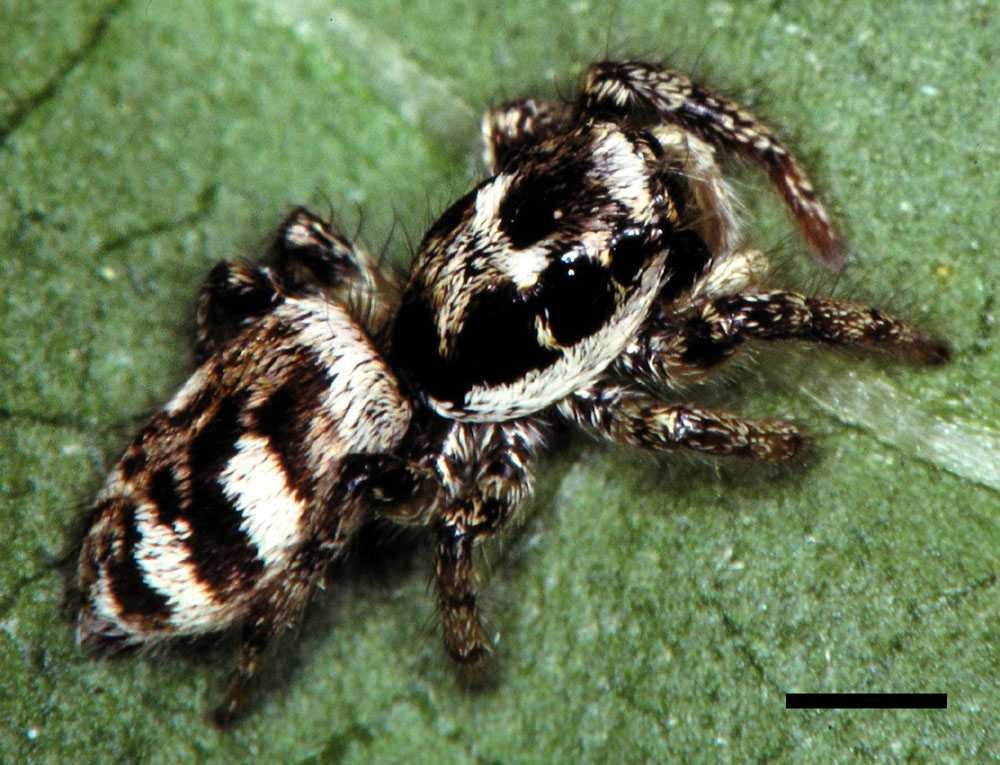
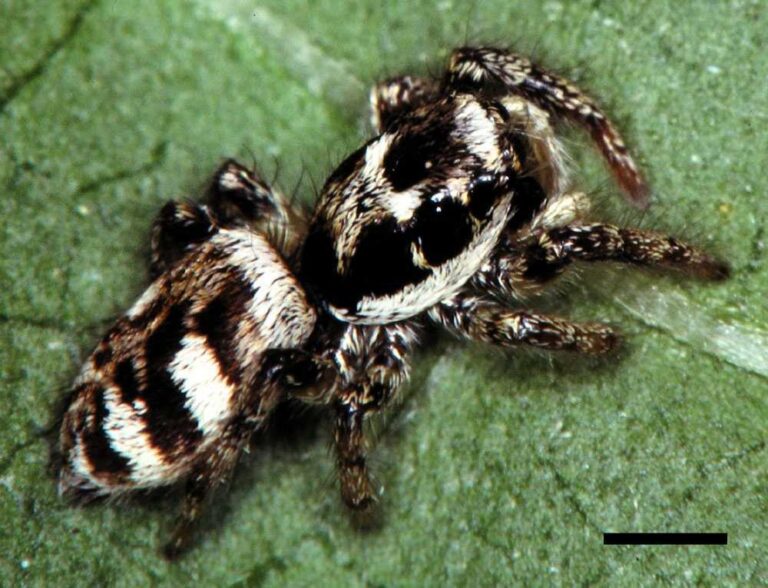
Small, black or dark brown with white markings; the British Arachnological Society writes that the white spots often merge into cross-bands across the whole abdomen. Four large eyes at the front, the middle pair strikingly large. The male has greatly elongated jaws. Females 5.5 to 7.5 mm, males 4.0 to 7.0 mm. Body lengths come from Spiders of Europe (Nentwig et al., araneae.nmbe.ch); those are European ranges, not Dutch measurements.
Common throughout the country, above all in and around buildings. Dutch trend figures are not available.
NDFF open data, 30 records 2016-2026
Nationwide period: The British Arachnological Society gives adult males from April to July and females from March to October. Note: the months come from British sources (the British Arachnological Society and NatureSpot). Dutch phenology data per spider species could not be consulted, as waarneming.nl and the Dutch Species Register blocked automated access. The climate is comparable, but this is not a Dutch measurement.
NDFF open data, 21 records 2016-2026
Nationwide period: The British Arachnological Society gives adult males from April to July and females from March to October. Note: the months come from British sources (the British Arachnological Society and NatureSpot). Dutch phenology data per spider species could not be consulted, as waarneming.nl and the Dutch Species Register blocked automated access. The climate is comparable, but this is not a Dutch measurement.
NDFF open data, 40 records 2016-2026
Nationwide period: The British Arachnological Society gives adult males from April to July and females from March to October. Note: the months come from British sources (the British Arachnological Society and NatureSpot). Dutch phenology data per spider species could not be consulted, as waarneming.nl and the Dutch Species Register blocked automated access. The climate is comparable, but this is not a Dutch measurement.
NDFF open data, 22 records 2016-2026
Nationwide period: The British Arachnological Society gives adult males from April to July and females from March to October. Note: the months come from British sources (the British Arachnological Society and NatureSpot). Dutch phenology data per spider species could not be consulted, as waarneming.nl and the Dutch Species Register blocked automated access. The climate is comparable, but this is not a Dutch measurement.
NDFF open data, 38 records 2016-2026
Nationwide period: The British Arachnological Society gives adult males from April to July and females from March to October. Note: the months come from British sources (the British Arachnological Society and NatureSpot). Dutch phenology data per spider species could not be consulted, as waarneming.nl and the Dutch Species Register blocked automated access. The climate is comparable, but this is not a Dutch measurement.
NDFF open data, 25 records 2016-2026
Nationwide period: The British Arachnological Society gives adult males from April to July and females from March to October. Note: the months come from British sources (the British Arachnological Society and NatureSpot). Dutch phenology data per spider species could not be consulted, as waarneming.nl and the Dutch Species Register blocked automated access. The climate is comparable, but this is not a Dutch measurement.
NDFF open data, 58 records 2016-2026
Nationwide period: The British Arachnological Society gives adult males from April to July and females from March to October. Note: the months come from British sources (the British Arachnological Society and NatureSpot). Dutch phenology data per spider species could not be consulted, as waarneming.nl and the Dutch Species Register blocked automated access. The climate is comparable, but this is not a Dutch measurement.
NDFF open data, 16 records 2016-2026
Nationwide period: The British Arachnological Society gives adult males from April to July and females from March to October. Note: the months come from British sources (the British Arachnological Society and NatureSpot). Dutch phenology data per spider species could not be consulted, as waarneming.nl and the Dutch Species Register blocked automated access. The climate is comparable, but this is not a Dutch measurement.
NDFF open data, 19 records 2016-2026
Nationwide period: The British Arachnological Society gives adult males from April to July and females from March to October. Note: the months come from British sources (the British Arachnological Society and NatureSpot). Dutch phenology data per spider species could not be consulted, as waarneming.nl and the Dutch Species Register blocked automated access. The climate is comparable, but this is not a Dutch measurement.
NDFF open data, 11 records 2016-2026
Nationwide period: The British Arachnological Society gives adult males from April to July and females from March to October. Note: the months come from British sources (the British Arachnological Society and NatureSpot). Dutch phenology data per spider species could not be consulted, as waarneming.nl and the Dutch Species Register blocked automated access. The climate is comparable, but this is not a Dutch measurement.
NDFF open data, 22 records 2016-2026
Nationwide period: The British Arachnological Society gives adult males from April to July and females from March to October. Note: the months come from British sources (the British Arachnological Society and NatureSpot). Dutch phenology data per spider species could not be consulted, as waarneming.nl and the Dutch Species Register blocked automated access. The climate is comparable, but this is not a Dutch measurement.
NDFF open data, 64 records 2016-2026
Nationwide period: The British Arachnological Society gives adult males from April to July and females from March to October. Note: the months come from British sources (the British Arachnological Society and NatureSpot). Dutch phenology data per spider species could not be consulted, as waarneming.nl and the Dutch Species Register blocked automated access. The climate is comparable, but this is not a Dutch measurement.
NDFF open data, 15 records 2016-2026
Nationwide period: The British Arachnological Society gives adult males from April to July and females from March to October. Note: the months come from British sources (the British Arachnological Society and NatureSpot). Dutch phenology data per spider species could not be consulted, as waarneming.nl and the Dutch Species Register blocked automated access. The climate is comparable, but this is not a Dutch measurement.
NDFF open data, 17 records 2016-2026
Nationwide period: The British Arachnological Society gives adult males from April to July and females from March to October. Note: the months come from British sources (the British Arachnological Society and NatureSpot). Dutch phenology data per spider species could not be consulted, as waarneming.nl and the Dutch Species Register blocked automated access. The climate is comparable, but this is not a Dutch measurement.
NDFF open data, 11 records 2016-2026
Nationwide period: The British Arachnological Society gives adult males from April to July and females from March to October. Note: the months come from British sources (the British Arachnological Society and NatureSpot). Dutch phenology data per spider species could not be consulted, as waarneming.nl and the Dutch Species Register blocked automated access. The climate is comparable, but this is not a Dutch measurement.
NDFF open data, 29 records 2016-2026
Nationwide period: The British Arachnological Society gives adult males from April to July and females from March to October. Note: the months come from British sources (the British Arachnological Society and NatureSpot). Dutch phenology data per spider species could not be consulted, as waarneming.nl and the Dutch Species Register blocked automated access. The climate is comparable, but this is not a Dutch measurement.
NDFF open data, 34 records 2016-2026
Nationwide period: The British Arachnological Society gives adult males from April to July and females from March to October. Note: the months come from British sources (the British Arachnological Society and NatureSpot). Dutch phenology data per spider species could not be consulted, as waarneming.nl and the Dutch Species Register blocked automated access. The climate is comparable, but this is not a Dutch measurement.
NDFF open data, 48 records 2016-2026
Nationwide period: The British Arachnological Society gives adult males from April to July and females from March to October. Note: the months come from British sources (the British Arachnological Society and NatureSpot). Dutch phenology data per spider species could not be consulted, as waarneming.nl and the Dutch Species Register blocked automated access. The climate is comparable, but this is not a Dutch measurement.
NDFF open data, 14 records 2016-2026
Nationwide period: The British Arachnological Society gives adult males from April to July and females from March to October. Note: the months come from British sources (the British Arachnological Society and NatureSpot). Dutch phenology data per spider species could not be consulted, as waarneming.nl and the Dutch Species Register blocked automated access. The climate is comparable, but this is not a Dutch measurement.
NDFF open data, 12 records 2016-2026
Nationwide period: The British Arachnological Society gives adult males from April to July and females from March to October. Note: the months come from British sources (the British Arachnological Society and NatureSpot). Dutch phenology data per spider species could not be consulted, as waarneming.nl and the Dutch Species Register blocked automated access. The climate is comparable, but this is not a Dutch measurement.
NDFF open data, 109 records 2016-2026
Nationwide period: The British Arachnological Society gives adult males from April to July and females from March to October. Note: the months come from British sources (the British Arachnological Society and NatureSpot). Dutch phenology data per spider species could not be consulted, as waarneming.nl and the Dutch Species Register blocked automated access. The climate is comparable, but this is not a Dutch measurement.
NDFF open data, 21 records 2016-2026
Nationwide period: The British Arachnological Society gives adult males from April to July and females from March to October. Note: the months come from British sources (the British Arachnological Society and NatureSpot). Dutch phenology data per spider species could not be consulted, as waarneming.nl and the Dutch Species Register blocked automated access. The climate is comparable, but this is not a Dutch measurement.
NDFF open data, 143 records 2016-2026
Nationwide period: The British Arachnological Society gives adult males from April to July and females from March to October. Note: the months come from British sources (the British Arachnological Society and NatureSpot). Dutch phenology data per spider species could not be consulted, as waarneming.nl and the Dutch Species Register blocked automated access. The climate is comparable, but this is not a Dutch measurement.
NDFF open data, 20 records 2016-2026
Nationwide period: The British Arachnological Society gives adult males from April to July and females from March to October. Note: the months come from British sources (the British Arachnological Society and NatureSpot). Dutch phenology data per spider species could not be consulted, as waarneming.nl and the Dutch Species Register blocked automated access. The climate is comparable, but this is not a Dutch measurement.
NDFF open data
Nationwide period: The British Arachnological Society gives adult males from April to July and females from March to October. Note: the months come from British sources (the British Arachnological Society and NatureSpot). Dutch phenology data per spider species could not be consulted, as waarneming.nl and the Dutch Species Register blocked automated access. The climate is comparable, but this is not a Dutch measurement.
NDFF open data, 232 records 2016-2026
Nationwide period: The British Arachnological Society gives adult males from April to July and females from March to October. Note: the months come from British sources (the British Arachnological Society and NatureSpot). Dutch phenology data per spider species could not be consulted, as waarneming.nl and the Dutch Species Register blocked automated access. The climate is comparable, but this is not a Dutch measurement.
NDFF open data, 32 records 2016-2026
Nationwide period: The British Arachnological Society gives adult males from April to July and females from March to October. Note: the months come from British sources (the British Arachnological Society and NatureSpot). Dutch phenology data per spider species could not be consulted, as waarneming.nl and the Dutch Species Register blocked automated access. The climate is comparable, but this is not a Dutch measurement.
NDFF open data, 71 records 2016-2026
Nationwide period: The British Arachnological Society gives adult males from April to July and females from March to October. Note: the months come from British sources (the British Arachnological Society and NatureSpot). Dutch phenology data per spider species could not be consulted, as waarneming.nl and the Dutch Species Register blocked automated access. The climate is comparable, but this is not a Dutch measurement.
NDFF open data, 83 records 2016-2026
Nationwide period: The British Arachnological Society gives adult males from April to July and females from March to October. Note: the months come from British sources (the British Arachnological Society and NatureSpot). Dutch phenology data per spider species could not be consulted, as waarneming.nl and the Dutch Species Register blocked automated access. The climate is comparable, but this is not a Dutch measurement.
NDFF open data, 106 records 2016-2026
Nationwide period: The British Arachnological Society gives adult males from April to July and females from March to October. Note: the months come from British sources (the British Arachnological Society and NatureSpot). Dutch phenology data per spider species could not be consulted, as waarneming.nl and the Dutch Species Register blocked automated access. The climate is comparable, but this is not a Dutch measurement.
NDFF open data, 127 records 2016-2026
Nationwide period: The British Arachnological Society gives adult males from April to July and females from March to October. Note: the months come from British sources (the British Arachnological Society and NatureSpot). Dutch phenology data per spider species could not be consulted, as waarneming.nl and the Dutch Species Register blocked automated access. The climate is comparable, but this is not a Dutch measurement.
NDFF open data, 117 records 2016-2026
Nationwide period: The British Arachnological Society gives adult males from April to July and females from March to October. Note: the months come from British sources (the British Arachnological Society and NatureSpot). Dutch phenology data per spider species could not be consulted, as waarneming.nl and the Dutch Species Register blocked automated access. The climate is comparable, but this is not a Dutch measurement.
These links come straight from our database, with the chance, the source and the evidence level for each area.
Green = present · orange = peak period. The bar is generated from our database.
Photograph head-on. The two large middle eyes are the face of this spider and make the difference between a snapshot and a portrait. Approach slowly and from the side; a jumping spider turns towards you once it sees you, and that is exactly the moment you want.