Where to see the White-tailed Eagle in the Netherlands
With luck 🦅 Bird Sensitive species · R3
🛡️ No exact locations, on purpose
This is a sensitive species. We deliberately show no nest sites, and during the breeding season (March to July) we are extra careful about exact spots. Why we do that.
Where and when do you see a White-tailed Eagle? With some luck you can see this species, all year round.
How do you recognise a White-tailed Eagle?
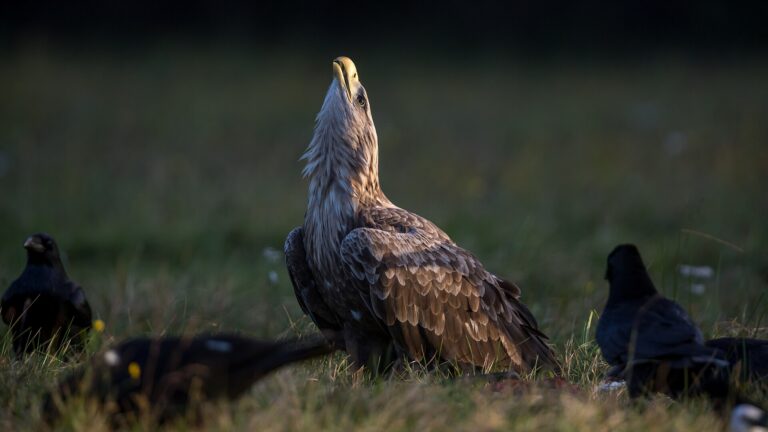
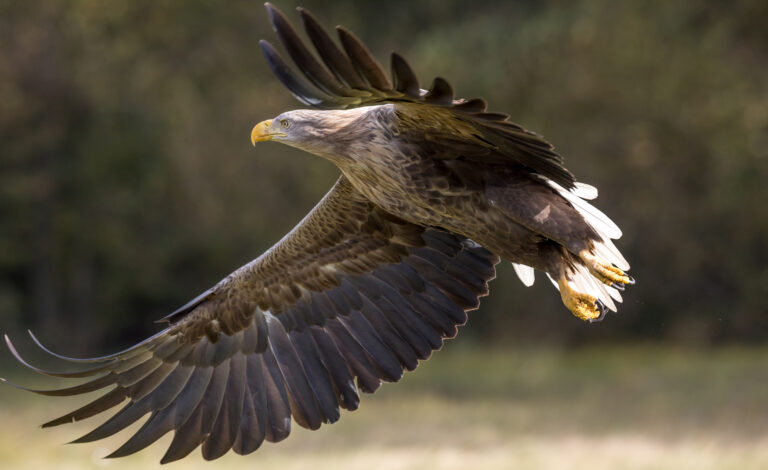
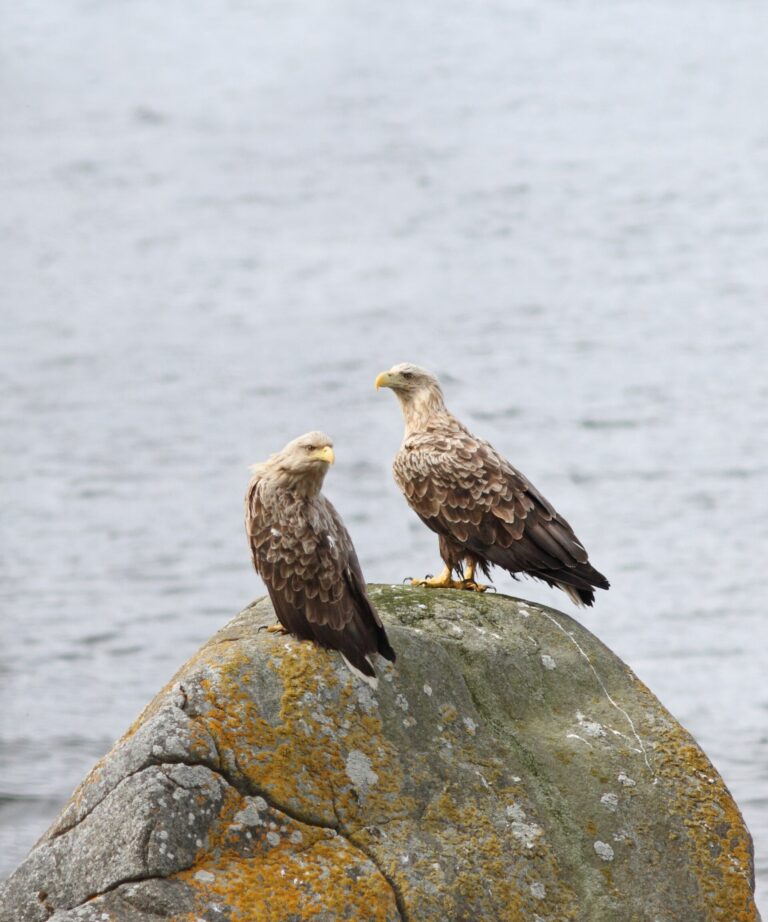
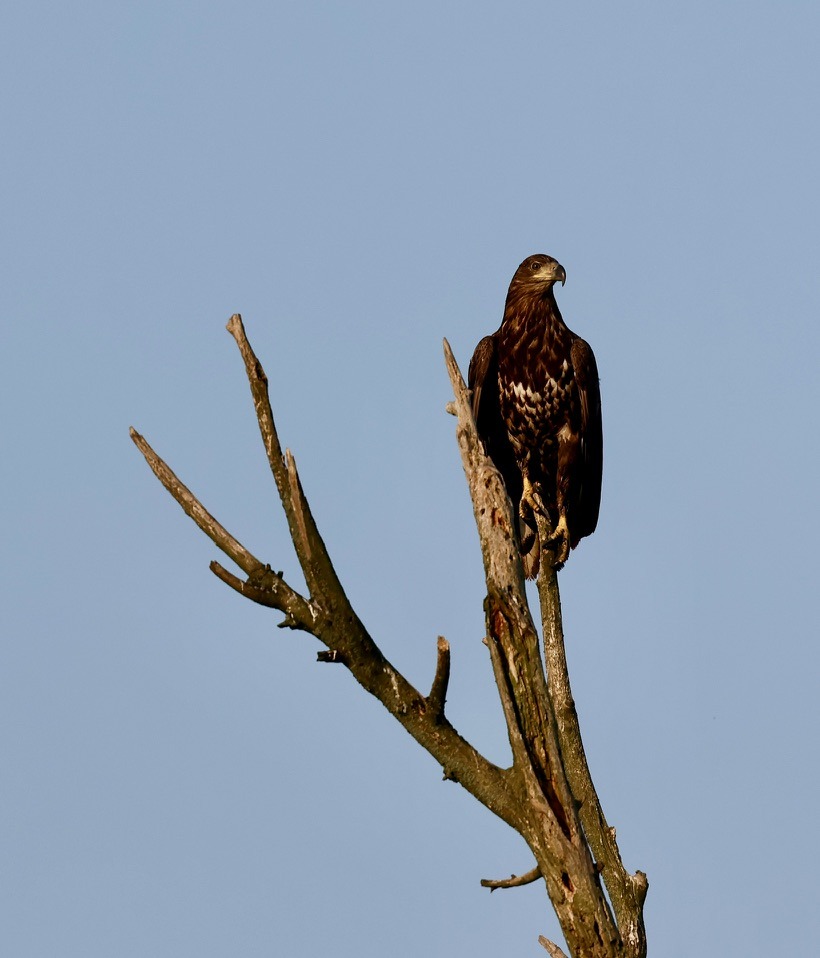
The silhouette, first and from far away. The wings are broad and cut off square and the tail is short, so the bird forms a rectangle in the air rather than the curved line of a buzzard. At a wingspan of over two metres that is visible at a great distance. Adults have a pale head and a short, white, wedge-shaped tail. Juveniles are predominantly dark brown and mottled, with no white at all, and it takes four to five years to reach adult plumage — so most of the eagles you see are not the textbook bird. The flying-door impression is the thing to hold on to. People scanning for an eagle shape miss it; people scanning for a plank do not.
Where do you see this species in the Netherlands?
The best-known places are the Oostvaardersplassen, the Biesbosch and the Zwarte Meer. In winter, white-tailed eagles also turn up at other large waters and marshes, and in the Wadden region — on the Lauwersmeer side your chances are decent, out on the Wadden itself it is a matter of luck. What the bird needs is consistent: large open water, marsh and floodplain, with old trees to rest and breed in, and enough fish and waterbirds within reach.
📍 Eemland
With luck chance per source📍 Oostvaardersplassen
Good chance verified📍 Nationaal Park De Alde Feanen
With luck chance per source📍 Nationaal Park De Biesbosch
With luck chance per source📍 Naardermeer
With luck chance per source📍 Gelderse Poort & Millingerwaard
With luck chance per source📍 Nationaal Park Lauwersmeer
Good chance chance per source📍 Wadden Sea
With luck chance per source📍 Onlanden & Leekstermeer
With luck chance per source📍 Blauwe Kamer
presence reported📍 Zouweboezem
presence reported📍 Oostelijke Vechtplassen
presence reported📍 Noordhollands Duinreservaat
presence reported📍 Wormer- en Jisperveld
presence reported📍 Ilperveld
presence reported📍 De Dollard
presence reported📍 Zuidlaardermeergebied en Hunzedal
presence reported📍 Landgoed Ennemaborg
presence reported📍 Meijendel & Berkheide
presence reported📍 Voornes Duin
presence reported📍 Kampina & Oisterwijkse Vennen
presence reported📍 De Maashorst
presence reported📍 Strabrechtse Heide & Beuven
presence reported📍 Loonse en Drunense Duinen
presence reported📍 Schoorlse Duinen
presence reported📍 Haringvlietsluizen
presence reported📍 Vismigratierivier Afsluitdijk
presence reported📍 De Putten bij Camperduin
presence reportedThese links come straight from our database, with the chance, the source and the evidence level for each area.
When is the best time?
Green = present · orange = peak period. The bar is generated from our database.
Best period: All year, with winter the best season. Two reasons stack up: birds from northern and eastern Europe join the Dutch population, and the trees have no leaves, so a perched eagle is far easier to find.
Best time of day: Early in the morning a bird is often still sitting on a lookout perch along the water, which is the better bet for a long look through a scope; later in the day there is a better chance of one in the air. Watch from a hide or a viewpoint over open water — both the most productive approach and the one that disturbs nothing.
Recent sightings
👁️ Where has this species been seen recently?
Check the current sightings on Waarneming.nl. A useful addition to our own verified information.
Current sightings on Waarneming.nl →
Note: for sensitive species the source already blurs or withholds sightings. We do not reproduce exact locations.
How to improve your chances
- Learn the calls first. You will hear most birds before you see them.
- Go in the first hour after sunrise, when the song is at its peak and the wind is still down.
- Use a hide or natural cover. Sitting still gets you more than walking closer.
- Keep the sun behind you. Against the light you see a silhouette and no colour.
🎒 What you need for this
Binoculars; a 500 mm lens or longer for a photograph.
🌿 Watching responsibly
Keep your distance, stay on the paths, and never lure animals with food or sound. Leave as soon as an animal becomes uneasy. This is a sensitive species. We deliberately show no nest sites, and during the breeding season (March to July) we are extra careful about exact spots.
Status: Verified · Last checked: 2026-08-08
The flying door
The White-tailed Eagle (Haliaeetus albicilla) is the largest bird of prey in the Netherlands, with a wingspan of 193 to 244 centimetres — comfortably over two metres, and in the biggest birds close to two and a half. The Dutch nickname is vliegende deur, the flying door, and once you have seen one it is hard to improve on.
It is also a species we write about with a deliberate gap in it. We do not publish nest locations. More on why below.
How it is doing
Well, which in a Dutch context is unusual enough to be worth saying plainly: the White-tailed Eagle is a breeding bird here and increasing. It is a genuine conservation success on a coast where most of this page’s neighbouring species are going the other way.
Why we do not publish nest locations
Because white-tailed eagles are highly sensitive to disturbance in the breeding season, and an abandoned nest means a failed brood. One photographer too close, repeated often enough, is sufficient.
So the rule we apply, here and on the Dutch side of the site, is this: we name areas, never nests. And from March to July we recommend extra distance.
This is not our own invention. The species falls under a national publication regime for sensitive species, under which breeding records are deliberately blurred to a 10 by 10 kilometre grid. We follow that regime rather than working around it. How we work sets out what the regime is and how we apply it across the site.
If you find a nest yourself: enjoy it quietly, from a distance, and do not post the location.
Sources
Our sources for this species are in Dutch.
- Vogelbescherming Nederland (bird guide), consulted 2 November 2026 (in Dutch): identification, wingspan, plumage stages and habitat.
- Sovon Vogelonderzoek Nederland (in Dutch): breeding status and the increase.
- NDFF List of Sensitive Species v1.2 (17 June 2026) (in Dutch): the publication regime under which breeding records are blurred to 10 by 10 kilometres, which is why we name no nest locations.
- Area-level occurrence on our Dutch pages is based on NDFF Flora & Fauna Verkenner open data alongside statements from the site managers. NDFF counts say something about presence, not about density or your chance of seeing a bird.
- Short-eared Owl — the other bird on this coast we treat under the same publication regime.
- The Wadden Sea — the area page, including the inland side of the Lauwersmeer dyke.
- How we work — the publication regime, what it covers, and why we follow it.
- Wildlife in the Netherlands — the English starting point.
Frequently asked questions
Where can you see a white-tailed eagle in the Netherlands?
The Oostvaardersplassen, the Biesbosch and the Zwarte Meer are the best-known sites. In winter white-tailed eagles also appear at other large waters and marshes. Watch from a hide or a viewpoint over open water.
Why is it called the flying door?
For its silhouette. The wings are broad and squarely cut off and the tail is short, so in the air it makes a rectangle rather than the curved line of a buzzard. At a wingspan of over two metres that is visible from a long way off.
When are your chances best?
In winter. Birds from northern and eastern Europe join the Dutch population then, and without leaves on the trees a perched eagle is far easier to spot. Early in the morning it is often still on a fixed lookout perch along the water.
How do you recognise a juvenile white-tailed eagle?
By the absence of white. Adults have a pale head and a short white wedge-shaped tail; young birds are predominantly dark brown and mottled. It takes four to five years before the adult plumage is there.
Do you publish nest locations?
No. White-tailed eagles are highly sensitive to disturbance in the breeding season, and an abandoned nest means a failed brood. We name areas, not nests, and from March to July we advise keeping extra distance.
More photos