
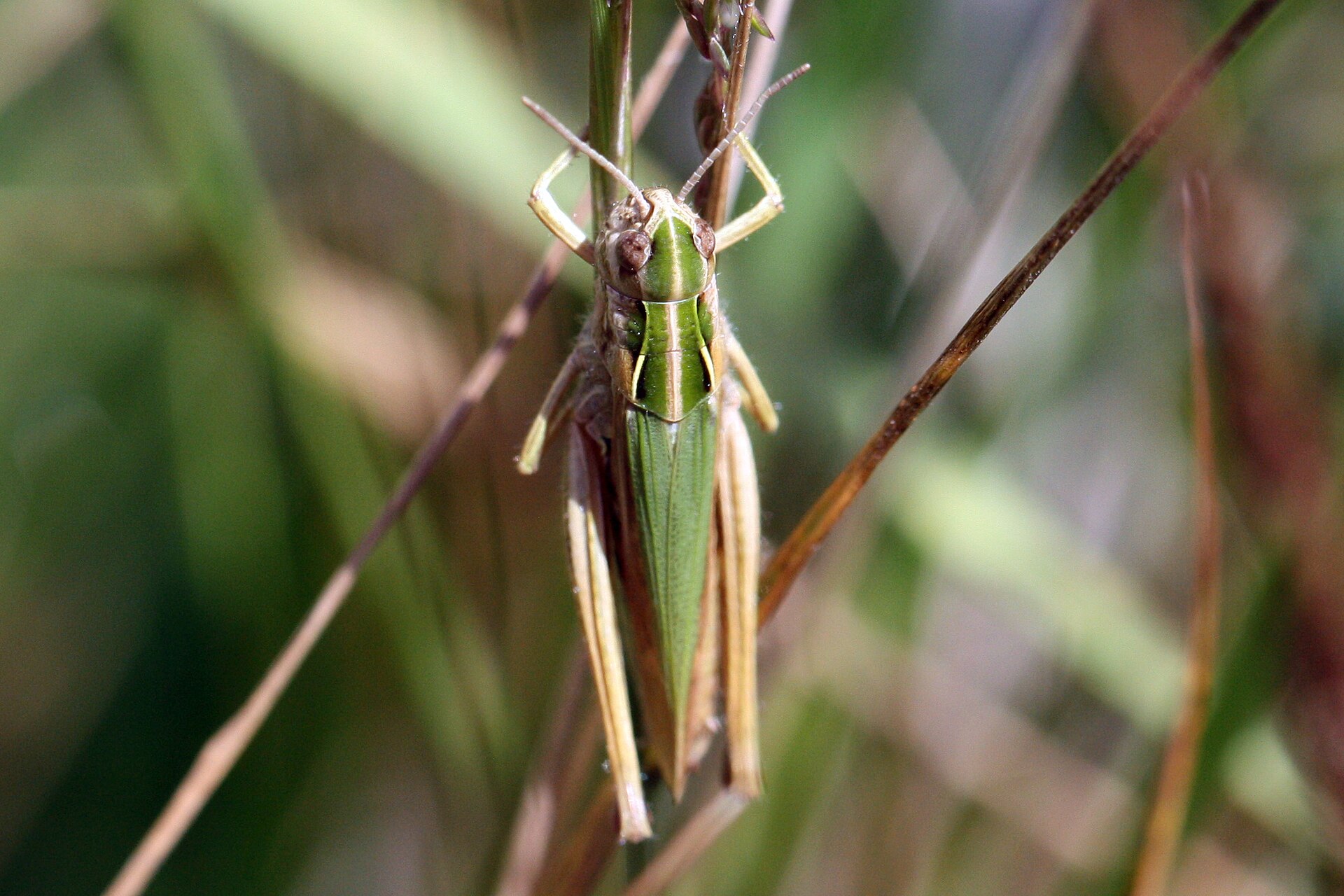
Where to see the Common Green Grasshopper in the Netherlands
With luck 🦗 Grasshopper
Where and when do you see a Common Green Grasshopper? With some luck you can see this species, from June to October.
How do you recognise a Common Green Grasshopper?
A grasshopper of 13 to 24 millimetres, variable in colour but with a back that is almost always green. The most reliable feature is the song: a clearly swelling whirr that turns into a ticking rustle lasting ten to twenty seconds, strongly reminiscent of an alarm clock running down.
What does a Common Green Grasshopper sound like?
Recording: Baudewijn Odé, CC BY-SA 4.0, via Wikimedia Commons
Where do you see this species in the Netherlands?
Fairly common in the right habitat in the south of the Netherlands and the south-east of Belgium, in the Kempen and the Ardennes; scarcer elsewhere. It colonises clearings in woodland quickly and usually does not occur together with the zwart wekkertje.
Habitat: Dry to moderately damp grassland, clearings in woodland, clear-fells and poor verges. It needs structurally rich vegetation that is neither too short nor too dense.
This is a common, widespread species: you can come across it in far more places than the areas listed below. Treat that list as a starting point rather than a full survey.
📍 Nationaal Park Dwingelderveld
presence reported📍 Deelerwoude
presence reported📍 Nationaal Park De Hoge Veluwe
presence reported📍 Fochteloërveen
presence reported📍 Nationaal Park Veluwezoom
presence reported📍 Nationaal Park Weerribben-Wieden
presence reported📍 Naardermeer
presence reported📍 Kroondomein Het Loo
presence reported📍 Nationaal Park Drents-Friese Wold
presence reported📍 Nationaal Park Utrechtse Heuvelrug
presence reported📍 Onlanden & Leekstermeer
presence reported📍 Planken Wambuis
presence reported📍 IJssel-uiterwaarden
presence reported📍 Eemland
presence reported📍 Leuvenumse Bossen
presence reported📍 Oostelijke Vechtplassen
presence reported📍 Noordhollands Duinreservaat
presence reported📍 Wormer- en Jisperveld
presence reported📍 Zuidlaardermeergebied en Hunzedal
presence reportedThese links come straight from our database, with the chance, the source and the evidence level for each area.
When is the best time?
Green = present · orange = peak period. The bar is generated from our database.
Best period: Adults from June to September, sometimes into October, early in the season.
Best time of day: Morning and late afternoon; the species keeps singing at moderate temperatures too.
Recent sightings
👁️ Where has this species been seen recently?
Check the current sightings on Waarneming.nl. A useful addition to our own verified information.
How to improve your chances
- Listen first. Almost every species gives itself away by singing before you spot it.
- Go on a warm, windless afternoon. In cold or wind they fall silent.
- Walk slowly and note where the sound stops. That is where it sits, usually low in the vegetation.
- A bat detector makes audible the species that sing too high for human ears.
🎒 What you need for this
Your ears. Once you know the song, you pick the common green grasshopper out among all the other species at once.
Photography
Look in June, when few other grasshoppers are adult yet and the vegetation is still low. Take a bearing on a singing male, stay sitting and let him start again; then you can photograph at eye level without driving him off.
🌿 Watching responsibly
Keep your distance, stay on the paths, and never lure animals with food or sound. Leave as soon as an animal becomes uneasy.
Status: Verified · Last checked: 2026-08-08