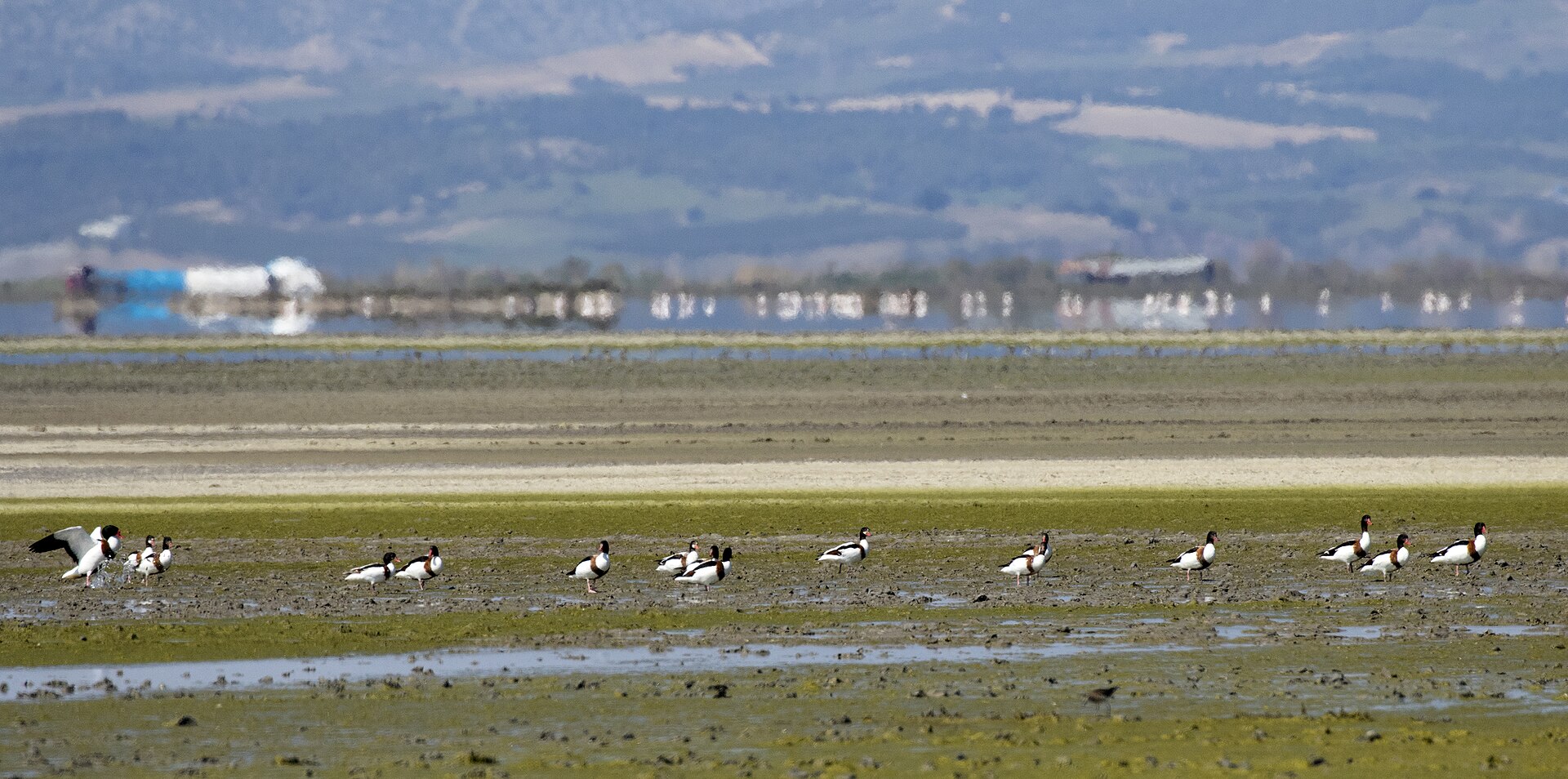
A broad chestnut band across the breast and back on a white body — the single feature that does all the work. A green-black head and a bright red bill. The male has a knob on the bill; otherwise the sexes look alike. 58 to 67 centimetres, wingspan 110 to 133 centimetres: big for a duck. At distance it reads as a small goose — bulky, long-legged, with a slow wingbeat — and that catches people out more often than the plumage does.
The sexes sound nothing alike. In display the males whistle high and softly, with trills in it; the females call low, rra-rra-rra-rra.
Along the coast — the Wadden region, the Delta and the salt marshes — and also inland at sand extraction pits and lakes, where there are breeding birds too.
Vogelbescherming Nederland and Sovon
Nationwide period: Present all year, with spring as the breeding season. But there is one gap worth planning around.
In July and August the adults leave to moult. They gather at fixed moulting sites in the Wadden Sea and along the German coast, and for those weeks they are simply not where you are looking. The young stay behind, often in mixed crèches — groups of ducklings from several families supervised by a handful of older birds. So a summer visitor can find a flat full of half-grown shelducks and almost no adults, and wonder what has happened. Nothing has; the parents are elsewhere, growing feathers.
Landschap Noord-Holland
Nationwide period: Present all year, with spring as the breeding season. But there is one gap worth planning around.
In July and August the adults leave to moult. They gather at fixed moulting sites in the Wadden Sea and along the German coast, and for those weeks they are simply not where you are looking. The young stay behind, often in mixed crèches — groups of ducklings from several families supervised by a handful of older birds. So a summer visitor can find a flat full of half-grown shelducks and almost no adults, and wonder what has happened. Nothing has; the parents are elsewhere, growing feathers.
NDFF open data, 645 records 2016-2026 · zwin.be
Nationwide period: Present all year, with spring as the breeding season. But there is one gap worth planning around.
In July and August the adults leave to moult. They gather at fixed moulting sites in the Wadden Sea and along the German coast, and for those weeks they are simply not where you are looking. The young stay behind, often in mixed crèches — groups of ducklings from several families supervised by a handful of older birds. So a summer visitor can find a flat full of half-grown shelducks and almost no adults, and wonder what has happened. Nothing has; the parents are elsewhere, growing feathers.
NDFF open data, 140 records 2016-2026
Nationwide period: Present all year, with spring as the breeding season. But there is one gap worth planning around.
In July and August the adults leave to moult. They gather at fixed moulting sites in the Wadden Sea and along the German coast, and for those weeks they are simply not where you are looking. The young stay behind, often in mixed crèches — groups of ducklings from several families supervised by a handful of older birds. So a summer visitor can find a flat full of half-grown shelducks and almost no adults, and wonder what has happened. Nothing has; the parents are elsewhere, growing feathers.
NDFF open data, 5.086 records 2016-2026 · Sovon
Nationwide period: Present all year, with spring as the breeding season. But there is one gap worth planning around.
In July and August the adults leave to moult. They gather at fixed moulting sites in the Wadden Sea and along the German coast, and for those weeks they are simply not where you are looking. The young stay behind, often in mixed crèches — groups of ducklings from several families supervised by a handful of older birds. So a summer visitor can find a flat full of half-grown shelducks and almost no adults, and wonder what has happened. Nothing has; the parents are elsewhere, growing feathers.
NDFF open data, 5.660 records 2016-2026 · Sovon
Nationwide period: Present all year, with spring as the breeding season. But there is one gap worth planning around.
In July and August the adults leave to moult. They gather at fixed moulting sites in the Wadden Sea and along the German coast, and for those weeks they are simply not where you are looking. The young stay behind, often in mixed crèches — groups of ducklings from several families supervised by a handful of older birds. So a summer visitor can find a flat full of half-grown shelducks and almost no adults, and wonder what has happened. Nothing has; the parents are elsewhere, growing feathers.
NDFF open data, 145 records 2016-2026
Nationwide period: Present all year, with spring as the breeding season. But there is one gap worth planning around.
In July and August the adults leave to moult. They gather at fixed moulting sites in the Wadden Sea and along the German coast, and for those weeks they are simply not where you are looking. The young stay behind, often in mixed crèches — groups of ducklings from several families supervised by a handful of older birds. So a summer visitor can find a flat full of half-grown shelducks and almost no adults, and wonder what has happened. Nothing has; the parents are elsewhere, growing feathers.
NDFF open data, 1.032 records 2016-2026
Nationwide period: Present all year, with spring as the breeding season. But there is one gap worth planning around.
In July and August the adults leave to moult. They gather at fixed moulting sites in the Wadden Sea and along the German coast, and for those weeks they are simply not where you are looking. The young stay behind, often in mixed crèches — groups of ducklings from several families supervised by a handful of older birds. So a summer visitor can find a flat full of half-grown shelducks and almost no adults, and wonder what has happened. Nothing has; the parents are elsewhere, growing feathers.
Birdingplaces · Vogelmeer
Nationwide period: Present all year, with spring as the breeding season. But there is one gap worth planning around.
In July and August the adults leave to moult. They gather at fixed moulting sites in the Wadden Sea and along the German coast, and for those weeks they are simply not where you are looking. The young stay behind, often in mixed crèches — groups of ducklings from several families supervised by a handful of older birds. So a summer visitor can find a flat full of half-grown shelducks and almost no adults, and wonder what has happened. Nothing has; the parents are elsewhere, growing feathers.
NDFF open data, 525 records 2016-2026
Nationwide period: Present all year, with spring as the breeding season. But there is one gap worth planning around.
In July and August the adults leave to moult. They gather at fixed moulting sites in the Wadden Sea and along the German coast, and for those weeks they are simply not where you are looking. The young stay behind, often in mixed crèches — groups of ducklings from several families supervised by a handful of older birds. So a summer visitor can find a flat full of half-grown shelducks and almost no adults, and wonder what has happened. Nothing has; the parents are elsewhere, growing feathers.
NDFF open data, 3.496 records 2016-2026 · npduinenvantexel.nl
Nationwide period: Present all year, with spring as the breeding season. But there is one gap worth planning around.
In July and August the adults leave to moult. They gather at fixed moulting sites in the Wadden Sea and along the German coast, and for those weeks they are simply not where you are looking. The young stay behind, often in mixed crèches — groups of ducklings from several families supervised by a handful of older birds. So a summer visitor can find a flat full of half-grown shelducks and almost no adults, and wonder what has happened. Nothing has; the parents are elsewhere, growing feathers.
NDFF open data, 5.893 records 2016-2026 · np-lauwersmeer.nl
Nationwide period: Present all year, with spring as the breeding season. But there is one gap worth planning around.
In July and August the adults leave to moult. They gather at fixed moulting sites in the Wadden Sea and along the German coast, and for those weeks they are simply not where you are looking. The young stay behind, often in mixed crèches — groups of ducklings from several families supervised by a handful of older birds. So a summer visitor can find a flat full of half-grown shelducks and almost no adults, and wonder what has happened. Nothing has; the parents are elsewhere, growing feathers.
NDFF open data, 348 records 2016-2026
Nationwide period: Present all year, with spring as the breeding season. But there is one gap worth planning around.
In July and August the adults leave to moult. They gather at fixed moulting sites in the Wadden Sea and along the German coast, and for those weeks they are simply not where you are looking. The young stay behind, often in mixed crèches — groups of ducklings from several families supervised by a handful of older birds. So a summer visitor can find a flat full of half-grown shelducks and almost no adults, and wonder what has happened. Nothing has; the parents are elsewhere, growing feathers.
NDFF open data, 306 records 2016-2026
Nationwide period: Present all year, with spring as the breeding season. But there is one gap worth planning around.
In July and August the adults leave to moult. They gather at fixed moulting sites in the Wadden Sea and along the German coast, and for those weeks they are simply not where you are looking. The young stay behind, often in mixed crèches — groups of ducklings from several families supervised by a handful of older birds. So a summer visitor can find a flat full of half-grown shelducks and almost no adults, and wonder what has happened. Nothing has; the parents are elsewhere, growing feathers.
NDFF open data, 110 records 2016-2026
Nationwide period: Present all year, with spring as the breeding season. But there is one gap worth planning around.
In July and August the adults leave to moult. They gather at fixed moulting sites in the Wadden Sea and along the German coast, and for those weeks they are simply not where you are looking. The young stay behind, often in mixed crèches — groups of ducklings from several families supervised by a handful of older birds. So a summer visitor can find a flat full of half-grown shelducks and almost no adults, and wonder what has happened. Nothing has; the parents are elsewhere, growing feathers.
NDFF open data, 123 records 2016-2026
Nationwide period: Present all year, with spring as the breeding season. But there is one gap worth planning around.
In July and August the adults leave to moult. They gather at fixed moulting sites in the Wadden Sea and along the German coast, and for those weeks they are simply not where you are looking. The young stay behind, often in mixed crèches — groups of ducklings from several families supervised by a handful of older birds. So a summer visitor can find a flat full of half-grown shelducks and almost no adults, and wonder what has happened. Nothing has; the parents are elsewhere, growing feathers.
NDFF open data, 332 records 2016-2026
Nationwide period: Present all year, with spring as the breeding season. But there is one gap worth planning around.
In July and August the adults leave to moult. They gather at fixed moulting sites in the Wadden Sea and along the German coast, and for those weeks they are simply not where you are looking. The young stay behind, often in mixed crèches — groups of ducklings from several families supervised by a handful of older birds. So a summer visitor can find a flat full of half-grown shelducks and almost no adults, and wonder what has happened. Nothing has; the parents are elsewhere, growing feathers.
NDFF open data, 410 records 2016-2026
Nationwide period: Present all year, with spring as the breeding season. But there is one gap worth planning around.
In July and August the adults leave to moult. They gather at fixed moulting sites in the Wadden Sea and along the German coast, and for those weeks they are simply not where you are looking. The young stay behind, often in mixed crèches — groups of ducklings from several families supervised by a handful of older birds. So a summer visitor can find a flat full of half-grown shelducks and almost no adults, and wonder what has happened. Nothing has; the parents are elsewhere, growing feathers.
NDFF open data, 2.095 records 2016-2026
Nationwide period: Present all year, with spring as the breeding season. But there is one gap worth planning around.
In July and August the adults leave to moult. They gather at fixed moulting sites in the Wadden Sea and along the German coast, and for those weeks they are simply not where you are looking. The young stay behind, often in mixed crèches — groups of ducklings from several families supervised by a handful of older birds. So a summer visitor can find a flat full of half-grown shelducks and almost no adults, and wonder what has happened. Nothing has; the parents are elsewhere, growing feathers.
De Visdief · birdwatching guide
Nationwide period: Present all year, with spring as the breeding season. But there is one gap worth planning around.
In July and August the adults leave to moult. They gather at fixed moulting sites in the Wadden Sea and along the German coast, and for those weeks they are simply not where you are looking. The young stay behind, often in mixed crèches — groups of ducklings from several families supervised by a handful of older birds. So a summer visitor can find a flat full of half-grown shelducks and almost no adults, and wonder what has happened. Nothing has; the parents are elsewhere, growing feathers.
NDFF open data, 461 records 2016-2026
Nationwide period: Present all year, with spring as the breeding season. But there is one gap worth planning around.
In July and August the adults leave to moult. They gather at fixed moulting sites in the Wadden Sea and along the German coast, and for those weeks they are simply not where you are looking. The young stay behind, often in mixed crèches — groups of ducklings from several families supervised by a handful of older birds. So a summer visitor can find a flat full of half-grown shelducks and almost no adults, and wonder what has happened. Nothing has; the parents are elsewhere, growing feathers.
NDFF open data
Nationwide period: Present all year, with spring as the breeding season. But there is one gap worth planning around.
In July and August the adults leave to moult. They gather at fixed moulting sites in the Wadden Sea and along the German coast, and for those weeks they are simply not where you are looking. The young stay behind, often in mixed crèches — groups of ducklings from several families supervised by a handful of older birds. So a summer visitor can find a flat full of half-grown shelducks and almost no adults, and wonder what has happened. Nothing has; the parents are elsewhere, growing feathers.
NDFF open data, 4.120 records 2016-2026
Nationwide period: Present all year, with spring as the breeding season. But there is one gap worth planning around.
In July and August the adults leave to moult. They gather at fixed moulting sites in the Wadden Sea and along the German coast, and for those weeks they are simply not where you are looking. The young stay behind, often in mixed crèches — groups of ducklings from several families supervised by a handful of older birds. So a summer visitor can find a flat full of half-grown shelducks and almost no adults, and wonder what has happened. Nothing has; the parents are elsewhere, growing feathers.
NDFF open data, 2.006 records 2016-2026
Nationwide period: Present all year, with spring as the breeding season. But there is one gap worth planning around.
In July and August the adults leave to moult. They gather at fixed moulting sites in the Wadden Sea and along the German coast, and for those weeks they are simply not where you are looking. The young stay behind, often in mixed crèches — groups of ducklings from several families supervised by a handful of older birds. So a summer visitor can find a flat full of half-grown shelducks and almost no adults, and wonder what has happened. Nothing has; the parents are elsewhere, growing feathers.
NDFF open data, 498 records 2016-2026
Nationwide period: Present all year, with spring as the breeding season. But there is one gap worth planning around.
In July and August the adults leave to moult. They gather at fixed moulting sites in the Wadden Sea and along the German coast, and for those weeks they are simply not where you are looking. The young stay behind, often in mixed crèches — groups of ducklings from several families supervised by a handful of older birds. So a summer visitor can find a flat full of half-grown shelducks and almost no adults, and wonder what has happened. Nothing has; the parents are elsewhere, growing feathers.
NDFF open data, 271 records 2016-2026
Nationwide period: Present all year, with spring as the breeding season. But there is one gap worth planning around.
In July and August the adults leave to moult. They gather at fixed moulting sites in the Wadden Sea and along the German coast, and for those weeks they are simply not where you are looking. The young stay behind, often in mixed crèches — groups of ducklings from several families supervised by a handful of older birds. So a summer visitor can find a flat full of half-grown shelducks and almost no adults, and wonder what has happened. Nothing has; the parents are elsewhere, growing feathers.
NDFF open data, 299 records 2016-2026
Nationwide period: Present all year, with spring as the breeding season. But there is one gap worth planning around.
In July and August the adults leave to moult. They gather at fixed moulting sites in the Wadden Sea and along the German coast, and for those weeks they are simply not where you are looking. The young stay behind, often in mixed crèches — groups of ducklings from several families supervised by a handful of older birds. So a summer visitor can find a flat full of half-grown shelducks and almost no adults, and wonder what has happened. Nothing has; the parents are elsewhere, growing feathers.
NDFF open data, 646 records 2016-2026
Nationwide period: Present all year, with spring as the breeding season. But there is one gap worth planning around.
In July and August the adults leave to moult. They gather at fixed moulting sites in the Wadden Sea and along the German coast, and for those weeks they are simply not where you are looking. The young stay behind, often in mixed crèches — groups of ducklings from several families supervised by a handful of older birds. So a summer visitor can find a flat full of half-grown shelducks and almost no adults, and wonder what has happened. Nothing has; the parents are elsewhere, growing feathers.
NDFF open data, 6.901 records 2016-2026
Nationwide period: Present all year, with spring as the breeding season. But there is one gap worth planning around.
In July and August the adults leave to moult. They gather at fixed moulting sites in the Wadden Sea and along the German coast, and for those weeks they are simply not where you are looking. The young stay behind, often in mixed crèches — groups of ducklings from several families supervised by a handful of older birds. So a summer visitor can find a flat full of half-grown shelducks and almost no adults, and wonder what has happened. Nothing has; the parents are elsewhere, growing feathers.
NDFF open data, 2.199 records 2016-2026
Nationwide period: Present all year, with spring as the breeding season. But there is one gap worth planning around.
In July and August the adults leave to moult. They gather at fixed moulting sites in the Wadden Sea and along the German coast, and for those weeks they are simply not where you are looking. The young stay behind, often in mixed crèches — groups of ducklings from several families supervised by a handful of older birds. So a summer visitor can find a flat full of half-grown shelducks and almost no adults, and wonder what has happened. Nothing has; the parents are elsewhere, growing feathers.
NDFF open data, 758 records 2016-2026
Nationwide period: Present all year, with spring as the breeding season. But there is one gap worth planning around.
In July and August the adults leave to moult. They gather at fixed moulting sites in the Wadden Sea and along the German coast, and for those weeks they are simply not where you are looking. The young stay behind, often in mixed crèches — groups of ducklings from several families supervised by a handful of older birds. So a summer visitor can find a flat full of half-grown shelducks and almost no adults, and wonder what has happened. Nothing has; the parents are elsewhere, growing feathers.
NDFF open data, 4.060 records 2016-2026
Nationwide period: Present all year, with spring as the breeding season. But there is one gap worth planning around.
In July and August the adults leave to moult. They gather at fixed moulting sites in the Wadden Sea and along the German coast, and for those weeks they are simply not where you are looking. The young stay behind, often in mixed crèches — groups of ducklings from several families supervised by a handful of older birds. So a summer visitor can find a flat full of half-grown shelducks and almost no adults, and wonder what has happened. Nothing has; the parents are elsewhere, growing feathers.
These links come straight from our database, with the chance, the source and the evidence level for each area.
Green = present · orange = peak period. The bar is generated from our database.