Badger
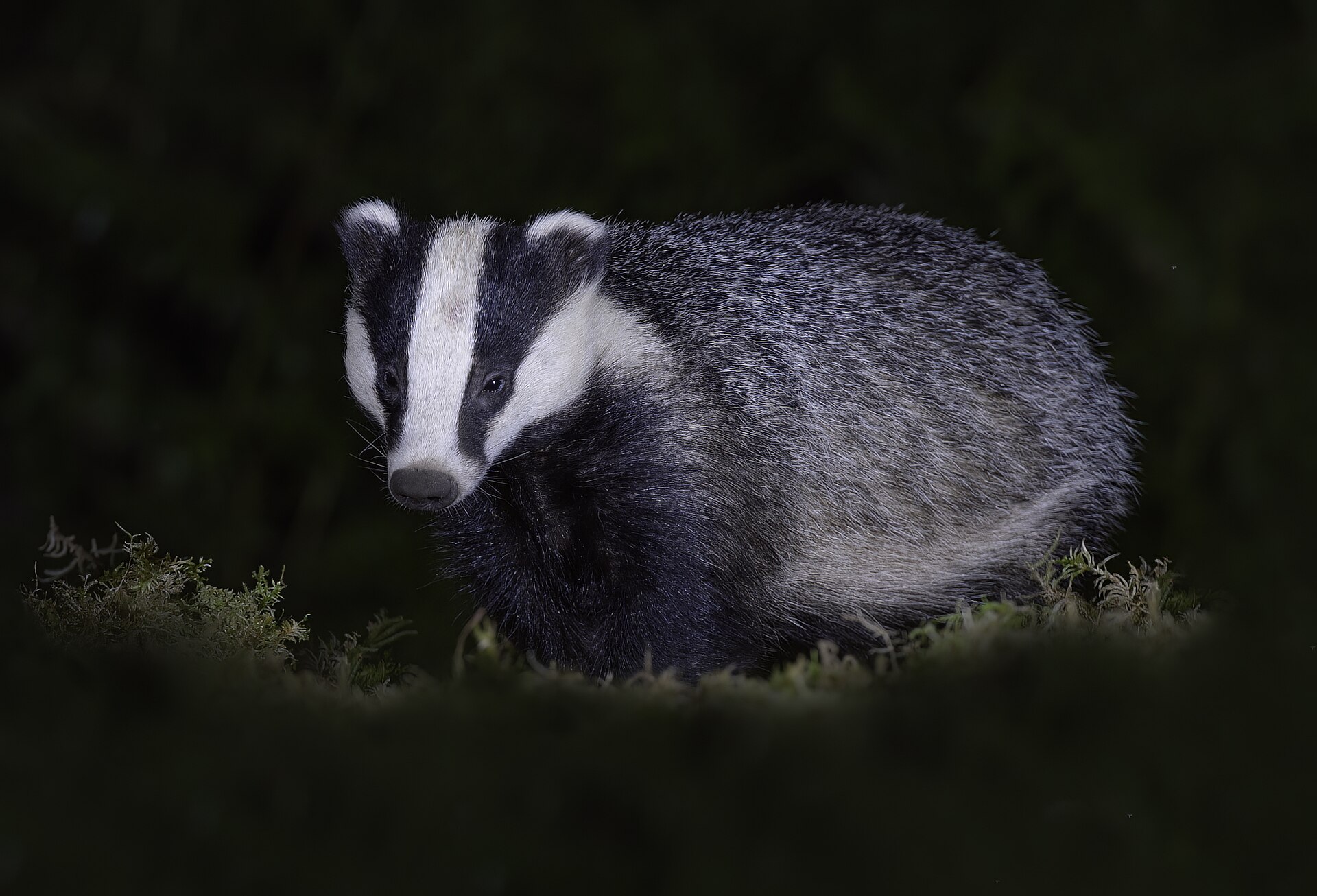
📷 caroline legg, CC BY 2.0 (Wikimedia Commons)

Where to see the European badger in the Netherlands

Meles meles · European badger

With luck 🦌 Mammal (land) Sensitive species · R2

🛡️ No exact locations, on purpose

This is a sensitive species. We deliberately show no resting places such as setts, burrows or winter roosts, and no photographs in which such a place is recognisable. Why we do that.

Where and when do you see a European badger? With some luck you can see this species, from April to October.

How do you recognise a European badger?

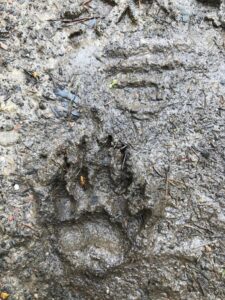
Squat and grey, on short legs, with an unmistakable head: white with two black stripes running from the snout to the ears. In the dark you usually see that pattern first and the animal second. Its track shows five toes with long digging claws — a dog’s shows four.

What does a European badger sound like?

Recording: British Library, CC BY-SA 4.0, via Wikimedia Commons

What tracks does a European badger leave?

5–6 cm wide

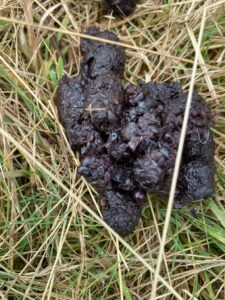
Tracks: crescent-shaped, 5 to 6 cm wide, with five oval toes and heavy claw marks that reach 3 cm long on the front feet. The central pad is kidney-shaped. Unlike other members of the marten family the badger does not bound; it walks with a rolling step or a trot. Droppings: highly variable, from black and sausage-shaped to yellow-brown and formless depending on the food, deposited in pits it digs itself, 10 to 15 cm deep. Hairs: thick and coarse, 7 to 10 cm long and three-coloured — off-white at the root, then a black band of about 1 cm, and silver-grey at the tip. There are also scratch marks on trees, the way a cat leaves them.
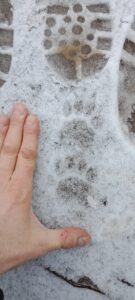
Spoor van een das
Photo: Oleksii Vasyliuk, CC BY 4.0, via iNaturalist
Spoor van een das
Photo: Lukas Zangl, CC BY 4.0, via iNaturalist
Uitwerpselen van een das
Photo: Alister Harman, CC BY 4.0, via iNaturalist

Where do you see this species in the Netherlands?

The Veluwe, South Limburg, eastern North Brabant, Utrecht and the Gooi. We deliberately name only the region and not the precise spot: disturbance at the sett is the single biggest threat to this species.

How certain is this? verified chance per source presence reported Links that do not clear the bottom threshold are not published. How we decide that.
NDFF open data, 139 records 2016-2026 · the national park
Nationwide period: April to October is when the badger is most active. It does not truly hibernate, but in the coldest months it comes above ground far less often and lives off its fat reserve.

📍 Nationaal Park Veluwezoom

With luck chance per source
Natuurmonumenten
Nationwide period: April to October is when the badger is most active. It does not truly hibernate, but in the coldest months it comes above ground far less often and lives off its fat reserve.
NDFF open data, 117 records 2016-2026 · Natuurmonumenten
Nationwide period: April to October is when the badger is most active. It does not truly hibernate, but in the coldest months it comes above ground far less often and lives off its fat reserve.
NDFF open data, 119 records 2016-2026 · nationaal-parkdemaasduinen.nl
Nationwide period: April to October is when the badger is most active. It does not truly hibernate, but in the coldest months it comes above ground far less often and lives off its fat reserve.

📍 Nationaal Park De Meinweg

Very rare verified
NDFF open data, 158 records 2016-2026 · yumpu.com
Nationwide period: April to October is when the badger is most active. It does not truly hibernate, but in the coldest months it comes above ground far less often and lives off its fat reserve.
NDFF open data, 271 records 2016-2026 · Staatsbosbeheer
Nationwide period: April to October is when the badger is most active. It does not truly hibernate, but in the coldest months it comes above ground far less often and lives off its fat reserve.
NDFF open data, 2.362 records 2016-2026 · Natuurmonumenten
Nationwide period: April to October is when the badger is most active. It does not truly hibernate, but in the coldest months it comes above ground far less often and lives off its fat reserve.

📍 Fochteloërveen

presence reported
NDFF open data, 253 records 2016-2026
Nationwide period: April to October is when the badger is most active. It does not truly hibernate, but in the coldest months it comes above ground far less often and lives off its fat reserve.
Staatsbosbeheer, which manages much of the Heuvelland
Nationwide period: April to October is when the badger is most active. It does not truly hibernate, but in the coldest months it comes above ground far less often and lives off its fat reserve.

📍 Kroondomein Het Loo

Rare chance per source
Zodion (Zoogdiervereniging)
Nationwide period: April to October is when the badger is most active. It does not truly hibernate, but in the coldest months it comes above ground far less often and lives off its fat reserve.

📍 Deelerwoude

Very rare verified
NDFF open data, 142 records 2016-2026 · Natuurmonumenten
Nationwide period: April to October is when the badger is most active. It does not truly hibernate, but in the coldest months it comes above ground far less often and lives off its fat reserve.

📍 Naardermeer

Very rare verified
NDFF open data, 179 records 2016-2026 · Natuurmonumenten
Nationwide period: April to October is when the badger is most active. It does not truly hibernate, but in the coldest months it comes above ground far less often and lives off its fat reserve.
NDFF open data, 223 records 2016-2026 · Staatsbosbeheer
Nationwide period: April to October is when the badger is most active. It does not truly hibernate, but in the coldest months it comes above ground far less often and lives off its fat reserve.
NDFF open data, 348 records 2016-2026
Nationwide period: April to October is when the badger is most active. It does not truly hibernate, but in the coldest months it comes above ground far less often and lives off its fat reserve.
NDFF open data, 142 records 2016-2026
Nationwide period: April to October is when the badger is most active. It does not truly hibernate, but in the coldest months it comes above ground far less often and lives off its fat reserve.
NDFF open data, 13 records 2016-2026
Nationwide period: April to October is when the badger is most active. It does not truly hibernate, but in the coldest months it comes above ground far less often and lives off its fat reserve.
NDFF open data, 56 records 2016-2026
Nationwide period: April to October is when the badger is most active. It does not truly hibernate, but in the coldest months it comes above ground far less often and lives off its fat reserve.

📍 Onlanden & Leekstermeer

presence reported
NDFF open data, 166 records 2016-2026
Nationwide period: April to October is when the badger is most active. It does not truly hibernate, but in the coldest months it comes above ground far less often and lives off its fat reserve.

📍 Planken Wambuis

Very rare chance per source
Natuurmonumenten
Nationwide period: April to October is when the badger is most active. It does not truly hibernate, but in the coldest months it comes above ground far less often and lives off its fat reserve.

📍 Leuvenumse Bossen

presence reported
NDFF open data, 180 records 2016-2026
Nationwide period: April to October is when the badger is most active. It does not truly hibernate, but in the coldest months it comes above ground far less often and lives off its fat reserve.

📍 Oostelijke Vechtplassen

presence reported
NDFF open data
Nationwide period: April to October is when the badger is most active. It does not truly hibernate, but in the coldest months it comes above ground far less often and lives off its fat reserve.
NDFF open data
Nationwide period: April to October is when the badger is most active. It does not truly hibernate, but in the coldest months it comes above ground far less often and lives off its fat reserve.
NDFF open data, 196 records 2016-2026
Nationwide period: April to October is when the badger is most active. It does not truly hibernate, but in the coldest months it comes above ground far less often and lives off its fat reserve.

📍 De Maashorst

presence reported
NDFF open data, 754 records 2016-2026
Nationwide period: April to October is when the badger is most active. It does not truly hibernate, but in the coldest months it comes above ground far less often and lives off its fat reserve.
NDFF open data, 165 records 2016-2026
Nationwide period: April to October is when the badger is most active. It does not truly hibernate, but in the coldest months it comes above ground far less often and lives off its fat reserve.

📍 Loonse en Drunense Duinen

presence reported
NDFF open data, 215 records 2016-2026
Nationwide period: April to October is when the badger is most active. It does not truly hibernate, but in the coldest months it comes above ground far less often and lives off its fat reserve.

These links come straight from our database, with the chance, the source and the evidence level for each area.

🗺️ Oostelijk Noord-Brabant

Rare
Nationwide period: April to October is when the badger is most active. It does not truly hibernate, but in the coldest months it comes above ground far less often and lives off its fat reserve.

🗺️ Utrecht en 't Gooi

Rare
Nationwide period: April to October is when the badger is most active. It does not truly hibernate, but in the coldest months it comes above ground far less often and lives off its fat reserve.

🗺️ Veluwe

Rare
Nationwide period: April to October is when the badger is most active. It does not truly hibernate, but in the coldest months it comes above ground far less often and lives off its fat reserve.

🗺️ Zuid-Limburg

Rare
Nationwide period: April to October is when the badger is most active. It does not truly hibernate, but in the coldest months it comes above ground far less often and lives off its fat reserve.

For this sensitive species we deliberately stay at regional level.

When is the best time?

Green = present · orange = peak period. The bar is generated from our database.

Best period: April to October is when the badger is most active. It does not truly hibernate, but in the coldest months it comes above ground far less often and lives off its fat reserve.

Best time of day: Night and late dusk. On long summer evenings it sometimes comes out before dark, but by far the most sightings are at night. Look for the signs rather than for the animal, and never wait at a sett.

Recent sightings

👁️ Where has this species been seen recently?

Check the current sightings on Waarneming.nl. A useful addition to our own verified information.

Current sightings on Waarneming.nl →

Note: for sensitive species the source already blurs or withholds sightings. We do not reproduce exact locations.

How to improve your chances

  • Keep the wind in your face. Most mammals will smell you long before they see you.
  • Arrive before sunrise and then stay put. Sitting still beats walking about.
  • Wear muted colours, skip the scent, and put your phone on silent.
  • Be patient. Expect to come back more than once before it works.

🎒 What you need for this

A trail camera. Never wait at a sett.

🌿 Watching responsibly

Keep your distance, stay on the paths, and never lure animals with food or sound. Leave as soon as an animal becomes uneasy. This is a sensitive species. We deliberately show no resting places such as setts, burrows or winter roosts, and no photographs in which such a place is recognisable.

Sources: Zoogdiervereniging, Zodion-soortpagina Das
Status: Verified · Last checked: 2026-07-29