
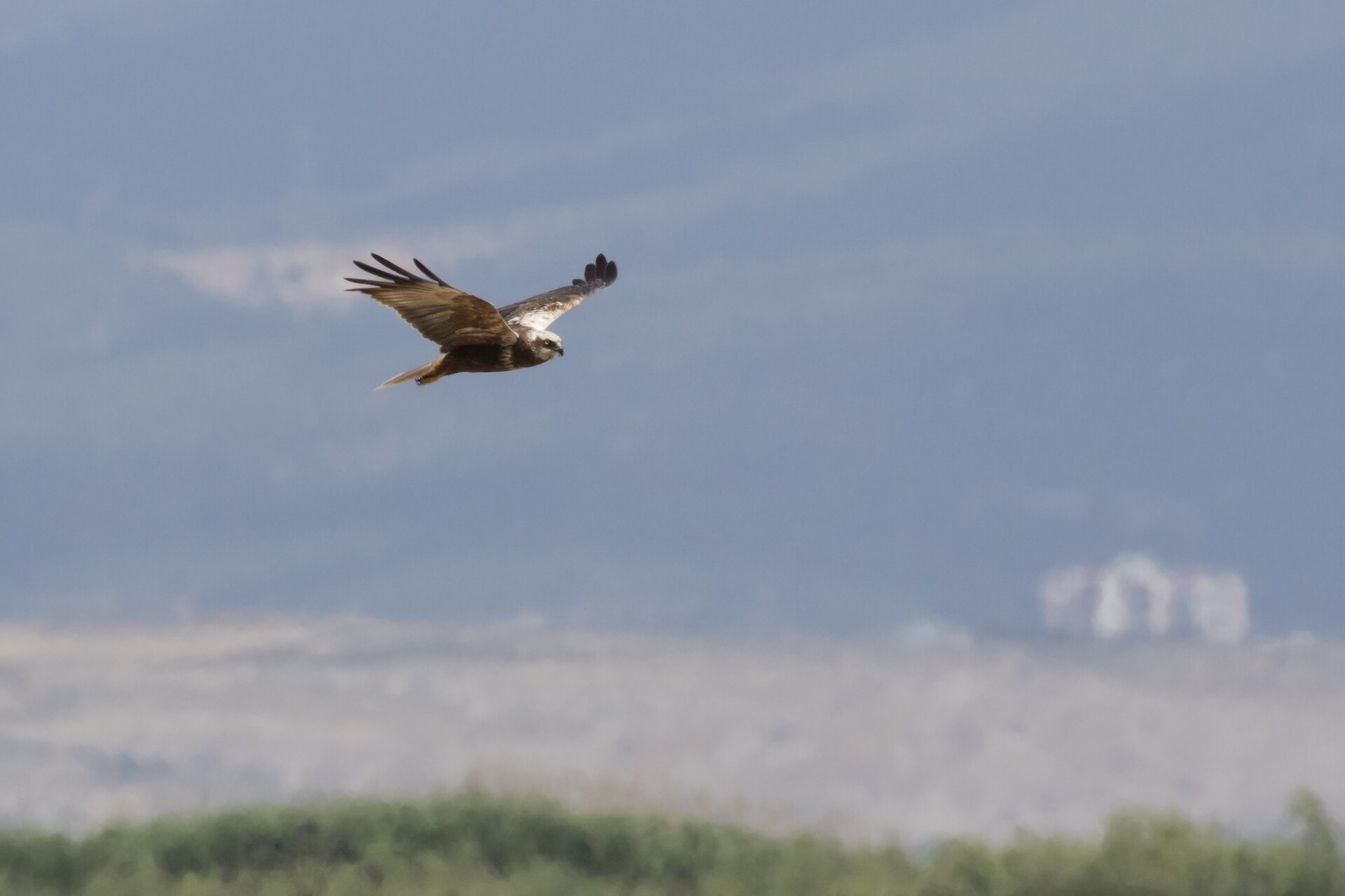
Western Marsh Harrier
📷 Zeynel Cebeci, CC BY-SA 4.0 (Wikimedia Commons)

Where to see the Marsh Harrier in the Netherlands

Circus aeruginosus · Marsh Harrier

With luck 🦅 Bird Sensitive species · R3

🛡️ No exact locations, on purpose

This is a sensitive species. We deliberately show no nest sites, and during the breeding season (March to July) we are extra careful about exact spots. Why we do that.

Where and when do you see a Marsh Harrier? With some luck you can see this species, from April to September.

How do you recognise a Marsh Harrier?

43 to 54 cm long, wingspan 115 to 145 cm. A slim raptor that sails low and slowly over reed and rough ground with its wings held in a clear V. The male is brown with grey wing panels and black wingtips; the female is dark brown with a creamy head and shoulders. That sailing, rocking flight is the most reliable feature.

What can you confuse a Marsh Harrier with?

Looks like: Hen Harrier, Common Buzzard

  • Hen Harrier: the male Hen Harrier is pale grey with black wingtips, while the Marsh Harrier is brown with grey wing panels.
  • Common Buzzard: the buzzard sails on flat to slightly raised wings and is more compact; the harrier holds its wings in a clear V and rocks low over the reed.

What does a Marsh Harrier sound like?

Recording: Sternanita2, CC BY-SA 4.0, via Wikimedia Commons

Where do you see this species in the Netherlands?

The wetlands of Flevoland, the Wadden and Delta regions and the peat marshes. The Oostvaardersplassen is the best known stronghold.

How certain is this? verified chance per source presence reported Links that do not clear the bottom threshold are not published. How we decide that.

📍 Nationaal Park Lauwersmeer

With luck chance per source
np-lauwersmeer.nl
Nationwide period: April to September. Most marsh harriers winter in Africa and southern Europe; they return from March onwards and leave again in September.

📍 Oostvaardersplassen

With luck verified
the national park
Nationwide period: April to September. Most marsh harriers winter in Africa and southern Europe; they return from March onwards and leave again in September.

📍 Nationaal Park De Alde Feanen

With luck chance per source
Nationaal Park De Alde Feanen
Nationwide period: April to September. Most marsh harriers winter in Africa and southern Europe; they return from March onwards and leave again in September.

📍 Planken Wambuis

presence reported
NDFF open data, 5.845 records 2016-2026
Nationwide period: April to September. Most marsh harriers winter in Africa and southern Europe; they return from March onwards and leave again in September.

📍 Onlanden & Leekstermeer

Good chance in season chance per source
Natuurmonumenten · Birdingplaces · Stichting Natuurbelang De Onlanden
Nationwide period: April to September. Most marsh harriers winter in Africa and southern Europe; they return from March onwards and leave again in September.
Buitencentrum De Pelen · Staatsbosbeheer
Nationwide period: April to September. Most marsh harriers winter in Africa and southern Europe; they return from March onwards and leave again in September.

📍 Naardermeer

Good chance in season chance per source
De Visdief · birdwatching guide
Nationwide period: April to September. Most marsh harriers winter in Africa and southern Europe; they return from March onwards and leave again in September.

📍 Nationaal Park De Biesbosch

Good chance in season chance per source
De Visdief · birdwatching guide to Biesbosch
Nationwide period: April to September. Most marsh harriers winter in Africa and southern Europe; they return from March onwards and leave again in September.

📍 Fochteloërveen

Good chance in season chance per source
De Visdief · birdwatching guide to Fochteloërveen
Nationwide period: April to September. Most marsh harriers winter in Africa and southern Europe; they return from March onwards and leave again in September.

📍 Blauwe Kamer

presence reported
NDFF open data
Nationwide period: April to September. Most marsh harriers winter in Africa and southern Europe; they return from March onwards and leave again in September.

📍 Zouweboezem

presence reported
NDFF open data
Nationwide period: April to September. Most marsh harriers winter in Africa and southern Europe; they return from March onwards and leave again in September.

📍 Oostelijke Vechtplassen

presence reported
NDFF open data
Nationwide period: April to September. Most marsh harriers winter in Africa and southern Europe; they return from March onwards and leave again in September.
NDFF open data
Nationwide period: April to September. Most marsh harriers winter in Africa and southern Europe; they return from March onwards and leave again in September.

📍 Wormer- en Jisperveld

presence reported
NDFF open data
Nationwide period: April to September. Most marsh harriers winter in Africa and southern Europe; they return from March onwards and leave again in September.

📍 Ilperveld

presence reported
NDFF open data
Nationwide period: April to September. Most marsh harriers winter in Africa and southern Europe; they return from March onwards and leave again in September.

📍 De Dollard

presence reported
NDFF open data
Nationwide period: April to September. Most marsh harriers winter in Africa and southern Europe; they return from March onwards and leave again in September.
NDFF open data
Nationwide period: April to September. Most marsh harriers winter in Africa and southern Europe; they return from March onwards and leave again in September.

📍 Landgoed Ennemaborg

presence reported
NDFF open data
Nationwide period: April to September. Most marsh harriers winter in Africa and southern Europe; they return from March onwards and leave again in September.

📍 Meijendel & Berkheide

presence reported
NDFF open data, 11.179 records 2016-2026
Nationwide period: April to September. Most marsh harriers winter in Africa and southern Europe; they return from March onwards and leave again in September.

📍 Voornes Duin

presence reported
NDFF open data, 4.547 records 2016-2026
Nationwide period: April to September. Most marsh harriers winter in Africa and southern Europe; they return from March onwards and leave again in September.
NDFF open data, 2.484 records 2016-2026
Nationwide period: April to September. Most marsh harriers winter in Africa and southern Europe; they return from March onwards and leave again in September.

📍 De Maashorst

presence reported
NDFF open data, 4.282 records 2016-2026
Nationwide period: April to September. Most marsh harriers winter in Africa and southern Europe; they return from March onwards and leave again in September.
NDFF open data, 1.164 records 2016-2026
Nationwide period: April to September. Most marsh harriers winter in Africa and southern Europe; they return from March onwards and leave again in September.

📍 Loonse en Drunense Duinen

presence reported
NDFF open data, 1.283 records 2016-2026
Nationwide period: April to September. Most marsh harriers winter in Africa and southern Europe; they return from March onwards and leave again in September.

📍 Schoorlse Duinen

presence reported
NDFF open data, 6.856 records 2016-2026
Nationwide period: April to September. Most marsh harriers winter in Africa and southern Europe; they return from March onwards and leave again in September.

📍 Haringvlietsluizen

presence reported
NDFF open data, 23.098 records 2016-2026
Nationwide period: April to September. Most marsh harriers winter in Africa and southern Europe; they return from March onwards and leave again in September.
NDFF open data, 7.397 records 2016-2026
Nationwide period: April to September. Most marsh harriers winter in Africa and southern Europe; they return from March onwards and leave again in September.

📍 De Putten bij Camperduin

presence reported
NDFF open data, 16.497 records 2016-2026
Nationwide period: April to September. Most marsh harriers winter in Africa and southern Europe; they return from March onwards and leave again in September.

These links come straight from our database, with the chance, the source and the evidence level for each area.

When is the best time?

Green = present · orange = peak period. The bar is generated from our database.

Best period: April to September. Most marsh harriers winter in Africa and southern Europe; they return from March onwards and leave again in September.

Best time of day: During the day, with the morning as the best moment. It hunts on the wing and stays in view for long stretches.

Recent sightings

👁️ Where has this species been seen recently?

Check the current sightings on Waarneming.nl. A useful addition to our own verified information.

Current sightings on Waarneming.nl →

Note: for sensitive species the source already blurs or withholds sightings. We do not reproduce exact locations.

How to improve your chances

  • Learn the calls first. You will hear most birds before you see them.
  • Go in the first hour after sunrise, when the song is at its peak and the wind is still down.
  • Use a hide or natural cover. Sitting still gets you more than walking closer.
  • Keep the sun behind you. Against the light you see a silhouette and no colour.

🎒 What you need for this

Binoculars.

🌿 Watching responsibly

Keep your distance, stay on the paths, and never lure animals with food or sound. Leave as soon as an animal becomes uneasy. This is a sensitive species. We deliberately show no nest sites, and during the breeding season (March to July) we are extra careful about exact spots.

Sources: Sovon; Vogelbescherming Nederland (vogelgids), geraadpleegd 02-11-2026
Status: Verified · Last checked: 2026-08-08