
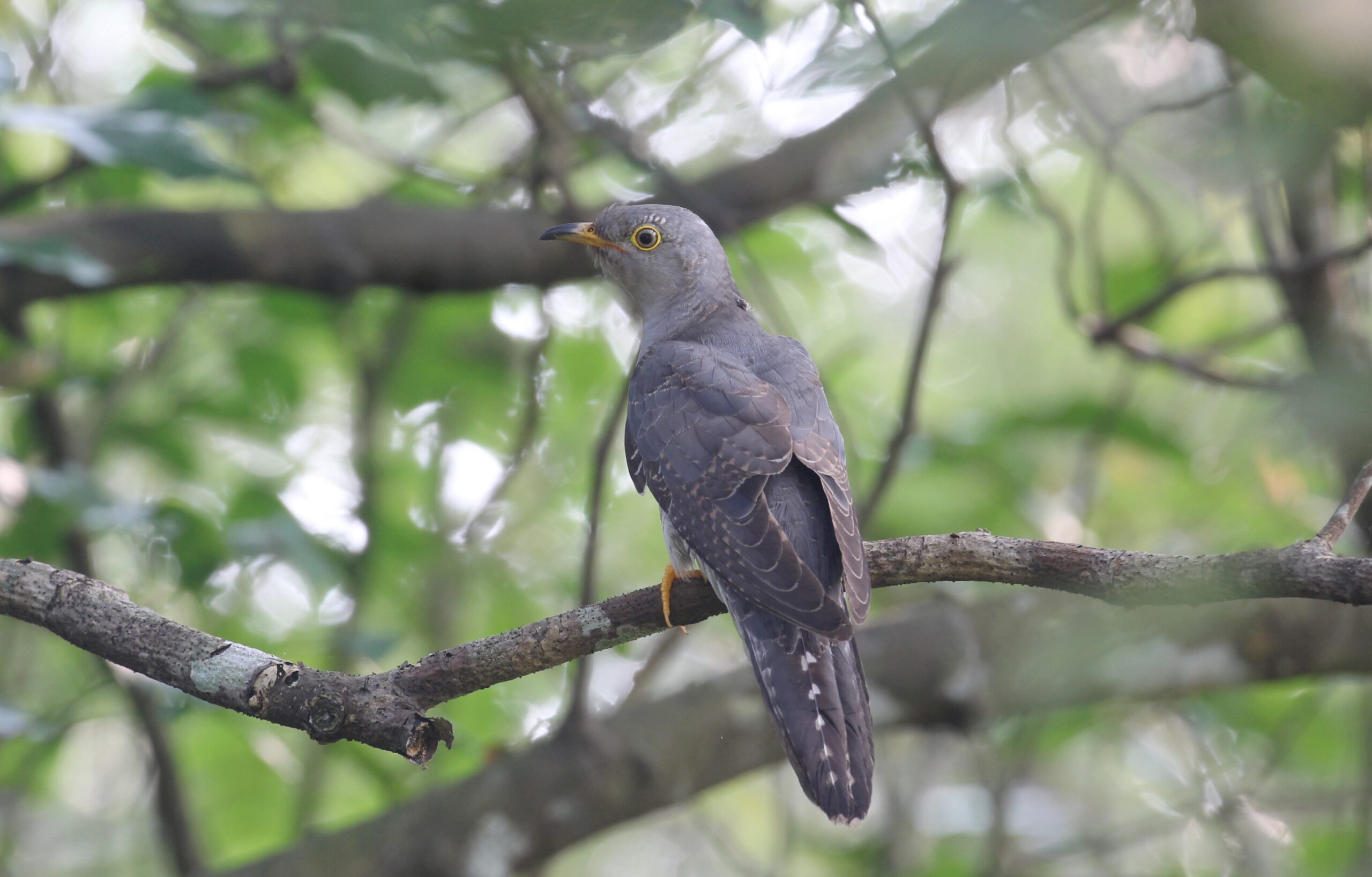
Cuckoo in the Netherlands
📷 Shino jacob koottanad, CC BY-SA 4.0 (Wikimedia Commons)

Where to see the Common Cuckoo in the Netherlands

Cuculus canorus · Common Cuckoo

With luck 🦅 Bird

Where and when do you see a Common Cuckoo? With some luck you can see this species, from April to June.

How do you recognise a Common Cuckoo?

Length 32 to 33 cm, wingspan 66 cm. A slender grey bird that in flight closely resembles a sparrowhawk: pointed wings, a long tail and a fast, low flight. The difference is in the wingbeat, which on a cuckoo stays below the body, and in the soft yellow eye-ring. Everyone knows its call; the female gives a bubbling sound instead.

What does a Common Cuckoo sound like?

Recording: Vladimir Yu. Arkhipov, Arkhivov, CC BY-SA 3.0, via Wikimedia Commons

Where do you see this species in the Netherlands?

The whole of the Netherlands, with the emphasis on reedland, heath, dunes and half-open landscape, precisely where its host birds breed.

Habitat: Open and half-open terrain with plenty of songbirds it can use as hosts: sedge warblers, meadow pipits, dunnocks and wagtails.

This is a common, widespread species: you can come across it in far more places than the areas listed below. Treat that list as a starting point rather than a full survey.

How certain is this? verified chance per source presence reported Links that do not clear the bottom threshold are not published. How we decide that.

📍 Onlanden & Leekstermeer

With luck chance per source
Natuurmonumenten
Nationwide period: April to June is the period in which you hear it; the call falls almost silent once the eggs have been laid. Adults leave for Africa as early as July, well before their young do.

📍 Naardermeer

With luck chance per source
De Visdief · birdwatching guide
Nationwide period: April to June is the period in which you hear it; the call falls almost silent once the eggs have been laid. Adults leave for Africa as early as July, well before their young do.

📍 Nationaal Park De Biesbosch

With luck chance per source
De Visdief · birdwatching guide to Biesbosch
Nationwide period: April to June is the period in which you hear it; the call falls almost silent once the eggs have been laid. Adults leave for Africa as early as July, well before their young do.

📍 Sint-Pietersberg & Zuid-Limburg

With luck chance per source
De Visdief · birdwatching guide to Sint-Pietersberg
Nationwide period: April to June is the period in which you hear it; the call falls almost silent once the eggs have been laid. Adults leave for Africa as early as July, well before their young do.

📍 Nationaal Park Veluwezoom

Good chance in season chance per source
De Visdief
Nationwide period: April to June is the period in which you hear it; the call falls almost silent once the eggs have been laid. Adults leave for Africa as early as July, well before their young do.

📍 Blauwe Kamer

presence reported
NDFF open data
Nationwide period: April to June is the period in which you hear it; the call falls almost silent once the eggs have been laid. Adults leave for Africa as early as July, well before their young do.

📍 Zouweboezem

presence reported
NDFF open data
Nationwide period: April to June is the period in which you hear it; the call falls almost silent once the eggs have been laid. Adults leave for Africa as early as July, well before their young do.

📍 Oostelijke Vechtplassen

presence reported
NDFF open data
Nationwide period: April to June is the period in which you hear it; the call falls almost silent once the eggs have been laid. Adults leave for Africa as early as July, well before their young do.
NDFF open data
Nationwide period: April to June is the period in which you hear it; the call falls almost silent once the eggs have been laid. Adults leave for Africa as early as July, well before their young do.

📍 Wormer- en Jisperveld

presence reported
NDFF open data
Nationwide period: April to June is the period in which you hear it; the call falls almost silent once the eggs have been laid. Adults leave for Africa as early as July, well before their young do.

📍 Ilperveld

presence reported
NDFF open data
Nationwide period: April to June is the period in which you hear it; the call falls almost silent once the eggs have been laid. Adults leave for Africa as early as July, well before their young do.

📍 De Dollard

presence reported
NDFF open data
Nationwide period: April to June is the period in which you hear it; the call falls almost silent once the eggs have been laid. Adults leave for Africa as early as July, well before their young do.
NDFF open data
Nationwide period: April to June is the period in which you hear it; the call falls almost silent once the eggs have been laid. Adults leave for Africa as early as July, well before their young do.

📍 Meijendel & Berkheide

presence reported
NDFF open data, 5.802 records 2016-2026
Nationwide period: April to June is the period in which you hear it; the call falls almost silent once the eggs have been laid. Adults leave for Africa as early as July, well before their young do.

📍 Voornes Duin

presence reported
NDFF open data, 322 records 2016-2026
Nationwide period: April to June is the period in which you hear it; the call falls almost silent once the eggs have been laid. Adults leave for Africa as early as July, well before their young do.
NDFF open data, 4.984 records 2016-2026
Nationwide period: April to June is the period in which you hear it; the call falls almost silent once the eggs have been laid. Adults leave for Africa as early as July, well before their young do.

📍 De Maashorst

presence reported
NDFF open data, 830 records 2016-2026
Nationwide period: April to June is the period in which you hear it; the call falls almost silent once the eggs have been laid. Adults leave for Africa as early as July, well before their young do.
NDFF open data, 2.044 records 2016-2026
Nationwide period: April to June is the period in which you hear it; the call falls almost silent once the eggs have been laid. Adults leave for Africa as early as July, well before their young do.

📍 Loonse en Drunense Duinen

presence reported
NDFF open data, 1.366 records 2016-2026
Nationwide period: April to June is the period in which you hear it; the call falls almost silent once the eggs have been laid. Adults leave for Africa as early as July, well before their young do.

📍 Schoorlse Duinen

presence reported
NDFF open data, 1.022 records 2016-2026
Nationwide period: April to June is the period in which you hear it; the call falls almost silent once the eggs have been laid. Adults leave for Africa as early as July, well before their young do.

📍 De Putten bij Camperduin

presence reported
NDFF open data, 288 records 2016-2026
Nationwide period: April to June is the period in which you hear it; the call falls almost silent once the eggs have been laid. Adults leave for Africa as early as July, well before their young do.

These links come straight from our database, with the chance, the source and the evidence level for each area.

When is the best time?

Green = present · orange = peak period. The bar is generated from our database.

Best period: April to June is the period in which you hear it; the call falls almost silent once the eggs have been laid. Adults leave for Africa as early as July, well before their young do.

Best time of day: The morning, when it calls most. For the rest of the day it is hard to find, because it sits still on a lookout perch for long periods.

Recent sightings

👁️ Where has this species been seen recently?

Check the current sightings on Waarneming.nl. A useful addition to our own verified information.

Current sightings on Waarneming.nl →

How to improve your chances

  • Learn the calls first. You will hear most birds before you see them.
  • Go in the first hour after sunrise, when the song is at its peak and the wind is still down.
  • Use a hide or natural cover. Sitting still gets you more than walking closer.
  • Keep the sun behind you. Against the light you see a silhouette and no colour.

🎒 What you need for this

By sound; binoculars

🌿 Watching responsibly

Keep your distance, stay on the paths, and never lure animals with food or sound. Leave as soon as an animal becomes uneasy.

Sources: Sovon; Vogelbescherming Nederland (vogelgids), geraadpleegd 02-11-2026
Status: Verified · Last checked: 2026-08-08

More photos
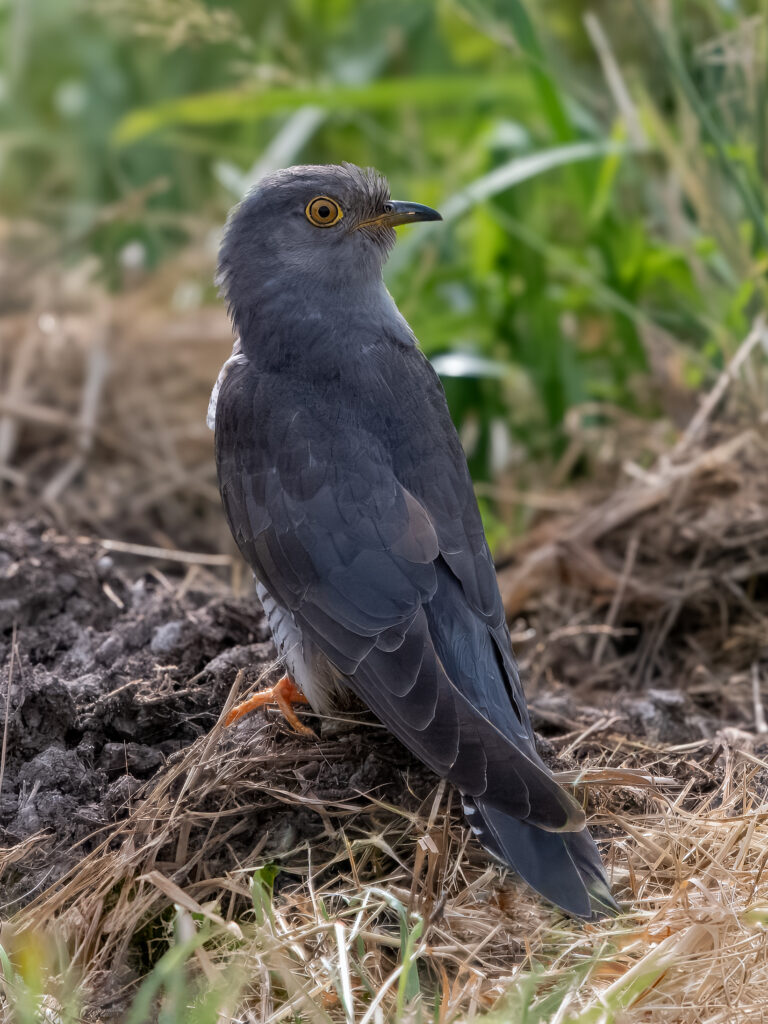
Koekoek
Photo: Reinhold Möller Ermell, CC BY-SA 4.0 (Wikimedia Commons)