🛡️ No exact locations, on purpose
This is a sensitive species. We deliberately show no nest sites, and during the breeding season (March to July) we are extra careful about exact spots. Why we do that.
Where and when do you see a Barn Owl? With some luck you can see this species, all year round.
How do you recognise a Barn Owl?
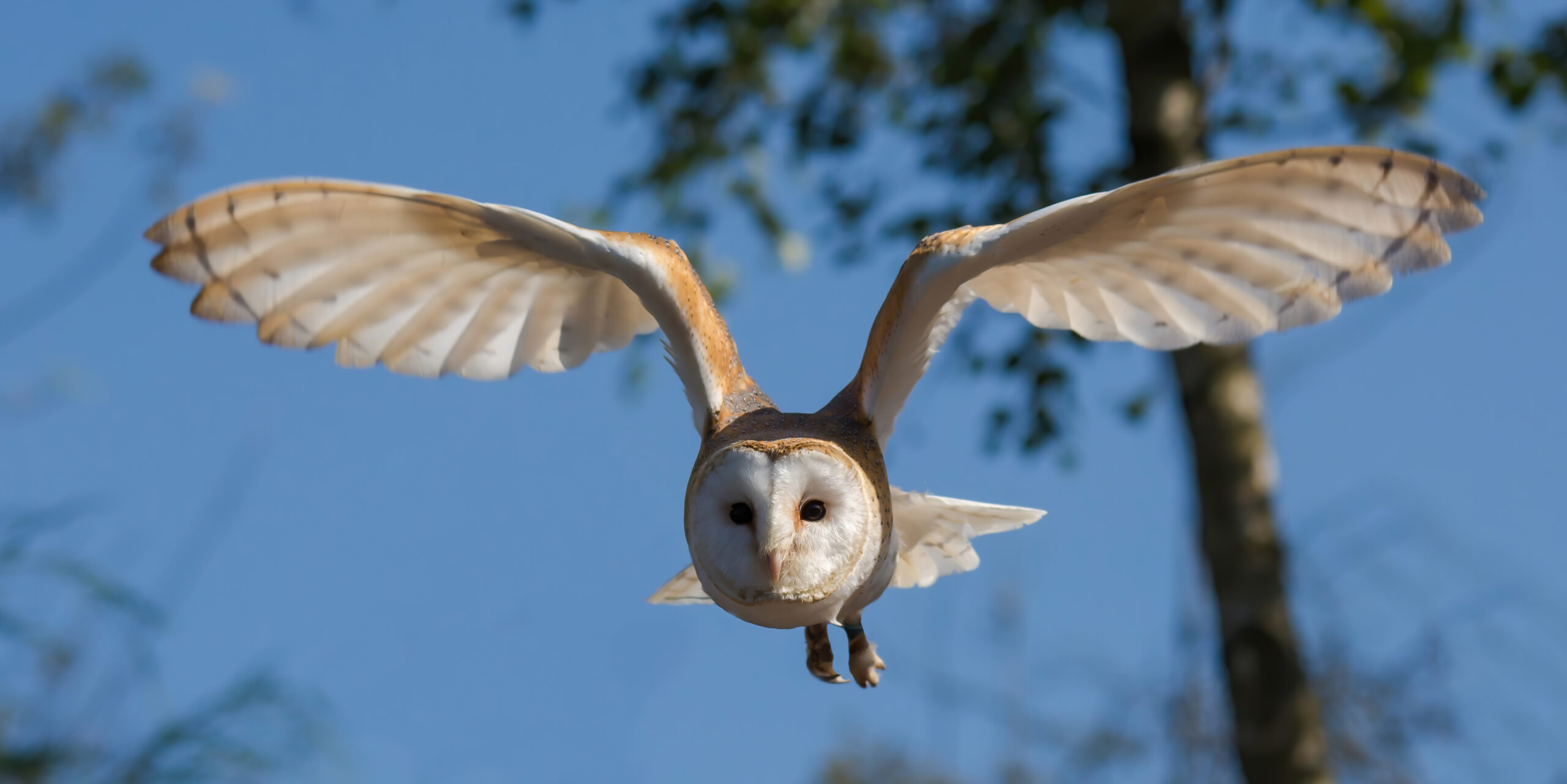
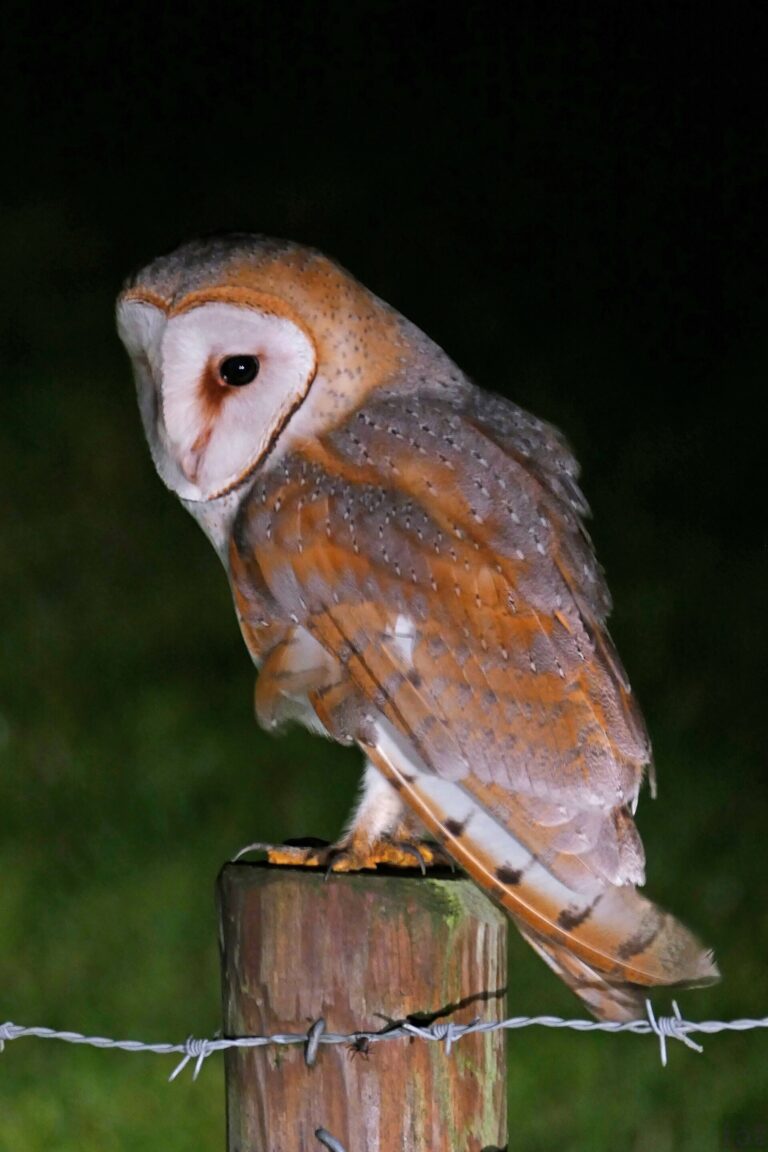
Unmistakable for its heart-shaped, white facial disc. The upperside is golden brown with grey speckling, the underside almost white. Length 33 to 39 centimetres, wingspan 82 to 99 centimetres. In the light of headlights it looks snow white, which makes it surprisingly conspicuous in the dark.
What can you confuse a Barn Owl with?
Looks like: Little Owl, Tawny Owl
- Little Owl: Far smaller, brown with white streaks and bright yellow eyes under pale eyebrows.
- Tawny Owl: Larger and grey to rusty brown, with dark eyes and without the white facial disc.
What does a Barn Owl sound like?
Where do you see this species in the Netherlands?
Scattered across farmland throughout the Netherlands, present all year. The breeding population swings strongly with the supply of common voles.
How certain is this? verified chance per source presence reported Links that do not clear the bottom threshold are not published. How we decide that.
De Visdief · birdwatching guide to Biesbosch
Nationwide period: Present all year. The breeding season runs from February to sometimes well into autumn; in vole-rich years there are more breeding pairs and more second clutches.
Vogelwerkgroep Nijmegen · area description
Nationwide period: Present all year. The breeding season runs from February to sometimes well into autumn; in vole-rich years there are more breeding pairs and more second clutches.
NDFF open data
Nationwide period: Present all year. The breeding season runs from February to sometimes well into autumn; in vole-rich years there are more breeding pairs and more second clutches.
NDFF open data
Nationwide period: Present all year. The breeding season runs from February to sometimes well into autumn; in vole-rich years there are more breeding pairs and more second clutches.
NDFF open data
Nationwide period: Present all year. The breeding season runs from February to sometimes well into autumn; in vole-rich years there are more breeding pairs and more second clutches.
NDFF open data
Nationwide period: Present all year. The breeding season runs from February to sometimes well into autumn; in vole-rich years there are more breeding pairs and more second clutches.
NDFF open data
Nationwide period: Present all year. The breeding season runs from February to sometimes well into autumn; in vole-rich years there are more breeding pairs and more second clutches.
NDFF open data
Nationwide period: Present all year. The breeding season runs from February to sometimes well into autumn; in vole-rich years there are more breeding pairs and more second clutches.
NDFF open data
Nationwide period: Present all year. The breeding season runs from February to sometimes well into autumn; in vole-rich years there are more breeding pairs and more second clutches.
NDFF open data
Nationwide period: Present all year. The breeding season runs from February to sometimes well into autumn; in vole-rich years there are more breeding pairs and more second clutches.
NDFF open data
Nationwide period: Present all year. The breeding season runs from February to sometimes well into autumn; in vole-rich years there are more breeding pairs and more second clutches.
NDFF open data, 2.346 records 2016-2026
Nationwide period: Present all year. The breeding season runs from February to sometimes well into autumn; in vole-rich years there are more breeding pairs and more second clutches.
NDFF open data, 198 records 2016-2026
Nationwide period: Present all year. The breeding season runs from February to sometimes well into autumn; in vole-rich years there are more breeding pairs and more second clutches.
NDFF open data, 496 records 2016-2026
Nationwide period: Present all year. The breeding season runs from February to sometimes well into autumn; in vole-rich years there are more breeding pairs and more second clutches.
NDFF open data, 468 records 2016-2026
Nationwide period: Present all year. The breeding season runs from February to sometimes well into autumn; in vole-rich years there are more breeding pairs and more second clutches.
NDFF open data, 454 records 2016-2026
Nationwide period: Present all year. The breeding season runs from February to sometimes well into autumn; in vole-rich years there are more breeding pairs and more second clutches.
NDFF open data, 394 records 2016-2026
Nationwide period: Present all year. The breeding season runs from February to sometimes well into autumn; in vole-rich years there are more breeding pairs and more second clutches.
NDFF open data, 466 records 2016-2026
Nationwide period: Present all year. The breeding season runs from February to sometimes well into autumn; in vole-rich years there are more breeding pairs and more second clutches.
NDFF open data, 669 records 2016-2026
Nationwide period: Present all year. The breeding season runs from February to sometimes well into autumn; in vole-rich years there are more breeding pairs and more second clutches.
NDFF open data, 216 records 2016-2026
Nationwide period: Present all year. The breeding season runs from February to sometimes well into autumn; in vole-rich years there are more breeding pairs and more second clutches.
NDFF open data, 850 records 2016-2026
Nationwide period: Present all year. The breeding season runs from February to sometimes well into autumn; in vole-rich years there are more breeding pairs and more second clutches.
These links come straight from our database, with the chance, the source and the evidence level for each area.
When is the best time?
janfebmaraprmayjunjulaugsepoctnovdec
Green = present · orange = peak period. The bar is generated from our database.
Best period: Present all year. The breeding season runs from February to sometimes well into autumn; in vole-rich years there are more breeding pairs and more second clutches.
Best time of day: Night. As soon as it is dark it goes hunting in the open field, mainly for common voles. Most people see it as a white shape in the headlights along a country road.
Recent sightings
👁️ Where has this species been seen recently?
Check the current sightings on Waarneming.nl. A useful addition to our own verified information.
Current sightings on Waarneming.nl →
Note: for sensitive species the source already blurs or withholds sightings. We do not reproduce exact locations.
How to improve your chances
- Learn the calls first. You will hear most birds before you see them.
- Go in the first hour after sunrise, when the song is at its peak and the wind is still down.
- Use a hide or natural cover. Sitting still gets you more than walking closer.
- Keep the sun behind you. Against the light you see a silhouette and no colour.
🎒 What you need for this
Binoculars; never stake out a breeding site
🌿 Watching responsibly
Keep your distance, stay on the paths, and never lure animals with food or sound. Leave as soon as an animal becomes uneasy.
This is a sensitive species. We deliberately show no nest sites, and during the breeding season (March to July) we are extra careful about exact spots.
Sources: Vogelbescherming Nederland (vogelgids) en Sovon Vogelonderzoek Nederland (soortpagina en telrichtlijn), geraadpleegd 12-08-2026; NDFF Flora & Fauna Verkenner (open data)
Vogelbescherming Nederland, De braakballen spijskaart, geraadpleegd 21-08-2026
Status: Verified · Last checked: 2026-08-08