Where to see the fallow deer in the Netherlands
Easy 🦌 Mammal (land)
Where and when do you see a fallow deer? This species is easy to see, all year round.
How do you recognise a fallow deer?
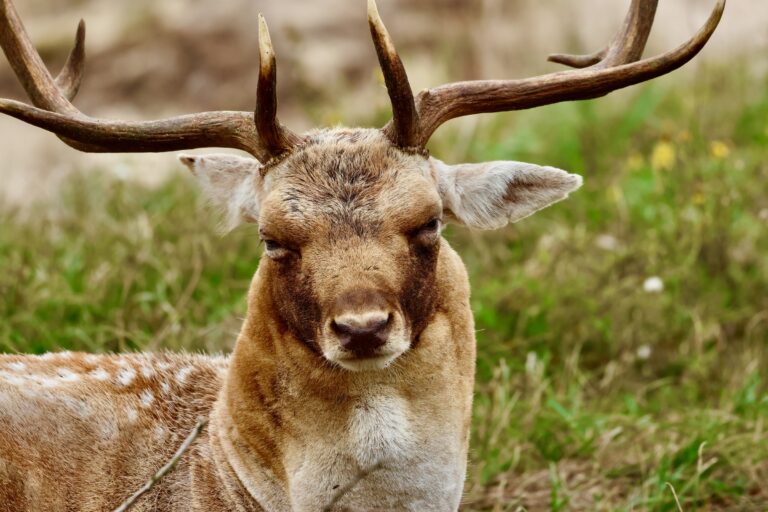
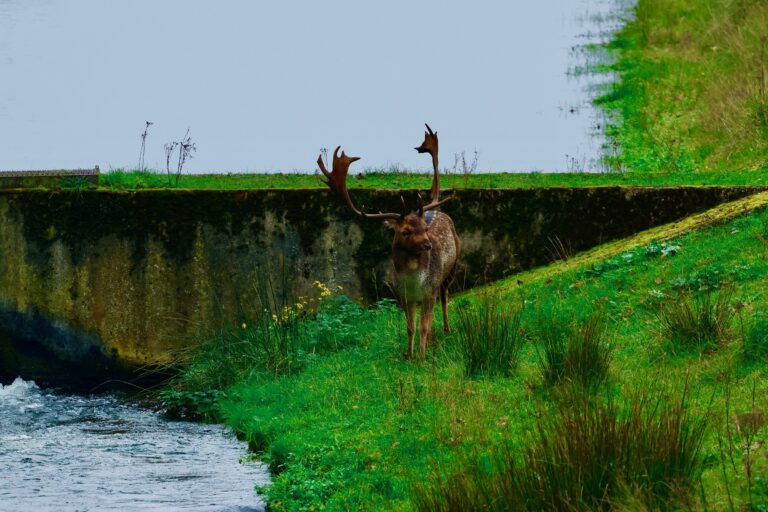
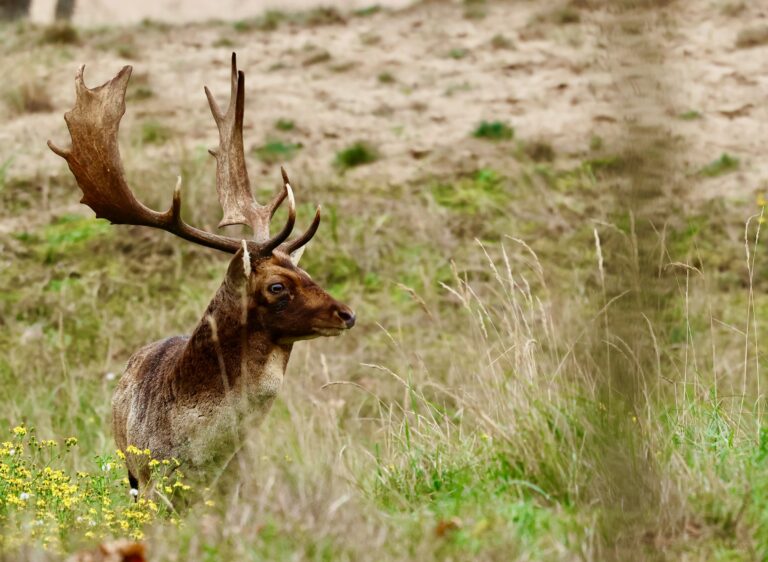
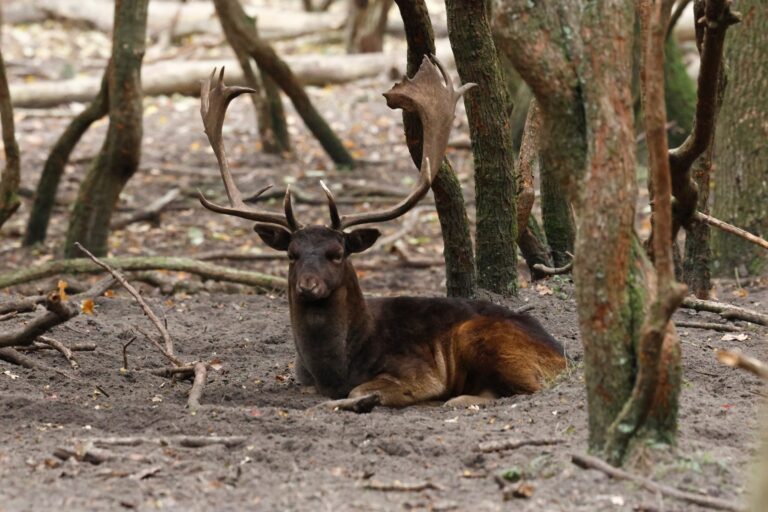
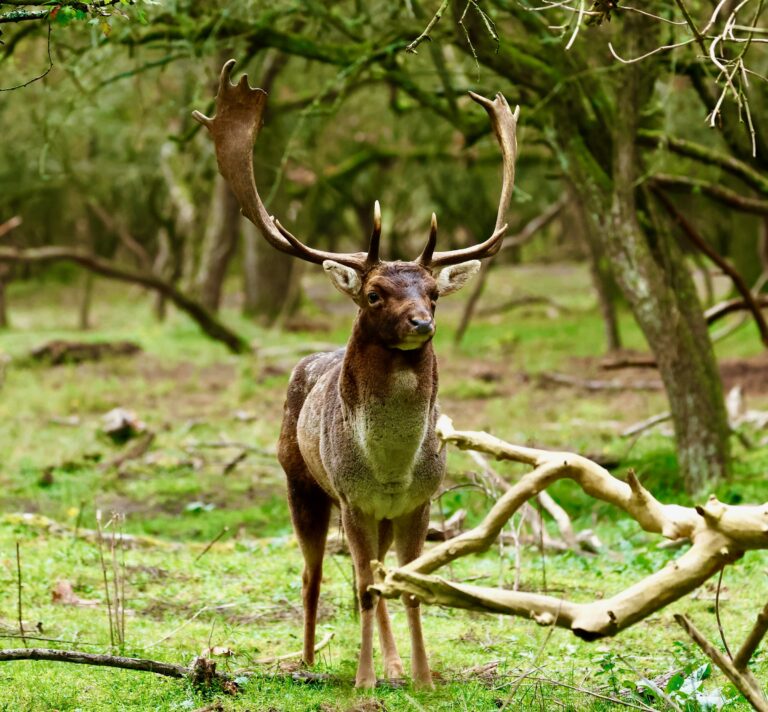
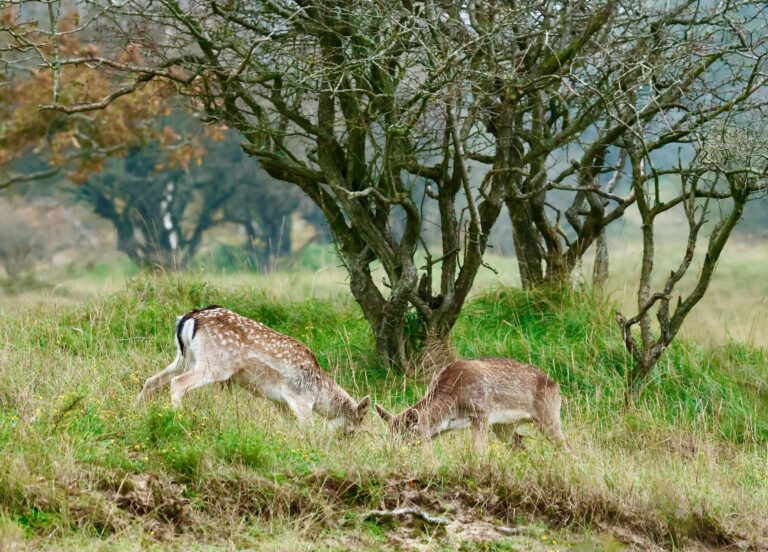
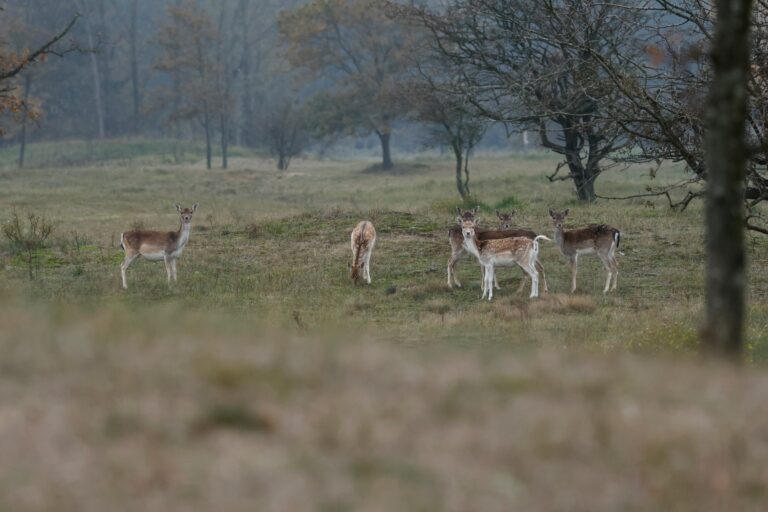
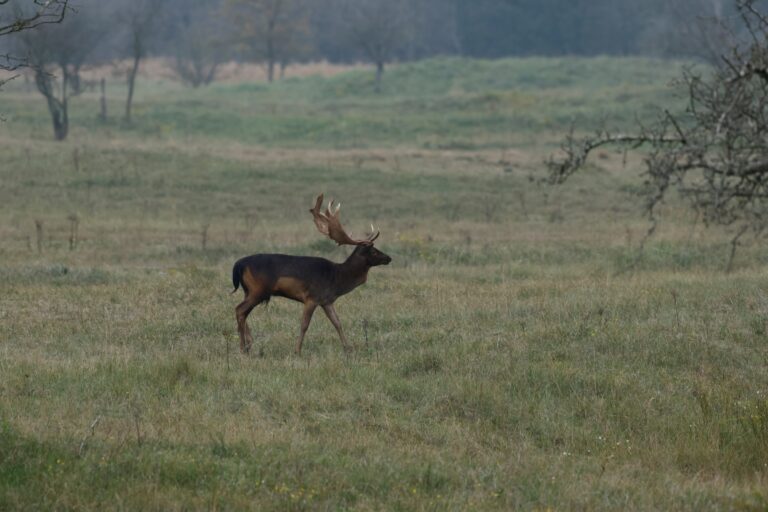
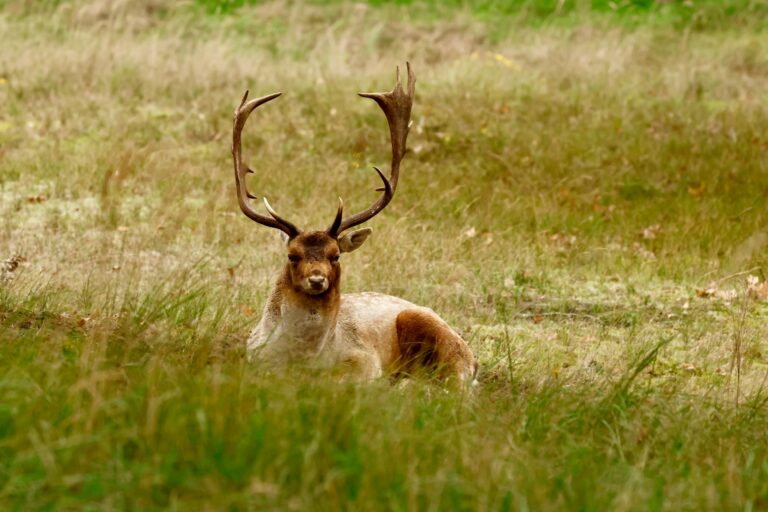
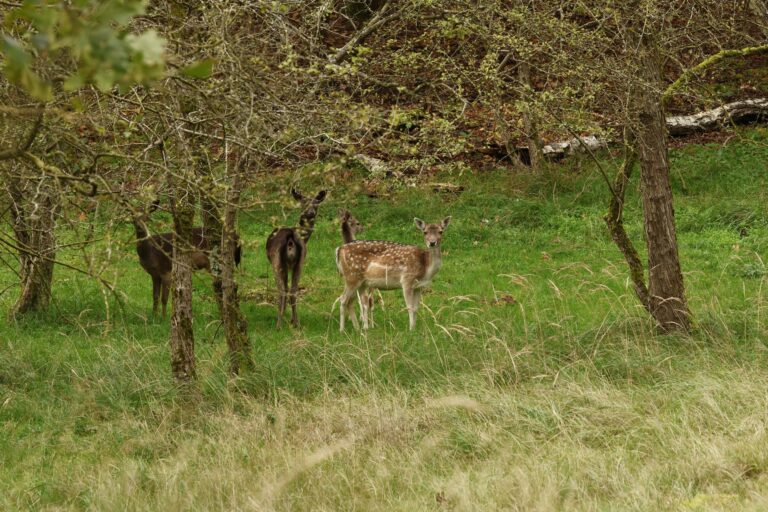
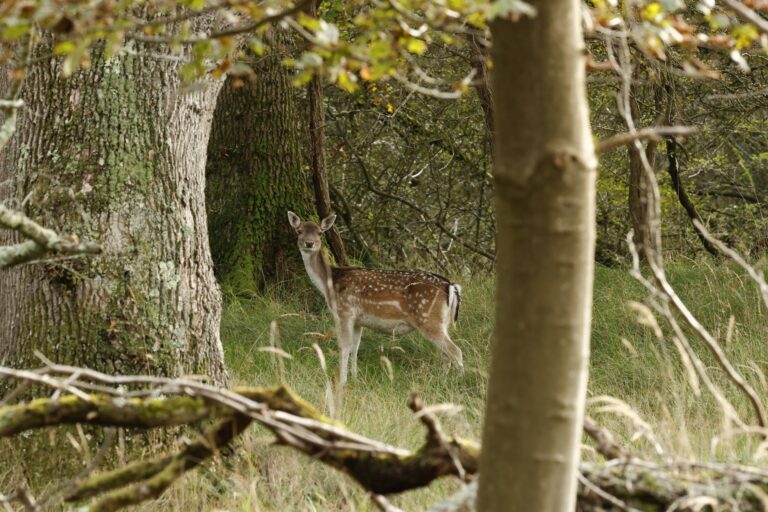
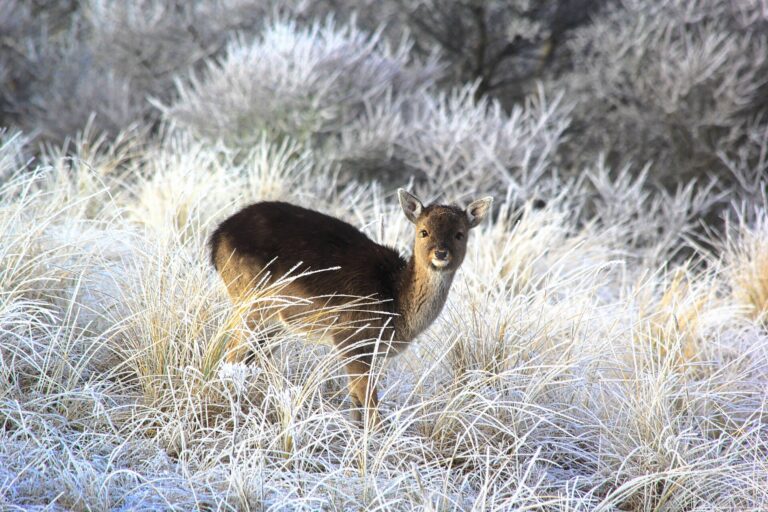
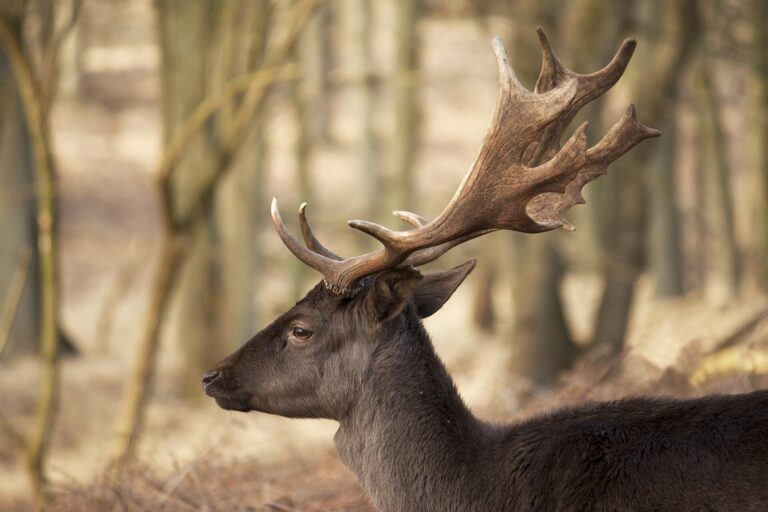
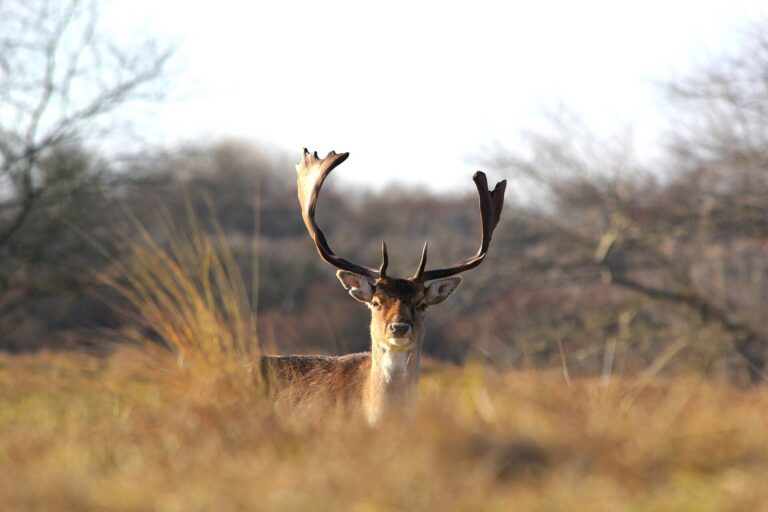
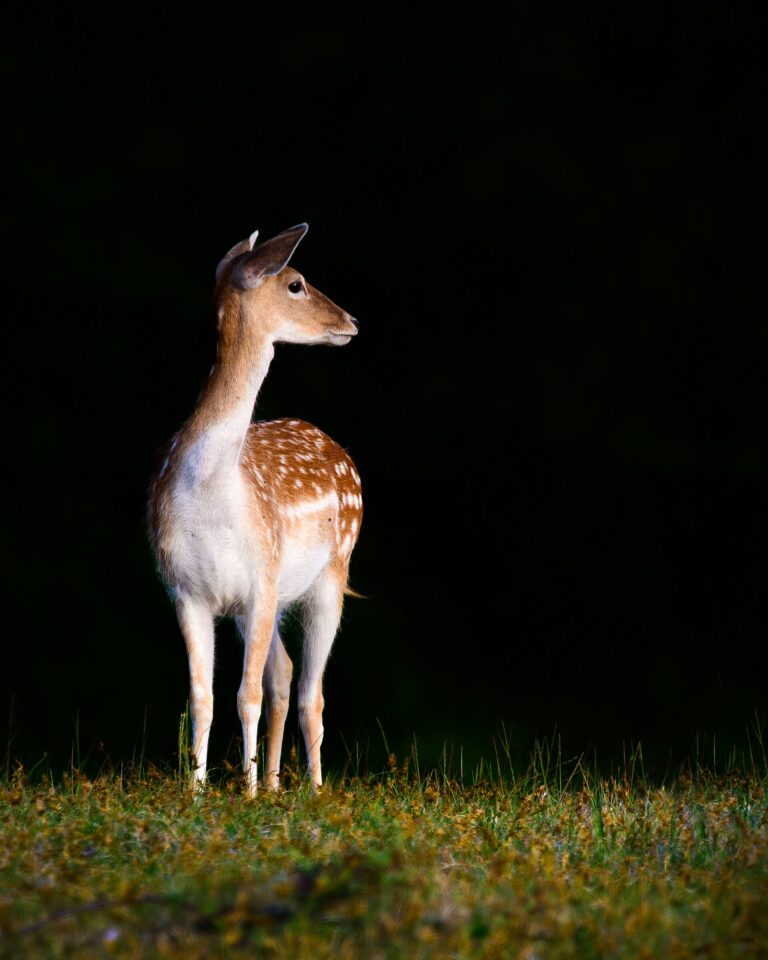
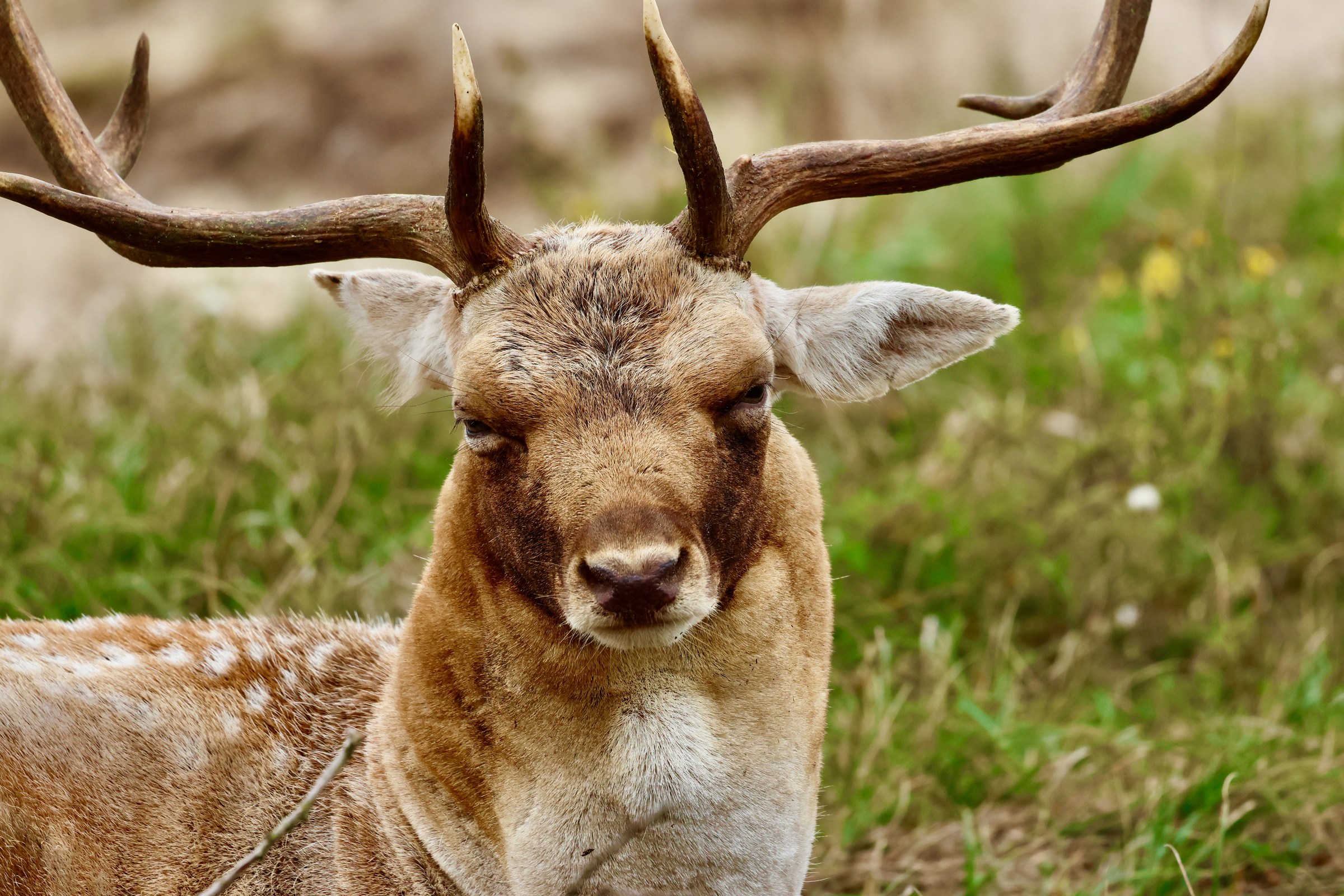
Medium-sized: smaller than a red deer, larger than a roe deer. The coat is usually red-brown with white spots, but there are near-white and very dark animals walking about too — natural variation within the same species. The buck’s antlers are unmistakable: not branches but broad, flattened palms.
What can you confuse a fallow deer with?
Looks like: Roe deer, Red deer, Sika deer
- Roe deer: smaller and more slender, about knee height, without spots and without a long tail.
- Red deer: larger and a plain red-brown to greyish brown; the stag has branched antlers where the fallow buck carries palms.
- Sika deer: the same size and also spotted, but with a white rump patch edged in dark, and antlers with tines instead of palms.
What does a fallow deer sound like?
Recording: British Library, CC BY-SA 4.0, via Wikimedia Commons
What tracks does a fallow deer leave?
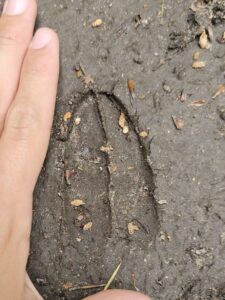
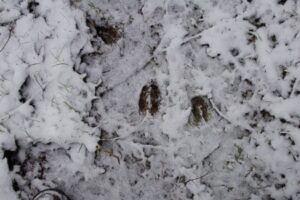
Tracks: about 5 by 8 cm for a buck, 3.5 to 4 by 5 to 6 cm for a doe. Droppings: about 15 mm long, acorn-shaped, dark green to black. You will also find bark stripped with the tooth marks still in it, and fraying — scratches from antler tips on young trees, usually around a metre up. Fresh, pale fraying in October means a buck has been at work there recently.
Where do you see this species in the Netherlands?
The dunes behind Zandvoort and Bloemendaal are the stronghold: in the Amsterdamse Waterleidingduinen and the Kennemerduinen there are so many that you can hardly avoid them. Also on the Veluwe and locally elsewhere.
📍 Amsterdamse Waterleidingduinen
Good chance chance per source📍 Nationaal Park Zuid-Kennemerland
Good chance chance per source📍 Nationaal Park De Hoge Veluwe
With luck verified📍 Nationaal Park Veluwezoom
With luck chance per source📍 Kroondomein Het Loo
With luck chance per source📍 Deelerwoude
Good chance verified📍 Nationaal Park Duinen van Texel
presence reported📍 Nationaal Park Drents-Friese Wold
presence reported📍 Nationaal Park Lauwersmeer
presence reported📍 Leuvenumse Bossen
presence reported📍 Blauwe Kamer
presence reported📍 Oostelijke Vechtplassen
presence reported📍 Noordhollands Duinreservaat
presence reported📍 Meijendel & Berkheide
presence reported📍 Kampina & Oisterwijkse Vennen
presence reported📍 Strabrechtse Heide & Beuven
presence reportedThese links come straight from our database, with the chance, the source and the evidence level for each area.
When is the best time?
Green = present · orange = peak period. The bar is generated from our database.
Best period: Easy to see all year. The rut falls in October, a few weeks later than the red deer. Bucks then gather at traditional rutting stands they use year after year; the sound is a raw, rasping groan, quite unlike a red deer’s roar.
Best time of day: Morning and evening twilight give the best light and the most active animals, but in quiet dune areas the fallow deer shows itself in the middle of the day as well — one of the few large mammals you do not have to get up early for.
Recent sightings
👁️ Where has this species been seen recently?
Check the current sightings on Waarneming.nl. A useful addition to our own verified information.
How to improve your chances
- Keep the wind in your face. Most mammals will smell you long before they see you.
- Arrive before sunrise and then stay put. Sitting still beats walking about.
- Wear muted colours, skip the scent, and put your phone on silent.
- Be patient. Expect to come back more than once before it works.
🎒 What you need for this
Binoculars, 8x42.
🌿 Watching responsibly
Keep your distance, stay on the paths, and never lure animals with food or sound. Leave as soon as an animal becomes uneasy.
Status: Verified · Last checked: 2026-10-21
More photos