
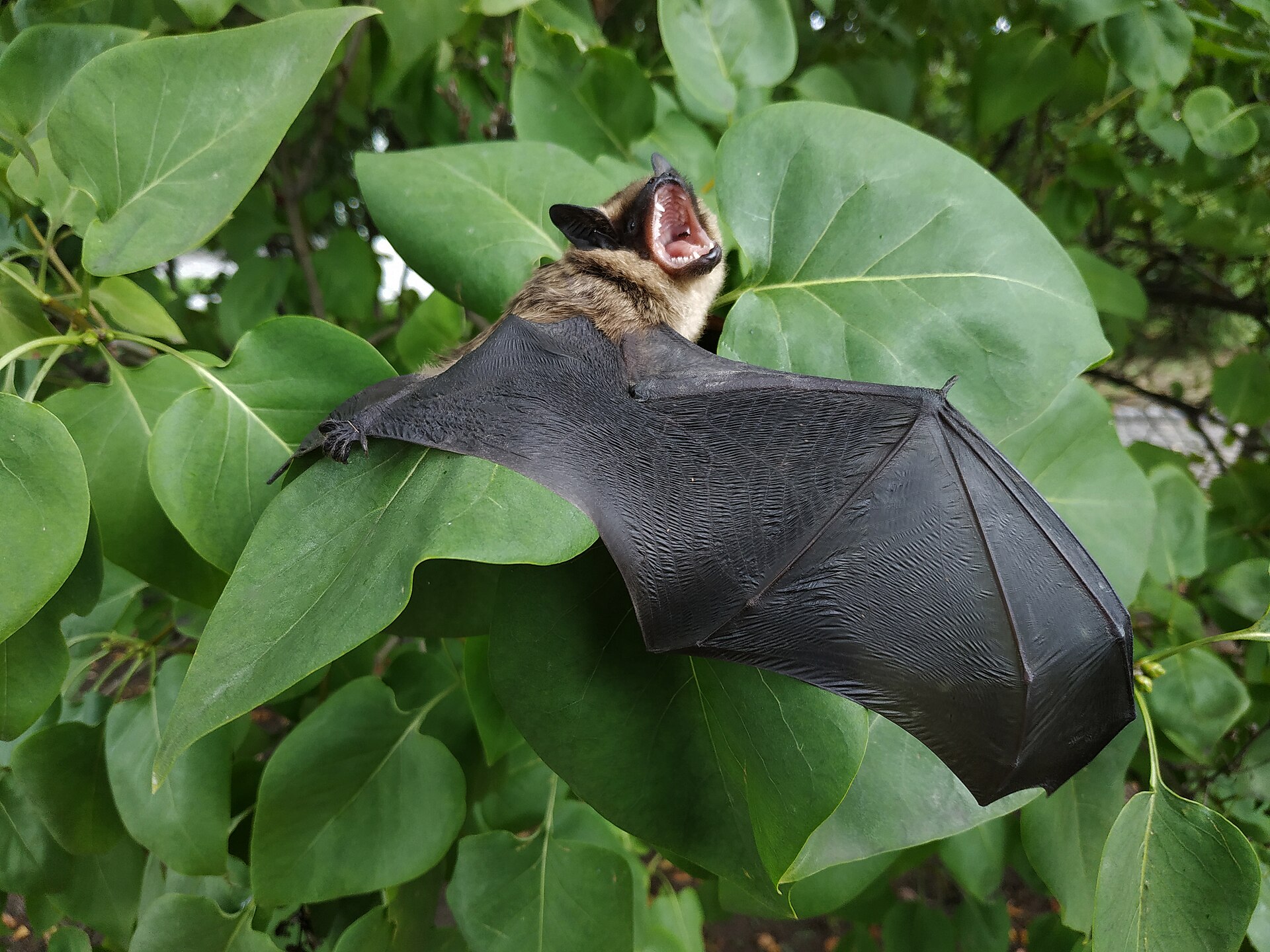
Serotine bat
📷 Purpleowlfly, CC BY 4.0 (Wikimedia Commons)

Where to see the serotine bat in the Netherlands

Eptesicus serotinus · Serotine bat

Rare 🦇 Mammal (bat) Sensitive species · R2

🛡️ No exact locations, on purpose

This is a sensitive species. We deliberately show no resting places such as setts, burrows or winter roosts, and no photographs in which such a place is recognisable. Why we do that.

Where and when do you see a serotine bat? This species is rarely seen, from April to October.

How do you recognise a serotine bat?

One of the largest bats in the Netherlands, with broad wings and a slow, heavy flight that brings a bird to mind rather than a pipistrelle. It appears early in the dusk, which makes its Dutch name laatvlieger, late flier, misleading: it is in fact one of the first to emerge.

What can you confuse a serotine bat with?

Looks like: Common noctule, Common pipistrelle

  • Common noctule: The noctule flies higher and faster on narrow pointed wings; the serotine has broad wings and a heavy, slow flight along woodland edges and street lamps.
  • Common pipistrelle: Size decides it: the serotine is one of our largest bats, the pipistrelle one of the smallest.

What does a serotine bat sound like?

Recording: XN, CC BY-SA 3.0, via Wikimedia Commons

What tracks does a serotine bat leave?

Droppings: 3 to 3.5 mm across, 6 to 14 mm long. In practice this is the only trace a bat leaves, and they cannot be identified to species: Zodion calls bat droppings very hard to put a name to. Because bats eat nothing but insects, the droppings consist entirely of insect remains and not of plant material, and that is how you tell them from mouse droppings of the same size. If you want to know which species is flying, sound will get you further than traces.

Where do you see this species in the Netherlands?

The whole of the Netherlands, above all villages and towns. It is a pronounced building dweller.

Habitat: Built-up areas with cavity walls, eaves and crevices in buildings to roost in, and gardens, tree-lined avenues and meadows around them to hunt over.

This is a common, widespread species: you can come across it in far more places than the areas listed below. Treat that list as a starting point rather than a full survey.

How certain is this? verified chance per source presence reported Links that do not clear the bottom threshold are not published. How we decide that.
NDFF open data, 13 records 2016-2026
Nationwide period: April to October, with the summer months as the best period. In winter it hibernates, usually in the cavity walls of buildings rather than in cellars.
NDFF open data, 854 records 2016-2026
Nationwide period: April to October, with the summer months as the best period. In winter it hibernates, usually in the cavity walls of buildings rather than in cellars.

📍 Nationaal Park Veluwezoom

presence reported
NDFF open data, 548 records 2016-2026
Nationwide period: April to October, with the summer months as the best period. In winter it hibernates, usually in the cavity walls of buildings rather than in cellars.

📍 Oostvaardersplassen

presence reported
NDFF open data, 18 records 2016-2026
Nationwide period: April to October, with the summer months as the best period. In winter it hibernates, usually in the cavity walls of buildings rather than in cellars.
NDFF open data, 22 records 2016-2026
Nationwide period: April to October, with the summer months as the best period. In winter it hibernates, usually in the cavity walls of buildings rather than in cellars.
NDFF open data, 141 records 2016-2026
Nationwide period: April to October, with the summer months as the best period. In winter it hibernates, usually in the cavity walls of buildings rather than in cellars.
NDFF open data, 127 records 2016-2026
Nationwide period: April to October, with the summer months as the best period. In winter it hibernates, usually in the cavity walls of buildings rather than in cellars.
NDFF open data, 20 records 2016-2026
Nationwide period: April to October, with the summer months as the best period. In winter it hibernates, usually in the cavity walls of buildings rather than in cellars.
NDFF open data, 85 records 2016-2026
Nationwide period: April to October, with the summer months as the best period. In winter it hibernates, usually in the cavity walls of buildings rather than in cellars.
NDFF open data, 571 records 2016-2026
Nationwide period: April to October, with the summer months as the best period. In winter it hibernates, usually in the cavity walls of buildings rather than in cellars.
NDFF open data, 71 records 2016-2026
Nationwide period: April to October, with the summer months as the best period. In winter it hibernates, usually in the cavity walls of buildings rather than in cellars.
NDFF open data, 39 records 2016-2026
Nationwide period: April to October, with the summer months as the best period. In winter it hibernates, usually in the cavity walls of buildings rather than in cellars.
NDFF open data, 19 records 2016-2026
Nationwide period: April to October, with the summer months as the best period. In winter it hibernates, usually in the cavity walls of buildings rather than in cellars.
NDFF open data, 180 records 2016-2026
Nationwide period: April to October, with the summer months as the best period. In winter it hibernates, usually in the cavity walls of buildings rather than in cellars.

📍 Nationaal Park De Meinweg

presence reported
NDFF open data, 429 records 2016-2026
Nationwide period: April to October, with the summer months as the best period. In winter it hibernates, usually in the cavity walls of buildings rather than in cellars.
NDFF open data, 1.007 records 2016-2026
Nationwide period: April to October, with the summer months as the best period. In winter it hibernates, usually in the cavity walls of buildings rather than in cellars.
NDFF open data, 216 records 2016-2026
Nationwide period: April to October, with the summer months as the best period. In winter it hibernates, usually in the cavity walls of buildings rather than in cellars.

📍 Fochteloërveen

presence reported
NDFF open data, 209 records 2016-2026
Nationwide period: April to October, with the summer months as the best period. In winter it hibernates, usually in the cavity walls of buildings rather than in cellars.
NDFF open data, 321 records 2016-2026
Nationwide period: April to October, with the summer months as the best period. In winter it hibernates, usually in the cavity walls of buildings rather than in cellars.

📍 Kroondomein Het Loo

presence reported
NDFF open data, 169 records 2016-2026
Nationwide period: April to October, with the summer months as the best period. In winter it hibernates, usually in the cavity walls of buildings rather than in cellars.

📍 Deelerwoude

presence reported
NDFF open data, 14 records 2016-2026
Nationwide period: April to October, with the summer months as the best period. In winter it hibernates, usually in the cavity walls of buildings rather than in cellars.

📍 Naardermeer

presence reported
NDFF open data, 320 records 2016-2026
Nationwide period: April to October, with the summer months as the best period. In winter it hibernates, usually in the cavity walls of buildings rather than in cellars.

📍 Onlanden & Leekstermeer

presence reported
NDFF open data, 981 records 2016-2026
Nationwide period: April to October, with the summer months as the best period. In winter it hibernates, usually in the cavity walls of buildings rather than in cellars.
NDFF open data, 37 records 2016-2026
Nationwide period: April to October, with the summer months as the best period. In winter it hibernates, usually in the cavity walls of buildings rather than in cellars.

📍 Planken Wambuis

presence reported
NDFF open data, 743 records 2016-2026
Nationwide period: April to October, with the summer months as the best period. In winter it hibernates, usually in the cavity walls of buildings rather than in cellars.

📍 Leuvenumse Bossen

presence reported
NDFF open data, 75 records 2016-2026
Nationwide period: April to October, with the summer months as the best period. In winter it hibernates, usually in the cavity walls of buildings rather than in cellars.

📍 Blauwe Kamer

presence reported
NDFF open data
Nationwide period: April to October, with the summer months as the best period. In winter it hibernates, usually in the cavity walls of buildings rather than in cellars.

📍 Oostelijke Vechtplassen

presence reported
NDFF open data
Nationwide period: April to October, with the summer months as the best period. In winter it hibernates, usually in the cavity walls of buildings rather than in cellars.
NDFF open data
Nationwide period: April to October, with the summer months as the best period. In winter it hibernates, usually in the cavity walls of buildings rather than in cellars.

📍 Wormer- en Jisperveld

presence reported
NDFF open data
Nationwide period: April to October, with the summer months as the best period. In winter it hibernates, usually in the cavity walls of buildings rather than in cellars.

📍 Ilperveld

presence reported
NDFF open data
Nationwide period: April to October, with the summer months as the best period. In winter it hibernates, usually in the cavity walls of buildings rather than in cellars.
NDFF open data
Nationwide period: April to October, with the summer months as the best period. In winter it hibernates, usually in the cavity walls of buildings rather than in cellars.

📍 Landgoed Ennemaborg

presence reported
NDFF open data
Nationwide period: April to October, with the summer months as the best period. In winter it hibernates, usually in the cavity walls of buildings rather than in cellars.

📍 Meijendel & Berkheide

presence reported
NDFF open data, 334 records 2016-2026
Nationwide period: April to October, with the summer months as the best period. In winter it hibernates, usually in the cavity walls of buildings rather than in cellars.

📍 Voornes Duin

presence reported
NDFF open data, 284 records 2016-2026
Nationwide period: April to October, with the summer months as the best period. In winter it hibernates, usually in the cavity walls of buildings rather than in cellars.
NDFF open data, 357 records 2016-2026
Nationwide period: April to October, with the summer months as the best period. In winter it hibernates, usually in the cavity walls of buildings rather than in cellars.

📍 De Maashorst

presence reported
NDFF open data, 139 records 2016-2026
Nationwide period: April to October, with the summer months as the best period. In winter it hibernates, usually in the cavity walls of buildings rather than in cellars.
NDFF open data, 312 records 2016-2026
Nationwide period: April to October, with the summer months as the best period. In winter it hibernates, usually in the cavity walls of buildings rather than in cellars.

📍 Loonse en Drunense Duinen

presence reported
NDFF open data, 562 records 2016-2026
Nationwide period: April to October, with the summer months as the best period. In winter it hibernates, usually in the cavity walls of buildings rather than in cellars.

📍 Schoorlse Duinen

presence reported
NDFF open data, 451 records 2016-2026
Nationwide period: April to October, with the summer months as the best period. In winter it hibernates, usually in the cavity walls of buildings rather than in cellars.

📍 De Putten bij Camperduin

presence reported
NDFF open data, 16 records 2016-2026
Nationwide period: April to October, with the summer months as the best period. In winter it hibernates, usually in the cavity walls of buildings rather than in cellars.

These links come straight from our database, with the chance, the source and the evidence level for each area.

When is the best time?

Green = present · orange = peak period. The bar is generated from our database.

Best period: April to October, with the summer months as the best period. In winter it hibernates, usually in the cavity walls of buildings rather than in cellars.

Best time of day: Dusk, shortly after sunset. It is one of the first bats to appear, often while the light is still reasonable.

Recent sightings

👁️ Where has this species been seen recently?

Check the current sightings on Waarneming.nl. A useful addition to our own verified information.

Current sightings on Waarneming.nl →

Note: for sensitive species the source already blurs or withholds sightings. We do not reproduce exact locations.

How to improve your chances

  • Keep the wind in your face. Most mammals will smell you long before they see you.
  • Arrive before sunrise and then stay put. Sitting still beats walking about.
  • Wear muted colours, skip the scent, and put your phone on silent.
  • Be patient. Expect to come back more than once before it works.

🎒 What you need for this

Bat detector

🌿 Watching responsibly

Keep your distance, stay on the paths, and never lure animals with food or sound. Leave as soon as an animal becomes uneasy. This is a sensitive species. We deliberately show no resting places such as setts, burrows or winter roosts, and no photographs in which such a place is recognisable.

Sources: Zoogdiervereniging, Zodion-soortpagina Laatvlieger
Status: Verified · Last checked: 2026-08-08