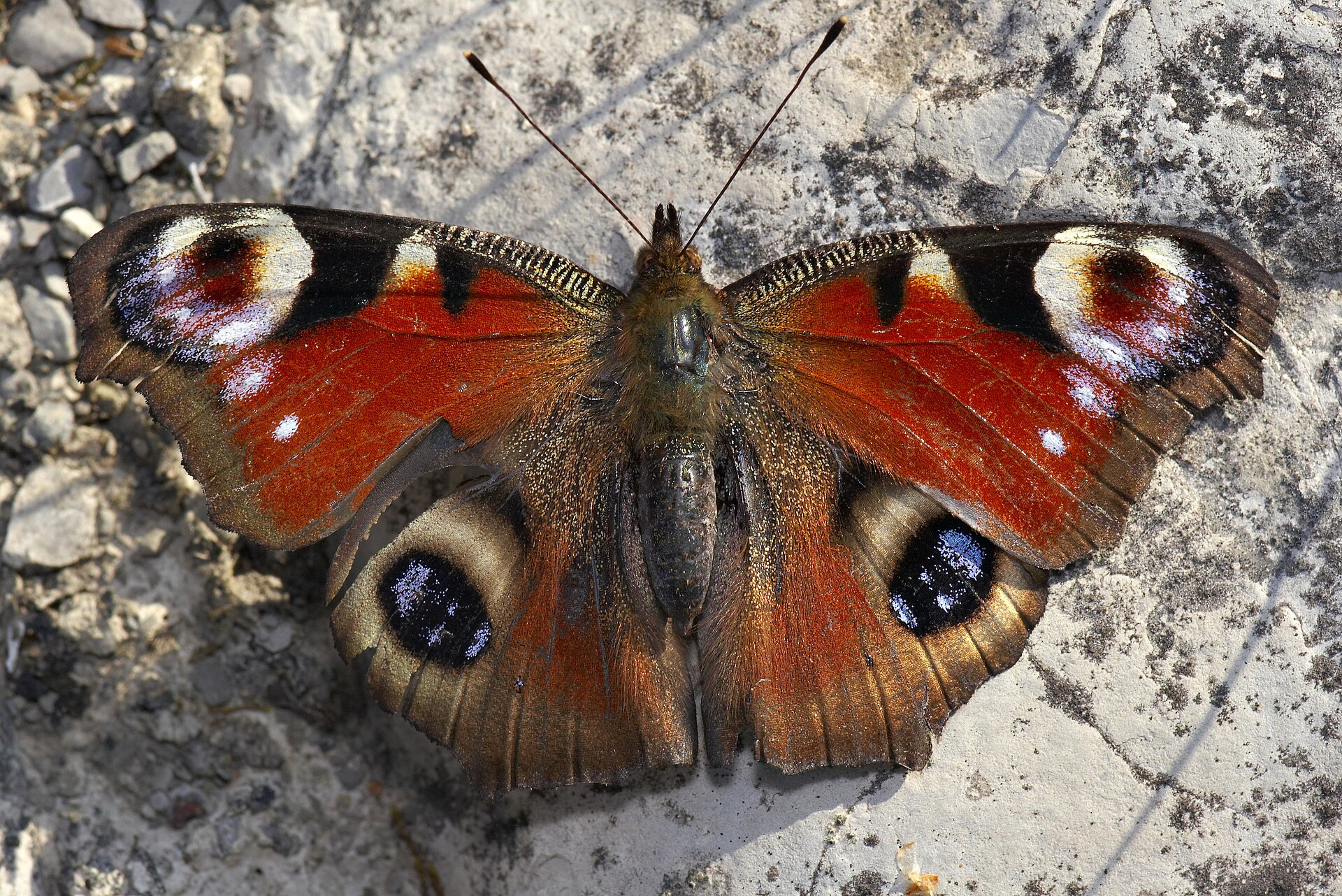
Forewing length 24 to 31 millimetres. Red-brown with four large blue eyespots, one on each wing. The underside is almost black and finely marked, so that with its wings closed it looks like a dead leaf. When disturbed it flicks its wings open and shows the eyes, a startle display that keeps birds at a distance.
Almost the whole of the Netherlands: gardens, parks, woodland edges and rough ground.
This is a common, widespread species: you can come across it in far more places than the areas listed below. Treat that list as a starting point rather than a full survey.
NDFF open data, 584 records 2016-2026
Nationwide period: March and April for the overwintered butterflies that appear early in the year, and July to September for the new generation. That also answers where it is in winter: it hibernates as an adult butterfly, in a shed, a cellar or a hollow tree.
NDFF open data, 1.234 records 2016-2026
Nationwide period: March and April for the overwintered butterflies that appear early in the year, and July to September for the new generation. That also answers where it is in winter: it hibernates as an adult butterfly, in a shed, a cellar or a hollow tree.
NDFF open data, 3.666 records 2016-2026
Nationwide period: March and April for the overwintered butterflies that appear early in the year, and July to September for the new generation. That also answers where it is in winter: it hibernates as an adult butterfly, in a shed, a cellar or a hollow tree.
NDFF open data, 9.487 records 2016-2026
Nationwide period: March and April for the overwintered butterflies that appear early in the year, and July to September for the new generation. That also answers where it is in winter: it hibernates as an adult butterfly, in a shed, a cellar or a hollow tree.
NDFF open data, 1.373 records 2016-2026
Nationwide period: March and April for the overwintered butterflies that appear early in the year, and July to September for the new generation. That also answers where it is in winter: it hibernates as an adult butterfly, in a shed, a cellar or a hollow tree.
NDFF open data, 5.253 records 2016-2026
Nationwide period: March and April for the overwintered butterflies that appear early in the year, and July to September for the new generation. That also answers where it is in winter: it hibernates as an adult butterfly, in a shed, a cellar or a hollow tree.
NDFF open data, 3.662 records 2016-2026
Nationwide period: March and April for the overwintered butterflies that appear early in the year, and July to September for the new generation. That also answers where it is in winter: it hibernates as an adult butterfly, in a shed, a cellar or a hollow tree.
NDFF open data, 678 records 2016-2026
Nationwide period: March and April for the overwintered butterflies that appear early in the year, and July to September for the new generation. That also answers where it is in winter: it hibernates as an adult butterfly, in a shed, a cellar or a hollow tree.
NDFF open data, 334 records 2016-2026
Nationwide period: March and April for the overwintered butterflies that appear early in the year, and July to September for the new generation. That also answers where it is in winter: it hibernates as an adult butterfly, in a shed, a cellar or a hollow tree.
NDFF open data, 4.928 records 2016-2026
Nationwide period: March and April for the overwintered butterflies that appear early in the year, and July to September for the new generation. That also answers where it is in winter: it hibernates as an adult butterfly, in a shed, a cellar or a hollow tree.
NDFF open data, 984 records 2016-2026
Nationwide period: March and April for the overwintered butterflies that appear early in the year, and July to September for the new generation. That also answers where it is in winter: it hibernates as an adult butterfly, in a shed, a cellar or a hollow tree.
NDFF open data, 1.090 records 2016-2026
Nationwide period: March and April for the overwintered butterflies that appear early in the year, and July to September for the new generation. That also answers where it is in winter: it hibernates as an adult butterfly, in a shed, a cellar or a hollow tree.
NDFF open data, 572 records 2016-2026
Nationwide period: March and April for the overwintered butterflies that appear early in the year, and July to September for the new generation. That also answers where it is in winter: it hibernates as an adult butterfly, in a shed, a cellar or a hollow tree.
NDFF open data, 3.034 records 2016-2026
Nationwide period: March and April for the overwintered butterflies that appear early in the year, and July to September for the new generation. That also answers where it is in winter: it hibernates as an adult butterfly, in a shed, a cellar or a hollow tree.
NDFF open data, 4.211 records 2016-2026
Nationwide period: March and April for the overwintered butterflies that appear early in the year, and July to September for the new generation. That also answers where it is in winter: it hibernates as an adult butterfly, in a shed, a cellar or a hollow tree.
NDFF open data, 1.361 records 2016-2026
Nationwide period: March and April for the overwintered butterflies that appear early in the year, and July to September for the new generation. That also answers where it is in winter: it hibernates as an adult butterfly, in a shed, a cellar or a hollow tree.
NDFF open data, 1.181 records 2016-2026
Nationwide period: March and April for the overwintered butterflies that appear early in the year, and July to September for the new generation. That also answers where it is in winter: it hibernates as an adult butterfly, in a shed, a cellar or a hollow tree.
NDFF open data, 1.354 records 2016-2026
Nationwide period: March and April for the overwintered butterflies that appear early in the year, and July to September for the new generation. That also answers where it is in winter: it hibernates as an adult butterfly, in a shed, a cellar or a hollow tree.
NDFF open data, 2.665 records 2016-2026
Nationwide period: March and April for the overwintered butterflies that appear early in the year, and July to September for the new generation. That also answers where it is in winter: it hibernates as an adult butterfly, in a shed, a cellar or a hollow tree.
NDFF open data, 405 records 2016-2026
Nationwide period: March and April for the overwintered butterflies that appear early in the year, and July to September for the new generation. That also answers where it is in winter: it hibernates as an adult butterfly, in a shed, a cellar or a hollow tree.
NDFF open data, 1.380 records 2016-2026
Nationwide period: March and April for the overwintered butterflies that appear early in the year, and July to September for the new generation. That also answers where it is in winter: it hibernates as an adult butterfly, in a shed, a cellar or a hollow tree.
NDFF open data, 5.138 records 2016-2026
Nationwide period: March and April for the overwintered butterflies that appear early in the year, and July to September for the new generation. That also answers where it is in winter: it hibernates as an adult butterfly, in a shed, a cellar or a hollow tree.
NDFF open data, 2.869 records 2016-2026
Nationwide period: March and April for the overwintered butterflies that appear early in the year, and July to September for the new generation. That also answers where it is in winter: it hibernates as an adult butterfly, in a shed, a cellar or a hollow tree.
NDFF open data, 4.304 records 2016-2026
Nationwide period: March and April for the overwintered butterflies that appear early in the year, and July to September for the new generation. That also answers where it is in winter: it hibernates as an adult butterfly, in a shed, a cellar or a hollow tree.
NDFF open data, 3.041 records 2016-2026
Nationwide period: March and April for the overwintered butterflies that appear early in the year, and July to September for the new generation. That also answers where it is in winter: it hibernates as an adult butterfly, in a shed, a cellar or a hollow tree.
NDFF open data, 3.887 records 2016-2026
Nationwide period: March and April for the overwintered butterflies that appear early in the year, and July to September for the new generation. That also answers where it is in winter: it hibernates as an adult butterfly, in a shed, a cellar or a hollow tree.
NDFF open data, 3.984 records 2016-2026
Nationwide period: March and April for the overwintered butterflies that appear early in the year, and July to September for the new generation. That also answers where it is in winter: it hibernates as an adult butterfly, in a shed, a cellar or a hollow tree.
NDFF open data, 3.606 records 2016-2026
Nationwide period: March and April for the overwintered butterflies that appear early in the year, and July to September for the new generation. That also answers where it is in winter: it hibernates as an adult butterfly, in a shed, a cellar or a hollow tree.
NDFF open data, 3.076 records 2016-2026
Nationwide period: March and April for the overwintered butterflies that appear early in the year, and July to September for the new generation. That also answers where it is in winter: it hibernates as an adult butterfly, in a shed, a cellar or a hollow tree.
NDFF open data
Nationwide period: March and April for the overwintered butterflies that appear early in the year, and July to September for the new generation. That also answers where it is in winter: it hibernates as an adult butterfly, in a shed, a cellar or a hollow tree.
NDFF open data
Nationwide period: March and April for the overwintered butterflies that appear early in the year, and July to September for the new generation. That also answers where it is in winter: it hibernates as an adult butterfly, in a shed, a cellar or a hollow tree.
NDFF open data
Nationwide period: March and April for the overwintered butterflies that appear early in the year, and July to September for the new generation. That also answers where it is in winter: it hibernates as an adult butterfly, in a shed, a cellar or a hollow tree.
NDFF open data
Nationwide period: March and April for the overwintered butterflies that appear early in the year, and July to September for the new generation. That also answers where it is in winter: it hibernates as an adult butterfly, in a shed, a cellar or a hollow tree.
NDFF open data
Nationwide period: March and April for the overwintered butterflies that appear early in the year, and July to September for the new generation. That also answers where it is in winter: it hibernates as an adult butterfly, in a shed, a cellar or a hollow tree.
NDFF open data
Nationwide period: March and April for the overwintered butterflies that appear early in the year, and July to September for the new generation. That also answers where it is in winter: it hibernates as an adult butterfly, in a shed, a cellar or a hollow tree.
NDFF open data
Nationwide period: March and April for the overwintered butterflies that appear early in the year, and July to September for the new generation. That also answers where it is in winter: it hibernates as an adult butterfly, in a shed, a cellar or a hollow tree.
NDFF open data
Nationwide period: March and April for the overwintered butterflies that appear early in the year, and July to September for the new generation. That also answers where it is in winter: it hibernates as an adult butterfly, in a shed, a cellar or a hollow tree.
NDFF open data
Nationwide period: March and April for the overwintered butterflies that appear early in the year, and July to September for the new generation. That also answers where it is in winter: it hibernates as an adult butterfly, in a shed, a cellar or a hollow tree.
NDFF open data, 2.933 records 2016-2026
Nationwide period: March and April for the overwintered butterflies that appear early in the year, and July to September for the new generation. That also answers where it is in winter: it hibernates as an adult butterfly, in a shed, a cellar or a hollow tree.
NDFF open data, 370 records 2016-2026
Nationwide period: March and April for the overwintered butterflies that appear early in the year, and July to September for the new generation. That also answers where it is in winter: it hibernates as an adult butterfly, in a shed, a cellar or a hollow tree.
NDFF open data, 3.954 records 2016-2026
Nationwide period: March and April for the overwintered butterflies that appear early in the year, and July to September for the new generation. That also answers where it is in winter: it hibernates as an adult butterfly, in a shed, a cellar or a hollow tree.
NDFF open data, 1.908 records 2016-2026
Nationwide period: March and April for the overwintered butterflies that appear early in the year, and July to September for the new generation. That also answers where it is in winter: it hibernates as an adult butterfly, in a shed, a cellar or a hollow tree.
NDFF open data, 2.007 records 2016-2026
Nationwide period: March and April for the overwintered butterflies that appear early in the year, and July to September for the new generation. That also answers where it is in winter: it hibernates as an adult butterfly, in a shed, a cellar or a hollow tree.
NDFF open data, 3.202 records 2016-2026
Nationwide period: March and April for the overwintered butterflies that appear early in the year, and July to September for the new generation. That also answers where it is in winter: it hibernates as an adult butterfly, in a shed, a cellar or a hollow tree.
NDFF open data, 1.357 records 2016-2026
Nationwide period: March and April for the overwintered butterflies that appear early in the year, and July to September for the new generation. That also answers where it is in winter: it hibernates as an adult butterfly, in a shed, a cellar or a hollow tree.
These links come straight from our database, with the chance, the source and the evidence level for each area.
Green = present · orange = peak period. The bar is generated from our database.