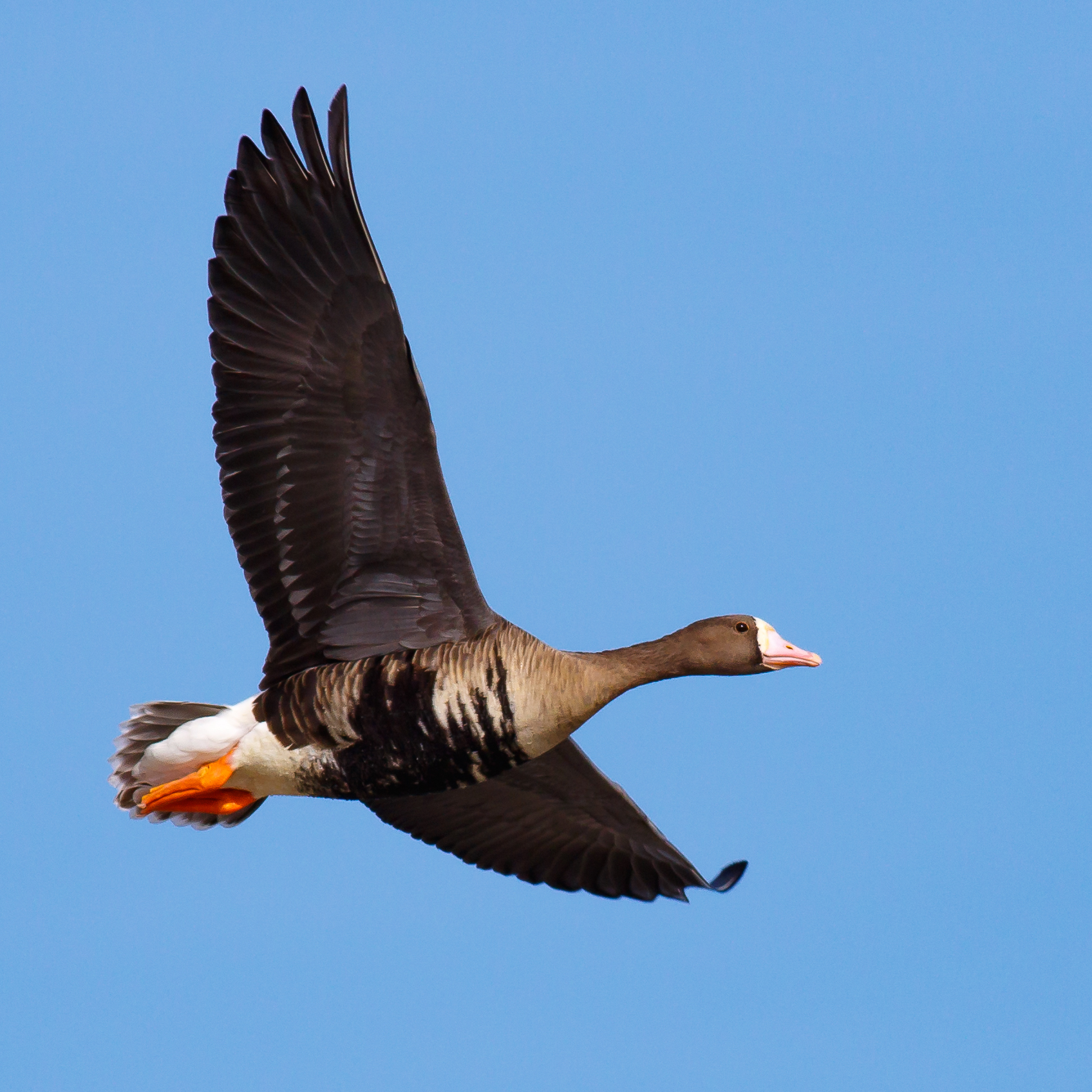
64 to 78 cm long, wingspan 130 to 165 cm. A grey-brown goose with a striking white blaze around the base of the bill and irregular black bars across the belly. The bill is pink, the legs orange. Young birds lack both the blaze and the belly bars, which makes them awkward in autumn.
Polders, floodplains and wetlands throughout the Netherlands, above all in the river area, Friesland and Zeeland.
NDFF open data, 1.791 records 2016-2026
Nationwide period: October to March. The Netherlands is one of the most important wintering areas in the world for this species; in summer almost all of them are away on the Russian tundra.
NDFF open data, 157 records 2016-2026
Nationwide period: October to March. The Netherlands is one of the most important wintering areas in the world for this species; in summer almost all of them are away on the Russian tundra.
NDFF open data, 609 records 2016-2026
Nationwide period: October to March. The Netherlands is one of the most important wintering areas in the world for this species; in summer almost all of them are away on the Russian tundra.
Staatsbosbeheer
Nationwide period: October to March. The Netherlands is one of the most important wintering areas in the world for this species; in summer almost all of them are away on the Russian tundra.
NDFF open data, 433 records 2016-2026 · Natuurmonumenten
Nationwide period: October to March. The Netherlands is one of the most important wintering areas in the world for this species; in summer almost all of them are away on the Russian tundra.
NDFF open data, 280 records 2016-2026
Nationwide period: October to March. The Netherlands is one of the most important wintering areas in the world for this species; in summer almost all of them are away on the Russian tundra.
NDFF open data, 1.991 records 2016-2026 · Sovon
Nationwide period: October to March. The Netherlands is one of the most important wintering areas in the world for this species; in summer almost all of them are away on the Russian tundra.
NDFF open data, 448 records 2016-2026
Nationwide period: October to March. The Netherlands is one of the most important wintering areas in the world for this species; in summer almost all of them are away on the Russian tundra.
NDFF open data, 651 records 2016-2026
Nationwide period: October to March. The Netherlands is one of the most important wintering areas in the world for this species; in summer almost all of them are away on the Russian tundra.
NDFF open data, 2.839 records 2016-2026
Nationwide period: October to March. The Netherlands is one of the most important wintering areas in the world for this species; in summer almost all of them are away on the Russian tundra.
NDFF open data, 627 records 2016-2026 · Sovon
Nationwide period: October to March. The Netherlands is one of the most important wintering areas in the world for this species; in summer almost all of them are away on the Russian tundra.
NDFF open data, 418 records 2016-2026 · It Fryske Gea
Nationwide period: October to March. The Netherlands is one of the most important wintering areas in the world for this species; in summer almost all of them are away on the Russian tundra.
NDFF open data, 617 records 2016-2026
Nationwide period: October to March. The Netherlands is one of the most important wintering areas in the world for this species; in summer almost all of them are away on the Russian tundra.
NDFF open data, 406 records 2016-2026
Nationwide period: October to March. The Netherlands is one of the most important wintering areas in the world for this species; in summer almost all of them are away on the Russian tundra.
NDFF open data, 597 records 2016-2026
Nationwide period: October to March. The Netherlands is one of the most important wintering areas in the world for this species; in summer almost all of them are away on the Russian tundra.
NDFF open data, 296 records 2016-2026
Nationwide period: October to March. The Netherlands is one of the most important wintering areas in the world for this species; in summer almost all of them are away on the Russian tundra.
NDFF open data, 435 records 2016-2026
Nationwide period: October to March. The Netherlands is one of the most important wintering areas in the world for this species; in summer almost all of them are away on the Russian tundra.
NDFF open data, 101 records 2016-2026 · Sovon
Nationwide period: October to March. The Netherlands is one of the most important wintering areas in the world for this species; in summer almost all of them are away on the Russian tundra.
NDFF open data, 945 records 2016-2026 · Sovon
Nationwide period: October to March. The Netherlands is one of the most important wintering areas in the world for this species; in summer almost all of them are away on the Russian tundra.
NDFF open data, 652 records 2016-2026 · Sovon
Nationwide period: October to March. The Netherlands is one of the most important wintering areas in the world for this species; in summer almost all of them are away on the Russian tundra.
NDFF open data, 146 records 2016-2026
Nationwide period: October to March. The Netherlands is one of the most important wintering areas in the world for this species; in summer almost all of them are away on the Russian tundra.
NDFF open data, 1.092 records 2016-2026 · Sovon
Nationwide period: October to March. The Netherlands is one of the most important wintering areas in the world for this species; in summer almost all of them are away on the Russian tundra.
Natura 2000
Nationwide period: October to March. The Netherlands is one of the most important wintering areas in the world for this species; in summer almost all of them are away on the Russian tundra.
NDFF open data, 158 records 2016-2026 · zwin.be
Nationwide period: October to March. The Netherlands is one of the most important wintering areas in the world for this species; in summer almost all of them are away on the Russian tundra.
NDFF open data, 424 records 2016-2026
Nationwide period: October to March. The Netherlands is one of the most important wintering areas in the world for this species; in summer almost all of them are away on the Russian tundra.
NDFF open data
Nationwide period: October to March. The Netherlands is one of the most important wintering areas in the world for this species; in summer almost all of them are away on the Russian tundra.
NDFF open data
Nationwide period: October to March. The Netherlands is one of the most important wintering areas in the world for this species; in summer almost all of them are away on the Russian tundra.
NDFF open data
Nationwide period: October to March. The Netherlands is one of the most important wintering areas in the world for this species; in summer almost all of them are away on the Russian tundra.
NDFF open data
Nationwide period: October to March. The Netherlands is one of the most important wintering areas in the world for this species; in summer almost all of them are away on the Russian tundra.
NDFF open data
Nationwide period: October to March. The Netherlands is one of the most important wintering areas in the world for this species; in summer almost all of them are away on the Russian tundra.
NDFF open data
Nationwide period: October to March. The Netherlands is one of the most important wintering areas in the world for this species; in summer almost all of them are away on the Russian tundra.
NDFF open data
Nationwide period: October to March. The Netherlands is one of the most important wintering areas in the world for this species; in summer almost all of them are away on the Russian tundra.
NDFF open data
Nationwide period: October to March. The Netherlands is one of the most important wintering areas in the world for this species; in summer almost all of them are away on the Russian tundra.
Natuurmonumenten · Harger- en Pettemerpolder
Nationwide period: October to March. The Netherlands is one of the most important wintering areas in the world for this species; in summer almost all of them are away on the Russian tundra.
NDFF open data, 1.470 records 2016-2026
Nationwide period: October to March. The Netherlands is one of the most important wintering areas in the world for this species; in summer almost all of them are away on the Russian tundra.
NDFF open data, 423 records 2016-2026
Nationwide period: October to March. The Netherlands is one of the most important wintering areas in the world for this species; in summer almost all of them are away on the Russian tundra.
NDFF open data, 1.145 records 2016-2026
Nationwide period: October to March. The Netherlands is one of the most important wintering areas in the world for this species; in summer almost all of them are away on the Russian tundra.
NDFF open data, 616 records 2016-2026
Nationwide period: October to March. The Netherlands is one of the most important wintering areas in the world for this species; in summer almost all of them are away on the Russian tundra.
NDFF open data, 475 records 2016-2026
Nationwide period: October to March. The Netherlands is one of the most important wintering areas in the world for this species; in summer almost all of them are away on the Russian tundra.
NDFF open data, 2.331 records 2016-2026
Nationwide period: October to March. The Netherlands is one of the most important wintering areas in the world for this species; in summer almost all of them are away on the Russian tundra.
NDFF open data, 4.549 records 2016-2026
Nationwide period: October to March. The Netherlands is one of the most important wintering areas in the world for this species; in summer almost all of them are away on the Russian tundra.
NDFF open data, 141 records 2016-2026
Nationwide period: October to March. The Netherlands is one of the most important wintering areas in the world for this species; in summer almost all of them are away on the Russian tundra.
These links come straight from our database, with the chance, the source and the evidence level for each area.
Green = present · orange = peak period. The bar is generated from our database.