
Where to see the Cepero's Ground-hopper in the Netherlands
With luck 🦗 Grasshopper
Where and when do you see a Cepero's Ground-hopper? With some luck you can see this species, from April to September.
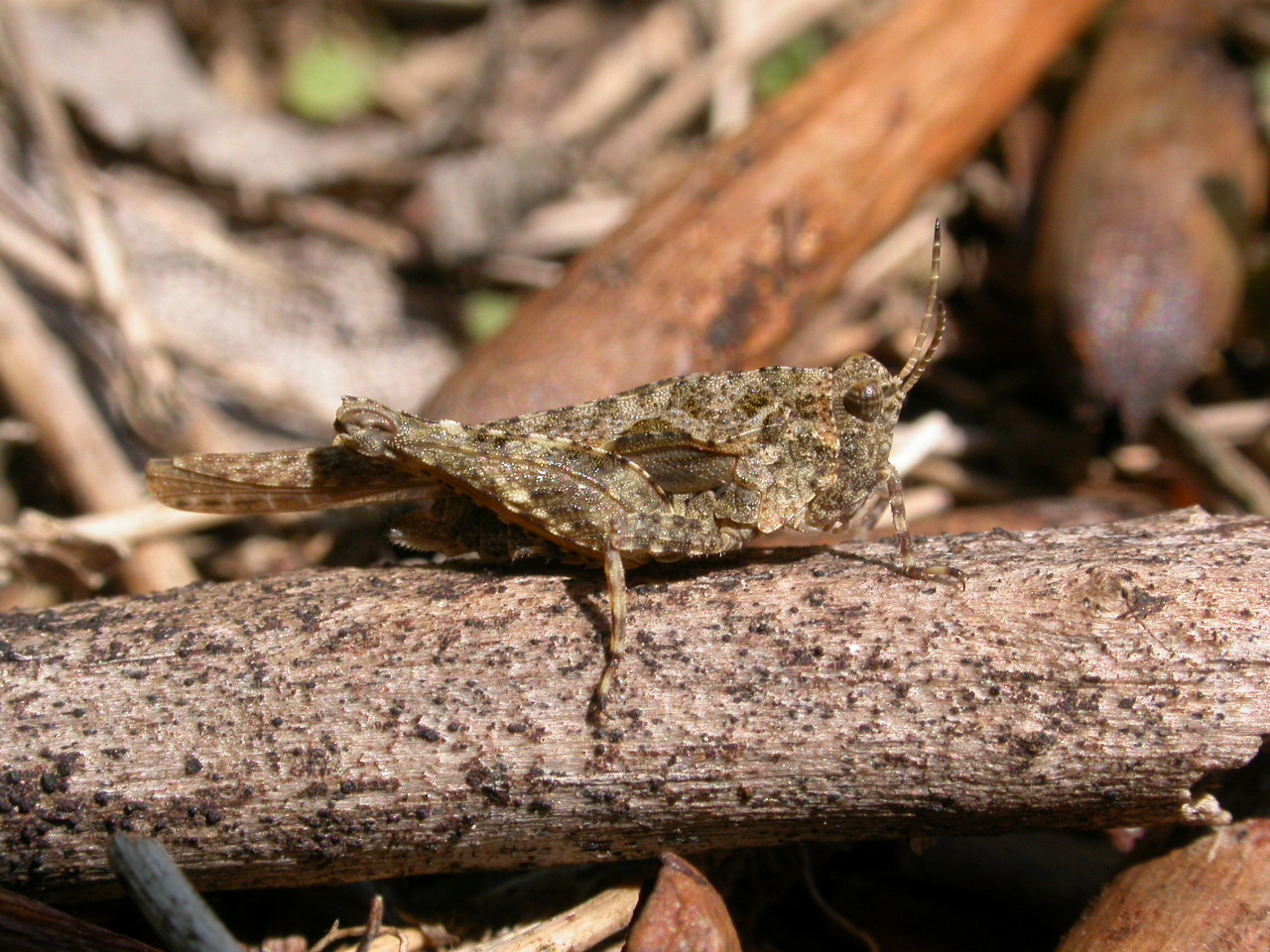
How do you recognise a Cepero's Ground-hopper?
A small, slender groundhopper of 9 to 13 millimetres with a fairly flat pronotum. The colour is highly variable, dark brown, grey or greenish, often mottled. The feature that matters is the kinked keel on the upper side of the hind thigh. Only the long-spined form of this species is known.
Where do you see this species in the Netherlands?
Mainly in the coastal strip, with scattered populations inland. In Europe the species is rare almost everywhere, but in the west of the Netherlands it is fairly common and seems to be increasing a little.
📍 Oostelijke Vechtplassen
presence reported📍 Noordhollands Duinreservaat
presence reported📍 Wormer- en Jisperveld
presence reported📍 Ilperveld
presence reported📍 Meijendel & Berkheide
presence reported📍 Kampina & Oisterwijkse Vennen
presence reported📍 De Maashorst
presence reported📍 Strabrechtse Heide & Beuven
presence reported📍 Loonse en Drunense Duinen
presence reported📍 Schoorlse Duinen
presence reportedThese links come straight from our database, with the chance, the source and the evidence level for each area.
When is the best time?
Green = present · orange = peak period. The bar is generated from our database.
Best period: Adults in two waves: from late April to early June and again from late July to early September.
Best time of day: Sunny hours, on bare wet ground along the waterline.
Recent sightings
👁️ Where has this species been seen recently?
Check the current sightings on Waarneming.nl. A useful addition to our own verified information.
How to improve your chances
- Listen first. Almost every species gives itself away by singing before you spot it.
- Go on a warm, windless afternoon. In cold or wind they fall silent.
- Walk slowly and note where the sound stops. That is where it sits, usually low in the vegetation.
- A bat detector makes audible the species that sing too high for human ears.
🎒 What you need for this
Boots. The best places are the wet edges of small dune pools.
Photography
Groundhoppers let you come close if you stay low. Lie flat on the ground so the camera is at the animal's eye level, and use f11: the kinked keel on the hind thigh is small and has to be sharp. On wet ground early morning sun works best, because the reflection is soft then.
🌿 Watching responsibly
Keep your distance, stay on the paths, and never lure animals with food or sound. Leave as soon as an animal becomes uneasy.
Status: Verified · Last checked: 2026-08-12