
Where to see the edible frog in the Netherlands
Easy 🐸 Amphibian
Where and when do you see an edible frog? This species is easy to see, from May to July.
How do you recognise an edible frog?
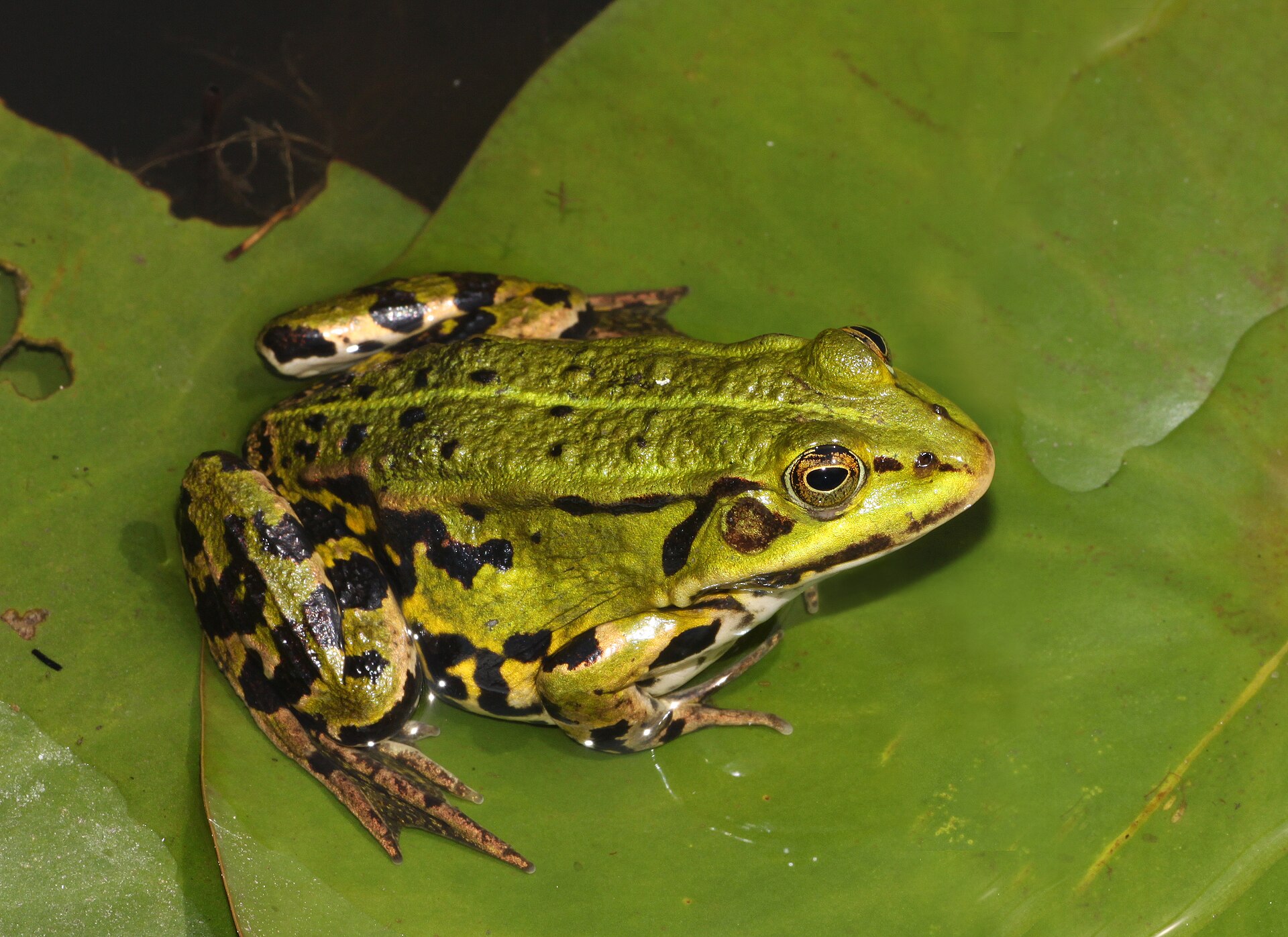
Bright grass green to bronze green, often with a pale stripe down the middle of the back, and with conspicuous vocal sacs on either side of the head in the male. Unlike the common frog it stays in or close to the water all season and jumps in with a splash when disturbed.
Where do you see this species in the Netherlands?
The whole of the Netherlands, by ditches, pools, lakes and ponds with vegetated banks.
Habitat: Permanent, sunny water with plenty of bankside vegetation and floating plants to bask on. Unlike common frogs and toads it hardly leaves the water.
This is a common, widespread species: you can come across it in far more places than the areas listed below. Treat that list as a starting point rather than a full survey.
📍 Nationaal Park De Maasduinen
presence reported📍 Nationaal Park Utrechtse Heuvelrug
presence reported📍 Onlanden & Leekstermeer
presence reported📍 Naardermeer
presence reported📍 Gelderse Poort & Millingerwaard
presence reported📍 Nationaal Park De Meinweg
presence reported📍 Amsterdamse Waterleidingduinen
presence reported📍 Blauwe Kamer
presence reported📍 Zouweboezem
presence reported📍 Oostelijke Vechtplassen
presence reported📍 Noordhollands Duinreservaat
presence reported📍 Wormer- en Jisperveld
presence reported📍 Ilperveld
presence reported📍 Zuidlaardermeergebied en Hunzedal
presence reported📍 Meijendel & Berkheide
presence reported📍 Kampina & Oisterwijkse Vennen
presence reported📍 De Maashorst
presence reported📍 Strabrechtse Heide & Beuven
presence reported📍 Loonse en Drunense Duinen
presence reported📍 Schoorlse Duinen
presence reported📍 De Putten bij Camperduin
presence reportedThese links come straight from our database, with the chance, the source and the evidence level for each area.
When is the best time?
Green = present · orange = peak period. The bar is generated from our database.
Best period: May to July is the chorus period: on warm evenings dozens of males croak at once, a sound that carries for hundreds of metres and that for many people belongs to summer.
Best time of day: By day in warm weather, and in the evening when the chorus is loudest.
Recent sightings
👁️ Where has this species been seen recently?
Check the current sightings on Waarneming.nl. A useful addition to our own verified information.
How to improve your chances
- Go after dark in mild, wet weather, when amphibians are at their most active.
- Follow the chorus. In spring you can hear the calling males from a long way off.
- Shine your torch along the bank rather than into it, and keep the light brief.
- Stay on the bank and touch nothing. Amphibian skin is sensitive to whatever is on your hands.
🎒 What you need for this
Macro
🌿 Watching responsibly
Keep your distance, stay on the paths, and never lure animals with food or sound. Leave as soon as an animal becomes uneasy.
Status: Verified · Last checked: 2026-08-08