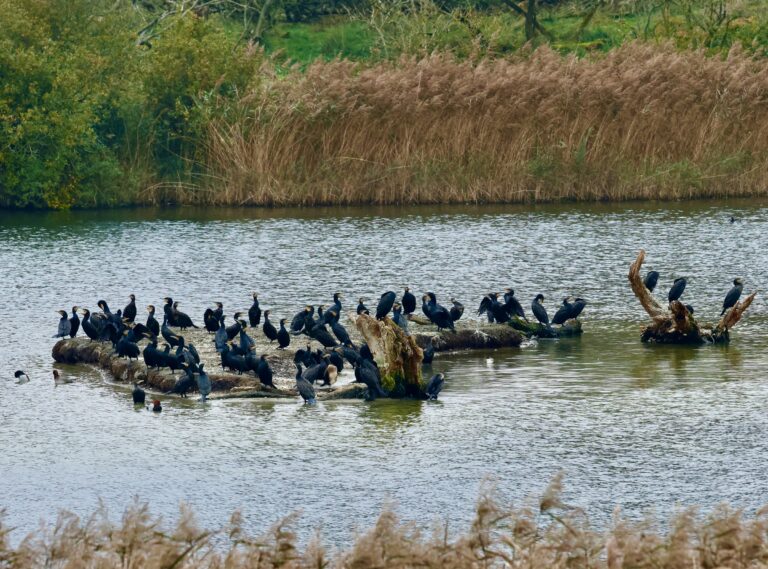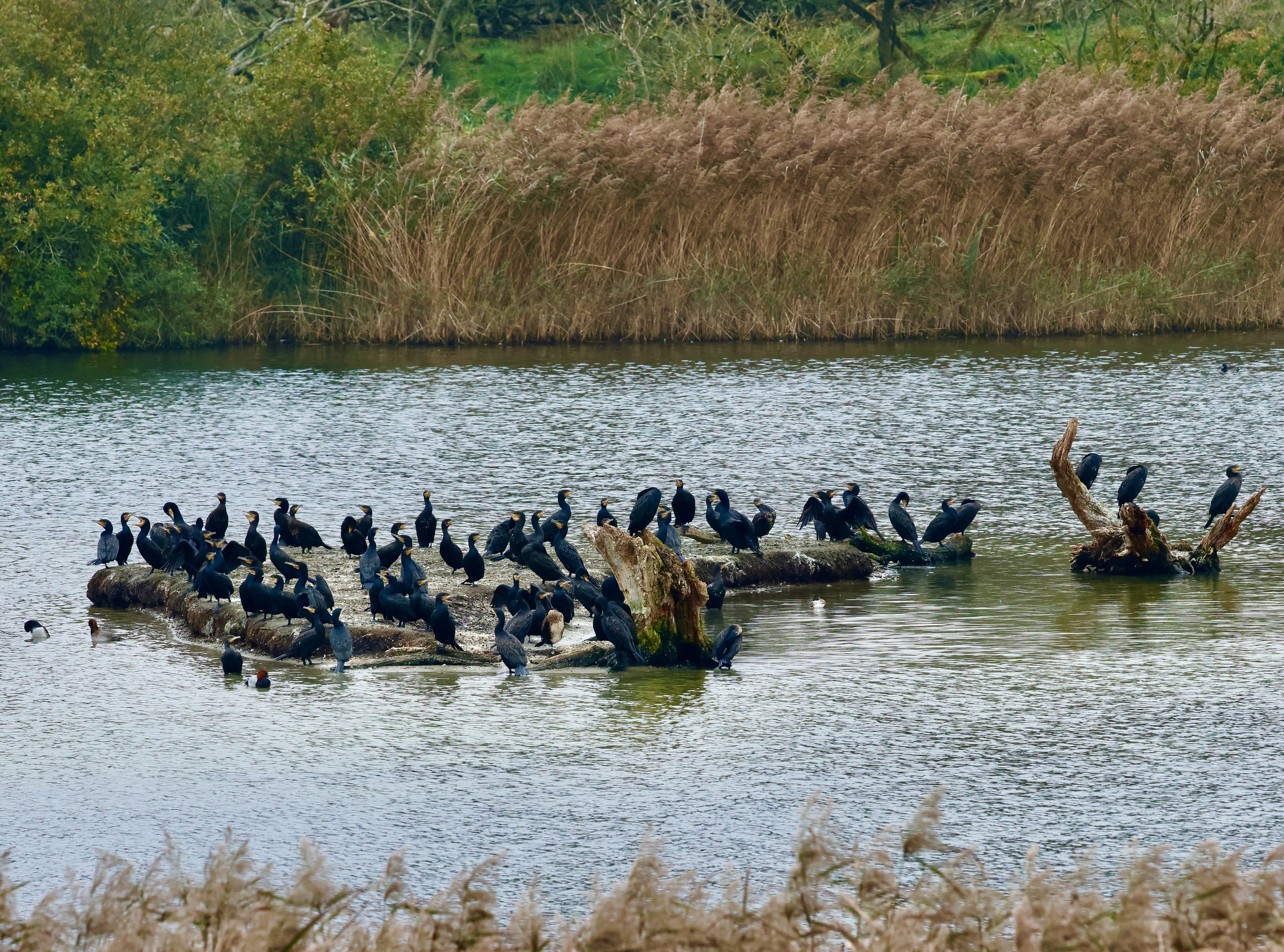
Dozens of cormorants on a tree stump in the water
📷 Foto: Bas de Bruin — Amsterdamse Waterleidingduinen, 31 oktober 2026

Where to see the Great Cormorant in the Netherlands

Phalacrocorax carbo · Great Cormorant

Easy 🦅 Bird

Where and when do you see a Great Cormorant? This species is easy to see, all year round.

How do you recognise a Great Cormorant?

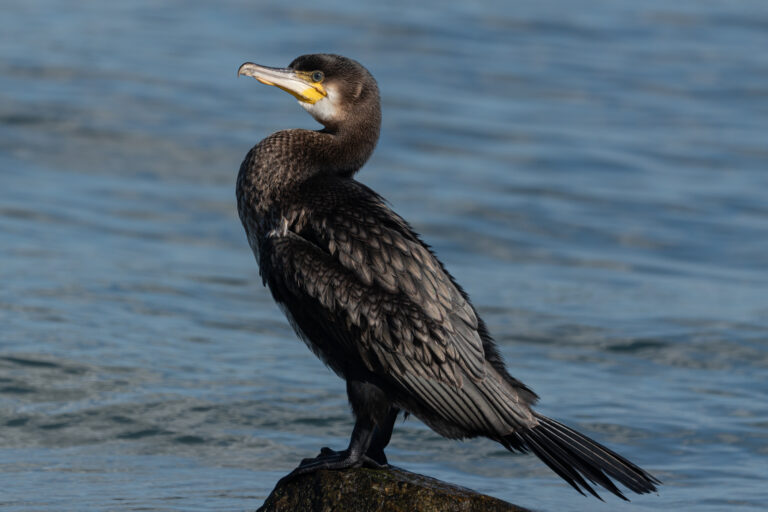
Length 80 to 100 cm, wingspan 130 to 160 cm. Large and black, with an angular head, a hooked bill and, from close up, a bronze sheen on the wings. It swims low in the water with its bill tilted up and dives soundlessly. After fishing it sits drying with its wings spread wide, a posture no other Dutch bird adopts.

What can you confuse a Great Cormorant with?

Looks like: Great Crested Grebe

  • Great Crested Grebe: Slimmer, with a long white neck and a dagger-shaped bill instead of a hooked one.

What does a Great Cormorant sound like?

Recording: Sonothèque ADVL, CC0, via Wikimedia Commons

Where do you see this species in the Netherlands?

The whole of the Netherlands, on almost any larger water: lakes, rivers, canals and the coast.

Habitat: Open, fish-rich water to hunt in and trees or structures to breed in colonies. Colonies are recognisable by trees stripped bare and stained white.

This is a common, widespread species: you can come across it in far more places than the areas listed below. Treat that list as a starting point rather than a full survey.

How certain is this? verified chance per source presence reported Links that do not clear the bottom threshold are not published. How we decide that.

📍 Oostvaardersplassen

Good chance chance per source
Common throughout the Netherlands (Verspreidingsatlas) — here too
Nationwide period: Present all year. In spring the colonies are occupied and noisy; in winter birds from the north arrive and you see large groups on open water.

📍 Wadden Sea

Good chance chance per source
Vogelbescherming Nederland and Sovon
Nationwide period: Present all year. In spring the colonies are occupied and noisy; in winter birds from the north arrive and you see large groups on open water.

📍 Marker Wadden

Good chance chance per source
Natuurmonumenten, the site manager
Nationwide period: Present all year. In spring the colonies are occupied and noisy; in winter birds from the north arrive and you see large groups on open water.

📍 Nationaal Park De Alde Feanen

Good chance chance per source
Nationaal Park De Alde Feanen and It Fryske Gea, the site manager
Nationwide period: Present all year. In spring the colonies are occupied and noisy; in winter birds from the north arrive and you see large groups on open water.

📍 Planken Wambuis

presence reported
NDFF open data, 376 records 2016-2026
Nationwide period: Present all year. In spring the colonies are occupied and noisy; in winter birds from the north arrive and you see large groups on open water.

📍 Naardermeer

Good chance in season chance per source
Natura 2000 target · 1.800 breeding pairs
Nationwide period: Present all year. In spring the colonies are occupied and noisy; in winter birds from the north arrive and you see large groups on open water.

📍 Nationaal Park De Biesbosch

Good chance chance per source
De Visdief · birdwatching guide to Biesbosch
Nationwide period: Present all year. In spring the colonies are occupied and noisy; in winter birds from the north arrive and you see large groups on open water.

📍 Nationaal Park Zuid-Kennemerland

Good chance chance per source
Birdingplaces · Vogelmeer
Nationwide period: Present all year. In spring the colonies are occupied and noisy; in winter birds from the north arrive and you see large groups on open water.

📍 Blauwe Kamer

presence reported
NDFF open data
Nationwide period: Present all year. In spring the colonies are occupied and noisy; in winter birds from the north arrive and you see large groups on open water.

📍 Zouweboezem

presence reported
NDFF open data
Nationwide period: Present all year. In spring the colonies are occupied and noisy; in winter birds from the north arrive and you see large groups on open water.

📍 Oostelijke Vechtplassen

presence reported
NDFF open data
Nationwide period: Present all year. In spring the colonies are occupied and noisy; in winter birds from the north arrive and you see large groups on open water.
NDFF open data
Nationwide period: Present all year. In spring the colonies are occupied and noisy; in winter birds from the north arrive and you see large groups on open water.

📍 Wormer- en Jisperveld

presence reported
NDFF open data
Nationwide period: Present all year. In spring the colonies are occupied and noisy; in winter birds from the north arrive and you see large groups on open water.

📍 Ilperveld

presence reported
NDFF open data
Nationwide period: Present all year. In spring the colonies are occupied and noisy; in winter birds from the north arrive and you see large groups on open water.

📍 De Dollard

presence reported
NDFF open data
Nationwide period: Present all year. In spring the colonies are occupied and noisy; in winter birds from the north arrive and you see large groups on open water.
NDFF open data
Nationwide period: Present all year. In spring the colonies are occupied and noisy; in winter birds from the north arrive and you see large groups on open water.

📍 Meijendel & Berkheide

presence reported
NDFF open data, 9.954 records 2016-2026
Nationwide period: Present all year. In spring the colonies are occupied and noisy; in winter birds from the north arrive and you see large groups on open water.

📍 Voornes Duin

presence reported
NDFF open data, 1.497 records 2016-2026
Nationwide period: Present all year. In spring the colonies are occupied and noisy; in winter birds from the north arrive and you see large groups on open water.
NDFF open data, 1.962 records 2016-2026
Nationwide period: Present all year. In spring the colonies are occupied and noisy; in winter birds from the north arrive and you see large groups on open water.

📍 De Maashorst

presence reported
NDFF open data, 1.647 records 2016-2026
Nationwide period: Present all year. In spring the colonies are occupied and noisy; in winter birds from the north arrive and you see large groups on open water.
NDFF open data, 913 records 2016-2026
Nationwide period: Present all year. In spring the colonies are occupied and noisy; in winter birds from the north arrive and you see large groups on open water.

📍 Loonse en Drunense Duinen

presence reported
NDFF open data, 2.789 records 2016-2026
Nationwide period: Present all year. In spring the colonies are occupied and noisy; in winter birds from the north arrive and you see large groups on open water.

📍 Schoorlse Duinen

presence reported
NDFF open data, 11.121 records 2016-2026
Nationwide period: Present all year. In spring the colonies are occupied and noisy; in winter birds from the north arrive and you see large groups on open water.

📍 Haringvlietsluizen

presence reported
NDFF open data, 2.932 records 2016-2026
Nationwide period: Present all year. In spring the colonies are occupied and noisy; in winter birds from the north arrive and you see large groups on open water.
NDFF open data, 728 records 2016-2026
Nationwide period: Present all year. In spring the colonies are occupied and noisy; in winter birds from the north arrive and you see large groups on open water.

📍 De Putten bij Camperduin

presence reported
NDFF open data, 5.185 records 2016-2026
Nationwide period: Present all year. In spring the colonies are occupied and noisy; in winter birds from the north arrive and you see large groups on open water.

These links come straight from our database, with the chance, the source and the evidence level for each area.

When is the best time?

Green = present · orange = peak period. The bar is generated from our database.

Best period: Present all year. In spring the colonies are occupied and noisy; in winter birds from the north arrive and you see large groups on open water.

Best time of day: During the day, with the morning as the best moment. Drying birds often sit on the same post or jetty for hours.

Recent sightings

👁️ Where has this species been seen recently?

Check the current sightings on Waarneming.nl. A useful addition to our own verified information.

Current sightings on Waarneming.nl →

How to improve your chances

  • Learn the calls first. You will hear most birds before you see them.
  • Go in the first hour after sunrise, when the song is at its peak and the wind is still down.
  • Use a hide or natural cover. Sitting still gets you more than walking closer.
  • Keep the sun behind you. Against the light you see a silhouette and no colour.

🎒 What you need for this

Binoculars

🌿 Watching responsibly

Keep your distance, stay on the paths, and never lure animals with food or sound. Leave as soon as an animal becomes uneasy.

Sources: Sovon; Vogelbescherming Nederland (vogelgids), geraadpleegd 02-11-2026
Status: Verified · Last checked: 2026-08-08

More photos
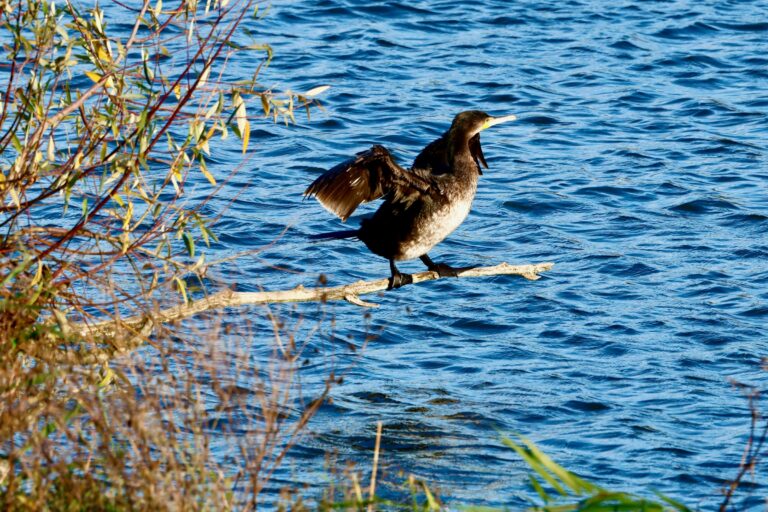
Aalscholver met gespreide vleugels op een tak boven het water
Photo: Bas de Bruin — De Blauwe Kamer, 4 november 2026
Dozens of cormorants on a tree stump in the water
Photo: Bas de Bruin — Amsterdamse Waterleidingduinen, 31 oktober 2026
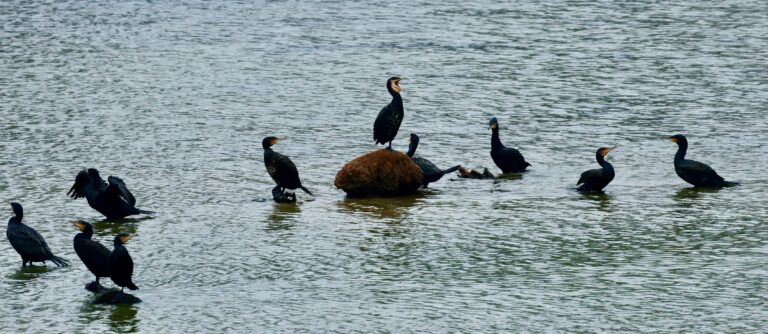
Groep aalscholvers in ondiep water, met een blauwe reiger ertussen
Photo: Bas de Bruin — Amsterdamse Waterleidingduinen, 31 oktober 2026
Aalscholver in Nederland
Photo: Hobbyfotowiki, CC0 (Wikimedia Commons)
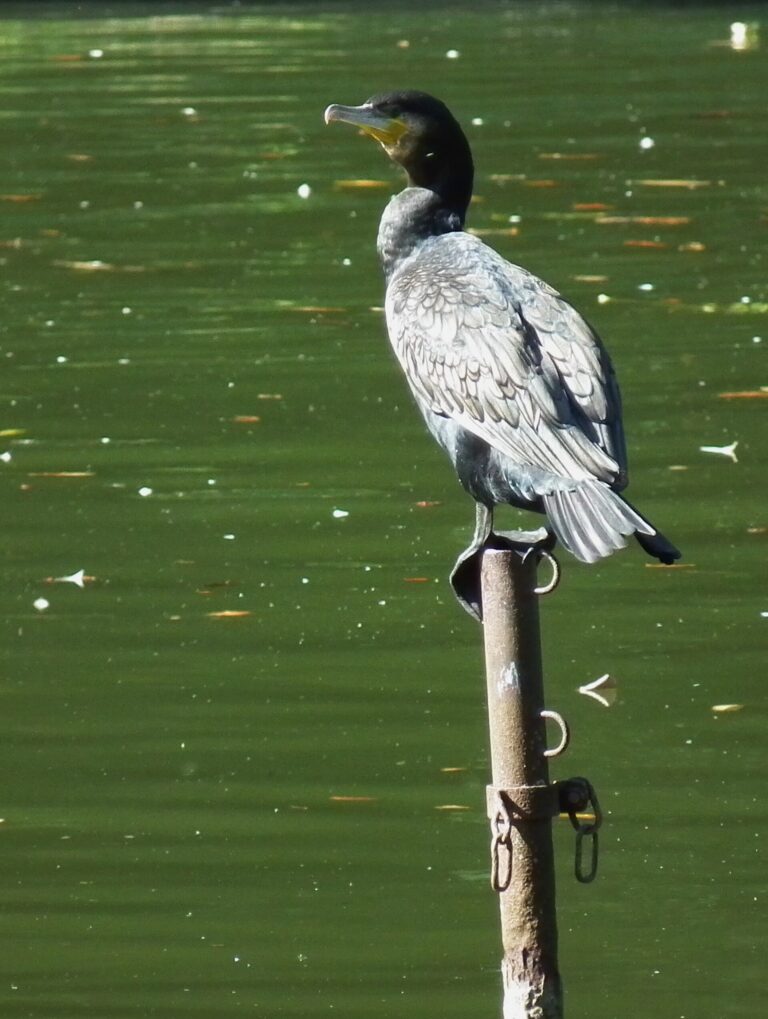
Aalscholver
Photo: 4028mdk09, CC BY-SA 3.0 (Wikimedia Commons)