
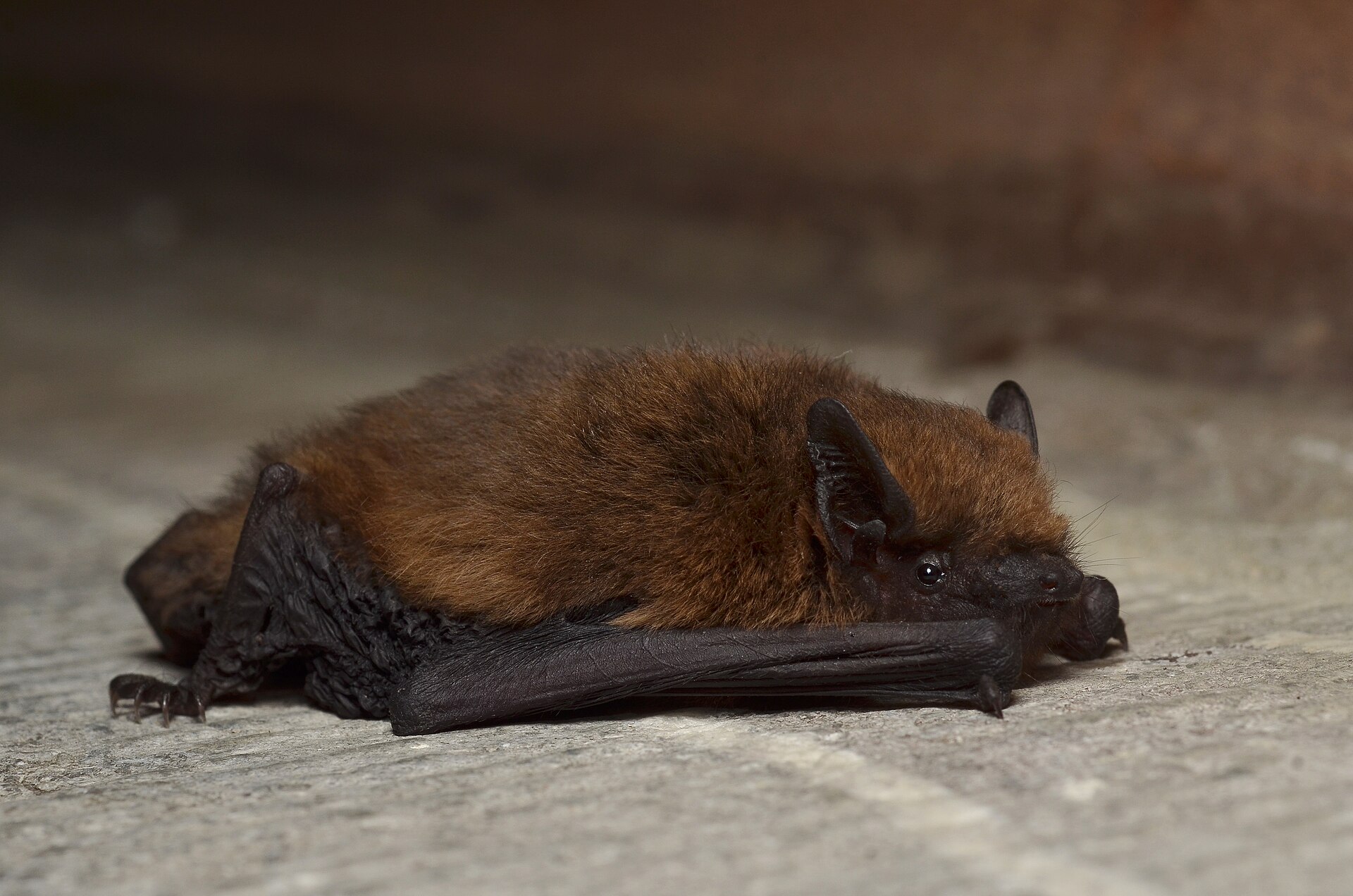
Common pipistrelle
📷 Gilles San Martin from Namur, Belgium, CC BY-SA 2.0 (Wikimedia Commons)

Where to see the common pipistrelle in the Netherlands

Pipistrellus pipistrellus · Common pipistrelle

With luck 🦇 Mammal (bat) Sensitive species · R2

🛡️ No exact locations, on purpose

This is a sensitive species. We deliberately show no resting places such as setts, burrows or winter roosts, and no photographs in which such a place is recognisable. Why we do that.

Where and when do you see a common pipistrelle? With some luck you can see this species, from April to October.

How do you recognise a common pipistrelle?

The smallest bat in the Netherlands, with a body under five centimetres and a fast, erratic flight. You recognise it above all by its behaviour and where it is: it hunts circuits around street lamps, along wood edges and over gardens, with short sharp turns after insects.

What can you confuse a common pipistrelle with?

Looks like: Nathusius' pipistrelle, Soprano pipistrelle, Serotine bat

  • Nathusius’ pipistrelle: slightly larger, with a longer, shaggier and red-brown coat, broader wings and a slower, straighter flight.
  • Soprano pipistrelle: practically identical in appearance; the soprano pipistrelle has a light brown snout and ear base where those are darker in the common pipistrelle. Only a bat detector or the animal in the hand gives certainty.
  • Serotine bat: much larger, with broad wings and a slow, heavy flight; the pipistrelle flies fast and erratically around lamps.

What does a common pipistrelle sound like?

Recording: XN URL: Ex :: Natura - Freies Portal zu Naturerlebnis und Umweltbildung (Environmental Education), CC BY-SA 3.0, via Wikimedia Commons

Where do you see this species in the Netherlands?

All of the Netherlands, including the middle of towns. It is by far the commonest bat in the country.

Habitat: Built-up areas, gardens, parks and wood edges. It roosts in cavity walls and under eaves, and hunts over linear features such as hedges, avenues and watercourses.

This is a common, widespread species: you can come across it in far more places than the areas listed below. Treat that list as a starting point rather than a full survey.

How certain is this? verified chance per source presence reported Links that do not clear the bottom threshold are not published. How we decide that.
NDFF open data, 373 records 2016-2026
Nationwide period: April to October. Warm, windless summer evenings are best: that is when there are most insects and the animals hunt low and for a long time. In winter it hibernates.
NDFF open data, 1.936 records 2016-2026
Nationwide period: April to October. Warm, windless summer evenings are best: that is when there are most insects and the animals hunt low and for a long time. In winter it hibernates.

📍 Nationaal Park Veluwezoom

presence reported
NDFF open data, 2.781 records 2016-2026
Nationwide period: April to October. Warm, windless summer evenings are best: that is when there are most insects and the animals hunt low and for a long time. In winter it hibernates.

📍 Oostvaardersplassen

presence reported
NDFF open data, 92 records 2016-2026
Nationwide period: April to October. Warm, windless summer evenings are best: that is when there are most insects and the animals hunt low and for a long time. In winter it hibernates.
NDFF open data, 178 records 2016-2026
Nationwide period: April to October. Warm, windless summer evenings are best: that is when there are most insects and the animals hunt low and for a long time. In winter it hibernates.
NDFF open data, 841 records 2016-2026
Nationwide period: April to October. Warm, windless summer evenings are best: that is when there are most insects and the animals hunt low and for a long time. In winter it hibernates.
NDFF open data, 766 records 2016-2026
Nationwide period: April to October. Warm, windless summer evenings are best: that is when there are most insects and the animals hunt low and for a long time. In winter it hibernates.
NDFF open data, 203 records 2016-2026
Nationwide period: April to October. Warm, windless summer evenings are best: that is when there are most insects and the animals hunt low and for a long time. In winter it hibernates.
NDFF open data, 1.623 records 2016-2026
Nationwide period: April to October. Warm, windless summer evenings are best: that is when there are most insects and the animals hunt low and for a long time. In winter it hibernates.
NDFF open data, 6.406 records 2016-2026
Nationwide period: April to October. Warm, windless summer evenings are best: that is when there are most insects and the animals hunt low and for a long time. In winter it hibernates.
NDFF open data, 62 records 2016-2026
Nationwide period: April to October. Warm, windless summer evenings are best: that is when there are most insects and the animals hunt low and for a long time. In winter it hibernates.
NDFF open data, 46 records 2016-2026
Nationwide period: April to October. Warm, windless summer evenings are best: that is when there are most insects and the animals hunt low and for a long time. In winter it hibernates.
NDFF open data, 199 records 2016-2026
Nationwide period: April to October. Warm, windless summer evenings are best: that is when there are most insects and the animals hunt low and for a long time. In winter it hibernates.
NDFF open data, 56 records 2016-2026
Nationwide period: April to October. Warm, windless summer evenings are best: that is when there are most insects and the animals hunt low and for a long time. In winter it hibernates.
NDFF open data, 1.651 records 2016-2026
Nationwide period: April to October. Warm, windless summer evenings are best: that is when there are most insects and the animals hunt low and for a long time. In winter it hibernates.

📍 Nationaal Park De Meinweg

presence reported
NDFF open data, 1.670 records 2016-2026
Nationwide period: April to October. Warm, windless summer evenings are best: that is when there are most insects and the animals hunt low and for a long time. In winter it hibernates.
NDFF open data, 5.767 records 2016-2026
Nationwide period: April to October. Warm, windless summer evenings are best: that is when there are most insects and the animals hunt low and for a long time. In winter it hibernates.
NDFF open data, 4.281 records 2016-2026
Nationwide period: April to October. Warm, windless summer evenings are best: that is when there are most insects and the animals hunt low and for a long time. In winter it hibernates.
NDFF open data, 146 records 2016-2026
Nationwide period: April to October. Warm, windless summer evenings are best: that is when there are most insects and the animals hunt low and for a long time. In winter it hibernates.

📍 Fochteloërveen

presence reported
NDFF open data, 902 records 2016-2026
Nationwide period: April to October. Warm, windless summer evenings are best: that is when there are most insects and the animals hunt low and for a long time. In winter it hibernates.
NDFF open data, 2.394 records 2016-2026
Nationwide period: April to October. Warm, windless summer evenings are best: that is when there are most insects and the animals hunt low and for a long time. In winter it hibernates.

📍 Kroondomein Het Loo

presence reported
NDFF open data, 1.207 records 2016-2026
Nationwide period: April to October. Warm, windless summer evenings are best: that is when there are most insects and the animals hunt low and for a long time. In winter it hibernates.

📍 Deelerwoude

presence reported
NDFF open data, 11 records 2016-2026
Nationwide period: April to October. Warm, windless summer evenings are best: that is when there are most insects and the animals hunt low and for a long time. In winter it hibernates.

📍 Naardermeer

presence reported
NDFF open data, 3.804 records 2016-2026
Nationwide period: April to October. Warm, windless summer evenings are best: that is when there are most insects and the animals hunt low and for a long time. In winter it hibernates.

📍 Onlanden & Leekstermeer

presence reported
NDFF open data, 11.503 records 2016-2026
Nationwide period: April to October. Warm, windless summer evenings are best: that is when there are most insects and the animals hunt low and for a long time. In winter it hibernates.

📍 Zwin & Zeeuws-Vlaanderen

presence reported
NDFF open data, 48 records 2016-2026
Nationwide period: April to October. Warm, windless summer evenings are best: that is when there are most insects and the animals hunt low and for a long time. In winter it hibernates.
NDFF open data, 533 records 2016-2026
Nationwide period: April to October. Warm, windless summer evenings are best: that is when there are most insects and the animals hunt low and for a long time. In winter it hibernates.

📍 Planken Wambuis

presence reported
NDFF open data, 1.607 records 2016-2026
Nationwide period: April to October. Warm, windless summer evenings are best: that is when there are most insects and the animals hunt low and for a long time. In winter it hibernates.

📍 Leuvenumse Bossen

presence reported
NDFF open data, 573 records 2016-2026
Nationwide period: April to October. Warm, windless summer evenings are best: that is when there are most insects and the animals hunt low and for a long time. In winter it hibernates.

📍 Marker Wadden

presence reported
NDFF open data, 14 records 2016-2026 (1 km grid squares)
Nationwide period: April to October. Warm, windless summer evenings are best: that is when there are most insects and the animals hunt low and for a long time. In winter it hibernates.

📍 Blauwe Kamer

presence reported
NDFF open data
Nationwide period: April to October. Warm, windless summer evenings are best: that is when there are most insects and the animals hunt low and for a long time. In winter it hibernates.

📍 Zouweboezem

presence reported
NDFF open data
Nationwide period: April to October. Warm, windless summer evenings are best: that is when there are most insects and the animals hunt low and for a long time. In winter it hibernates.

📍 Oostelijke Vechtplassen

presence reported
NDFF open data
Nationwide period: April to October. Warm, windless summer evenings are best: that is when there are most insects and the animals hunt low and for a long time. In winter it hibernates.
NDFF open data
Nationwide period: April to October. Warm, windless summer evenings are best: that is when there are most insects and the animals hunt low and for a long time. In winter it hibernates.

📍 Wormer- en Jisperveld

presence reported
NDFF open data
Nationwide period: April to October. Warm, windless summer evenings are best: that is when there are most insects and the animals hunt low and for a long time. In winter it hibernates.

📍 Ilperveld

presence reported
NDFF open data
Nationwide period: April to October. Warm, windless summer evenings are best: that is when there are most insects and the animals hunt low and for a long time. In winter it hibernates.

📍 De Dollard

presence reported
NDFF open data
Nationwide period: April to October. Warm, windless summer evenings are best: that is when there are most insects and the animals hunt low and for a long time. In winter it hibernates.
NDFF open data
Nationwide period: April to October. Warm, windless summer evenings are best: that is when there are most insects and the animals hunt low and for a long time. In winter it hibernates.

📍 Landgoed Ennemaborg

presence reported
NDFF open data
Nationwide period: April to October. Warm, windless summer evenings are best: that is when there are most insects and the animals hunt low and for a long time. In winter it hibernates.

📍 Meijendel & Berkheide

presence reported
NDFF open data, 12.805 records 2016-2026
Nationwide period: April to October. Warm, windless summer evenings are best: that is when there are most insects and the animals hunt low and for a long time. In winter it hibernates.

📍 Voornes Duin

presence reported
NDFF open data, 4.097 records 2016-2026
Nationwide period: April to October. Warm, windless summer evenings are best: that is when there are most insects and the animals hunt low and for a long time. In winter it hibernates.
NDFF open data, 4.899 records 2016-2026
Nationwide period: April to October. Warm, windless summer evenings are best: that is when there are most insects and the animals hunt low and for a long time. In winter it hibernates.

📍 De Maashorst

presence reported
NDFF open data, 1.715 records 2016-2026
Nationwide period: April to October. Warm, windless summer evenings are best: that is when there are most insects and the animals hunt low and for a long time. In winter it hibernates.
NDFF open data, 1.923 records 2016-2026
Nationwide period: April to October. Warm, windless summer evenings are best: that is when there are most insects and the animals hunt low and for a long time. In winter it hibernates.

📍 Loonse en Drunense Duinen

presence reported
NDFF open data, 5.343 records 2016-2026
Nationwide period: April to October. Warm, windless summer evenings are best: that is when there are most insects and the animals hunt low and for a long time. In winter it hibernates.

📍 Schoorlse Duinen

presence reported
NDFF open data, 2.181 records 2016-2026
Nationwide period: April to October. Warm, windless summer evenings are best: that is when there are most insects and the animals hunt low and for a long time. In winter it hibernates.

These links come straight from our database, with the chance, the source and the evidence level for each area.

When is the best time?

Green = present · orange = peak period. The bar is generated from our database.

Best period: April to October. Warm, windless summer evenings are best: that is when there are most insects and the animals hunt low and for a long time. In winter it hibernates.

Best time of day: Dusk, from about half an hour after sunset. That is when it comes out and hunts most intensively; in the middle of the night there is far less to see.

Recent sightings

👁️ Where has this species been seen recently?

Check the current sightings on Waarneming.nl. A useful addition to our own verified information.

Current sightings on Waarneming.nl →

Note: for sensitive species the source already blurs or withholds sightings. We do not reproduce exact locations.

How to improve your chances

  • Keep the wind in your face. Most mammals will smell you long before they see you.
  • Arrive before sunrise and then stay put. Sitting still beats walking about.
  • Wear muted colours, skip the scent, and put your phone on silent.
  • Be patient. Expect to come back more than once before it works.

🎒 What you need for this

A bat detector

🌿 Watching responsibly

Keep your distance, stay on the paths, and never lure animals with food or sound. Leave as soon as an animal becomes uneasy. This is a sensitive species. We deliberately show no resting places such as setts, burrows or winter roosts, and no photographs in which such a place is recognisable.

Sources: Zoogdiervereniging, Zodion-soortpagina Gewone dwergvleermuis
Status: Verified · Last checked: 2026-08-08