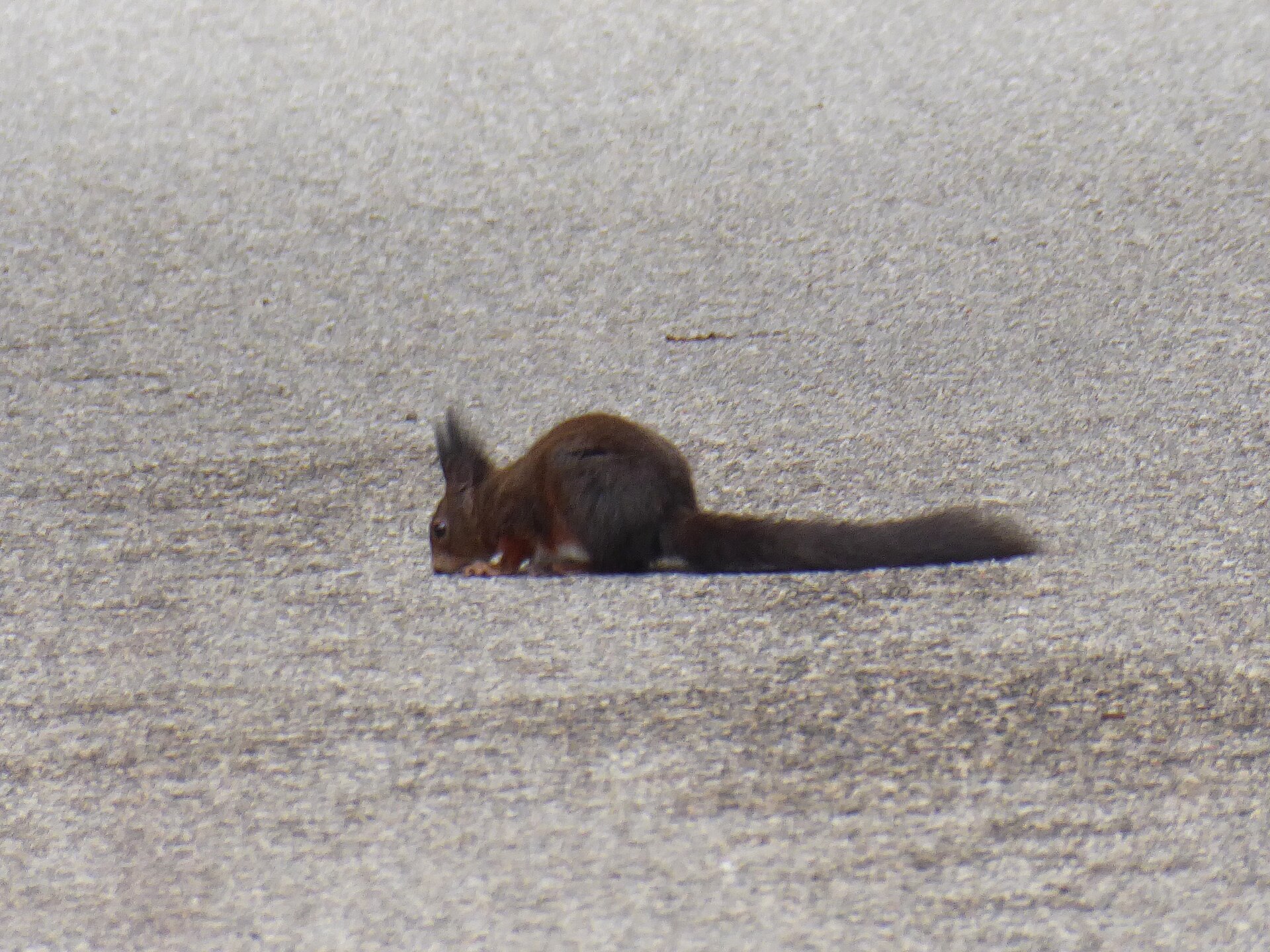
Red-brown to almost black, with a long bushy tail it uses for balance and, in winter, striking ear tufts. Dark animals are not another species but a colour form. Gnawed pine cones at the foot of a tree give it away even when you do not see the animal itself.
The whole of the Netherlands, in coniferous and broadleaved woodland, and in parks, cemeteries and gardens with old trees.
This is a common, widespread species: you can come across it in far more places than the areas listed below. Treat that list as a starting point rather than a full survey.
Nationaal Park Utrechtse Heuvelrug
Nationwide period: Present all year; it does not hibernate. It is most active from September to November, when it collects and hides nuts, and in February and March during the mating season, when you see them chasing one another through the canopy.
NDFF open data, 1.155 records 2016-2026
Nationwide period: Present all year; it does not hibernate. It is most active from September to November, when it collects and hides nuts, and in February and March during the mating season, when you see them chasing one another through the canopy.
NDFF open data, 678 records 2016-2026
Nationwide period: Present all year; it does not hibernate. It is most active from September to November, when it collects and hides nuts, and in February and March during the mating season, when you see them chasing one another through the canopy.
NDFF open data, 711 records 2016-2026
Nationwide period: Present all year; it does not hibernate. It is most active from September to November, when it collects and hides nuts, and in February and March during the mating season, when you see them chasing one another through the canopy.
NDFF open data, 296 records 2016-2026
Nationwide period: Present all year; it does not hibernate. It is most active from September to November, when it collects and hides nuts, and in February and March during the mating season, when you see them chasing one another through the canopy.
NDFF open data, 81 records 2016-2026
Nationwide period: Present all year; it does not hibernate. It is most active from September to November, when it collects and hides nuts, and in February and March during the mating season, when you see them chasing one another through the canopy.
Kennemerduinen.com
Nationwide period: Present all year; it does not hibernate. It is most active from September to November, when it collects and hides nuts, and in February and March during the mating season, when you see them chasing one another through the canopy.
NDFF open data, 1.243 records 2016-2026
Nationwide period: Present all year; it does not hibernate. It is most active from September to November, when it collects and hides nuts, and in February and March during the mating season, when you see them chasing one another through the canopy.
NDFF open data, 520 records 2016-2026
Nationwide period: Present all year; it does not hibernate. It is most active from September to November, when it collects and hides nuts, and in February and March during the mating season, when you see them chasing one another through the canopy.
NDFF open data, 1.087 records 2016-2026
Nationwide period: Present all year; it does not hibernate. It is most active from September to November, when it collects and hides nuts, and in February and March during the mating season, when you see them chasing one another through the canopy.
NDFF open data, 54 records 2016-2026
Nationwide period: Present all year; it does not hibernate. It is most active from September to November, when it collects and hides nuts, and in February and March during the mating season, when you see them chasing one another through the canopy.
NDFF open data, 224 records 2016-2026
Nationwide period: Present all year; it does not hibernate. It is most active from September to November, when it collects and hides nuts, and in February and March during the mating season, when you see them chasing one another through the canopy.
De Visdief · birdwatching guide to Fochteloërveen
Nationwide period: Present all year; it does not hibernate. It is most active from September to November, when it collects and hides nuts, and in February and March during the mating season, when you see them chasing one another through the canopy.
NDFF open data, 531 records 2016-2026
Nationwide period: Present all year; it does not hibernate. It is most active from September to November, when it collects and hides nuts, and in February and March during the mating season, when you see them chasing one another through the canopy.
NDFF open data, 1.142 records 2016-2026
Nationwide period: Present all year; it does not hibernate. It is most active from September to November, when it collects and hides nuts, and in February and March during the mating season, when you see them chasing one another through the canopy.
NDFF open data, 857 records 2016-2026
Nationwide period: Present all year; it does not hibernate. It is most active from September to November, when it collects and hides nuts, and in February and March during the mating season, when you see them chasing one another through the canopy.
NDFF open data, 838 records 2016-2026
Nationwide period: Present all year; it does not hibernate. It is most active from September to November, when it collects and hides nuts, and in February and March during the mating season, when you see them chasing one another through the canopy.
NDFF open data, 499 records 2016-2026
Nationwide period: Present all year; it does not hibernate. It is most active from September to November, when it collects and hides nuts, and in February and March during the mating season, when you see them chasing one another through the canopy.
NDFF open data
Nationwide period: Present all year; it does not hibernate. It is most active from September to November, when it collects and hides nuts, and in February and March during the mating season, when you see them chasing one another through the canopy.
NDFF open data
Nationwide period: Present all year; it does not hibernate. It is most active from September to November, when it collects and hides nuts, and in February and March during the mating season, when you see them chasing one another through the canopy.
NDFF open data
Nationwide period: Present all year; it does not hibernate. It is most active from September to November, when it collects and hides nuts, and in February and March during the mating season, when you see them chasing one another through the canopy.
NDFF open data
Nationwide period: Present all year; it does not hibernate. It is most active from September to November, when it collects and hides nuts, and in February and March during the mating season, when you see them chasing one another through the canopy.
NDFF open data
Nationwide period: Present all year; it does not hibernate. It is most active from September to November, when it collects and hides nuts, and in February and March during the mating season, when you see them chasing one another through the canopy.
NDFF open data
Nationwide period: Present all year; it does not hibernate. It is most active from September to November, when it collects and hides nuts, and in February and March during the mating season, when you see them chasing one another through the canopy.
NDFF open data
Nationwide period: Present all year; it does not hibernate. It is most active from September to November, when it collects and hides nuts, and in February and March during the mating season, when you see them chasing one another through the canopy.
NDFF open data, 2.301 records 2016-2026
Nationwide period: Present all year; it does not hibernate. It is most active from September to November, when it collects and hides nuts, and in February and March during the mating season, when you see them chasing one another through the canopy.
NDFF open data, 20 records 2016-2026
Nationwide period: Present all year; it does not hibernate. It is most active from September to November, when it collects and hides nuts, and in February and March during the mating season, when you see them chasing one another through the canopy.
NDFF open data, 920 records 2016-2026
Nationwide period: Present all year; it does not hibernate. It is most active from September to November, when it collects and hides nuts, and in February and March during the mating season, when you see them chasing one another through the canopy.
NDFF open data, 805 records 2016-2026
Nationwide period: Present all year; it does not hibernate. It is most active from September to November, when it collects and hides nuts, and in February and March during the mating season, when you see them chasing one another through the canopy.
NDFF open data, 681 records 2016-2026
Nationwide period: Present all year; it does not hibernate. It is most active from September to November, when it collects and hides nuts, and in February and March during the mating season, when you see them chasing one another through the canopy.
NDFF open data, 1.163 records 2016-2026
Nationwide period: Present all year; it does not hibernate. It is most active from September to November, when it collects and hides nuts, and in February and March during the mating season, when you see them chasing one another through the canopy.
NDFF open data, 566 records 2016-2026
Nationwide period: Present all year; it does not hibernate. It is most active from September to November, when it collects and hides nuts, and in February and March during the mating season, when you see them chasing one another through the canopy.
These links come straight from our database, with the chance, the source and the evidence level for each area.
Green = present · orange = peak period. The bar is generated from our database.