
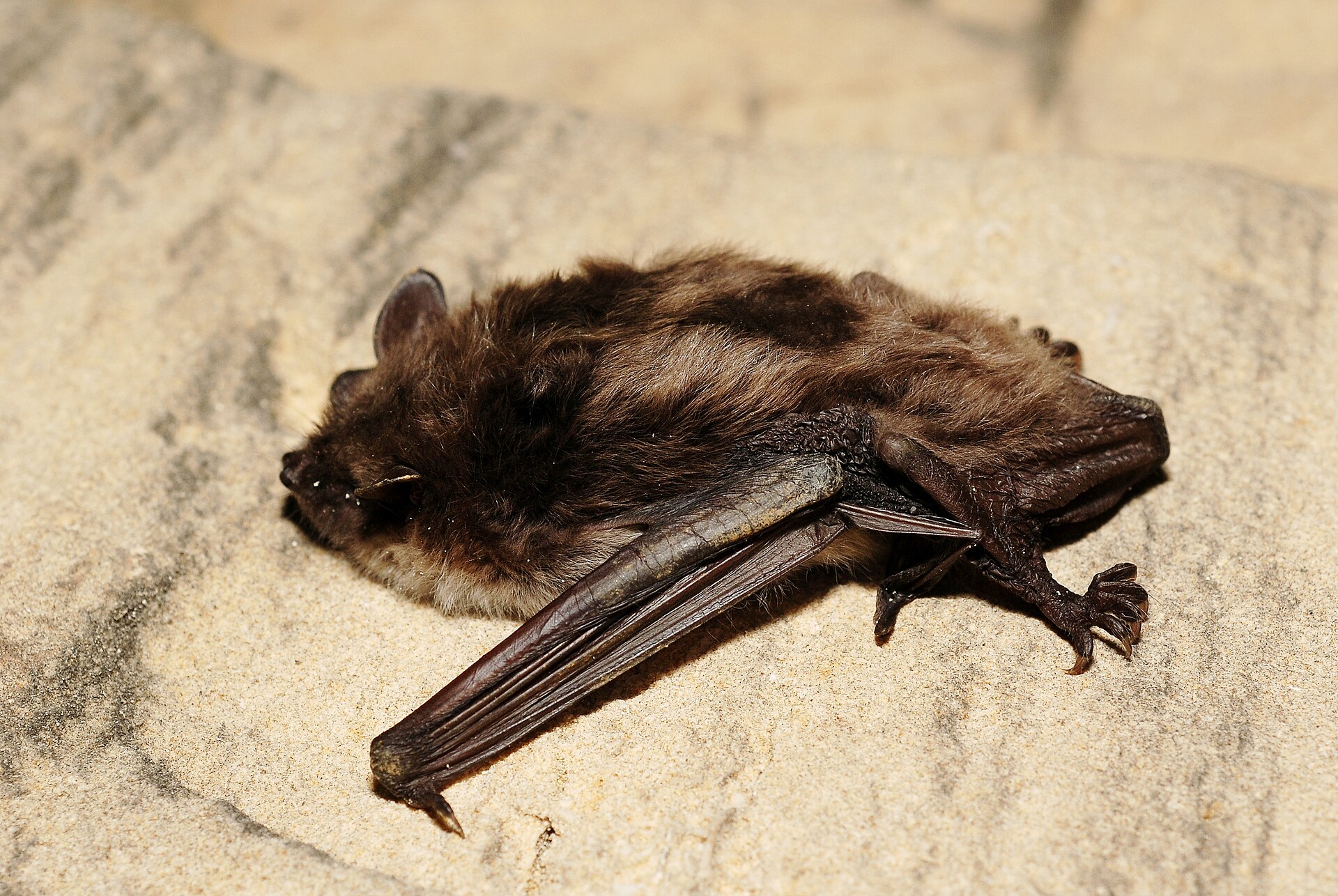
Where to see the pond bat in the Netherlands
With luck 🦇 Mammal (bat) Sensitive species · R2
🛡️ No exact locations, on purpose
This is a sensitive species. We deliberately show no resting places such as setts, burrows or winter roosts, and no photographs in which such a place is recognisable. Why we do that.
Where and when do you see a pond bat? With some luck you can see this species, from April to October.
How do you recognise a pond bat?
A fairly large bat with long, broad wings: body 57 to 67 millimetres, 14 to 20 grams, wingspan 20 to 30 centimetres. The back fur is a medium to dark brown-grey and contrasts with a whitish grey belly. Characteristic are the large feet with long sensory hairs and the fairly large nostril pads on the muzzle.
What can you confuse a pond bat with?
Looks like: Daubenton's bat
- Daubenton's bat: Daubenton's bat is smaller and skims a fixed round over smaller, still water; the pond bat flies higher and straighter over large lakes and meres.
Where do you see this species in the Netherlands?
The summer population is concentrated in the west and north-west of the Netherlands; it overwinters in the marl quarries of Limburg and in bunkers in South and North Holland.
📍 Nationaal Park De Hoge Veluwe
presence reported📍 Oostvaardersplassen
presence reported📍 Nationaal Park Weerribben-Wieden
presence reported📍 Nationaal Park Zuid-Kennemerland
presence reported📍 Amsterdamse Waterleidingduinen
presence reported📍 Nationaal Park De Alde Feanen
presence reported📍 Sint-Pietersberg & Zuid-Limburg
presence reported📍 Kroondomein Het Loo
presence reported📍 Naardermeer
presence reported📍 Onlanden & Leekstermeer
presence reported📍 Gelderse Poort & Millingerwaard
presence reported📍 Planken Wambuis
presence reported📍 Blauwe Kamer
presence reported📍 Oostelijke Vechtplassen
presence reported📍 Wormer- en Jisperveld
presence reported📍 Ilperveld
presence reported📍 Zuidlaardermeergebied en Hunzedal
presence reported📍 Meijendel & Berkheide
presence reported📍 Loonse en Drunense Duinen
presence reported📍 Schoorlse Duinen
presence reportedThese links come straight from our database, with the chance, the source and the evidence level for each area.
When is the best time?
Green = present · orange = peak period. The bar is generated from our database.
Best period: April to October; in winter in underground roosts.
Best time of day: Thirty to ninety minutes after sunset.
Recent sightings
👁️ Where has this species been seen recently?
Check the current sightings on Waarneming.nl. A useful addition to our own verified information.
Current sightings on Waarneming.nl →
Note: for sensitive species the source already blurs or withholds sightings. We do not reproduce exact locations.
How to improve your chances
- Keep the wind in your face. Most mammals will smell you long before they see you.
- Arrive before sunrise and then stay put. Sitting still beats walking about.
- Wear muted colours, skip the scent, and put your phone on silent.
- Be patient. Expect to come back more than once before it works.
🎒 What you need for this
A bat detector; above water you can also follow it with a torch along the bank
Photography
Stand by a broad waterway on a still evening and aim at the water surface: it flies low and straight, back and forth along fixed routes. With a lamp along the water and a short shutter speed the splashes of its raking can be made visible
🌿 Watching responsibly
Keep your distance, stay on the paths, and never lure animals with food or sound. Leave as soon as an animal becomes uneasy. This is a sensitive species. We deliberately show no resting places such as setts, burrows or winter roosts, and no photographs in which such a place is recognisable.
Status: Verified · Last checked: 2026-08-07