Where to see the bank vole in the Netherlands
With luck 🦌 Mammal (land)
Where and when do you see a bank vole? With some luck you can see this species, all year round.
How do you recognise a bank vole?
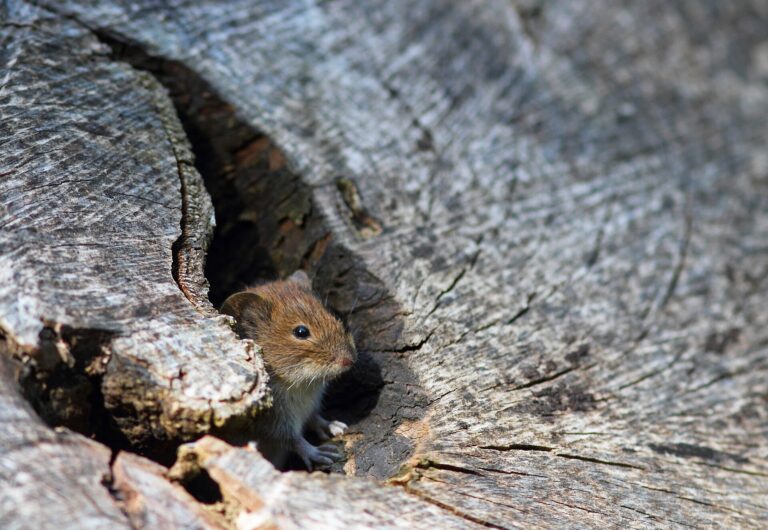
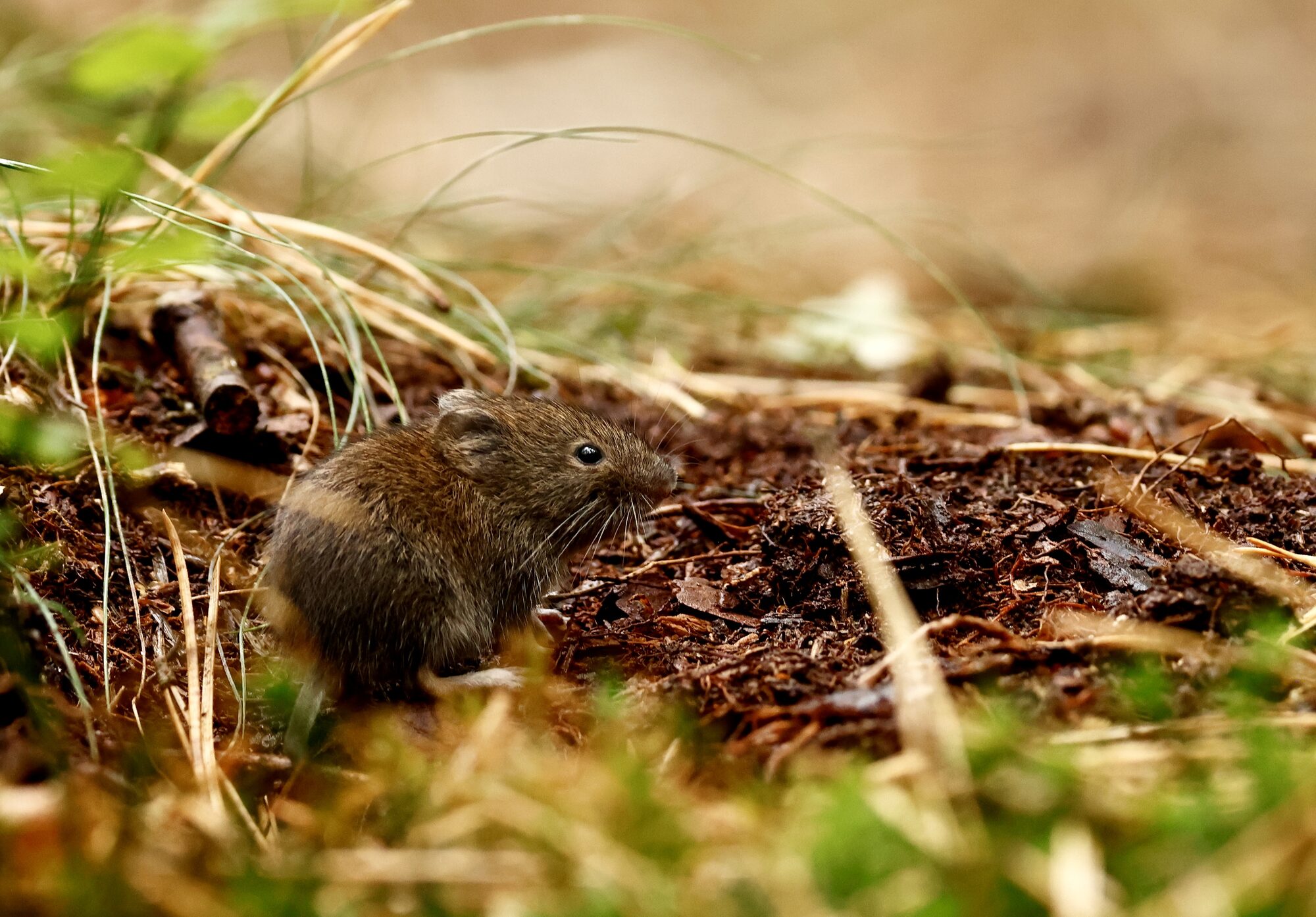
A vole with a chestnut-red back, large eyes, visible ears and a fairly long, two-toned tail.
What tracks does a bank vole leave?
Print: the forefoot is 9 mm long and 7 mm wide with four toes, the hind foot 13 mm long and just as wide with five toes; the print cannot be told apart from that of other voles. Trail: walking, with the hind foot landing behind the forefoot. Droppings: 4 to 7 mm long and 2 to 3 mm thick, brown to black and less green than those of other voles, on its runways and above all at the junctions. Feeding signs: gnawed hazelnuts, beech nuts and acorns, and fine scratches 1 to 2 mm wide in the bark of trees.
Where do you see this species in the Netherlands?
Deciduous and mixed woodland with a shrub layer, hedgerows and hedges; almost the whole country.
This is a common, widespread species: you can come across it in far more places than the areas listed below. Treat that list as a starting point rather than a full survey.
📍 Nationaal Park De Biesbosch
presence reported📍 Nationaal Park De Hoge Veluwe
presence reported📍 Nationaal Park Veluwezoom
presence reported📍 Oostvaardersplassen
presence reported📍 Nationaal Park Weerribben-Wieden
presence reported📍 Nationaal Park Dwingelderveld
presence reported📍 Nationaal Park Drents-Friese Wold
presence reported📍 Nationaal Park De Groote Peel
presence reported📍 Nationaal Park Zuid-Kennemerland
presence reported📍 Amsterdamse Waterleidingduinen
presence reported📍 Nationaal Park Duinen van Texel
presence reported📍 Nationaal Park De Alde Feanen
presence reported📍 Nationaal Park De Maasduinen
presence reported📍 Nationaal Park Sallandse Heuvelrug
presence reported📍 Nationaal Park De Meinweg
presence reported📍 Nationaal Park Utrechtse Heuvelrug
presence reported📍 Sint-Pietersberg & Zuid-Limburg
presence reported📍 Fochteloërveen
presence reported📍 Nationaal Park Zuid-Limburg (in formation)
presence reported📍 Kroondomein Het Loo
presence reported📍 Deelerwoude
presence reported📍 Naardermeer
presence reported📍 Onlanden & Leekstermeer
presence reported📍 Zwin & Zeeuws-Vlaanderen
presence reported📍 Gelderse Poort & Millingerwaard
presence reported📍 Planken Wambuis
presence reported📍 Leuvenumse Bossen
presence reported📍 Blauwe Kamer
presence reported📍 Zouweboezem
presence reported📍 Oostelijke Vechtplassen
presence reported📍 Noordhollands Duinreservaat
presence reported📍 Wormer- en Jisperveld
presence reported📍 Ilperveld
presence reported📍 Zuidlaardermeergebied en Hunzedal
presence reported📍 Landgoed Ennemaborg
presence reported📍 Meijendel & Berkheide
presence reported📍 Voornes Duin
presence reported📍 Kampina & Oisterwijkse Vennen
presence reported📍 De Maashorst
presence reported📍 Strabrechtse Heide & Beuven
presence reported📍 Loonse en Drunense Duinen
presence reported📍 Schoorlse Duinen
presence reported📍 Haringvlietsluizen
presence reported📍 De Putten bij Camperduin
presence reportedThese links come straight from our database, with the chance, the source and the evidence level for each area.
When is the best time?
Green = present · orange = peak period. The bar is generated from our database.
Best period: All year; breeding February to October.
Best time of day: By day and by night; in winter mainly by day.
Recent sightings
👁️ Where has this species been seen recently?
Check the current sightings on Waarneming.nl. A useful addition to our own verified information.
How to improve your chances
- Keep the wind in your face. Most mammals will smell you long before they see you.
- Arrive before sunrise and then stay put. Sitting still beats walking about.
- Wear muted colours, skip the scent, and put your phone on silent.
- Be patient. Expect to come back more than once before it works.
🎒 What you need for this
Patience; sitting still at a woodland edge
🌿 Watching responsibly
Keep your distance, stay on the paths, and never lure animals with food or sound. Leave as soon as an animal becomes uneasy.
Status: Verified · Last checked: 2026-08-08
More photos