
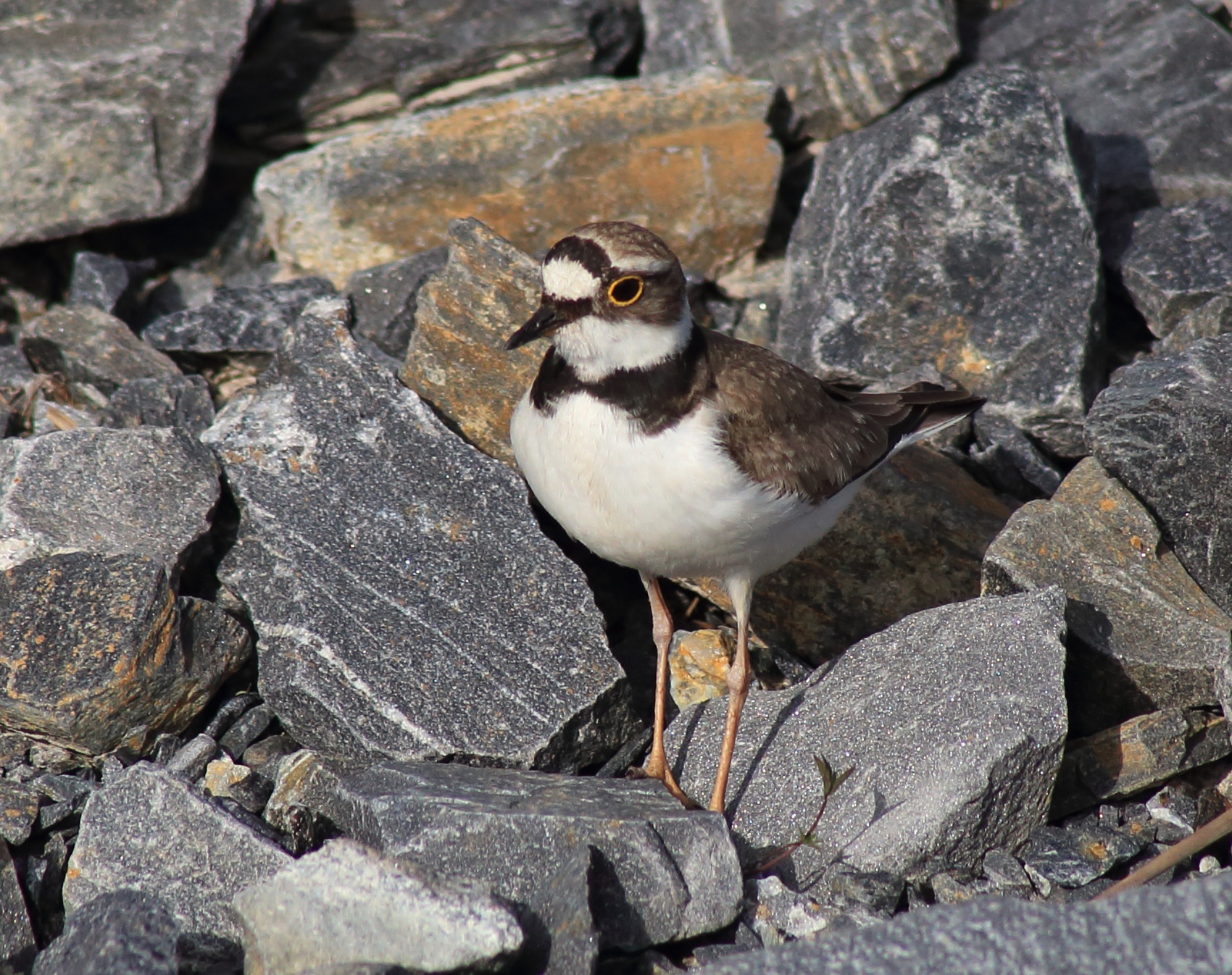
Little Ringed Plover
📷 Estormiz, CC0 (Wikimedia Commons)

Where to see the Little Ringed Plover in the Netherlands

Charadrius dubius · Little Ringed Plover

With luck 🦅 Bird

Where and when do you see a Little Ringed Plover? With some luck you can see this species, from March to September.

How do you recognise a Little Ringed Plover?

Length 14 to 15 cm, wingspan 42 to 48 cm. A small, slender plover with black and white head and breast markings, an all-black bill, pale pink legs and a striking yellow eye-ring.

What does a Little Ringed Plover sound like?

Recording: Jens Loose, CC BY-SA 4.0, via Wikimedia Commons

Where do you see this species in the Netherlands?

Sand quarries, building sites and bare pioneer ground inland.

This is a common, widespread species: you can come across it in far more places than the areas listed below. Treat that list as a starting point rather than a full survey.

How certain is this? verified chance per source presence reported Links that do not clear the bottom threshold are not published. How we decide that.
NDFF open data, 3.675 records 2016-2026
Nationwide period: April to August; migration March to April and August to September.

📍 Amsterdamse Waterleidingduinen

With luck chance per source
De Visdief · birdwatching guide to AWD
Nationwide period: April to August; migration March to April and August to September.
NDFF open data, 1.408 records 2016-2026
Nationwide period: April to August; migration March to April and August to September.
NDFF open data, 1.346 records 2016-2026
Nationwide period: April to August; migration March to April and August to September.

📍 Oostvaardersplassen

presence reported
NDFF open data, 1.122 records 2016-2026
Nationwide period: April to August; migration March to April and August to September.

📍 Naardermeer

presence reported
NDFF open data, 781 records 2016-2026
Nationwide period: April to August; migration March to April and August to September.

📍 Nationaal Park Zuid-Kennemerland

With luck chance per source
Birdingplaces · Vogelmeer
Nationwide period: April to August; migration March to April and August to September.

📍 Sint-Pietersberg & Zuid-Limburg

With luck chance per source
De Visdief · birdwatching guide to Sint-Pietersberg
Nationwide period: April to August; migration March to April and August to September.
NDFF open data, 408 records 2016-2026
Nationwide period: April to August; migration March to April and August to September.
NDFF open data, 363 records 2016-2026
Nationwide period: April to August; migration March to April and August to September.
NDFF open data, 343 records 2016-2026
Nationwide period: April to August; migration March to April and August to September.

📍 Zwin & Zeeuws-Vlaanderen

presence reported
NDFF open data, 244 records 2016-2026
Nationwide period: April to August; migration March to April and August to September.

📍 Fochteloërveen

presence reported
NDFF open data, 102 records 2016-2026
Nationwide period: April to August; migration March to April and August to September.

📍 Marker Wadden

With luck chance per source
Natuurmonumenten, the site manager
Nationwide period: April to August; migration March to April and August to September.

📍 Blauwe Kamer

presence reported
NDFF open data
Nationwide period: April to August; migration March to April and August to September.

📍 Zouweboezem

presence reported
NDFF open data
Nationwide period: April to August; migration March to April and August to September.

📍 Oostelijke Vechtplassen

presence reported
NDFF open data
Nationwide period: April to August; migration March to April and August to September.
NDFF open data
Nationwide period: April to August; migration March to April and August to September.

📍 Wormer- en Jisperveld

presence reported
NDFF open data
Nationwide period: April to August; migration March to April and August to September.

📍 Ilperveld

presence reported
NDFF open data
Nationwide period: April to August; migration March to April and August to September.

📍 De Dollard

presence reported
NDFF open data
Nationwide period: April to August; migration March to April and August to September.
NDFF open data
Nationwide period: April to August; migration March to April and August to September.

📍 Meijendel & Berkheide

presence reported
NDFF open data, 4.797 records 2016-2026
Nationwide period: April to August; migration March to April and August to September.

📍 Voornes Duin

presence reported
NDFF open data, 561 records 2016-2026
Nationwide period: April to August; migration March to April and August to September.
NDFF open data, 476 records 2016-2026
Nationwide period: April to August; migration March to April and August to September.

📍 De Maashorst

presence reported
NDFF open data, 1.223 records 2016-2026
Nationwide period: April to August; migration March to April and August to September.
NDFF open data, 848 records 2016-2026
Nationwide period: April to August; migration March to April and August to September.

📍 Loonse en Drunense Duinen

presence reported
NDFF open data, 879 records 2016-2026
Nationwide period: April to August; migration March to April and August to September.

📍 Schoorlse Duinen

presence reported
NDFF open data, 2.417 records 2016-2026
Nationwide period: April to August; migration March to April and August to September.

📍 De Putten bij Camperduin

presence reported
NDFF open data, 1.664 records 2016-2026
Nationwide period: April to August; migration March to April and August to September.

These links come straight from our database, with the chance, the source and the evidence level for each area.

When is the best time?

Green = present · orange = peak period. The bar is generated from our database.

Best period: April to August; migration March to April and August to September.

Best time of day: During the day.

Recent sightings

👁️ Where has this species been seen recently?

Check the current sightings on Waarneming.nl. A useful addition to our own verified information.

Current sightings on Waarneming.nl →

How to improve your chances

  • Learn the calls first. You will hear most birds before you see them.
  • Go in the first hour after sunrise, when the song is at its peak and the wind is still down.
  • Use a hide or natural cover. Sitting still gets you more than walking closer.
  • Keep the sun behind you. Against the light you see a silhouette and no colour.

🎒 What you need for this

Binoculars

🌿 Watching responsibly

Keep your distance, stay on the paths, and never lure animals with food or sound. Leave as soon as an animal becomes uneasy.

Sources: Vogelbescherming Nederland en Sovon Vogelonderzoek Nederland; Vogelbescherming Nederland (vogelgids), geraadpleegd 02-11-2026
Status: Verified · Last checked: 2026-08-08