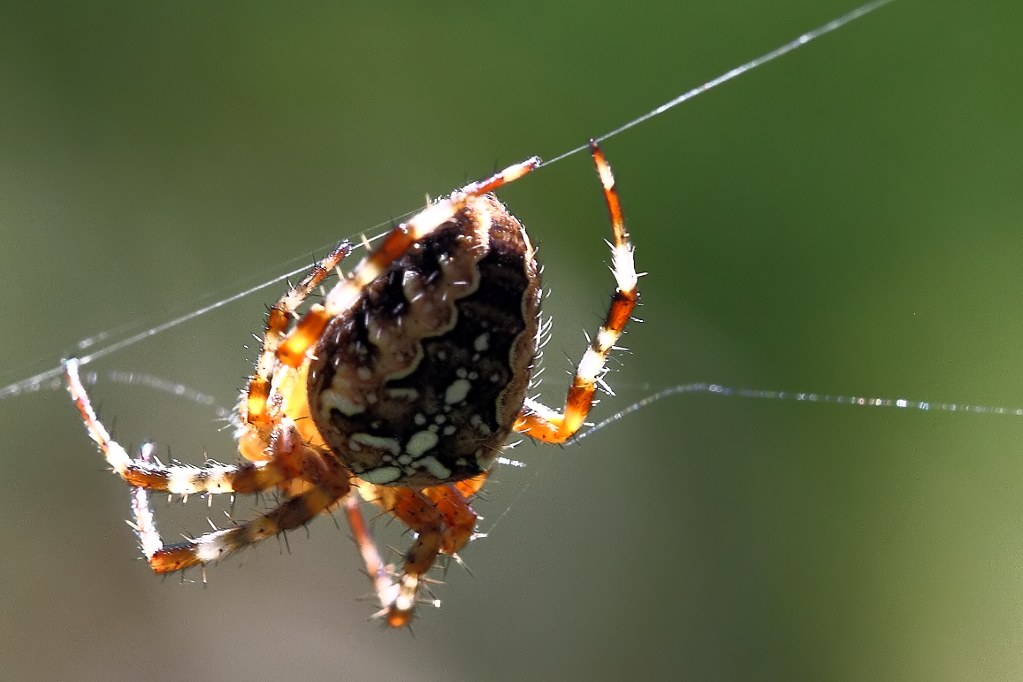
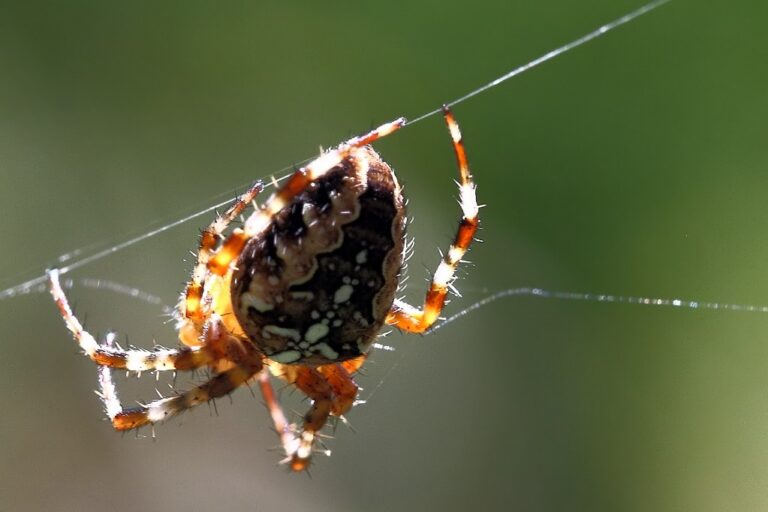
A sturdy orb-web spider with a rounded abdomen and a white cross of pale spots on top. The ground colour varies a great deal: the British Arachnological Society calls it "sandy brown, fox-red and almost black". Females are 10 to 22.5 mm, males 4 to 11 mm. The body lengths come from Spiders of Europe (Nentwig et al., araneae.nmbe.ch); those are European ranges, not Dutch measurements.
Throughout the country, in gardens, parks, wood edges and along buildings. Spiders of Europe gives the habitat as "On herbs and bushes, mostly in forest edges, in gardens and at buildings".
NDFF open data, 147 records 2016-2026
Nationwide period: June to November inclusive; the animals are largest and most conspicuous in August and September. The BAS writes that they are "commonly seen between June and November when the first frosts kill them off". Note: the months come from British sources (the British Arachnological Society and NatureSpot). Dutch phenology data per spider species could not be consulted — waarneming.nl and the Nederlands Soortenregister blocked automated access. The climate is comparable, but this is not a Dutch measurement.
NDFF open data, 195 records 2016-2026
Nationwide period: June to November inclusive; the animals are largest and most conspicuous in August and September. The BAS writes that they are "commonly seen between June and November when the first frosts kill them off". Note: the months come from British sources (the British Arachnological Society and NatureSpot). Dutch phenology data per spider species could not be consulted — waarneming.nl and the Nederlands Soortenregister blocked automated access. The climate is comparable, but this is not a Dutch measurement.
NDFF open data, 73 records 2016-2026
Nationwide period: June to November inclusive; the animals are largest and most conspicuous in August and September. The BAS writes that they are "commonly seen between June and November when the first frosts kill them off". Note: the months come from British sources (the British Arachnological Society and NatureSpot). Dutch phenology data per spider species could not be consulted — waarneming.nl and the Nederlands Soortenregister blocked automated access. The climate is comparable, but this is not a Dutch measurement.
NDFF open data, 42 records 2016-2026
Nationwide period: June to November inclusive; the animals are largest and most conspicuous in August and September. The BAS writes that they are "commonly seen between June and November when the first frosts kill them off". Note: the months come from British sources (the British Arachnological Society and NatureSpot). Dutch phenology data per spider species could not be consulted — waarneming.nl and the Nederlands Soortenregister blocked automated access. The climate is comparable, but this is not a Dutch measurement.
NDFF open data, 153 records 2016-2026
Nationwide period: June to November inclusive; the animals are largest and most conspicuous in August and September. The BAS writes that they are "commonly seen between June and November when the first frosts kill them off". Note: the months come from British sources (the British Arachnological Society and NatureSpot). Dutch phenology data per spider species could not be consulted — waarneming.nl and the Nederlands Soortenregister blocked automated access. The climate is comparable, but this is not a Dutch measurement.
NDFF open data, 190 records 2016-2026
Nationwide period: June to November inclusive; the animals are largest and most conspicuous in August and September. The BAS writes that they are "commonly seen between June and November when the first frosts kill them off". Note: the months come from British sources (the British Arachnological Society and NatureSpot). Dutch phenology data per spider species could not be consulted — waarneming.nl and the Nederlands Soortenregister blocked automated access. The climate is comparable, but this is not a Dutch measurement.
NDFF open data, 297 records 2016-2026
Nationwide period: June to November inclusive; the animals are largest and most conspicuous in August and September. The BAS writes that they are "commonly seen between June and November when the first frosts kill them off". Note: the months come from British sources (the British Arachnological Society and NatureSpot). Dutch phenology data per spider species could not be consulted — waarneming.nl and the Nederlands Soortenregister blocked automated access. The climate is comparable, but this is not a Dutch measurement.
NDFF open data, 155 records 2016-2026
Nationwide period: June to November inclusive; the animals are largest and most conspicuous in August and September. The BAS writes that they are "commonly seen between June and November when the first frosts kill them off". Note: the months come from British sources (the British Arachnological Society and NatureSpot). Dutch phenology data per spider species could not be consulted — waarneming.nl and the Nederlands Soortenregister blocked automated access. The climate is comparable, but this is not a Dutch measurement.
NDFF open data, 21 records 2016-2026
Nationwide period: June to November inclusive; the animals are largest and most conspicuous in August and September. The BAS writes that they are "commonly seen between June and November when the first frosts kill them off". Note: the months come from British sources (the British Arachnological Society and NatureSpot). Dutch phenology data per spider species could not be consulted — waarneming.nl and the Nederlands Soortenregister blocked automated access. The climate is comparable, but this is not a Dutch measurement.
NDFF open data, 28 records 2016-2026
Nationwide period: June to November inclusive; the animals are largest and most conspicuous in August and September. The BAS writes that they are "commonly seen between June and November when the first frosts kill them off". Note: the months come from British sources (the British Arachnological Society and NatureSpot). Dutch phenology data per spider species could not be consulted — waarneming.nl and the Nederlands Soortenregister blocked automated access. The climate is comparable, but this is not a Dutch measurement.
NDFF open data, 40 records 2016-2026
Nationwide period: June to November inclusive; the animals are largest and most conspicuous in August and September. The BAS writes that they are "commonly seen between June and November when the first frosts kill them off". Note: the months come from British sources (the British Arachnological Society and NatureSpot). Dutch phenology data per spider species could not be consulted — waarneming.nl and the Nederlands Soortenregister blocked automated access. The climate is comparable, but this is not a Dutch measurement.
NDFF open data, 30 records 2016-2026
Nationwide period: June to November inclusive; the animals are largest and most conspicuous in August and September. The BAS writes that they are "commonly seen between June and November when the first frosts kill them off". Note: the months come from British sources (the British Arachnological Society and NatureSpot). Dutch phenology data per spider species could not be consulted — waarneming.nl and the Nederlands Soortenregister blocked automated access. The climate is comparable, but this is not a Dutch measurement.
NDFF open data, 69 records 2016-2026
Nationwide period: June to November inclusive; the animals are largest and most conspicuous in August and September. The BAS writes that they are "commonly seen between June and November when the first frosts kill them off". Note: the months come from British sources (the British Arachnological Society and NatureSpot). Dutch phenology data per spider species could not be consulted — waarneming.nl and the Nederlands Soortenregister blocked automated access. The climate is comparable, but this is not a Dutch measurement.
NDFF open data, 239 records 2016-2026
Nationwide period: June to November inclusive; the animals are largest and most conspicuous in August and September. The BAS writes that they are "commonly seen between June and November when the first frosts kill them off". Note: the months come from British sources (the British Arachnological Society and NatureSpot). Dutch phenology data per spider species could not be consulted — waarneming.nl and the Nederlands Soortenregister blocked automated access. The climate is comparable, but this is not a Dutch measurement.
NDFF open data, 20 records 2016-2026
Nationwide period: June to November inclusive; the animals are largest and most conspicuous in August and September. The BAS writes that they are "commonly seen between June and November when the first frosts kill them off". Note: the months come from British sources (the British Arachnological Society and NatureSpot). Dutch phenology data per spider species could not be consulted — waarneming.nl and the Nederlands Soortenregister blocked automated access. The climate is comparable, but this is not a Dutch measurement.
NDFF open data, 10 records 2016-2026
Nationwide period: June to November inclusive; the animals are largest and most conspicuous in August and September. The BAS writes that they are "commonly seen between June and November when the first frosts kill them off". Note: the months come from British sources (the British Arachnological Society and NatureSpot). Dutch phenology data per spider species could not be consulted — waarneming.nl and the Nederlands Soortenregister blocked automated access. The climate is comparable, but this is not a Dutch measurement.
NDFF open data, 87 records 2016-2026
Nationwide period: June to November inclusive; the animals are largest and most conspicuous in August and September. The BAS writes that they are "commonly seen between June and November when the first frosts kill them off". Note: the months come from British sources (the British Arachnological Society and NatureSpot). Dutch phenology data per spider species could not be consulted — waarneming.nl and the Nederlands Soortenregister blocked automated access. The climate is comparable, but this is not a Dutch measurement.
NDFF open data, 34 records 2016-2026
Nationwide period: June to November inclusive; the animals are largest and most conspicuous in August and September. The BAS writes that they are "commonly seen between June and November when the first frosts kill them off". Note: the months come from British sources (the British Arachnological Society and NatureSpot). Dutch phenology data per spider species could not be consulted — waarneming.nl and the Nederlands Soortenregister blocked automated access. The climate is comparable, but this is not a Dutch measurement.
NDFF open data, 174 records 2016-2026
Nationwide period: June to November inclusive; the animals are largest and most conspicuous in August and September. The BAS writes that they are "commonly seen between June and November when the first frosts kill them off". Note: the months come from British sources (the British Arachnological Society and NatureSpot). Dutch phenology data per spider species could not be consulted — waarneming.nl and the Nederlands Soortenregister blocked automated access. The climate is comparable, but this is not a Dutch measurement.
NDFF open data, 11 records 2016-2026
Nationwide period: June to November inclusive; the animals are largest and most conspicuous in August and September. The BAS writes that they are "commonly seen between June and November when the first frosts kill them off". Note: the months come from British sources (the British Arachnological Society and NatureSpot). Dutch phenology data per spider species could not be consulted — waarneming.nl and the Nederlands Soortenregister blocked automated access. The climate is comparable, but this is not a Dutch measurement.
NDFF open data, 26 records 2016-2026
Nationwide period: June to November inclusive; the animals are largest and most conspicuous in August and September. The BAS writes that they are "commonly seen between June and November when the first frosts kill them off". Note: the months come from British sources (the British Arachnological Society and NatureSpot). Dutch phenology data per spider species could not be consulted — waarneming.nl and the Nederlands Soortenregister blocked automated access. The climate is comparable, but this is not a Dutch measurement.
NDFF open data, 69 records 2016-2026
Nationwide period: June to November inclusive; the animals are largest and most conspicuous in August and September. The BAS writes that they are "commonly seen between June and November when the first frosts kill them off". Note: the months come from British sources (the British Arachnological Society and NatureSpot). Dutch phenology data per spider species could not be consulted — waarneming.nl and the Nederlands Soortenregister blocked automated access. The climate is comparable, but this is not a Dutch measurement.
NDFF open data, 133 records 2016-2026
Nationwide period: June to November inclusive; the animals are largest and most conspicuous in August and September. The BAS writes that they are "commonly seen between June and November when the first frosts kill them off". Note: the months come from British sources (the British Arachnological Society and NatureSpot). Dutch phenology data per spider species could not be consulted — waarneming.nl and the Nederlands Soortenregister blocked automated access. The climate is comparable, but this is not a Dutch measurement.
NDFF open data, 179 records 2016-2026
Nationwide period: June to November inclusive; the animals are largest and most conspicuous in August and September. The BAS writes that they are "commonly seen between June and November when the first frosts kill them off". Note: the months come from British sources (the British Arachnological Society and NatureSpot). Dutch phenology data per spider species could not be consulted — waarneming.nl and the Nederlands Soortenregister blocked automated access. The climate is comparable, but this is not a Dutch measurement.
NDFF open data, 28 records 2016-2026
Nationwide period: June to November inclusive; the animals are largest and most conspicuous in August and September. The BAS writes that they are "commonly seen between June and November when the first frosts kill them off". Note: the months come from British sources (the British Arachnological Society and NatureSpot). Dutch phenology data per spider species could not be consulted — waarneming.nl and the Nederlands Soortenregister blocked automated access. The climate is comparable, but this is not a Dutch measurement.
NDFF open data, 238 records 2016-2026
Nationwide period: June to November inclusive; the animals are largest and most conspicuous in August and September. The BAS writes that they are "commonly seen between June and November when the first frosts kill them off". Note: the months come from British sources (the British Arachnological Society and NatureSpot). Dutch phenology data per spider species could not be consulted — waarneming.nl and the Nederlands Soortenregister blocked automated access. The climate is comparable, but this is not a Dutch measurement.
NDFF open data, 55 records 2016-2026
Nationwide period: June to November inclusive; the animals are largest and most conspicuous in August and September. The BAS writes that they are "commonly seen between June and November when the first frosts kill them off". Note: the months come from British sources (the British Arachnological Society and NatureSpot). Dutch phenology data per spider species could not be consulted — waarneming.nl and the Nederlands Soortenregister blocked automated access. The climate is comparable, but this is not a Dutch measurement.
NDFF open data, 363 records 2016-2026
Nationwide period: June to November inclusive; the animals are largest and most conspicuous in August and September. The BAS writes that they are "commonly seen between June and November when the first frosts kill them off". Note: the months come from British sources (the British Arachnological Society and NatureSpot). Dutch phenology data per spider species could not be consulted — waarneming.nl and the Nederlands Soortenregister blocked automated access. The climate is comparable, but this is not a Dutch measurement.
NDFF open data, 174 records 2016-2026
Nationwide period: June to November inclusive; the animals are largest and most conspicuous in August and September. The BAS writes that they are "commonly seen between June and November when the first frosts kill them off". Note: the months come from British sources (the British Arachnological Society and NatureSpot). Dutch phenology data per spider species could not be consulted — waarneming.nl and the Nederlands Soortenregister blocked automated access. The climate is comparable, but this is not a Dutch measurement.
NDFF open data, 552 records 2016-2026
Nationwide period: June to November inclusive; the animals are largest and most conspicuous in August and September. The BAS writes that they are "commonly seen between June and November when the first frosts kill them off". Note: the months come from British sources (the British Arachnological Society and NatureSpot). Dutch phenology data per spider species could not be consulted — waarneming.nl and the Nederlands Soortenregister blocked automated access. The climate is comparable, but this is not a Dutch measurement.
NDFF open data, 227 records 2016-2026
Nationwide period: June to November inclusive; the animals are largest and most conspicuous in August and September. The BAS writes that they are "commonly seen between June and November when the first frosts kill them off". Note: the months come from British sources (the British Arachnological Society and NatureSpot). Dutch phenology data per spider species could not be consulted — waarneming.nl and the Nederlands Soortenregister blocked automated access. The climate is comparable, but this is not a Dutch measurement.
NDFF open data
Nationwide period: June to November inclusive; the animals are largest and most conspicuous in August and September. The BAS writes that they are "commonly seen between June and November when the first frosts kill them off". Note: the months come from British sources (the British Arachnological Society and NatureSpot). Dutch phenology data per spider species could not be consulted — waarneming.nl and the Nederlands Soortenregister blocked automated access. The climate is comparable, but this is not a Dutch measurement.
NDFF open data, 624 records 2016-2026
Nationwide period: June to November inclusive; the animals are largest and most conspicuous in August and September. The BAS writes that they are "commonly seen between June and November when the first frosts kill them off". Note: the months come from British sources (the British Arachnological Society and NatureSpot). Dutch phenology data per spider species could not be consulted — waarneming.nl and the Nederlands Soortenregister blocked automated access. The climate is comparable, but this is not a Dutch measurement.
NDFF open data, 137 records 2016-2026
Nationwide period: June to November inclusive; the animals are largest and most conspicuous in August and September. The BAS writes that they are "commonly seen between June and November when the first frosts kill them off". Note: the months come from British sources (the British Arachnological Society and NatureSpot). Dutch phenology data per spider species could not be consulted — waarneming.nl and the Nederlands Soortenregister blocked automated access. The climate is comparable, but this is not a Dutch measurement.
NDFF open data, 263 records 2016-2026
Nationwide period: June to November inclusive; the animals are largest and most conspicuous in August and September. The BAS writes that they are "commonly seen between June and November when the first frosts kill them off". Note: the months come from British sources (the British Arachnological Society and NatureSpot). Dutch phenology data per spider species could not be consulted — waarneming.nl and the Nederlands Soortenregister blocked automated access. The climate is comparable, but this is not a Dutch measurement.
NDFF open data, 212 records 2016-2026
Nationwide period: June to November inclusive; the animals are largest and most conspicuous in August and September. The BAS writes that they are "commonly seen between June and November when the first frosts kill them off". Note: the months come from British sources (the British Arachnological Society and NatureSpot). Dutch phenology data per spider species could not be consulted — waarneming.nl and the Nederlands Soortenregister blocked automated access. The climate is comparable, but this is not a Dutch measurement.
NDFF open data, 314 records 2016-2026
Nationwide period: June to November inclusive; the animals are largest and most conspicuous in August and September. The BAS writes that they are "commonly seen between June and November when the first frosts kill them off". Note: the months come from British sources (the British Arachnological Society and NatureSpot). Dutch phenology data per spider species could not be consulted — waarneming.nl and the Nederlands Soortenregister blocked automated access. The climate is comparable, but this is not a Dutch measurement.
NDFF open data, 349 records 2016-2026
Nationwide period: June to November inclusive; the animals are largest and most conspicuous in August and September. The BAS writes that they are "commonly seen between June and November when the first frosts kill them off". Note: the months come from British sources (the British Arachnological Society and NatureSpot). Dutch phenology data per spider species could not be consulted — waarneming.nl and the Nederlands Soortenregister blocked automated access. The climate is comparable, but this is not a Dutch measurement.
NDFF open data, 468 records 2016-2026
Nationwide period: June to November inclusive; the animals are largest and most conspicuous in August and September. The BAS writes that they are "commonly seen between June and November when the first frosts kill them off". Note: the months come from British sources (the British Arachnological Society and NatureSpot). Dutch phenology data per spider species could not be consulted — waarneming.nl and the Nederlands Soortenregister blocked automated access. The climate is comparable, but this is not a Dutch measurement.
NDFF open data, 15 records 2016-2026
Nationwide period: June to November inclusive; the animals are largest and most conspicuous in August and September. The BAS writes that they are "commonly seen between June and November when the first frosts kill them off". Note: the months come from British sources (the British Arachnological Society and NatureSpot). Dutch phenology data per spider species could not be consulted — waarneming.nl and the Nederlands Soortenregister blocked automated access. The climate is comparable, but this is not a Dutch measurement.
These links come straight from our database, with the chance, the source and the evidence level for each area.
Green = present · orange = peak period. The bar is generated from our database.
Shoot against a dark background (a patch of shade, a dark hedge) with the web backlit. Do not put the spider in the middle of the frame but slightly off centre, so that the spiral of the web runs along with it. A tripod helps: at f/8 and with a little wind you always have too little light.