
Where to see the Lesser Marsh Grasshopper in the Netherlands
Easy 🦗 Grasshopper
Where and when do you see a Lesser Marsh Grasshopper? This species is easy to see, from June to October.
How do you recognise a Lesser Marsh Grasshopper?
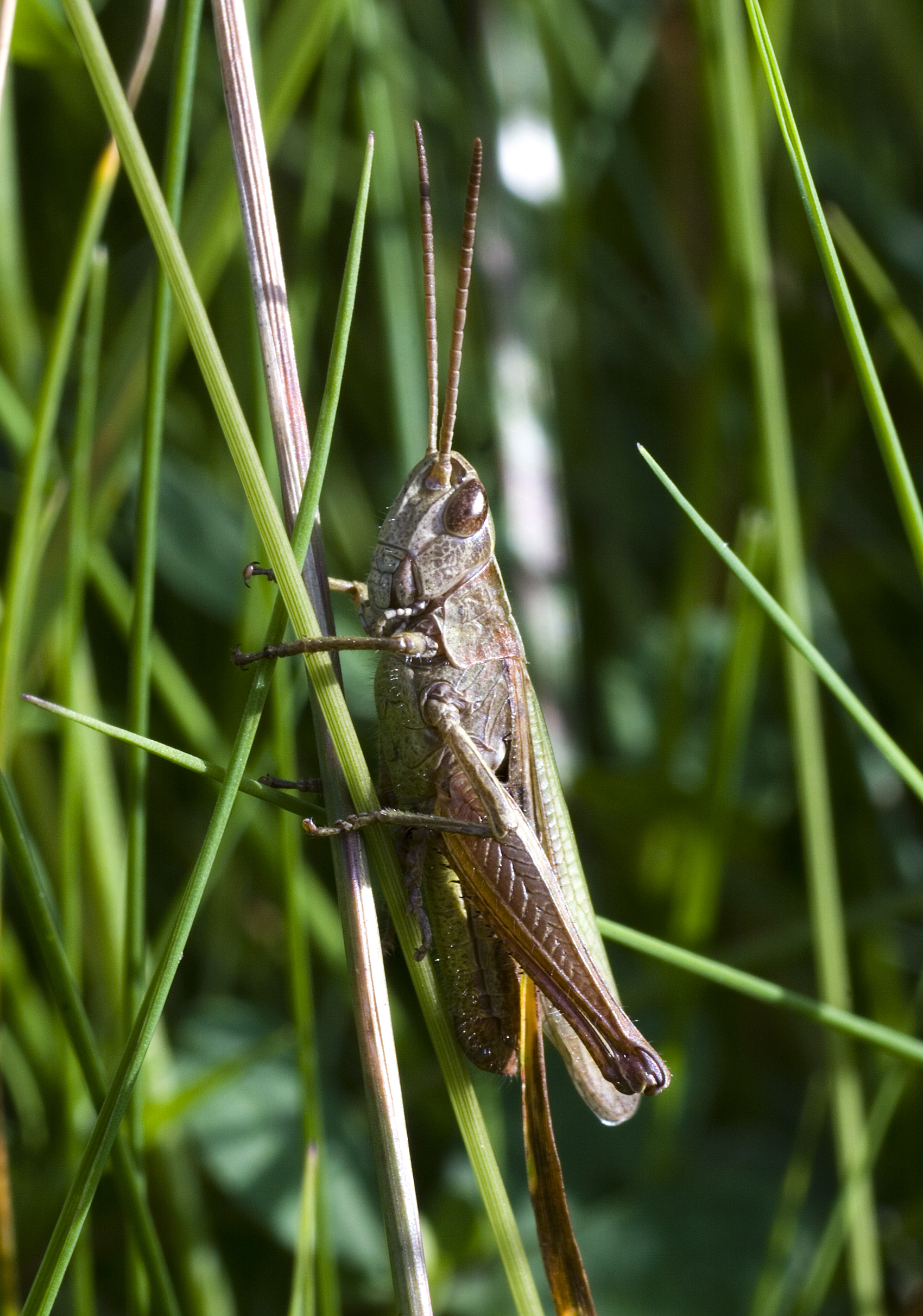
A field grasshopper of 13 to 21 millimetres, very variable in colour: brown, grey, yellowish or green. The deciding feature is on the pronotum: the keel along the upper side runs almost straight, whereas in the Common Field Grasshopper it is sharply angled. Females also have a white stripe along the edge of the forewing, which males lack.
What does a Lesser Marsh Grasshopper sound like?
Recording: http://bio.acousti.ca/sites/bio.acousti.ca/files/600_11_Chorthippus_albomarginatus_21r4.wav, CC BY 3.0, via Wikimedia Commons
Where do you see this species in the Netherlands?
A northern species which in the Netherlands occurs mainly along the coast and in the coastal dunes, and besides that in damp grassland further inland.
Habitat: Damp ground and grassland: dune valleys, salt marshes, wet meadows, dykes and shores. It tolerates salty conditions better than most other field grasshoppers.
This is a common, widespread species: you can come across it in far more places than the areas listed below. Treat that list as a starting point rather than a full survey.
📍 Nationaal Park De Alde Feanen
presence reported📍 Onlanden & Leekstermeer
presence reported📍 Naardermeer
presence reported📍 Nationaal Park Utrechtse Heuvelrug
presence reported📍 Amsterdamse Waterleidingduinen
presence reported📍 Nationaal Park Zuid-Kennemerland
presence reported📍 Grevelingenmeer
presence reported📍 IJssel-uiterwaarden
presence reported📍 IJsselmeer
presence reported📍 Haringvliet & Hollands Diep
presence reported📍 Eemland
presence reported📍 Leuvenumse Bossen
presence reported📍 Blauwe Kamer
presence reported📍 Zouweboezem
presence reported📍 Oostelijke Vechtplassen
presence reported📍 Noordhollands Duinreservaat
presence reported📍 Wormer- en Jisperveld
presence reported📍 Ilperveld
presence reported📍 Zuidlaardermeergebied en Hunzedal
presence reported📍 Meijendel & Berkheide
presence reported📍 Kampina & Oisterwijkse Vennen
presence reported📍 De Maashorst
presence reported📍 Strabrechtse Heide & Beuven
presence reported📍 Loonse en Drunense Duinen
presence reported📍 Schoorlse Duinen
presence reported📍 De Putten bij Camperduin
presence reportedThese links come straight from our database, with the chance, the source and the evidence level for each area.
When is the best time?
Green = present · orange = peak period. The bar is generated from our database.
Best period: Adults from June to October inclusive; that makes it start earlier than most species.
Best time of day: The warm hours of the day.
Recent sightings
👁️ Where has this species been seen recently?
Check the current sightings on Waarneming.nl. A useful addition to our own verified information.
How to improve your chances
- Listen first. Almost every species gives itself away by singing before you spot it.
- Go on a warm, windless afternoon. In cold or wind they fall silent.
- Walk slowly and note where the sound stops. That is where it sits, usually low in the vegetation.
- A bat detector makes audible the species that sing too high for human ears.
🎒 What you need for this
Nothing. Walk down a dune valley or a dyke slope and watch what jumps away in front of you.
Photography
The white stripe along the forewing edge of the female is a rewarding detail: shoot strictly from the side with a macro lens, so that the stripe and the straight keel on the pronotum are both sharp. Morning dew keeps the animals slow and close.
🌿 Watching responsibly
Keep your distance, stay on the paths, and never lure animals with food or sound. Leave as soon as an animal becomes uneasy.
Status: Verified · Last checked: 2026-08-08