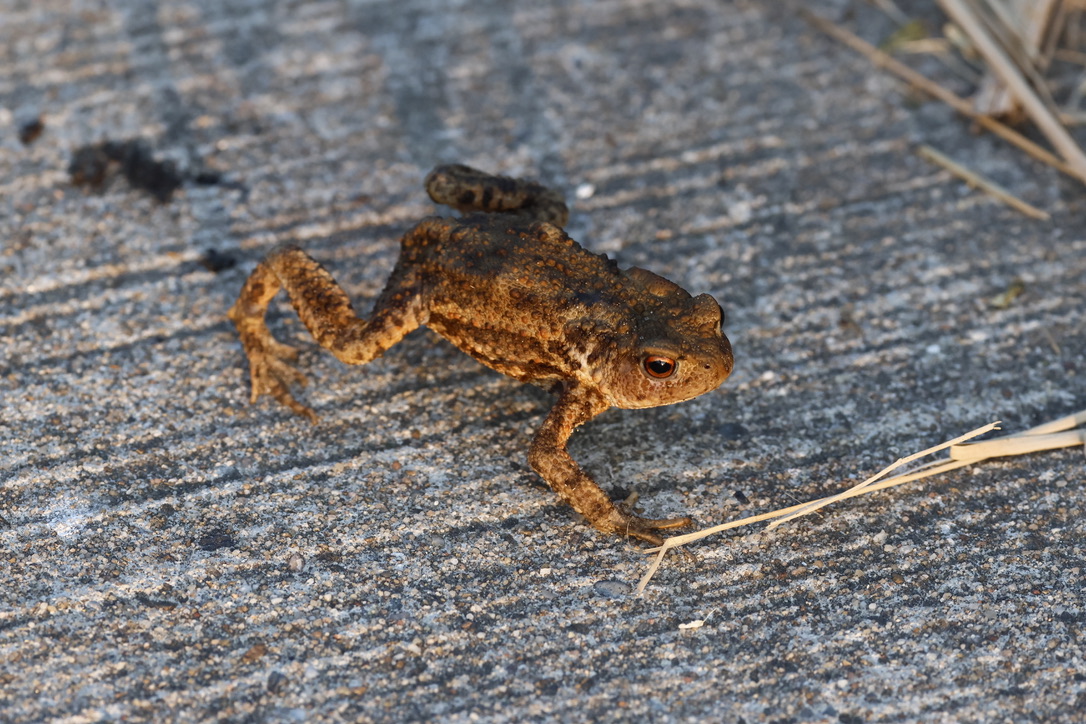
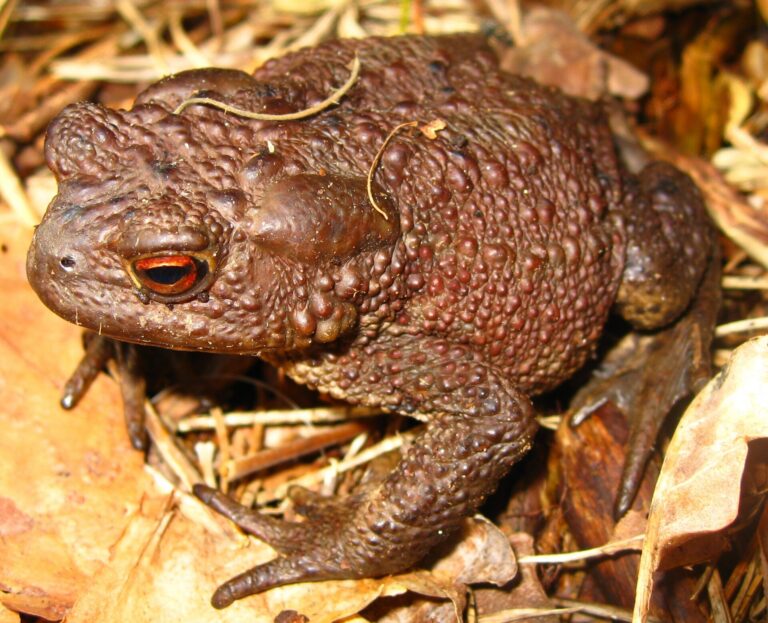
Brown to grey-brown with a clearly warty skin, copper-coloured eyes with a horizontal pupil, and a short build. It walks rather than hops, which is the clearest difference from the common frog, which is smoother and shoots away in long leaps.
The whole of the Netherlands, in gardens, woods, parks and farmland.
This is a common, widespread species: you can come across it in far more places than the areas listed below. Treat that list as a starting point rather than a full survey.
NDFF open data, 550 records 2016-2026
Nationwide period: February and March are the months of the toad migration: on mild, rainy evenings toads move to their breeding water en masse, often straight across roads. For the rest of the year the common toad lives hidden on land.
NDFF open data, 217 records 2016-2026
Nationwide period: February and March are the months of the toad migration: on mild, rainy evenings toads move to their breeding water en masse, often straight across roads. For the rest of the year the common toad lives hidden on land.
NDFF open data, 663 records 2016-2026
Nationwide period: February and March are the months of the toad migration: on mild, rainy evenings toads move to their breeding water en masse, often straight across roads. For the rest of the year the common toad lives hidden on land.
NDFF open data, 1.651 records 2016-2026
Nationwide period: February and March are the months of the toad migration: on mild, rainy evenings toads move to their breeding water en masse, often straight across roads. For the rest of the year the common toad lives hidden on land.
NDFF open data, 524 records 2016-2026
Nationwide period: February and March are the months of the toad migration: on mild, rainy evenings toads move to their breeding water en masse, often straight across roads. For the rest of the year the common toad lives hidden on land.
NDFF open data, 3.745 records 2016-2026
Nationwide period: February and March are the months of the toad migration: on mild, rainy evenings toads move to their breeding water en masse, often straight across roads. For the rest of the year the common toad lives hidden on land.
NDFF open data, 342 records 2016-2026
Nationwide period: February and March are the months of the toad migration: on mild, rainy evenings toads move to their breeding water en masse, often straight across roads. For the rest of the year the common toad lives hidden on land.
NDFF open data, 886 records 2016-2026
Nationwide period: February and March are the months of the toad migration: on mild, rainy evenings toads move to their breeding water en masse, often straight across roads. For the rest of the year the common toad lives hidden on land.
NDFF open data, 935 records 2016-2026
Nationwide period: February and March are the months of the toad migration: on mild, rainy evenings toads move to their breeding water en masse, often straight across roads. For the rest of the year the common toad lives hidden on land.
NDFF open data, 603 records 2016-2026
Nationwide period: February and March are the months of the toad migration: on mild, rainy evenings toads move to their breeding water en masse, often straight across roads. For the rest of the year the common toad lives hidden on land.
NDFF open data, 330 records 2016-2026
Nationwide period: February and March are the months of the toad migration: on mild, rainy evenings toads move to their breeding water en masse, often straight across roads. For the rest of the year the common toad lives hidden on land.
NDFF open data, 111 records 2016-2026
Nationwide period: February and March are the months of the toad migration: on mild, rainy evenings toads move to their breeding water en masse, often straight across roads. For the rest of the year the common toad lives hidden on land.
NDFF open data, 510 records 2016-2026
Nationwide period: February and March are the months of the toad migration: on mild, rainy evenings toads move to their breeding water en masse, often straight across roads. For the rest of the year the common toad lives hidden on land.
NDFF open data, 2.147 records 2016-2026
Nationwide period: February and March are the months of the toad migration: on mild, rainy evenings toads move to their breeding water en masse, often straight across roads. For the rest of the year the common toad lives hidden on land.
NDFF open data, 1.236 records 2016-2026
Nationwide period: February and March are the months of the toad migration: on mild, rainy evenings toads move to their breeding water en masse, often straight across roads. For the rest of the year the common toad lives hidden on land.
NDFF open data, 276 records 2016-2026
Nationwide period: February and March are the months of the toad migration: on mild, rainy evenings toads move to their breeding water en masse, often straight across roads. For the rest of the year the common toad lives hidden on land.
NDFF open data, 399 records 2016-2026
Nationwide period: February and March are the months of the toad migration: on mild, rainy evenings toads move to their breeding water en masse, often straight across roads. For the rest of the year the common toad lives hidden on land.
NDFF open data, 2.775 records 2016-2026
Nationwide period: February and March are the months of the toad migration: on mild, rainy evenings toads move to their breeding water en masse, often straight across roads. For the rest of the year the common toad lives hidden on land.
NDFF open data, 613 records 2016-2026
Nationwide period: February and March are the months of the toad migration: on mild, rainy evenings toads move to their breeding water en masse, often straight across roads. For the rest of the year the common toad lives hidden on land.
NDFF open data, 2.379 records 2016-2026
Nationwide period: February and March are the months of the toad migration: on mild, rainy evenings toads move to their breeding water en masse, often straight across roads. For the rest of the year the common toad lives hidden on land.
NDFF open data, 3.460 records 2016-2026
Nationwide period: February and March are the months of the toad migration: on mild, rainy evenings toads move to their breeding water en masse, often straight across roads. For the rest of the year the common toad lives hidden on land.
NDFF open data, 659 records 2016-2026
Nationwide period: February and March are the months of the toad migration: on mild, rainy evenings toads move to their breeding water en masse, often straight across roads. For the rest of the year the common toad lives hidden on land.
NDFF open data, 289 records 2016-2026
Nationwide period: February and March are the months of the toad migration: on mild, rainy evenings toads move to their breeding water en masse, often straight across roads. For the rest of the year the common toad lives hidden on land.
NDFF open data, 713 records 2016-2026
Nationwide period: February and March are the months of the toad migration: on mild, rainy evenings toads move to their breeding water en masse, often straight across roads. For the rest of the year the common toad lives hidden on land.
NDFF open data, 2.632 records 2016-2026
Nationwide period: February and March are the months of the toad migration: on mild, rainy evenings toads move to their breeding water en masse, often straight across roads. For the rest of the year the common toad lives hidden on land.
NDFF open data, 1.814 records 2016-2026
Nationwide period: February and March are the months of the toad migration: on mild, rainy evenings toads move to their breeding water en masse, often straight across roads. For the rest of the year the common toad lives hidden on land.
NDFF open data, 1.418 records 2016-2026
Nationwide period: February and March are the months of the toad migration: on mild, rainy evenings toads move to their breeding water en masse, often straight across roads. For the rest of the year the common toad lives hidden on land.
NDFF open data
Nationwide period: February and March are the months of the toad migration: on mild, rainy evenings toads move to their breeding water en masse, often straight across roads. For the rest of the year the common toad lives hidden on land.
NDFF open data
Nationwide period: February and March are the months of the toad migration: on mild, rainy evenings toads move to their breeding water en masse, often straight across roads. For the rest of the year the common toad lives hidden on land.
NDFF open data
Nationwide period: February and March are the months of the toad migration: on mild, rainy evenings toads move to their breeding water en masse, often straight across roads. For the rest of the year the common toad lives hidden on land.
NDFF open data
Nationwide period: February and March are the months of the toad migration: on mild, rainy evenings toads move to their breeding water en masse, often straight across roads. For the rest of the year the common toad lives hidden on land.
NDFF open data
Nationwide period: February and March are the months of the toad migration: on mild, rainy evenings toads move to their breeding water en masse, often straight across roads. For the rest of the year the common toad lives hidden on land.
NDFF open data
Nationwide period: February and March are the months of the toad migration: on mild, rainy evenings toads move to their breeding water en masse, often straight across roads. For the rest of the year the common toad lives hidden on land.
NDFF open data
Nationwide period: February and March are the months of the toad migration: on mild, rainy evenings toads move to their breeding water en masse, often straight across roads. For the rest of the year the common toad lives hidden on land.
NDFF open data, 2.209 records 2016-2026
Nationwide period: February and March are the months of the toad migration: on mild, rainy evenings toads move to their breeding water en masse, often straight across roads. For the rest of the year the common toad lives hidden on land.
NDFF open data, 98 records 2016-2026
Nationwide period: February and March are the months of the toad migration: on mild, rainy evenings toads move to their breeding water en masse, often straight across roads. For the rest of the year the common toad lives hidden on land.
NDFF open data, 1.039 records 2016-2026
Nationwide period: February and March are the months of the toad migration: on mild, rainy evenings toads move to their breeding water en masse, often straight across roads. For the rest of the year the common toad lives hidden on land.
NDFF open data, 917 records 2016-2026
Nationwide period: February and March are the months of the toad migration: on mild, rainy evenings toads move to their breeding water en masse, often straight across roads. For the rest of the year the common toad lives hidden on land.
NDFF open data, 2.032 records 2016-2026
Nationwide period: February and March are the months of the toad migration: on mild, rainy evenings toads move to their breeding water en masse, often straight across roads. For the rest of the year the common toad lives hidden on land.
NDFF open data, 814 records 2016-2026
Nationwide period: February and March are the months of the toad migration: on mild, rainy evenings toads move to their breeding water en masse, often straight across roads. For the rest of the year the common toad lives hidden on land.
NDFF open data, 4.464 records 2016-2026
Nationwide period: February and March are the months of the toad migration: on mild, rainy evenings toads move to their breeding water en masse, often straight across roads. For the rest of the year the common toad lives hidden on land.
NDFF open data, 21 records 2016-2026
Nationwide period: February and March are the months of the toad migration: on mild, rainy evenings toads move to their breeding water en masse, often straight across roads. For the rest of the year the common toad lives hidden on land.
NDFF open data, 24 records 2016-2026
Nationwide period: February and March are the months of the toad migration: on mild, rainy evenings toads move to their breeding water en masse, often straight across roads. For the rest of the year the common toad lives hidden on land.
These links come straight from our database, with the chance, the source and the evidence level for each area.
Green = present · orange = peak period. The bar is generated from our database.