
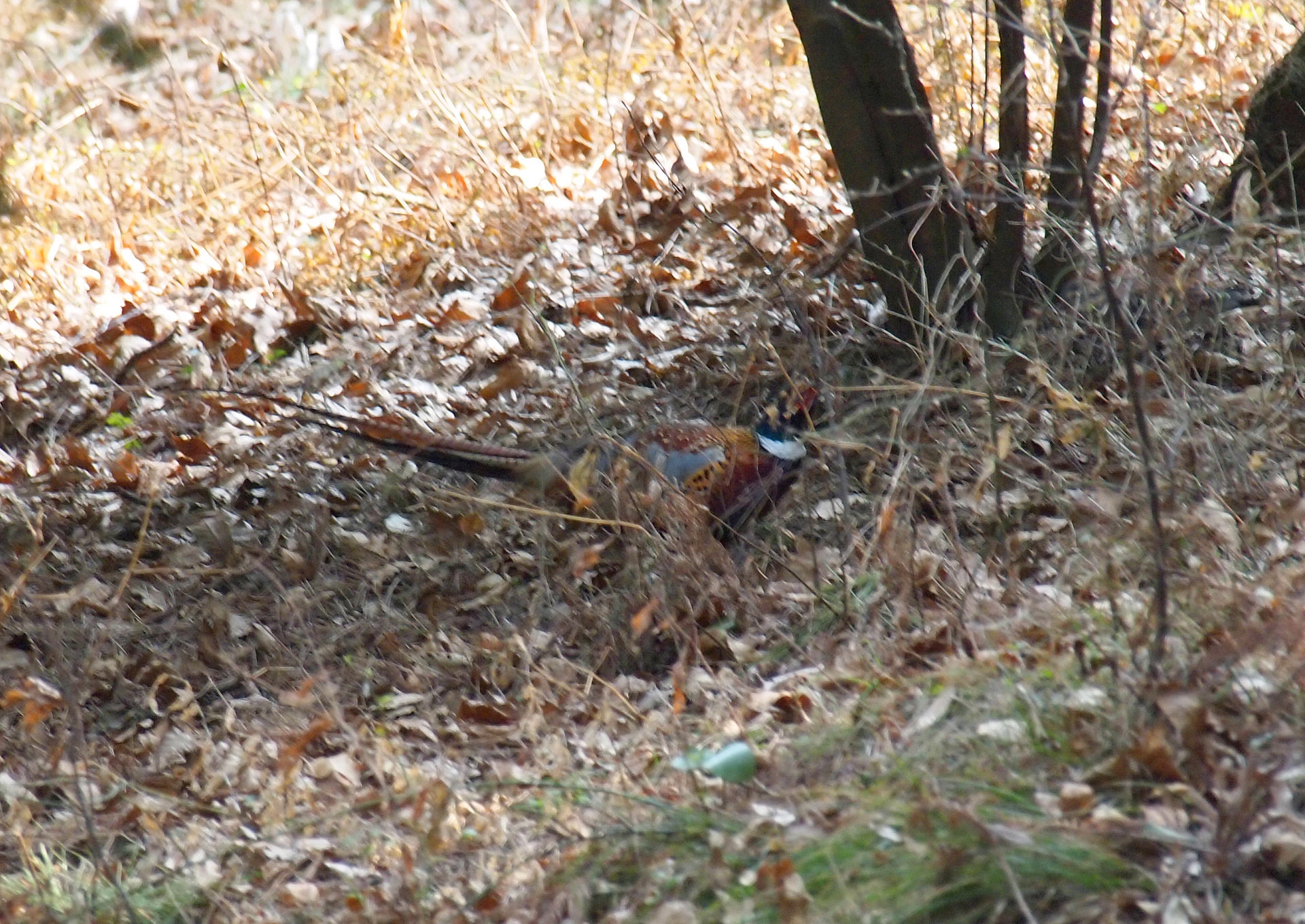
Common Pheasant
📷 Kim MyoungSung, CC BY 2.0 (Wikimedia Commons)

Where to see the Common Pheasant in the Netherlands

Phasianus colchicus · Common Pheasant

Easy 🦅 Bird

Where and when do you see a Common Pheasant? This species is easy to see, all year round.

How do you recognise a Common Pheasant?

Length 53 to 89 cm, wingspan 70 to 90 cm. The cock is unmistakable: a large, stately gamebird with a glossy head, a brown body with dark spots and a very long, barred tail. The hen is entirely brown with dark spots and also has a long tail, which camouflages her superbly in rank vegetation and arable land.

What does a Common Pheasant sound like?

Recording: SanoAK: Alexander Kürthy, CC BY-SA 4.0, via Wikimedia Commons

Where do you see this species in the Netherlands?

The whole of the Netherlands, with strikingly high densities in the dunes, in Zeeland and in Groningen. With 21,000 to 26,000 breeding pairs it is a numerous breeding bird, present all year.

How certain is this? verified chance per source presence reported Links that do not clear the bottom threshold are not published. How we decide that.

📍 Onlanden & Leekstermeer

presence reported
NDFF open data, 2.631 records 2016-2026
Nationwide period: Present all year; they are resident birds. In spring, from March to June, the cock calls loudly and conspicuously and is easiest to find.
NDFF open data, 2.379 records 2016-2026
Nationwide period: Present all year; they are resident birds. In spring, from March to June, the cock calls loudly and conspicuously and is easiest to find.
NDFF open data, 701 records 2016-2026
Nationwide period: Present all year; they are resident birds. In spring, from March to June, the cock calls loudly and conspicuously and is easiest to find.
NDFF open data, 651 records 2016-2026
Nationwide period: Present all year; they are resident birds. In spring, from March to June, the cock calls loudly and conspicuously and is easiest to find.
NDFF open data, 585 records 2016-2026
Nationwide period: Present all year; they are resident birds. In spring, from March to June, the cock calls loudly and conspicuously and is easiest to find.
NDFF open data, 385 records 2016-2026
Nationwide period: Present all year; they are resident birds. In spring, from March to June, the cock calls loudly and conspicuously and is easiest to find.
NDFF open data, 358 records 2016-2026
Nationwide period: Present all year; they are resident birds. In spring, from March to June, the cock calls loudly and conspicuously and is easiest to find.
NDFF open data, 328 records 2016-2026
Nationwide period: Present all year; they are resident birds. In spring, from March to June, the cock calls loudly and conspicuously and is easiest to find.
NDFF open data, 326 records 2016-2026
Nationwide period: Present all year; they are resident birds. In spring, from March to June, the cock calls loudly and conspicuously and is easiest to find.

📍 Zwin & Zeeuws-Vlaanderen

presence reported
NDFF open data, 322 records 2016-2026
Nationwide period: Present all year; they are resident birds. In spring, from March to June, the cock calls loudly and conspicuously and is easiest to find.
NDFF open data, 253 records 2016-2026
Nationwide period: Present all year; they are resident birds. In spring, from March to June, the cock calls loudly and conspicuously and is easiest to find.
NDFF open data, 187 records 2016-2026
Nationwide period: Present all year; they are resident birds. In spring, from March to June, the cock calls loudly and conspicuously and is easiest to find.

📍 Naardermeer

presence reported
NDFF open data, 145 records 2016-2026
Nationwide period: Present all year; they are resident birds. In spring, from March to June, the cock calls loudly and conspicuously and is easiest to find.

📍 Blauwe Kamer

presence reported
NDFF open data
Nationwide period: Present all year; they are resident birds. In spring, from March to June, the cock calls loudly and conspicuously and is easiest to find.

📍 Zouweboezem

presence reported
NDFF open data
Nationwide period: Present all year; they are resident birds. In spring, from March to June, the cock calls loudly and conspicuously and is easiest to find.

📍 Oostelijke Vechtplassen

presence reported
NDFF open data
Nationwide period: Present all year; they are resident birds. In spring, from March to June, the cock calls loudly and conspicuously and is easiest to find.
NDFF open data
Nationwide period: Present all year; they are resident birds. In spring, from March to June, the cock calls loudly and conspicuously and is easiest to find.

📍 Wormer- en Jisperveld

presence reported
NDFF open data
Nationwide period: Present all year; they are resident birds. In spring, from March to June, the cock calls loudly and conspicuously and is easiest to find.

📍 Ilperveld

presence reported
NDFF open data
Nationwide period: Present all year; they are resident birds. In spring, from March to June, the cock calls loudly and conspicuously and is easiest to find.

📍 De Dollard

presence reported
NDFF open data
Nationwide period: Present all year; they are resident birds. In spring, from March to June, the cock calls loudly and conspicuously and is easiest to find.
NDFF open data
Nationwide period: Present all year; they are resident birds. In spring, from March to June, the cock calls loudly and conspicuously and is easiest to find.

📍 Meijendel & Berkheide

presence reported
NDFF open data, 107 records 2016-2026
Nationwide period: Present all year; they are resident birds. In spring, from March to June, the cock calls loudly and conspicuously and is easiest to find.

📍 Voornes Duin

presence reported
NDFF open data, 533 records 2016-2026
Nationwide period: Present all year; they are resident birds. In spring, from March to June, the cock calls loudly and conspicuously and is easiest to find.
NDFF open data, 1.504 records 2016-2026
Nationwide period: Present all year; they are resident birds. In spring, from March to June, the cock calls loudly and conspicuously and is easiest to find.

📍 De Maashorst

presence reported
NDFF open data, 108 records 2016-2026
Nationwide period: Present all year; they are resident birds. In spring, from March to June, the cock calls loudly and conspicuously and is easiest to find.
NDFF open data, 150 records 2016-2026
Nationwide period: Present all year; they are resident birds. In spring, from March to June, the cock calls loudly and conspicuously and is easiest to find.

📍 Loonse en Drunense Duinen

presence reported
NDFF open data, 569 records 2016-2026
Nationwide period: Present all year; they are resident birds. In spring, from March to June, the cock calls loudly and conspicuously and is easiest to find.

These links come straight from our database, with the chance, the source and the evidence level for each area.

When is the best time?

Green = present · orange = peak period. The bar is generated from our database.

Best period: Present all year; they are resident birds. In spring, from March to June, the cock calls loudly and conspicuously and is easiest to find.

Best time of day: Around sunrise and sunset, when pheasants are looking for food. During the day they are more often in the cover of rank vegetation and scrub.

Recent sightings

👁️ Where has this species been seen recently?

Check the current sightings on Waarneming.nl. A useful addition to our own verified information.

Current sightings on Waarneming.nl →

How to improve your chances

  • Learn the calls first. You will hear most birds before you see them.
  • Go in the first hour after sunrise, when the song is at its peak and the wind is still down.
  • Use a hide or natural cover. Sitting still gets you more than walking closer.
  • Keep the sun behind you. Against the light you see a silhouette and no colour.

🎒 What you need for this

Binoculars

🌿 Watching responsibly

Keep your distance, stay on the paths, and never lure animals with food or sound. Leave as soon as an animal becomes uneasy.

Sources: Vogelbescherming Nederland (vogelgids) en Sovon Vogelonderzoek Nederland (soortpagina en telrichtlijn), geraadpleegd 12-08-2026; NDFF Flora & Fauna Verkenner (open data)
Status: Verified · Last checked: 2026-08-08