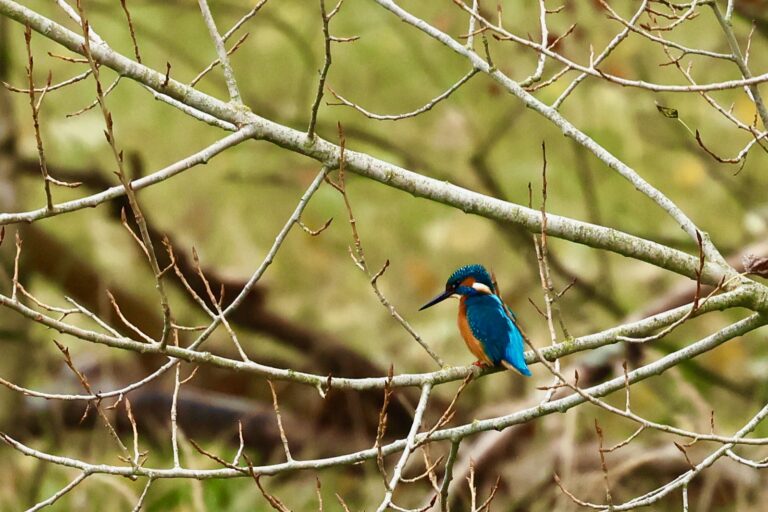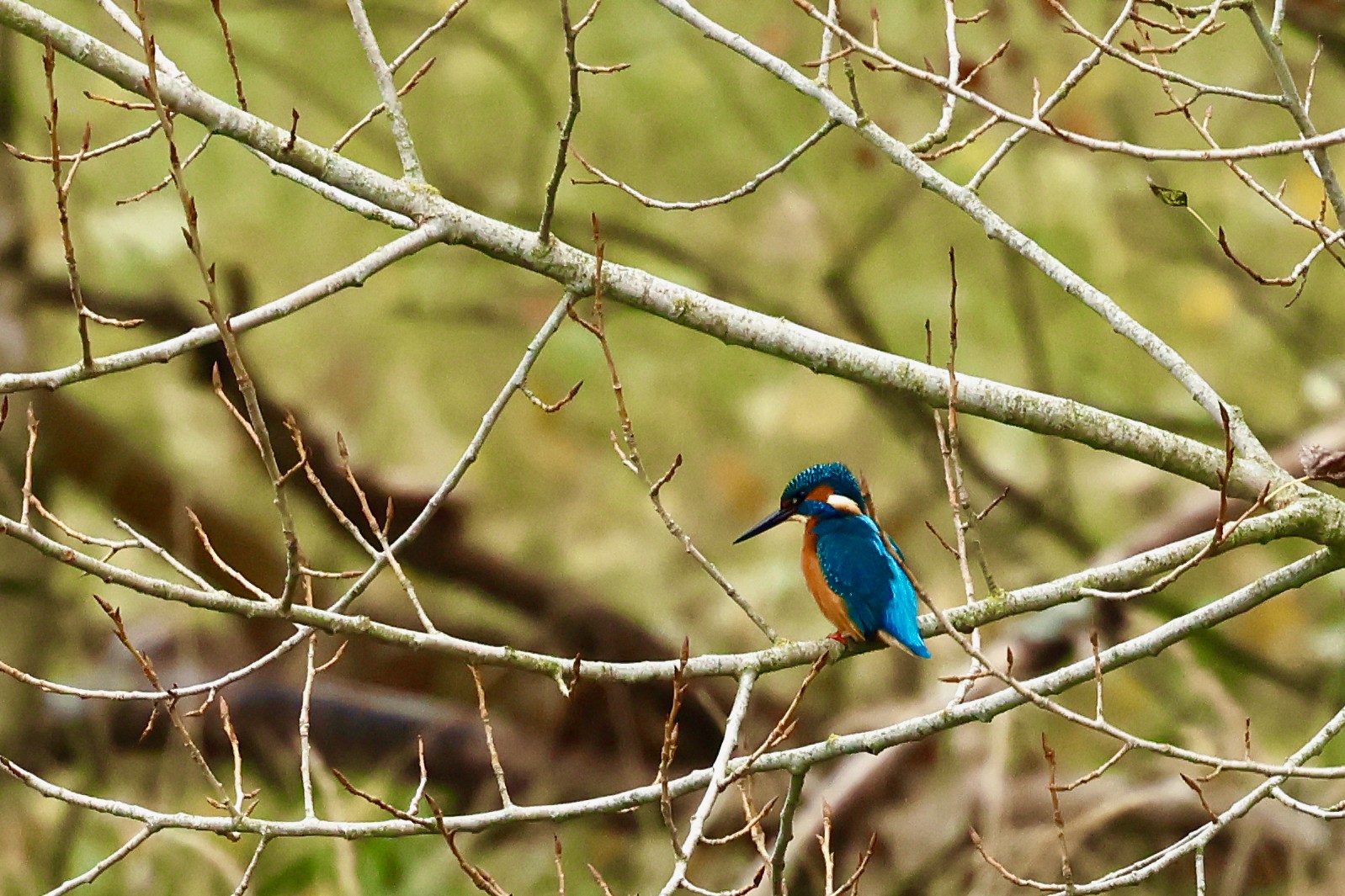
Kingfisher on a bare branch above the water
📷 Foto: Bas de Bruin — Amsterdamse Waterleidingduinen, 31 oktober 2026

Where to see the Common Kingfisher in the Netherlands

Alcedo atthis · Common Kingfisher

With luck 🦅 Bird Sensitive species · R3

🛡️ No exact locations, on purpose

This is a sensitive species. We deliberately show no nest sites, and during the breeding season (March to July) we are extra careful about exact spots. Why we do that.

Where and when do you see a Common Kingfisher? With some luck you can see this species, all year round.

How do you recognise a Common Kingfisher?

Length 17 to 19.5 cm, wingspan 24 to 26 cm. Small and compact, with a bright blue back and an orange breast, a short tail and a long dagger-shaped bill. Usually you do not see it perched but shooting past: a blue streak flying low over the water, often with a high, sharp whistle alongside.

What does a Common Kingfisher sound like?

Recording: Marie-Lan Taÿ Pamart, CC BY-SA 4.0, via Wikimedia Commons

Where do you see this species in the Netherlands?

Almost the whole of the Netherlands, along streams, ditches, canals and lakes with clear water and steep banks.

How certain is this? verified chance per source presence reported Links that do not clear the bottom threshold are not published. How we decide that.

📍 Nationaal Park Weerribben-Wieden

With luck chance per source
Nationwide period: Present all year. After a severe winter the population can drop sharply, because it cannot hunt when the water freezes over; after mild winters it is everywhere.

📍 Planken Wambuis

presence reported
NDFF open data, 5.888 records 2016-2026
Nationwide period: Present all year. After a severe winter the population can drop sharply, because it cannot hunt when the water freezes over; after mild winters it is everywhere.

📍 Onlanden & Leekstermeer

With luck chance per source
Het Groninger Landschap
Nationwide period: Present all year. After a severe winter the population can drop sharply, because it cannot hunt when the water freezes over; after mild winters it is everywhere.

📍 Gelderse Poort & Millingerwaard

With luck chance per source
Vogelwerkgroep Nijmegen · area description
Nationwide period: Present all year. After a severe winter the population can drop sharply, because it cannot hunt when the water freezes over; after mild winters it is everywhere.

📍 Nationaal Park De Biesbosch

With luck chance per source
De Visdief · birdwatching guide to Biesbosch
Nationwide period: Present all year. After a severe winter the population can drop sharply, because it cannot hunt when the water freezes over; after mild winters it is everywhere.
It Fryske Gea · Nationaal Park De Alde Feanen
Nationwide period: Present all year. After a severe winter the population can drop sharply, because it cannot hunt when the water freezes over; after mild winters it is everywhere.

📍 Sint-Pietersberg & Zuid-Limburg

Rare chance per source
Natuurmonumenten · a ranger
Nationwide period: Present all year. After a severe winter the population can drop sharply, because it cannot hunt when the water freezes over; after mild winters it is everywhere.
Het Limburgs Landschap · Staatsbosbeheer
Nationwide period: Present all year. After a severe winter the population can drop sharply, because it cannot hunt when the water freezes over; after mild winters it is everywhere.

📍 Leuvenumse Bossen

With luck presence reported
Natuurmonumenten (area page Leuvenumse Bossen), August 2026
Nationwide period: Present all year. After a severe winter the population can drop sharply, because it cannot hunt when the water freezes over; after mild winters it is everywhere.

📍 Naardermeer

Good chance chance per source
Natuurmonumenten · "there is always a kingfisher about"
Nationwide period: Present all year. After a severe winter the population can drop sharply, because it cannot hunt when the water freezes over; after mild winters it is everywhere.

📍 Amsterdamse Waterleidingduinen

With luck chance per source
De Visdief · birdwatching guide to AWD
Nationwide period: Present all year. After a severe winter the population can drop sharply, because it cannot hunt when the water freezes over; after mild winters it is everywhere.

📍 Fochteloërveen

Rare chance per source
De Visdief · birdwatching guide to Fochteloërveen
Nationwide period: Present all year. After a severe winter the population can drop sharply, because it cannot hunt when the water freezes over; after mild winters it is everywhere.

📍 Nationaal Park Veluwezoom

Rare chance per source
De Visdief
Nationwide period: Present all year. After a severe winter the population can drop sharply, because it cannot hunt when the water freezes over; after mild winters it is everywhere.

📍 Blauwe Kamer

presence reported
NDFF open data
Nationwide period: Present all year. After a severe winter the population can drop sharply, because it cannot hunt when the water freezes over; after mild winters it is everywhere.

📍 Zouweboezem

presence reported
NDFF open data
Nationwide period: Present all year. After a severe winter the population can drop sharply, because it cannot hunt when the water freezes over; after mild winters it is everywhere.

📍 Oostelijke Vechtplassen

presence reported
NDFF open data
Nationwide period: Present all year. After a severe winter the population can drop sharply, because it cannot hunt when the water freezes over; after mild winters it is everywhere.
NDFF open data
Nationwide period: Present all year. After a severe winter the population can drop sharply, because it cannot hunt when the water freezes over; after mild winters it is everywhere.

📍 Wormer- en Jisperveld

presence reported
NDFF open data
Nationwide period: Present all year. After a severe winter the population can drop sharply, because it cannot hunt when the water freezes over; after mild winters it is everywhere.

📍 Ilperveld

presence reported
NDFF open data
Nationwide period: Present all year. After a severe winter the population can drop sharply, because it cannot hunt when the water freezes over; after mild winters it is everywhere.

📍 De Dollard

presence reported
NDFF open data
Nationwide period: Present all year. After a severe winter the population can drop sharply, because it cannot hunt when the water freezes over; after mild winters it is everywhere.
NDFF open data
Nationwide period: Present all year. After a severe winter the population can drop sharply, because it cannot hunt when the water freezes over; after mild winters it is everywhere.

📍 Landgoed Ennemaborg

presence reported
NDFF open data
Nationwide period: Present all year. After a severe winter the population can drop sharply, because it cannot hunt when the water freezes over; after mild winters it is everywhere.

📍 Meijendel & Berkheide

presence reported
NDFF open data, 8.993 records 2016-2026
Nationwide period: Present all year. After a severe winter the population can drop sharply, because it cannot hunt when the water freezes over; after mild winters it is everywhere.

📍 Voornes Duin

presence reported
NDFF open data, 1.126 records 2016-2026
Nationwide period: Present all year. After a severe winter the population can drop sharply, because it cannot hunt when the water freezes over; after mild winters it is everywhere.
NDFF open data, 5.246 records 2016-2026
Nationwide period: Present all year. After a severe winter the population can drop sharply, because it cannot hunt when the water freezes over; after mild winters it is everywhere.

📍 De Maashorst

presence reported
NDFF open data, 1.906 records 2016-2026
Nationwide period: Present all year. After a severe winter the population can drop sharply, because it cannot hunt when the water freezes over; after mild winters it is everywhere.
NDFF open data, 2.562 records 2016-2026
Nationwide period: Present all year. After a severe winter the population can drop sharply, because it cannot hunt when the water freezes over; after mild winters it is everywhere.

📍 Loonse en Drunense Duinen

presence reported
NDFF open data, 3.230 records 2016-2026
Nationwide period: Present all year. After a severe winter the population can drop sharply, because it cannot hunt when the water freezes over; after mild winters it is everywhere.

📍 Schoorlse Duinen

presence reported
NDFF open data, 4.017 records 2016-2026
Nationwide period: Present all year. After a severe winter the population can drop sharply, because it cannot hunt when the water freezes over; after mild winters it is everywhere.

📍 Haringvlietsluizen

presence reported
NDFF open data, 3.601 records 2016-2026
Nationwide period: Present all year. After a severe winter the population can drop sharply, because it cannot hunt when the water freezes over; after mild winters it is everywhere.
NDFF open data, 847 records 2016-2026
Nationwide period: Present all year. After a severe winter the population can drop sharply, because it cannot hunt when the water freezes over; after mild winters it is everywhere.

📍 De Putten bij Camperduin

presence reported
NDFF open data, 5.065 records 2016-2026
Nationwide period: Present all year. After a severe winter the population can drop sharply, because it cannot hunt when the water freezes over; after mild winters it is everywhere.

These links come straight from our database, with the chance, the source and the evidence level for each area.

When is the best time?

Green = present · orange = peak period. The bar is generated from our database.

Best period: Present all year. After a severe winter the population can drop sharply, because it cannot hunt when the water freezes over; after mild winters it is everywhere.

Best time of day: During the day, with the morning as the best moment. It hunts from fixed perches, so waiting by a branch above the water works better than walking.

Recent sightings

👁️ Where has this species been seen recently?

Check the current sightings on Waarneming.nl. A useful addition to our own verified information.

Current sightings on Waarneming.nl →

Note: for sensitive species the source already blurs or withholds sightings. We do not reproduce exact locations.

How to improve your chances

  • Learn the calls first. You will hear most birds before you see them.
  • Go in the first hour after sunrise, when the song is at its peak and the wind is still down.
  • Use a hide or natural cover. Sitting still gets you more than walking closer.
  • Keep the sun behind you. Against the light you see a silhouette and no colour.

🎒 What you need for this

Telephoto lens 400mm or more, a hide

🌿 Watching responsibly

Keep your distance, stay on the paths, and never lure animals with food or sound. Leave as soon as an animal becomes uneasy. This is a sensitive species. We deliberately show no nest sites, and during the breeding season (March to July) we are extra careful about exact spots.

Sources: Sovon; Vogelbescherming; Vogelbescherming Nederland (vogelgids), geraadpleegd 02-11-2026
Status: Verified · Last checked: 2026-08-08

More photos
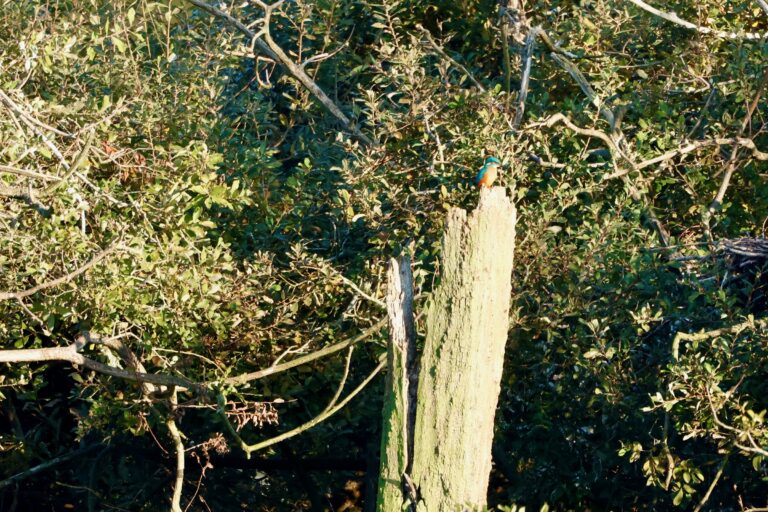
IJsvogel zit op een houten paal tussen takken en struiken langs het water
Photo: Bas de Bruin — De Blauwe Kamer, 4 november 2026
Kingfisher on a bare branch above the water
Photo: Bas de Bruin — Amsterdamse Waterleidingduinen, 31 oktober 2026
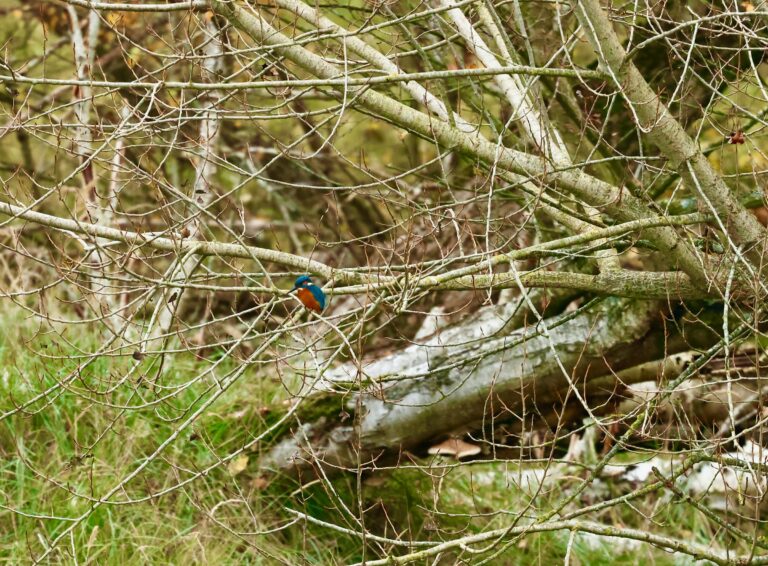
IJsvogel tussen kale takken boven een omgevallen berk
Photo: Bas de Bruin — Amsterdamse Waterleidingduinen, 31 oktober 2026
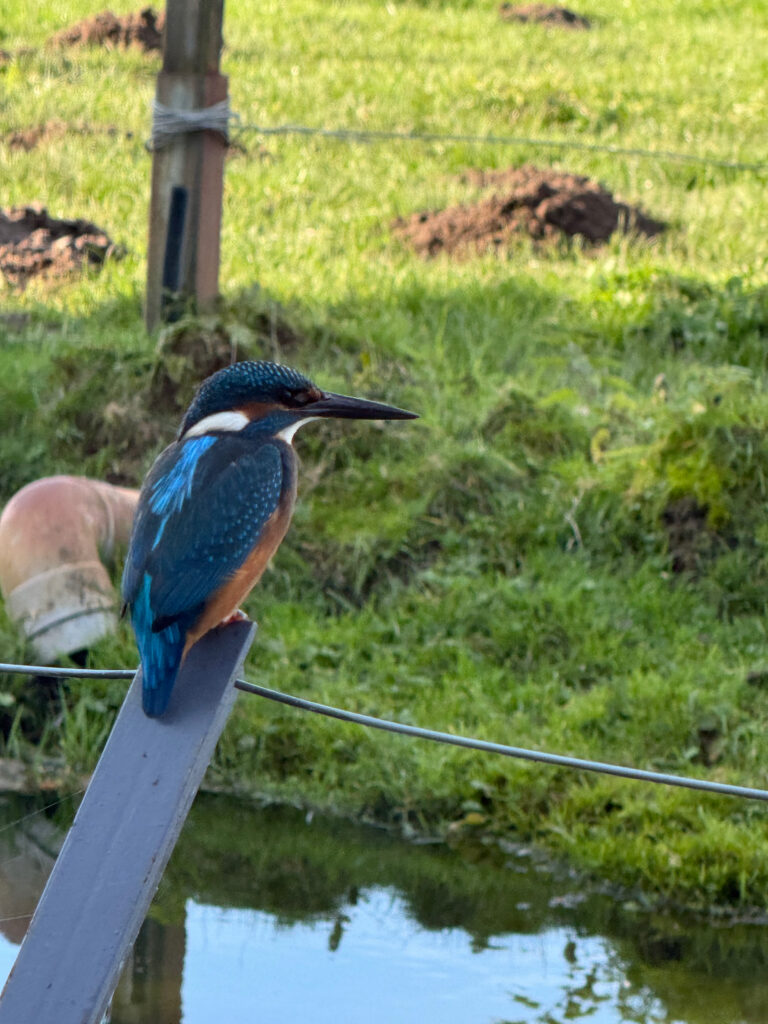
IJsvogel op een grijs paaltje boven een sloot, met prikkeldraad en een grasoever erachter
Photo: Bas de Bruin — De Blauwe Kamer, 4 november 2026
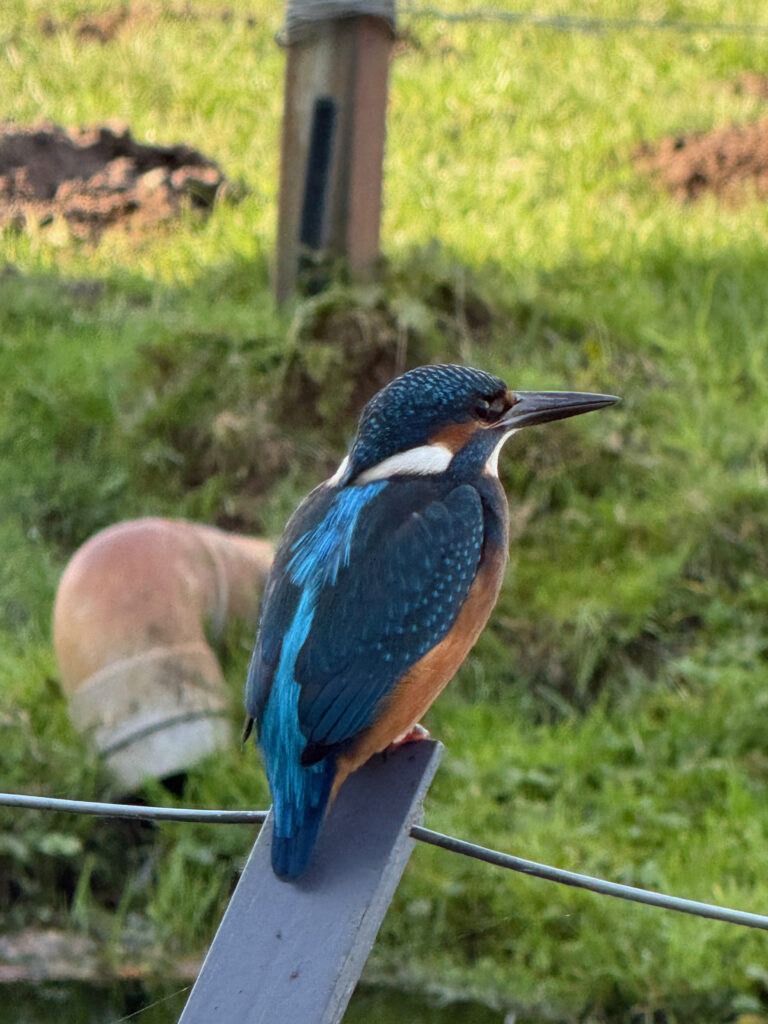
IJsvogel van opzij met witte halsvlek, oranje onderzijde en lichtblauwe rugstreep
Photo: Bas de Bruin — De Blauwe Kamer, 4 november 2026