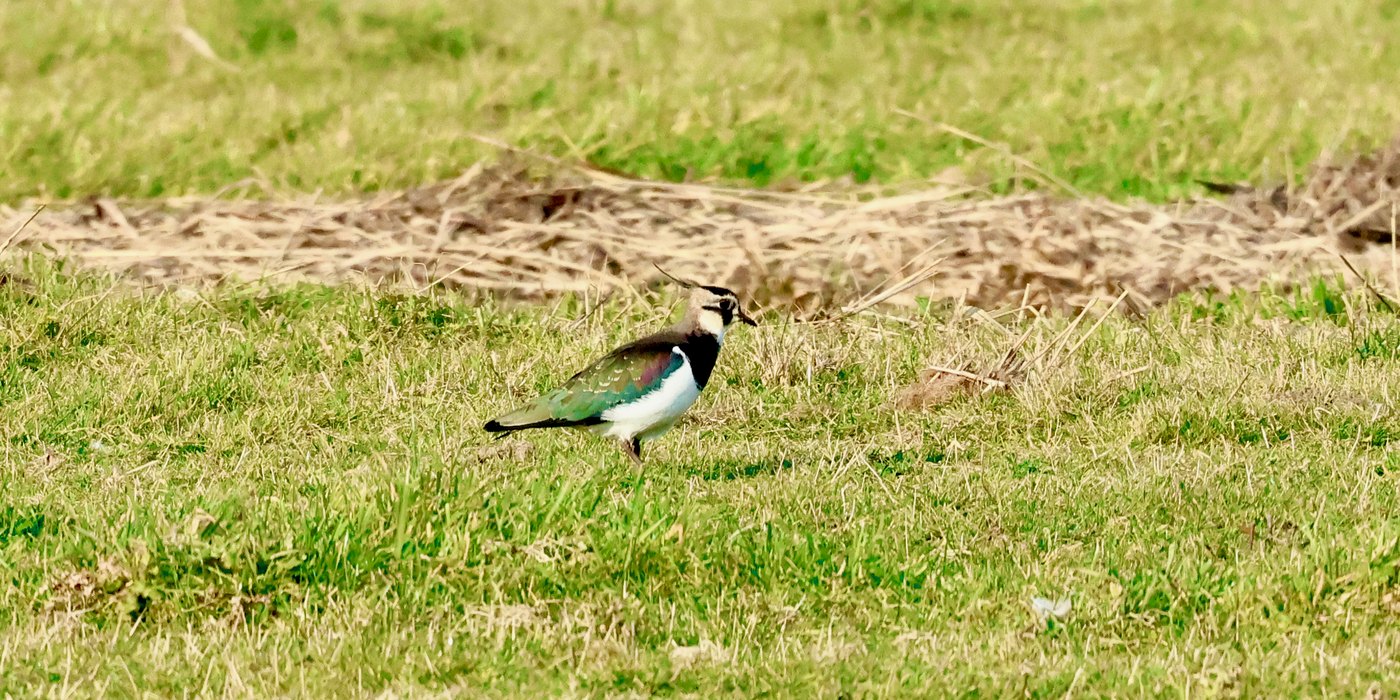
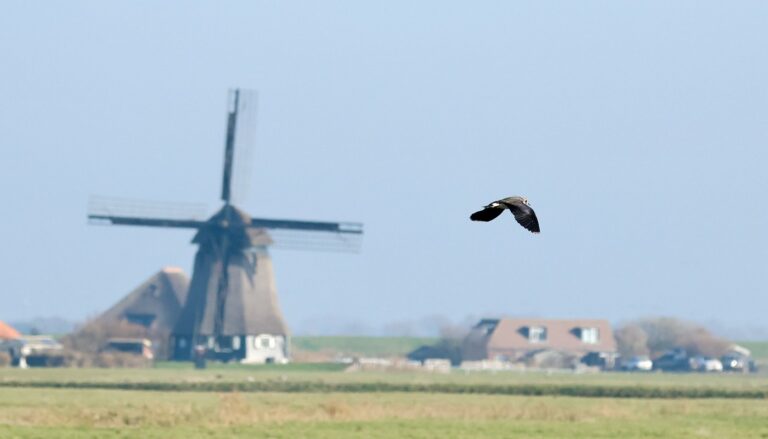
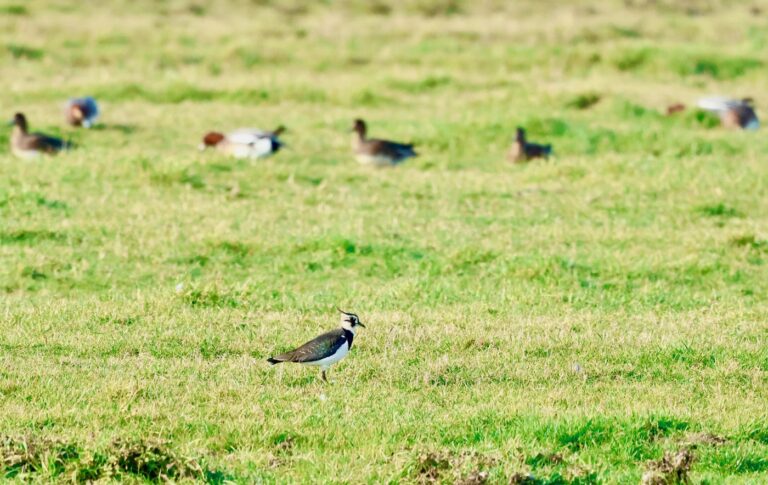
Length 28 to 31 cm, wingspan 82 to 87 cm. Black and white at a distance, but from close up the upperside glosses green and purple. Characteristic are the thin, upright crest and the broad, rounded wings. That wing shape makes its flight slow and flapping, unmistakable even without binoculars.
The whole of the Netherlands, in meadows and on arable fields. Outside the breeding season lapwings form large flocks in open farmland.
This is a common, widespread species: you can come across it in far more places than the areas listed below. Treat that list as a starting point rather than a full survey.
Nationwide period: February to June is the breeding period, with March the high point because of the tumbling display flights. In autumn and winter you see large flocks of lapwings on arable fields, often together with golden plovers and black-headed gulls.
Common throughout the Netherlands (Verspreidingsatlas) — here too
Nationwide period: February to June is the breeding period, with March the high point because of the tumbling display flights. In autumn and winter you see large flocks of lapwings on arable fields, often together with golden plovers and black-headed gulls.
NDFF open data, 351 records 2016-2026
Nationwide period: February to June is the breeding period, with March the high point because of the tumbling display flights. In autumn and winter you see large flocks of lapwings on arable fields, often together with golden plovers and black-headed gulls.
It Fryske Gea · Nationaal Park De Alde Feanen
Nationwide period: February to June is the breeding period, with March the high point because of the tumbling display flights. In autumn and winter you see large flocks of lapwings on arable fields, often together with golden plovers and black-headed gulls.
Werelderfgoed Waddenzee · UNESCO
Nationwide period: February to June is the breeding period, with March the high point because of the tumbling display flights. In autumn and winter you see large flocks of lapwings on arable fields, often together with golden plovers and black-headed gulls.
Het Groninger Landschap · Stichting Natuurbelang De Onlanden
Nationwide period: February to June is the breeding period, with March the high point because of the tumbling display flights. In autumn and winter you see large flocks of lapwings on arable fields, often together with golden plovers and black-headed gulls.
NDFF open data
Nationwide period: February to June is the breeding period, with March the high point because of the tumbling display flights. In autumn and winter you see large flocks of lapwings on arable fields, often together with golden plovers and black-headed gulls.
NDFF open data
Nationwide period: February to June is the breeding period, with March the high point because of the tumbling display flights. In autumn and winter you see large flocks of lapwings on arable fields, often together with golden plovers and black-headed gulls.
NDFF open data
Nationwide period: February to June is the breeding period, with March the high point because of the tumbling display flights. In autumn and winter you see large flocks of lapwings on arable fields, often together with golden plovers and black-headed gulls.
NDFF open data
Nationwide period: February to June is the breeding period, with March the high point because of the tumbling display flights. In autumn and winter you see large flocks of lapwings on arable fields, often together with golden plovers and black-headed gulls.
NDFF open data
Nationwide period: February to June is the breeding period, with March the high point because of the tumbling display flights. In autumn and winter you see large flocks of lapwings on arable fields, often together with golden plovers and black-headed gulls.
NDFF open data
Nationwide period: February to June is the breeding period, with March the high point because of the tumbling display flights. In autumn and winter you see large flocks of lapwings on arable fields, often together with golden plovers and black-headed gulls.
NDFF open data
Nationwide period: February to June is the breeding period, with March the high point because of the tumbling display flights. In autumn and winter you see large flocks of lapwings on arable fields, often together with golden plovers and black-headed gulls.
NDFF open data
Nationwide period: February to June is the breeding period, with March the high point because of the tumbling display flights. In autumn and winter you see large flocks of lapwings on arable fields, often together with golden plovers and black-headed gulls.
Own field observation, 10 November 2026
Nationwide period: February to June is the breeding period, with March the high point because of the tumbling display flights. In autumn and winter you see large flocks of lapwings on arable fields, often together with golden plovers and black-headed gulls.
NDFF open data, 5.551 records 2016-2026
Nationwide period: February to June is the breeding period, with March the high point because of the tumbling display flights. In autumn and winter you see large flocks of lapwings on arable fields, often together with golden plovers and black-headed gulls.
NDFF open data, 1.498 records 2016-2026
Nationwide period: February to June is the breeding period, with March the high point because of the tumbling display flights. In autumn and winter you see large flocks of lapwings on arable fields, often together with golden plovers and black-headed gulls.
NDFF open data, 3.796 records 2016-2026
Nationwide period: February to June is the breeding period, with March the high point because of the tumbling display flights. In autumn and winter you see large flocks of lapwings on arable fields, often together with golden plovers and black-headed gulls.
NDFF open data, 2.652 records 2016-2026
Nationwide period: February to June is the breeding period, with March the high point because of the tumbling display flights. In autumn and winter you see large flocks of lapwings on arable fields, often together with golden plovers and black-headed gulls.
NDFF open data, 937 records 2016-2026
Nationwide period: February to June is the breeding period, with March the high point because of the tumbling display flights. In autumn and winter you see large flocks of lapwings on arable fields, often together with golden plovers and black-headed gulls.
NDFF open data, 2.721 records 2016-2026
Nationwide period: February to June is the breeding period, with March the high point because of the tumbling display flights. In autumn and winter you see large flocks of lapwings on arable fields, often together with golden plovers and black-headed gulls.
NDFF open data, 7.497 records 2016-2026
Nationwide period: February to June is the breeding period, with March the high point because of the tumbling display flights. In autumn and winter you see large flocks of lapwings on arable fields, often together with golden plovers and black-headed gulls.
NDFF open data, 894 records 2016-2026
Nationwide period: February to June is the breeding period, with March the high point because of the tumbling display flights. In autumn and winter you see large flocks of lapwings on arable fields, often together with golden plovers and black-headed gulls.
These links come straight from our database, with the chance, the source and the evidence level for each area.
Green = present · orange = peak period. The bar is generated from our database.