Where to see the Eurasian Coot in the Netherlands
Easy 🦅 Bird
Where and when do you see a Eurasian Coot? This species is easy to see, from March to June.
How do you recognise a Eurasian Coot?
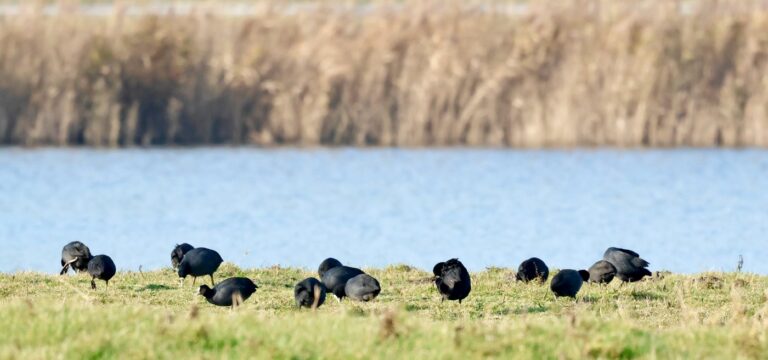
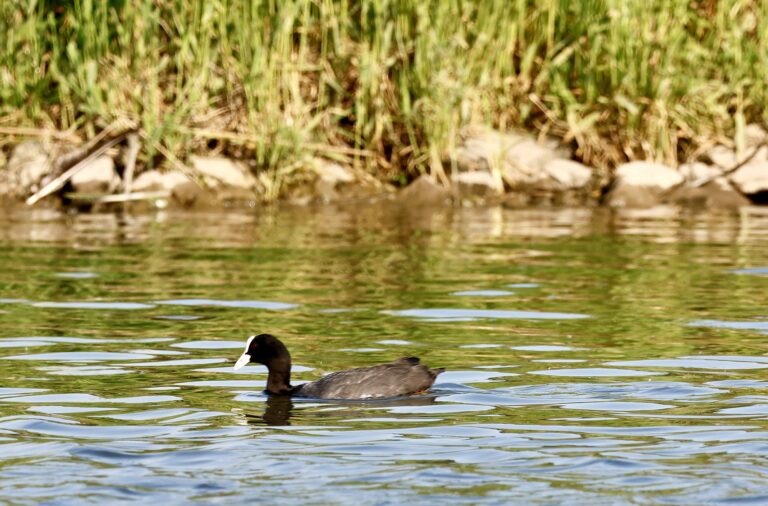
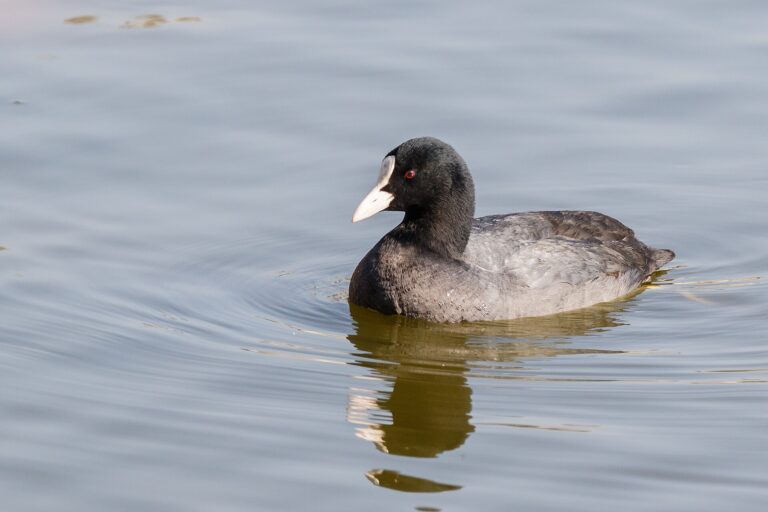
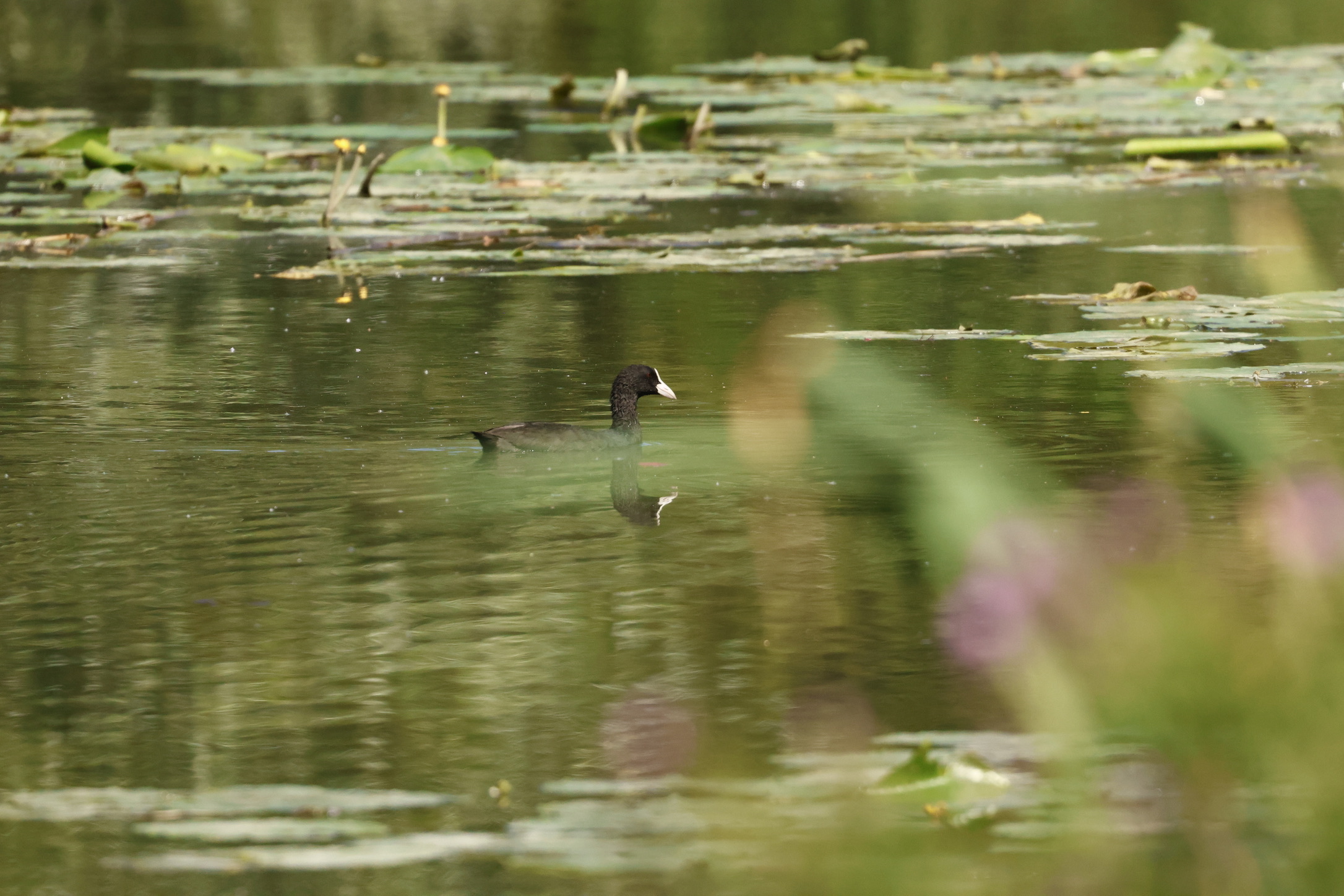
Length 36 to 42 cm, wingspan 70 to 80 cm. Jet black with a bright white bill that continues into a white frontal shield, which is where the expression as bald as a coot comes from. The feet have broad lobes instead of webs. Do not confuse it with the moorhen, which has a red bill with a yellow tip and white streaks on the flank.
What can you confuse a Eurasian Coot with?
Looks like: Common Moorhen
- Common Moorhen: Smaller, with a red bill with a yellow tip and white streaks along the flank; the coot is jet black with a white frontal shield.
What does a Eurasian Coot sound like?
Recording: Joost van Bruggen, CC BY-SA 4.0, via Wikimedia Commons
Where do you see this species in the Netherlands?
Almost the whole of the Netherlands, on almost any open fresh water.
Habitat: Lakes, ditches, canals and meres with bankside vegetation. The nest is a large floating heap of plant material, often clearly visible among the reeds or under a jetty.
This is a common, widespread species: you can come across it in far more places than the areas listed below. Treat that list as a starting point rather than a full survey.
📍 Gelderse Poort & Millingerwaard
Good chance chance per source📍 Amsterdamse Waterleidingduinen
Good chance chance per source📍 Nationaal Park Zuid-Kennemerland
Good chance chance per source📍 Blauwe Kamer
presence reported📍 Zouweboezem
presence reported📍 Oostelijke Vechtplassen
presence reported📍 Noordhollands Duinreservaat
presence reported📍 Wormer- en Jisperveld
presence reported📍 Ilperveld
presence reported📍 De Dollard
presence reported📍 Zuidlaardermeergebied en Hunzedal
presence reported📍 De Putten bij Camperduin
Good chance verified📍 Meijendel & Berkheide
presence reported📍 Voornes Duin
presence reported📍 Kampina & Oisterwijkse Vennen
presence reported📍 De Maashorst
presence reported📍 Strabrechtse Heide & Beuven
presence reported📍 Loonse en Drunense Duinen
presence reported📍 Schoorlse Duinen
presence reported📍 Haringvlietsluizen
presence reported📍 Vismigratierivier Afsluitdijk
presence reportedThese links come straight from our database, with the chance, the source and the evidence level for each area.
When is the best time?
Green = present · orange = peak period. The bar is generated from our database.
Best period: Present all year. From March to June the chicks swim about: black balls of down with a bright red-orange head, looking completely unlike their parents.
Best time of day: All day. Coots are noisy and not very shy and are easy to watch.
Recent sightings
👁️ Where has this species been seen recently?
Check the current sightings on Waarneming.nl. A useful addition to our own verified information.
How to improve your chances
- Learn the calls first. You will hear most birds before you see them.
- Go in the first hour after sunrise, when the song is at its peak and the wind is still down.
- Use a hide or natural cover. Sitting still gets you more than walking closer.
- Keep the sun behind you. Against the light you see a silhouette and no colour.
Photography
Cloudy weather gives the best detail in the black and white
🌿 Watching responsibly
Keep your distance, stay on the paths, and never lure animals with food or sound. Leave as soon as an animal becomes uneasy.
Status: Verified · Last checked: 2026-08-08
More photos