Where to see the European Robin in the Netherlands
Easy 🦅 Bird
Where and when do you see a European Robin? This species is easy to see, all year round.
How do you recognise a European Robin?
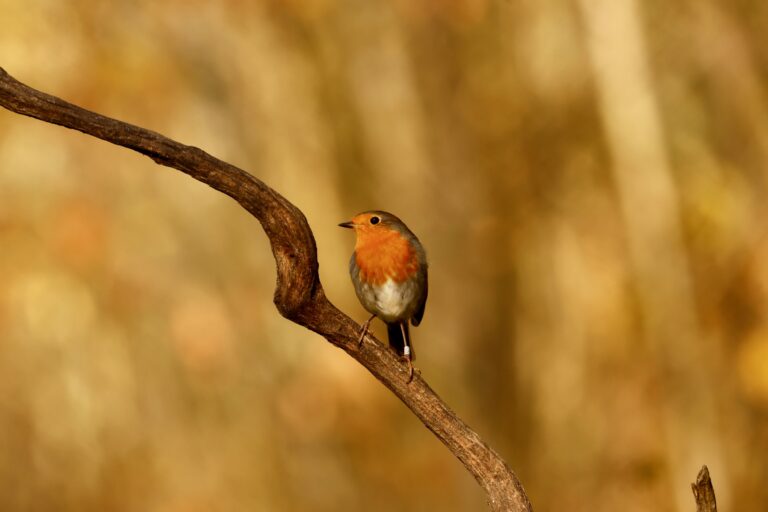
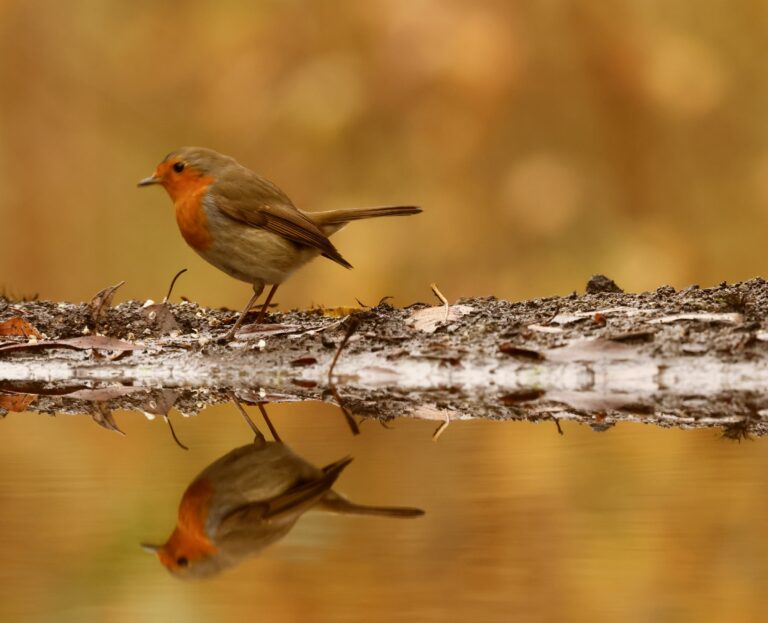
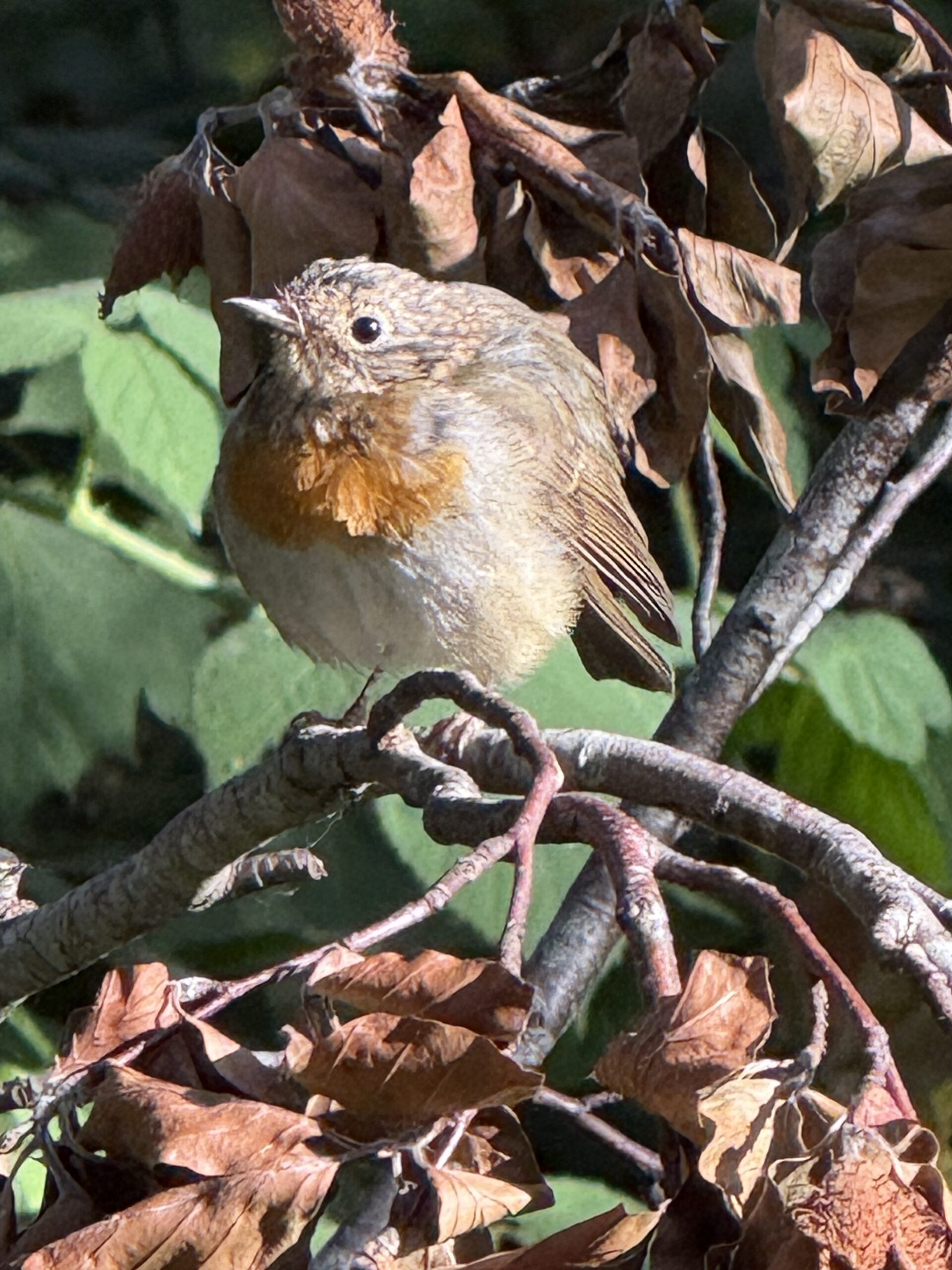
Length 12.5 to 14 cm. A small, round bird with an orange-red breast and face, an olive-brown back and long thin legs. Male and female look the same. Young robins lack the orange entirely and are mottled brown all over. It often stands still with its feathers fluffed up and looks at you with large dark eyes.
Wingspan: 21 cm an indication from Wikidata; it varies by individual, sex and subspecies · compare all birds (in Dutch)
What does a European Robin sound like?
Recording: MVmath20, CC BY-SA 4.0, via Wikimedia Commons
Where do you see this species in the Netherlands?
Almost the whole of the Netherlands, in woodland, park and garden.
Habitat: Woodland with undergrowth, scrub, hedges and gardens with cover low to the ground. It looks for food on the ground and needs shrubs to retreat into.
This is a common, widespread species: you can come across it in far more places than the areas listed below. Treat that list as a starting point rather than a full survey.
📍 Nationaal Park De Hoge Veluwe
Good chance verified📍 Blauwe Kamer
presence reported📍 Zouweboezem
presence reported📍 Oostelijke Vechtplassen
presence reported📍 Noordhollands Duinreservaat
presence reported📍 Wormer- en Jisperveld
presence reported📍 Ilperveld
presence reported📍 De Dollard
presence reported📍 Zuidlaardermeergebied en Hunzedal
presence reported📍 Landgoed Ennemaborg
presence reported📍 Meijendel & Berkheide
presence reported📍 Voornes Duin
presence reported📍 Kampina & Oisterwijkse Vennen
presence reported📍 De Maashorst
presence reported📍 Strabrechtse Heide & Beuven
presence reported📍 Loonse en Drunense Duinen
presence reported📍 Schoorlse Duinen
presence reported📍 Haringvlietsluizen
presence reported📍 Vismigratierivier Afsluitdijk
presence reported📍 De Putten bij Camperduin
presence reportedThese links come straight from our database, with the chance, the source and the evidence level for each area.
When is the best time?
Green = present · orange = peak period. The bar is generated from our database.
Best period: Present all year, with October to March the best period. In winter northern birds arrive and robins are strikingly tame near gardens and feeding places.
Best time of day: Early morning and dusk. The robin is one of the first birds to start singing and one of the last to stop; under street lighting it sometimes keeps singing in the dark.
Recent sightings
👁️ Where has this species been seen recently?
Check the current sightings on Waarneming.nl. A useful addition to our own verified information.
How to improve your chances
- Learn the calls first. You will hear most birds before you see them.
- Go in the first hour after sunrise, when the song is at its peak and the wind is still down.
- Use a hide or natural cover. Sitting still gets you more than walking closer.
- Keep the sun behind you. Against the light you see a silhouette and no colour.
Photography
Almost tame; it follows digging gardeners to within a metre
🌿 Watching responsibly
Keep your distance, stay on the paths, and never lure animals with food or sound. Leave as soon as an animal becomes uneasy.
Status: Verified · Last checked: 2026-08-08
More photos