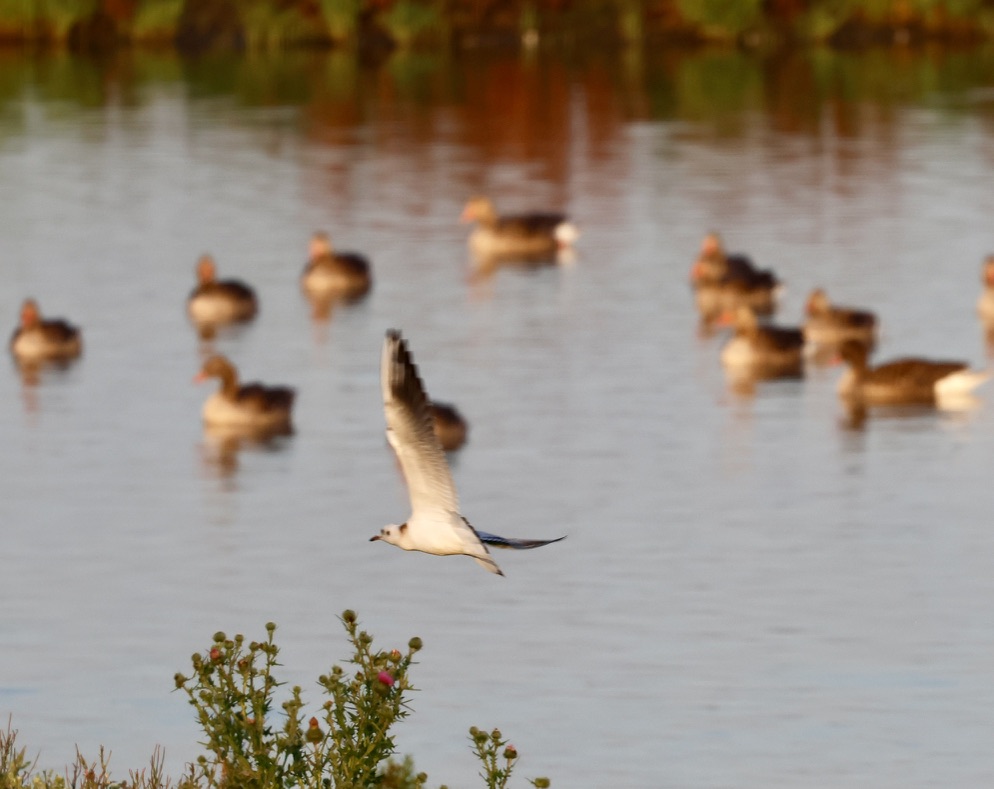
Black-headed gull flying low over the water, with greylag geese in the background
📷 Bas de Bruin — Oostvaardersplassen

Where to see the Black-headed Gull in the Netherlands

Chroicocephalus ridibundus · Black-headed Gull

Easy 🦅 Bird

Where and when do you see a Black-headed Gull? This species is easy to see, from March to July.

How do you recognise a Black-headed Gull?

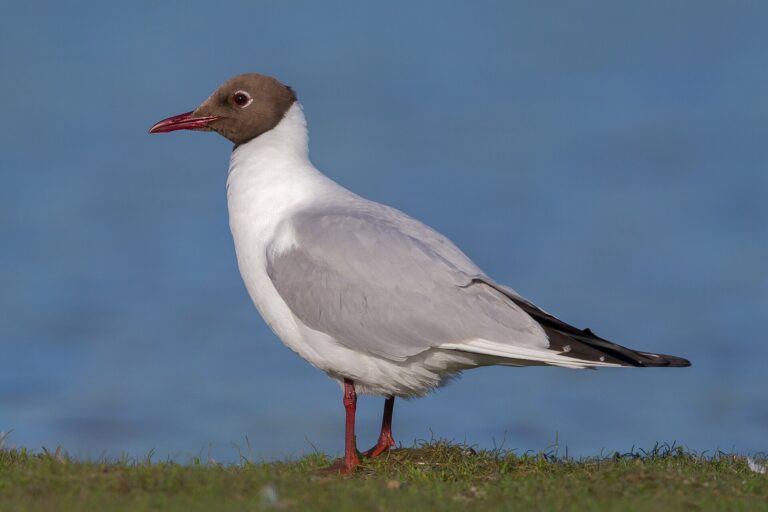
Length 37 to 43 cm, wingspan 94 to 110 cm. A small, elegant gull with red legs and a red bill. In breeding plumage it has a chocolate-brown head, not a black one, despite the English name. In winter that head is white with a dark spot behind the eye. In flight the white leading edge of the wing stands out.

What can you confuse a Black-headed Gull with?

Looks like: Common Gull, European Herring Gull, Mediterranean Gull, Sandwich Tern

  • Common Gull: Larger, with yellowish legs, a yellow bill without red and dark eyes; the black-headed gull has red legs and a red bill.
  • European Herring Gull: Much larger, with a yellow bill with a red spot.
  • Mediterranean Gull: The Mediterranean gull has a truly black hood that reaches into the nape and entirely white wingtips without black.
  • Sandwich Tern: The sandwich tern is about the same size but far slimmer, with a long black bill with a yellow tip and a black crest.

What does a Black-headed Gull sound like?

Recording: Nikita Panfilov, CC BY-SA 4.0, via Wikimedia Commons

Where do you see this species in the Netherlands?

Almost the whole of the Netherlands, from coast and wetlands to arable fields, town squares and car parks.

Habitat: Shallow water, marshes and small islands to breed in colonies, with open terrain around them to feed. It also follows ploughing tractors and scavenges in urban areas.

This is a common, widespread species: you can come across it in far more places than the areas listed below. Treat that list as a starting point rather than a full survey.

How certain is this? verified chance per source presence reported Links that do not clear the bottom threshold are not published. How we decide that.

📍 Wadden Sea

Good chance chance per source
Vogelbescherming Nederland and Sovon
Nationwide period: Present all year, with March to July as the period in which the birds wear their brown hood. Numbers are largest in winter, because birds from northern and eastern Europe arrive.

📍 Marker Wadden

Good chance in season chance per source
Natuurmonumenten
Nationwide period: Present all year, with March to July as the period in which the birds wear their brown hood. Numbers are largest in winter, because birds from northern and eastern Europe arrive.
Nationaal Park Oosterschelde
Nationwide period: Present all year, with March to July as the period in which the birds wear their brown hood. Numbers are largest in winter, because birds from northern and eastern Europe arrive.

📍 Blauwe Kamer

presence reported
NDFF open data
Nationwide period: Present all year, with March to July as the period in which the birds wear their brown hood. Numbers are largest in winter, because birds from northern and eastern Europe arrive.

📍 Zouweboezem

presence reported
NDFF open data
Nationwide period: Present all year, with March to July as the period in which the birds wear their brown hood. Numbers are largest in winter, because birds from northern and eastern Europe arrive.

📍 Oostelijke Vechtplassen

presence reported
NDFF open data
Nationwide period: Present all year, with March to July as the period in which the birds wear their brown hood. Numbers are largest in winter, because birds from northern and eastern Europe arrive.
NDFF open data
Nationwide period: Present all year, with March to July as the period in which the birds wear their brown hood. Numbers are largest in winter, because birds from northern and eastern Europe arrive.

📍 Wormer- en Jisperveld

presence reported
NDFF open data
Nationwide period: Present all year, with March to July as the period in which the birds wear their brown hood. Numbers are largest in winter, because birds from northern and eastern Europe arrive.

📍 Ilperveld

presence reported
NDFF open data
Nationwide period: Present all year, with March to July as the period in which the birds wear their brown hood. Numbers are largest in winter, because birds from northern and eastern Europe arrive.

📍 De Dollard

presence reported
NDFF open data
Nationwide period: Present all year, with March to July as the period in which the birds wear their brown hood. Numbers are largest in winter, because birds from northern and eastern Europe arrive.
NDFF open data
Nationwide period: Present all year, with March to July as the period in which the birds wear their brown hood. Numbers are largest in winter, because birds from northern and eastern Europe arrive.

📍 De Putten bij Camperduin

Good chance verified
Own field observation, 10 November 2026
Nationwide period: Present all year, with March to July as the period in which the birds wear their brown hood. Numbers are largest in winter, because birds from northern and eastern Europe arrive.

📍 Meijendel & Berkheide

presence reported
NDFF open data, 5.736 records 2016-2026
Nationwide period: Present all year, with March to July as the period in which the birds wear their brown hood. Numbers are largest in winter, because birds from northern and eastern Europe arrive.

📍 Voornes Duin

presence reported
NDFF open data, 1.507 records 2016-2026
Nationwide period: Present all year, with March to July as the period in which the birds wear their brown hood. Numbers are largest in winter, because birds from northern and eastern Europe arrive.
NDFF open data, 1.152 records 2016-2026
Nationwide period: Present all year, with March to July as the period in which the birds wear their brown hood. Numbers are largest in winter, because birds from northern and eastern Europe arrive.

📍 De Maashorst

presence reported
NDFF open data, 1.314 records 2016-2026
Nationwide period: Present all year, with March to July as the period in which the birds wear their brown hood. Numbers are largest in winter, because birds from northern and eastern Europe arrive.
NDFF open data, 1.397 records 2016-2026
Nationwide period: Present all year, with March to July as the period in which the birds wear their brown hood. Numbers are largest in winter, because birds from northern and eastern Europe arrive.

📍 Loonse en Drunense Duinen

presence reported
NDFF open data, 2.626 records 2016-2026
Nationwide period: Present all year, with March to July as the period in which the birds wear their brown hood. Numbers are largest in winter, because birds from northern and eastern Europe arrive.

📍 Schoorlse Duinen

presence reported
NDFF open data, 8.634 records 2016-2026
Nationwide period: Present all year, with March to July as the period in which the birds wear their brown hood. Numbers are largest in winter, because birds from northern and eastern Europe arrive.

📍 Haringvlietsluizen

presence reported
NDFF open data, 2.833 records 2016-2026
Nationwide period: Present all year, with March to July as the period in which the birds wear their brown hood. Numbers are largest in winter, because birds from northern and eastern Europe arrive.
NDFF open data, 603 records 2016-2026
Nationwide period: Present all year, with March to July as the period in which the birds wear their brown hood. Numbers are largest in winter, because birds from northern and eastern Europe arrive.

These links come straight from our database, with the chance, the source and the evidence level for each area.

When is the best time?

Green = present · orange = peak period. The bar is generated from our database.

Best period: Present all year, with March to July as the period in which the birds wear their brown hood. Numbers are largest in winter, because birds from northern and eastern Europe arrive.

Best time of day: All day. Black-headed gulls are hardly shy and are present everywhere.

Recent sightings

👁️ Where has this species been seen recently?

Check the current sightings on Waarneming.nl. A useful addition to our own verified information.

Current sightings on Waarneming.nl →

How to improve your chances

  • Learn the calls first. You will hear most birds before you see them.
  • Go in the first hour after sunrise, when the song is at its peak and the wind is still down.
  • Use a hide or natural cover. Sitting still gets you more than walking closer.
  • Keep the sun behind you. Against the light you see a silhouette and no colour.

Photography

The best bird to practise flight photography on

🌿 Watching responsibly

Keep your distance, stay on the paths, and never lure animals with food or sound. Leave as soon as an animal becomes uneasy.

Sources: Sovon / Vogelbescherming / Zodion / Vlinderstichting; Vogelbescherming Nederland (vogelgids), geraadpleegd 02-11-2026
Status: Verified · Last checked: 2026-08-08

More photos
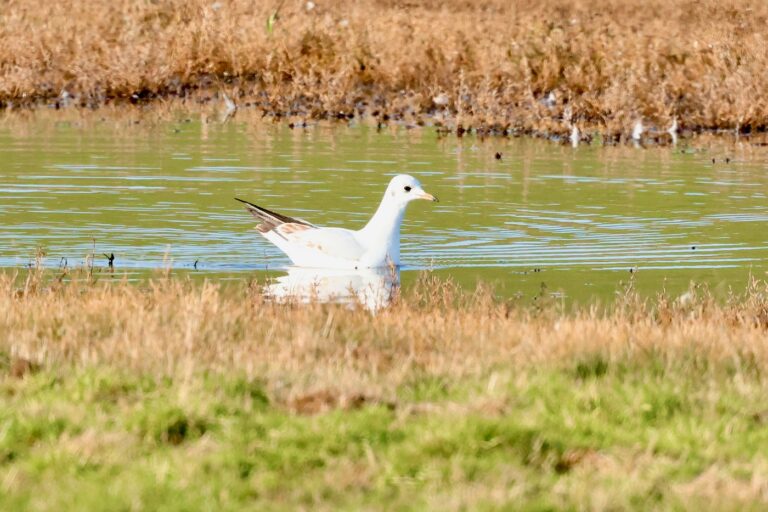
Jonge kokmeeuw met bruine vleugelband zwemt in een plas
Photo: Bas de Bruin — Camperduin, 10 november 2026
Kokmeeuw
Photo: Andreas Trepte, CC BY-SA 2.5 (Wikimedia Commons)