
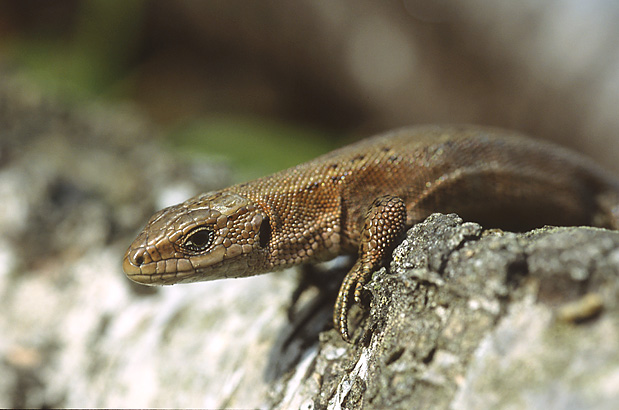
Where to see the viviparous lizard in the Netherlands
With luck 🦎 Reptile
Where and when do you see a viviparous lizard? With some luck you can see this species, from March to October.
How do you recognise a viviparous lizard?
A slender, brown lizard with a fine pattern of dark lines and spots, and a relatively long tail. It is less coarsely marked than the sand lizard and lacks the green. You often see it darting away rather than sitting: a quick movement along a path or over a tree stump.
Where do you see this species in the Netherlands?
The sandy soils and peat areas: heath, raised bog, dunes and woodland edges in the east, the south and along the coast.
📍 Nationaal Park Dwingelderveld
With luck chance per source📍 Nationaal Park De Hoge Veluwe
presence reported📍 Nationaal Park Veluwezoom
With luck chance per source📍 Nationaal Park Drents-Friese Wold
Good chance in season verified📍 Nationaal Park Sallandse Heuvelrug
presence reported📍 Nationaal Park De Meinweg
presence reported📍 Nationaal Park Utrechtse Heuvelrug
presence reported📍 Fochteloërveen
With luck chance per source📍 Nationaal Park Zuid-Limburg (in formation)
With luck chance per source📍 Kroondomein Het Loo
presence reported📍 Deelerwoude
presence reported📍 Sint-Pietersberg & Zuid-Limburg
presence reported📍 Nationaal Park De Maasduinen
presence reported📍 Naardermeer
presence reported📍 Nationaal Park De Groote Peel
presence reported📍 Nationaal Park Weerribben-Wieden
presence reported📍 Planken Wambuis
presence reported📍 Oostelijke Vechtplassen
presence reported📍 Zuidlaardermeergebied en Hunzedal
presence reported📍 Kampina & Oisterwijkse Vennen
presence reported📍 De Maashorst
presence reported📍 Strabrechtse Heide & Beuven
presence reported📍 Loonse en Drunense Duinen
presence reportedThese links come straight from our database, with the chance, the source and the evidence level for each area.
When is the best time?
Green = present · orange = peak period. The bar is generated from our database.
Best period: April to September, with spring the best period. On sunny mornings after a cool night the animals lie still longest and are easiest to find.
Best time of day: The morning, while it warms up on a sheltered, sunny spot.
Recent sightings
👁️ Where has this species been seen recently?
Check the current sightings on Waarneming.nl. A useful addition to our own verified information.
How to improve your chances
- Go on a sunny morning, while they are warming up and still slow.
- Look for the edges: woodland margins, heath paths, log piles, south-facing slopes.
- Walk quietly. Reptiles feel vibration through the ground before they see you.
- Look but do not touch. Picking one up is disturbance, and with protected species it is not allowed.
🎒 What you need for this
A telephoto lens
🌿 Watching responsibly
Keep your distance, stay on the paths, and never lure animals with food or sound. Leave as soon as an animal becomes uneasy.
Status: Verified · Last checked: 2026-08-08