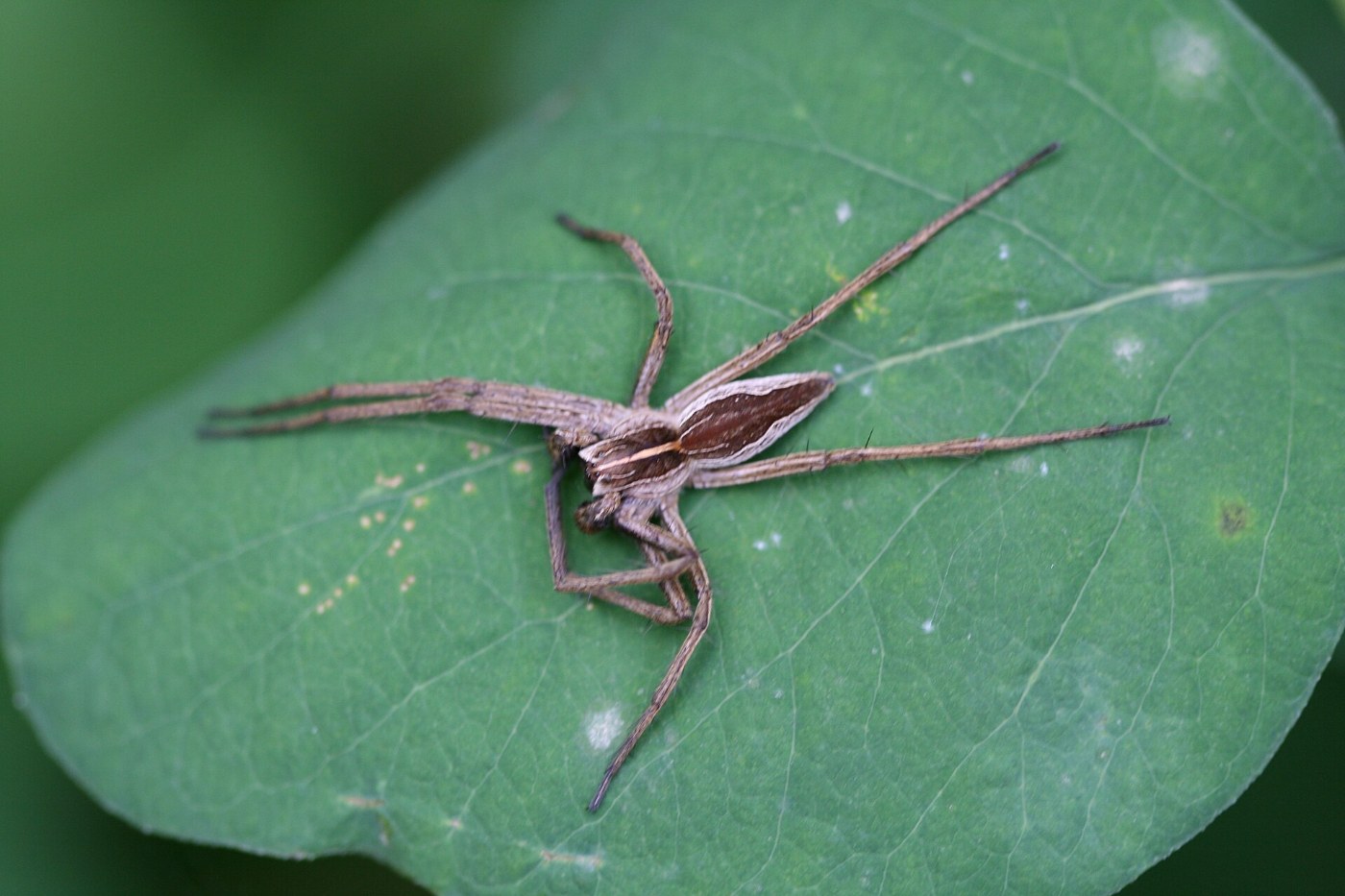
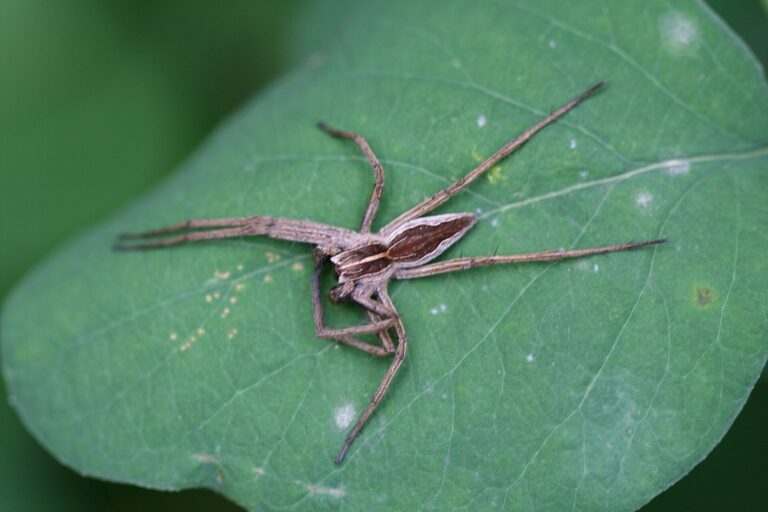
A slender abdomen with a pale central line, and pale tear marks beside the eyes (NatureSpot). It rests with the first two pairs of legs stretched forward at an angle, which makes the animal look like an arrow. Females 12 to 15 mm, males 10 to 13 mm. Body lengths come from Spiders of Europe (Nentwig et al., araneae.nmbe.ch); those are European ranges, not Dutch measurements.
Common throughout the country in rough, herb-rich vegetation. Dutch trend figures are not available.
NDFF open data, 70 records 2016-2026
Nationwide period: NatureSpot gives May to July as the high season, but reports that the species can be found in most months of the year. Note: the months come from British sources (the British Arachnological Society and NatureSpot). Dutch phenology data per spider species could not be consulted, as waarneming.nl and the Dutch Species Register blocked automated access. The climate is comparable, but this is not a Dutch measurement.
NDFF open data, 13 records 2016-2026
Nationwide period: NatureSpot gives May to July as the high season, but reports that the species can be found in most months of the year. Note: the months come from British sources (the British Arachnological Society and NatureSpot). Dutch phenology data per spider species could not be consulted, as waarneming.nl and the Dutch Species Register blocked automated access. The climate is comparable, but this is not a Dutch measurement.
NDFF open data, 143 records 2016-2026
Nationwide period: NatureSpot gives May to July as the high season, but reports that the species can be found in most months of the year. Note: the months come from British sources (the British Arachnological Society and NatureSpot). Dutch phenology data per spider species could not be consulted, as waarneming.nl and the Dutch Species Register blocked automated access. The climate is comparable, but this is not a Dutch measurement.
NDFF open data, 89 records 2016-2026
Nationwide period: NatureSpot gives May to July as the high season, but reports that the species can be found in most months of the year. Note: the months come from British sources (the British Arachnological Society and NatureSpot). Dutch phenology data per spider species could not be consulted, as waarneming.nl and the Dutch Species Register blocked automated access. The climate is comparable, but this is not a Dutch measurement.
NDFF open data, 44 records 2016-2026
Nationwide period: NatureSpot gives May to July as the high season, but reports that the species can be found in most months of the year. Note: the months come from British sources (the British Arachnological Society and NatureSpot). Dutch phenology data per spider species could not be consulted, as waarneming.nl and the Dutch Species Register blocked automated access. The climate is comparable, but this is not a Dutch measurement.
NDFF open data, 93 records 2016-2026
Nationwide period: NatureSpot gives May to July as the high season, but reports that the species can be found in most months of the year. Note: the months come from British sources (the British Arachnological Society and NatureSpot). Dutch phenology data per spider species could not be consulted, as waarneming.nl and the Dutch Species Register blocked automated access. The climate is comparable, but this is not a Dutch measurement.
NDFF open data, 196 records 2016-2026
Nationwide period: NatureSpot gives May to July as the high season, but reports that the species can be found in most months of the year. Note: the months come from British sources (the British Arachnological Society and NatureSpot). Dutch phenology data per spider species could not be consulted, as waarneming.nl and the Dutch Species Register blocked automated access. The climate is comparable, but this is not a Dutch measurement.
NDFF open data, 130 records 2016-2026
Nationwide period: NatureSpot gives May to July as the high season, but reports that the species can be found in most months of the year. Note: the months come from British sources (the British Arachnological Society and NatureSpot). Dutch phenology data per spider species could not be consulted, as waarneming.nl and the Dutch Species Register blocked automated access. The climate is comparable, but this is not a Dutch measurement.
NDFF open data, 27 records 2016-2026
Nationwide period: NatureSpot gives May to July as the high season, but reports that the species can be found in most months of the year. Note: the months come from British sources (the British Arachnological Society and NatureSpot). Dutch phenology data per spider species could not be consulted, as waarneming.nl and the Dutch Species Register blocked automated access. The climate is comparable, but this is not a Dutch measurement.
NDFF open data, 52 records 2016-2026
Nationwide period: NatureSpot gives May to July as the high season, but reports that the species can be found in most months of the year. Note: the months come from British sources (the British Arachnological Society and NatureSpot). Dutch phenology data per spider species could not be consulted, as waarneming.nl and the Dutch Species Register blocked automated access. The climate is comparable, but this is not a Dutch measurement.
NDFF open data, 61 records 2016-2026
Nationwide period: NatureSpot gives May to July as the high season, but reports that the species can be found in most months of the year. Note: the months come from British sources (the British Arachnological Society and NatureSpot). Dutch phenology data per spider species could not be consulted, as waarneming.nl and the Dutch Species Register blocked automated access. The climate is comparable, but this is not a Dutch measurement.
NDFF open data, 54 records 2016-2026
Nationwide period: NatureSpot gives May to July as the high season, but reports that the species can be found in most months of the year. Note: the months come from British sources (the British Arachnological Society and NatureSpot). Dutch phenology data per spider species could not be consulted, as waarneming.nl and the Dutch Species Register blocked automated access. The climate is comparable, but this is not a Dutch measurement.
NDFF open data, 128 records 2016-2026
Nationwide period: NatureSpot gives May to July as the high season, but reports that the species can be found in most months of the year. Note: the months come from British sources (the British Arachnological Society and NatureSpot). Dutch phenology data per spider species could not be consulted, as waarneming.nl and the Dutch Species Register blocked automated access. The climate is comparable, but this is not a Dutch measurement.
NDFF open data, 86 records 2016-2026
Nationwide period: NatureSpot gives May to July as the high season, but reports that the species can be found in most months of the year. Note: the months come from British sources (the British Arachnological Society and NatureSpot). Dutch phenology data per spider species could not be consulted, as waarneming.nl and the Dutch Species Register blocked automated access. The climate is comparable, but this is not a Dutch measurement.
NDFF open data, 57 records 2016-2026
Nationwide period: NatureSpot gives May to July as the high season, but reports that the species can be found in most months of the year. Note: the months come from British sources (the British Arachnological Society and NatureSpot). Dutch phenology data per spider species could not be consulted, as waarneming.nl and the Dutch Species Register blocked automated access. The climate is comparable, but this is not a Dutch measurement.
NDFF open data, 183 records 2016-2026
Nationwide period: NatureSpot gives May to July as the high season, but reports that the species can be found in most months of the year. Note: the months come from British sources (the British Arachnological Society and NatureSpot). Dutch phenology data per spider species could not be consulted, as waarneming.nl and the Dutch Species Register blocked automated access. The climate is comparable, but this is not a Dutch measurement.
NDFF open data, 24 records 2016-2026
Nationwide period: NatureSpot gives May to July as the high season, but reports that the species can be found in most months of the year. Note: the months come from British sources (the British Arachnological Society and NatureSpot). Dutch phenology data per spider species could not be consulted, as waarneming.nl and the Dutch Species Register blocked automated access. The climate is comparable, but this is not a Dutch measurement.
NDFF open data, 40 records 2016-2026
Nationwide period: NatureSpot gives May to July as the high season, but reports that the species can be found in most months of the year. Note: the months come from British sources (the British Arachnological Society and NatureSpot). Dutch phenology data per spider species could not be consulted, as waarneming.nl and the Dutch Species Register blocked automated access. The climate is comparable, but this is not a Dutch measurement.
NDFF open data, 96 records 2016-2026
Nationwide period: NatureSpot gives May to July as the high season, but reports that the species can be found in most months of the year. Note: the months come from British sources (the British Arachnological Society and NatureSpot). Dutch phenology data per spider species could not be consulted, as waarneming.nl and the Dutch Species Register blocked automated access. The climate is comparable, but this is not a Dutch measurement.
NDFF open data, 107 records 2016-2026
Nationwide period: NatureSpot gives May to July as the high season, but reports that the species can be found in most months of the year. Note: the months come from British sources (the British Arachnological Society and NatureSpot). Dutch phenology data per spider species could not be consulted, as waarneming.nl and the Dutch Species Register blocked automated access. The climate is comparable, but this is not a Dutch measurement.
NDFF open data, 88 records 2016-2026
Nationwide period: NatureSpot gives May to July as the high season, but reports that the species can be found in most months of the year. Note: the months come from British sources (the British Arachnological Society and NatureSpot). Dutch phenology data per spider species could not be consulted, as waarneming.nl and the Dutch Species Register blocked automated access. The climate is comparable, but this is not a Dutch measurement.
NDFF open data, 22 records 2016-2026
Nationwide period: NatureSpot gives May to July as the high season, but reports that the species can be found in most months of the year. Note: the months come from British sources (the British Arachnological Society and NatureSpot). Dutch phenology data per spider species could not be consulted, as waarneming.nl and the Dutch Species Register blocked automated access. The climate is comparable, but this is not a Dutch measurement.
NDFF open data, 240 records 2016-2026
Nationwide period: NatureSpot gives May to July as the high season, but reports that the species can be found in most months of the year. Note: the months come from British sources (the British Arachnological Society and NatureSpot). Dutch phenology data per spider species could not be consulted, as waarneming.nl and the Dutch Species Register blocked automated access. The climate is comparable, but this is not a Dutch measurement.
NDFF open data, 41 records 2016-2026
Nationwide period: NatureSpot gives May to July as the high season, but reports that the species can be found in most months of the year. Note: the months come from British sources (the British Arachnological Society and NatureSpot). Dutch phenology data per spider species could not be consulted, as waarneming.nl and the Dutch Species Register blocked automated access. The climate is comparable, but this is not a Dutch measurement.
NDFF open data, 277 records 2016-2026
Nationwide period: NatureSpot gives May to July as the high season, but reports that the species can be found in most months of the year. Note: the months come from British sources (the British Arachnological Society and NatureSpot). Dutch phenology data per spider species could not be consulted, as waarneming.nl and the Dutch Species Register blocked automated access. The climate is comparable, but this is not a Dutch measurement.
NDFF open data, 183 records 2016-2026
Nationwide period: NatureSpot gives May to July as the high season, but reports that the species can be found in most months of the year. Note: the months come from British sources (the British Arachnological Society and NatureSpot). Dutch phenology data per spider species could not be consulted, as waarneming.nl and the Dutch Species Register blocked automated access. The climate is comparable, but this is not a Dutch measurement.
NDFF open data, 524 records 2016-2026
Nationwide period: NatureSpot gives May to July as the high season, but reports that the species can be found in most months of the year. Note: the months come from British sources (the British Arachnological Society and NatureSpot). Dutch phenology data per spider species could not be consulted, as waarneming.nl and the Dutch Species Register blocked automated access. The climate is comparable, but this is not a Dutch measurement.
NDFF open data, 260 records 2016-2026
Nationwide period: NatureSpot gives May to July as the high season, but reports that the species can be found in most months of the year. Note: the months come from British sources (the British Arachnological Society and NatureSpot). Dutch phenology data per spider species could not be consulted, as waarneming.nl and the Dutch Species Register blocked automated access. The climate is comparable, but this is not a Dutch measurement.
NDFF open data
Nationwide period: NatureSpot gives May to July as the high season, but reports that the species can be found in most months of the year. Note: the months come from British sources (the British Arachnological Society and NatureSpot). Dutch phenology data per spider species could not be consulted, as waarneming.nl and the Dutch Species Register blocked automated access. The climate is comparable, but this is not a Dutch measurement.
NDFF open data, 529 records 2016-2026
Nationwide period: NatureSpot gives May to July as the high season, but reports that the species can be found in most months of the year. Note: the months come from British sources (the British Arachnological Society and NatureSpot). Dutch phenology data per spider species could not be consulted, as waarneming.nl and the Dutch Species Register blocked automated access. The climate is comparable, but this is not a Dutch measurement.
NDFF open data, 36 records 2016-2026
Nationwide period: NatureSpot gives May to July as the high season, but reports that the species can be found in most months of the year. Note: the months come from British sources (the British Arachnological Society and NatureSpot). Dutch phenology data per spider species could not be consulted, as waarneming.nl and the Dutch Species Register blocked automated access. The climate is comparable, but this is not a Dutch measurement.
NDFF open data, 340 records 2016-2026
Nationwide period: NatureSpot gives May to July as the high season, but reports that the species can be found in most months of the year. Note: the months come from British sources (the British Arachnological Society and NatureSpot). Dutch phenology data per spider species could not be consulted, as waarneming.nl and the Dutch Species Register blocked automated access. The climate is comparable, but this is not a Dutch measurement.
NDFF open data, 220 records 2016-2026
Nationwide period: NatureSpot gives May to July as the high season, but reports that the species can be found in most months of the year. Note: the months come from British sources (the British Arachnological Society and NatureSpot). Dutch phenology data per spider species could not be consulted, as waarneming.nl and the Dutch Species Register blocked automated access. The climate is comparable, but this is not a Dutch measurement.
NDFF open data, 290 records 2016-2026
Nationwide period: NatureSpot gives May to July as the high season, but reports that the species can be found in most months of the year. Note: the months come from British sources (the British Arachnological Society and NatureSpot). Dutch phenology data per spider species could not be consulted, as waarneming.nl and the Dutch Species Register blocked automated access. The climate is comparable, but this is not a Dutch measurement.
NDFF open data, 298 records 2016-2026
Nationwide period: NatureSpot gives May to July as the high season, but reports that the species can be found in most months of the year. Note: the months come from British sources (the British Arachnological Society and NatureSpot). Dutch phenology data per spider species could not be consulted, as waarneming.nl and the Dutch Species Register blocked automated access. The climate is comparable, but this is not a Dutch measurement.
NDFF open data, 145 records 2016-2026
Nationwide period: NatureSpot gives May to July as the high season, but reports that the species can be found in most months of the year. Note: the months come from British sources (the British Arachnological Society and NatureSpot). Dutch phenology data per spider species could not be consulted, as waarneming.nl and the Dutch Species Register blocked automated access. The climate is comparable, but this is not a Dutch measurement.
These links come straight from our database, with the chance, the source and the evidence level for each area.
Green = present · orange = peak period. The bar is generated from our database.
The posture is the portrait: photograph head-on or at a slight angle from the front, so the forward-stretched legs line up. From May look for a female with the white egg sac under her body; that image tells the whole story of the species in one frame.