Rabbit
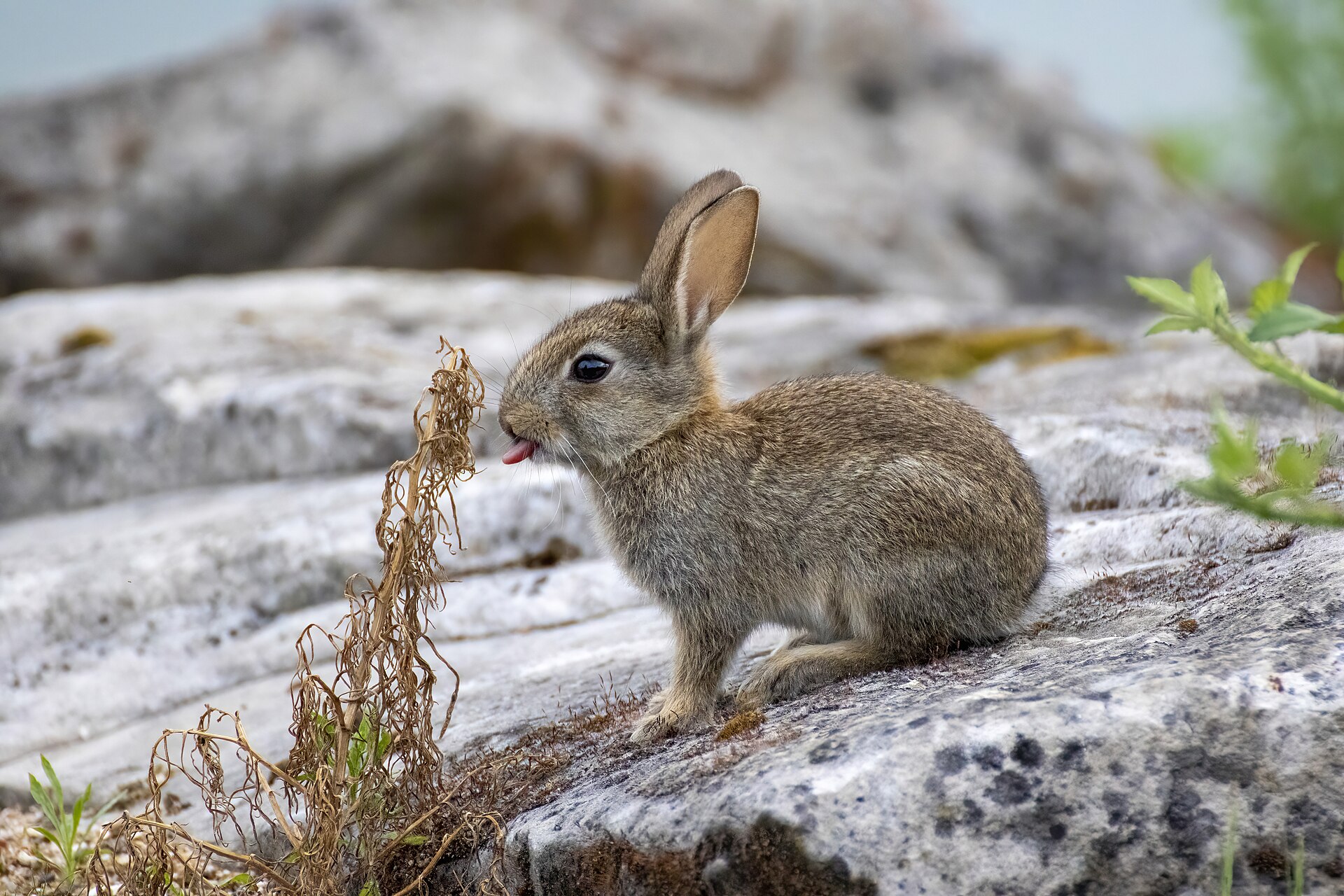
📷 Alexis Lours, CC BY 2.0 (Wikimedia Commons)

Where to see the European rabbit in the Netherlands

Oryctolagus cuniculus · European rabbit

Easy 🦌 Mammal (land)

Where and when do you see a European rabbit? This species is easy to see, all year round.

How do you recognise a European rabbit?

Smaller and stockier than a hare, with shorter ears without black tips and brown eyes. It sits lower on its legs and runs to cover in short hops. Where a hare lives alone and presses itself flat in the field, rabbits live in groups and flee into a burrow.

What can you confuse a European rabbit with?

Looks like: European hare

  • European hare: Larger and longer, with long black-tipped ears and yellow eyes, higher on the legs and with a flowing running style.

What tracks does a European rabbit leave?

2.5 × 4 cm

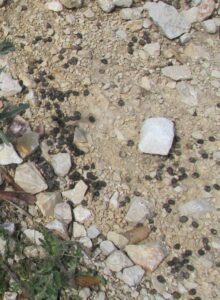
Print: about 25 mm wide; the forefoot is 35 mm long, the hind foot 40 mm, and up to 100 mm where the animal sat. Five toes at the front, four at the back, pointed in front and without visible pads. The distance between prints runs from 25 cm at a very slow walk to 2.5 metres in flight. Runways are narrow, about 10 cm, usually through grass or herbs. Droppings: ball-shaped, shiny dark green when fresh and later black-grey to brown-yellow, almost always in little heaps together, in latrines. Feeding signs: stems and twigs cut off at a sharp angle, and lower to the ground than with a hare.

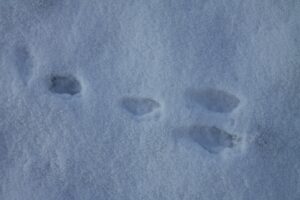
Pootafdruk van een konijn
Photo: Stephan Sprinz, CC BY 4.0, via Wikimedia Commons
Pootafdruk van een konijn
Photo: Thesupermat, CC BY-SA 3.0, via Wikimedia Commons
Uitwerpselen van een konijn
Photo: zebedeugalinha, CC BY 4.0, via iNaturalist

Where do you see this species in the Netherlands?

Above all the dunes and the sandy soils, where the ground is loose enough to dig. In clay areas it is much scarcer.

Habitat: Dry, free-draining ground with short vegetation to graze and scrub or a dune slope to dig burrows in. Dunes, railway embankments, dykes and sandy woodland edges.

This is a common, widespread species: you can come across it in far more places than the areas listed below. Treat that list as a starting point rather than a full survey.

How certain is this? verified chance per source presence reported Links that do not clear the bottom threshold are not published. How we decide that.

📍 Nationaal Park Zuid-Kennemerland

Good chance chance per source
Natuurmonumenten
Nationwide period: Present all year. You see the most animals in spring and early summer, when the young come above ground.
Waternet — Amsterdamse Waterleidingduinen
Nationwide period: Present all year. You see the most animals in spring and early summer, when the young come above ground.
NDFF open data, 97 records 2016-2026
Nationwide period: Present all year. You see the most animals in spring and early summer, when the young come above ground.
NDFF open data, 167 records 2016-2026
Nationwide period: Present all year. You see the most animals in spring and early summer, when the young come above ground.

📍 Nationaal Park Veluwezoom

presence reported
NDFF open data, 289 records 2016-2026
Nationwide period: Present all year. You see the most animals in spring and early summer, when the young come above ground.

📍 Oostvaardersplassen

presence reported
NDFF open data, 145 records 2016-2026
Nationwide period: Present all year. You see the most animals in spring and early summer, when the young come above ground.
NDFF open data, 278 records 2016-2026
Nationwide period: Present all year. You see the most animals in spring and early summer, when the young come above ground.
NDFF open data, 16 records 2016-2026
Nationwide period: Present all year. You see the most animals in spring and early summer, when the young come above ground.
NDFF open data, 109 records 2016-2026
Nationwide period: Present all year. You see the most animals in spring and early summer, when the young come above ground.
NDFF open data, 84 records 2016-2026
Nationwide period: Present all year. You see the most animals in spring and early summer, when the young come above ground.
NDFF open data, 48 records 2016-2026
Nationwide period: Present all year. You see the most animals in spring and early summer, when the young come above ground.
NDFF open data, 49 records 2016-2026
Nationwide period: Present all year. You see the most animals in spring and early summer, when the young come above ground.
NDFF open data, 194 records 2016-2026
Nationwide period: Present all year. You see the most animals in spring and early summer, when the young come above ground.
NDFF open data, 127 records 2016-2026
Nationwide period: Present all year. You see the most animals in spring and early summer, when the young come above ground.

📍 Nationaal Park De Meinweg

presence reported
NDFF open data, 11 records 2016-2026
Nationwide period: Present all year. You see the most animals in spring and early summer, when the young come above ground.
NDFF open data, 797 records 2016-2026
Nationwide period: Present all year. You see the most animals in spring and early summer, when the young come above ground.
NDFF open data, 69 records 2016-2026
Nationwide period: Present all year. You see the most animals in spring and early summer, when the young come above ground.

📍 Fochteloërveen

presence reported
NDFF open data, 13 records 2016-2026
Nationwide period: Present all year. You see the most animals in spring and early summer, when the young come above ground.

📍 Kroondomein Het Loo

presence reported
NDFF open data, 108 records 2016-2026
Nationwide period: Present all year. You see the most animals in spring and early summer, when the young come above ground.

📍 Deelerwoude

presence reported
NDFF open data, 116 records 2016-2026
Nationwide period: Present all year. You see the most animals in spring and early summer, when the young come above ground.

📍 Naardermeer

presence reported
NDFF open data, 42 records 2016-2026
Nationwide period: Present all year. You see the most animals in spring and early summer, when the young come above ground.

📍 Onlanden & Leekstermeer

presence reported
NDFF open data, 39 records 2016-2026
Nationwide period: Present all year. You see the most animals in spring and early summer, when the young come above ground.

📍 Zwin & Zeeuws-Vlaanderen

presence reported
NDFF open data, 432 records 2016-2026
Nationwide period: Present all year. You see the most animals in spring and early summer, when the young come above ground.
NDFF open data, 123 records 2016-2026
Nationwide period: Present all year. You see the most animals in spring and early summer, when the young come above ground.

📍 Planken Wambuis

presence reported
NDFF open data, 131 records 2016-2026
Nationwide period: Present all year. You see the most animals in spring and early summer, when the young come above ground.

📍 Leuvenumse Bossen

presence reported
NDFF open data, 110 records 2016-2026
Nationwide period: Present all year. You see the most animals in spring and early summer, when the young come above ground.

📍 Blauwe Kamer

presence reported
NDFF open data
Nationwide period: Present all year. You see the most animals in spring and early summer, when the young come above ground.

📍 Zouweboezem

presence reported
NDFF open data
Nationwide period: Present all year. You see the most animals in spring and early summer, when the young come above ground.

📍 Oostelijke Vechtplassen

presence reported
NDFF open data
Nationwide period: Present all year. You see the most animals in spring and early summer, when the young come above ground.
NDFF open data
Nationwide period: Present all year. You see the most animals in spring and early summer, when the young come above ground.

📍 Wormer- en Jisperveld

presence reported
NDFF open data
Nationwide period: Present all year. You see the most animals in spring and early summer, when the young come above ground.

📍 Ilperveld

presence reported
NDFF open data
Nationwide period: Present all year. You see the most animals in spring and early summer, when the young come above ground.
NDFF open data
Nationwide period: Present all year. You see the most animals in spring and early summer, when the young come above ground.

📍 Meijendel & Berkheide

presence reported
NDFF open data, 4.876 records 2016-2026
Nationwide period: Present all year. You see the most animals in spring and early summer, when the young come above ground.

📍 Voornes Duin

presence reported
NDFF open data, 142 records 2016-2026
Nationwide period: Present all year. You see the most animals in spring and early summer, when the young come above ground.
NDFF open data, 243 records 2016-2026
Nationwide period: Present all year. You see the most animals in spring and early summer, when the young come above ground.

📍 De Maashorst

presence reported
NDFF open data, 793 records 2016-2026
Nationwide period: Present all year. You see the most animals in spring and early summer, when the young come above ground.
NDFF open data, 221 records 2016-2026
Nationwide period: Present all year. You see the most animals in spring and early summer, when the young come above ground.

📍 Loonse en Drunense Duinen

presence reported
NDFF open data, 357 records 2016-2026
Nationwide period: Present all year. You see the most animals in spring and early summer, when the young come above ground.

📍 Schoorlse Duinen

presence reported
NDFF open data, 242 records 2016-2026
Nationwide period: Present all year. You see the most animals in spring and early summer, when the young come above ground.

📍 Haringvlietsluizen

presence reported
NDFF open data, 21 records 2016-2026
Nationwide period: Present all year. You see the most animals in spring and early summer, when the young come above ground.

📍 De Putten bij Camperduin

presence reported
NDFF open data, 98 records 2016-2026
Nationwide period: Present all year. You see the most animals in spring and early summer, when the young come above ground.

These links come straight from our database, with the chance, the source and the evidence level for each area.

When is the best time?

Green = present · orange = peak period. The bar is generated from our database.

Best period: Present all year. You see the most animals in spring and early summer, when the young come above ground.

Best time of day: Dawn and dusk. They then graze in groups on short vegetation close to their burrows; in the middle of the day they are usually underground or in cover.

Recent sightings

👁️ Where has this species been seen recently?

Check the current sightings on Waarneming.nl. A useful addition to our own verified information.

Current sightings on Waarneming.nl →

How to improve your chances

  • Keep the wind in your face. Most mammals will smell you long before they see you.
  • Arrive before sunrise and then stay put. Sitting still beats walking about.
  • Wear muted colours, skip the scent, and put your phone on silent.
  • Be patient. Expect to come back more than once before it works.

🎒 What you need for this

Telephoto lens

🌿 Watching responsibly

Keep your distance, stay on the paths, and never lure animals with food or sound. Leave as soon as an animal becomes uneasy.

Sources: Zoogdiervereniging, Zodion-soortpagina Konijn
Status: Verified · Last checked: 2026-08-08