
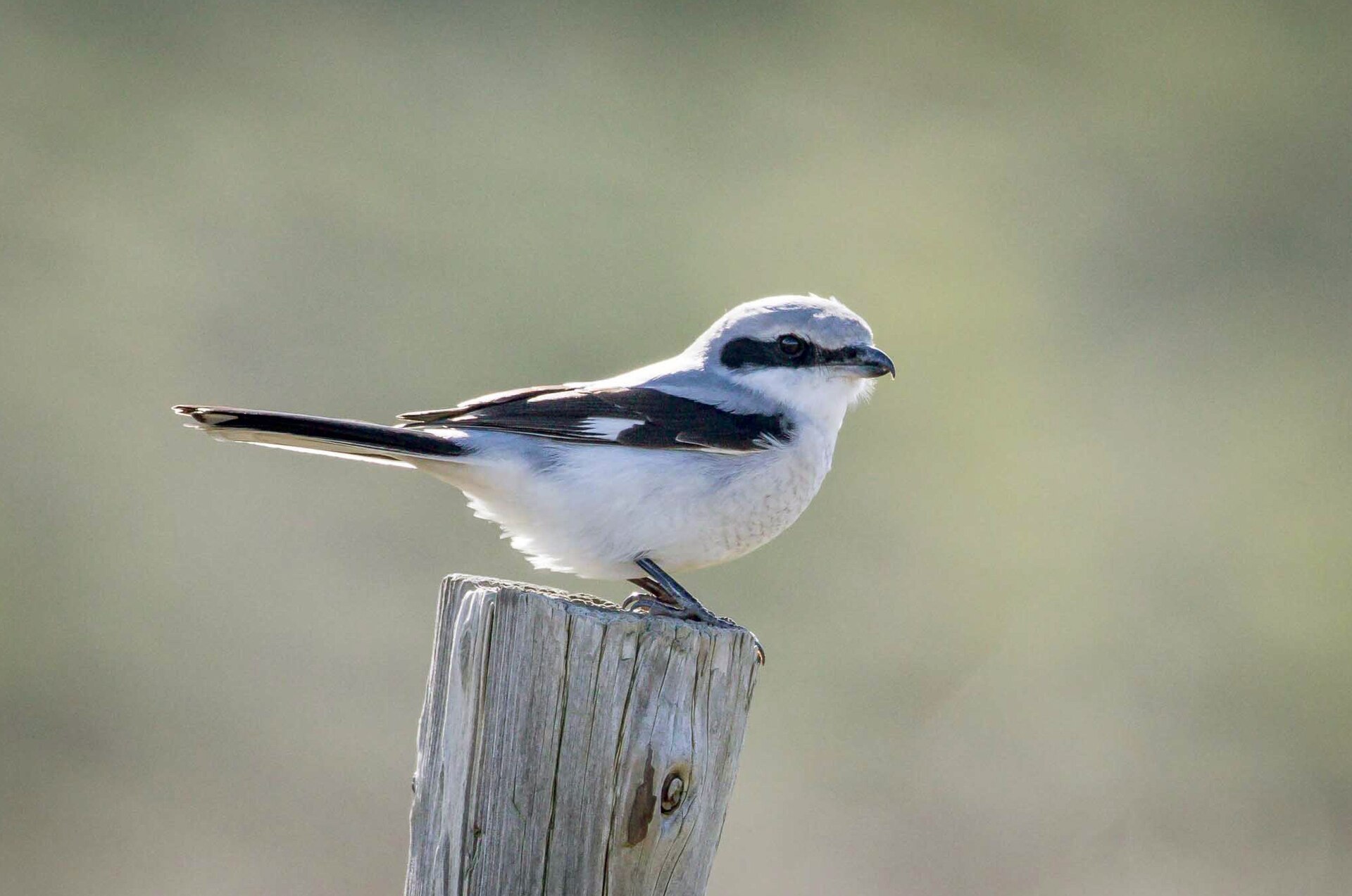
Where to see the Great Grey Shrike in the Netherlands
Rare 🦅 Bird Sensitive species · R3
🛡️ No exact locations, on purpose
This is a sensitive species. We deliberately show no nest sites, and during the breeding season (March to July) we are extra careful about exact spots. Why we do that.
Where and when do you see a Great Grey Shrike? This species is rarely seen, from October to March.
How do you recognise a Great Grey Shrike?
Length 21 to 26 cm. Grey, white and black, perched high on a lookout (winter).
Wingspan: 32 cm an indication from Wikidata; it varies by individual, sex and subspecies · compare all birds (in Dutch)
What does a Great Grey Shrike sound like?
Recording: Pascal Christe, CC BY-SA 4.0, via Wikimedia Commons
Where do you see this species in the Netherlands?
Heath and open country in winter.
📍 Deelerwoude
Good chance in season chance per source📍 Nationaal Park Dwingelderveld
Good chance in season chance per source📍 Nationaal Park Veluwezoom
With luck chance per source📍 Planken Wambuis
Rare chance per source📍 Nationaal Park Sallandse Heuvelrug
With luck chance per source📍 Nationaal Park De Maasduinen
presence reported📍 Nationaal Park De Biesbosch
Rare chance per source📍 Gelderse Poort & Millingerwaard
Rare chance per source📍 Nationaal Park Zuid-Kennemerland
Rare chance per source📍 Fochteloërveen
With luck chance per source📍 Blauwe Kamer
presence reported📍 Oostelijke Vechtplassen
presence reported📍 Noordhollands Duinreservaat
presence reported📍 Wormer- en Jisperveld
presence reported📍 Zuidlaardermeergebied en Hunzedal
presence reported📍 Meijendel & Berkheide
presence reported📍 Kampina & Oisterwijkse Vennen
presence reported📍 De Maashorst
presence reported📍 Strabrechtse Heide & Beuven
presence reported📍 Loonse en Drunense Duinen
presence reported📍 Schoorlse Duinen
presence reported📍 De Putten bij Camperduin
presence reportedThese links come straight from our database, with the chance, the source and the evidence level for each area.
When is the best time?
Green = present · orange = peak period. The bar is generated from our database.
Best period: October to March (winter).
Best time of day: During the day.
Recent sightings
👁️ Where has this species been seen recently?
Check the current sightings on Waarneming.nl. A useful addition to our own verified information.
Current sightings on Waarneming.nl →
Note: for sensitive species the source already blurs or withholds sightings. We do not reproduce exact locations.
How to improve your chances
- Learn the calls first. You will hear most birds before you see them.
- Go in the first hour after sunrise, when the song is at its peak and the wind is still down.
- Use a hide or natural cover. Sitting still gets you more than walking closer.
- Keep the sun behind you. Against the light you see a silhouette and no colour.
🎒 What you need for this
Binoculars, a telephoto lens
🌿 Watching responsibly
Keep your distance, stay on the paths, and never lure animals with food or sound. Leave as soon as an animal becomes uneasy. This is a sensitive species. We deliberately show no nest sites, and during the breeding season (March to July) we are extra careful about exact spots.
Status: Verified · Last checked: 2026-08-08