
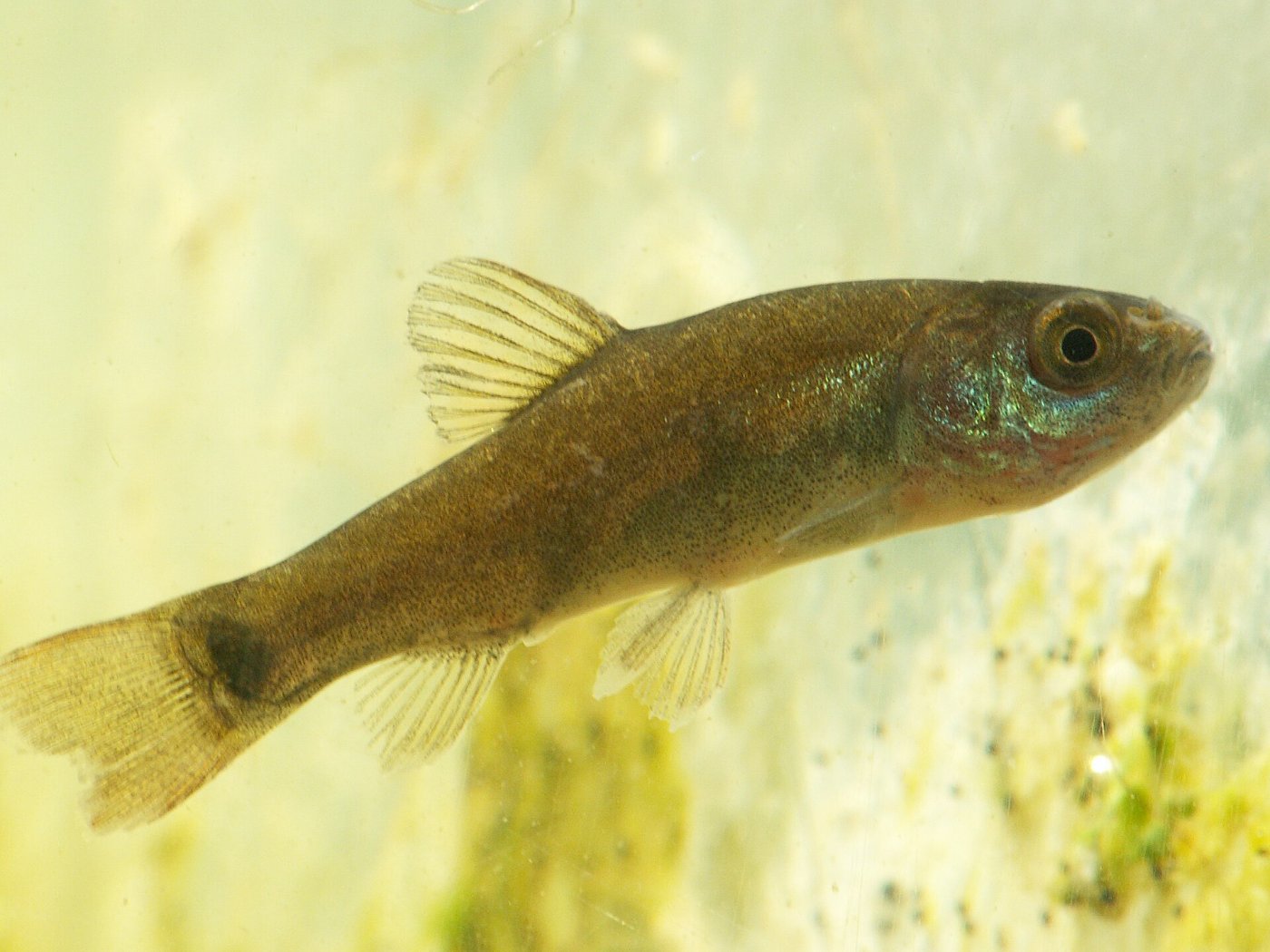
Where to see the tench in the Netherlands
With luck 🐟 Fish
Where and when do you see a tench? With some luck you can see this species, from April to October.
How do you recognise a tench?
A stocky, solid fish with an olive-green to bronze body and very small scales in a thick layer of slime, which makes it feel almost smooth. Two short barbels at the corners of the mouth, small red to orange eyes and strikingly rounded fins.
Where do you see this species in the Netherlands?
Scattered across the country in plant-rich, still and slow-flowing waters; most numerous in lowland peat and polder waters.
Habitat: Shallow, plant-rich and nutrient-rich water with a soft muddy bed: ditches, peat cuttings, lakes and old river arms.
This is a common, widespread species: you can come across it in far more places than the areas listed below. Treat that list as a starting point rather than a full survey.
📍 Nationaal Park De Alde Feanen
presence reported📍 Nationaal Park Weerribben-Wieden
presence reported📍 Nationaal Park De Biesbosch
presence reported📍 Gelderse Poort & Millingerwaard
presence reported📍 IJssel-uiterwaarden
presence reported📍 IJsselmeer
presence reported📍 Blauwe Kamer
presence reported📍 Zouweboezem
presence reported📍 Oostelijke Vechtplassen
presence reported📍 Wormer- en Jisperveld
presence reported📍 Ilperveld
presence reported📍 Zuidlaardermeergebied en Hunzedal
presence reported📍 Meijendel & Berkheide
presence reported📍 Kampina & Oisterwijkse Vennen
presence reported📍 De Maashorst
presence reported📍 Strabrechtse Heide & Beuven
presence reportedThese links come straight from our database, with the chance, the source and the evidence level for each area.
When is the best time?
Green = present · orange = peak period. The bar is generated from our database.
Best period: Mainly May to September; largely inactive in winter.
Best time of day: Early morning and dusk.
Recent sightings
👁️ Where has this species been seen recently?
Check the current sightings on Waarneming.nl. A useful addition to our own verified information.
How to improve your chances
- Look for clear, shallow water and watch from a bridge, a jetty or a high bank.
- Polarising sunglasses take the reflection off the surface and show you what is swimming underneath.
- Stay low and move slowly. Fish are very good at seeing movement above the water.
- Early morning gives the calmest water and the best visibility.
🎒 What you need for this
Polarising sunglasses; a viewing box helps
Photography
Look in the early morning for trails of bubbles above a muddy bed, which means a tench is feeding and rooting in the bottom. The bronze-green colour with its thick layer of slime catches low sunlight beautifully
🌿 Watching responsibly
Keep your distance, stay on the paths, and never lure animals with food or sound. Leave as soon as an animal becomes uneasy.
Status: Verified · Last checked: 2026-08-07