
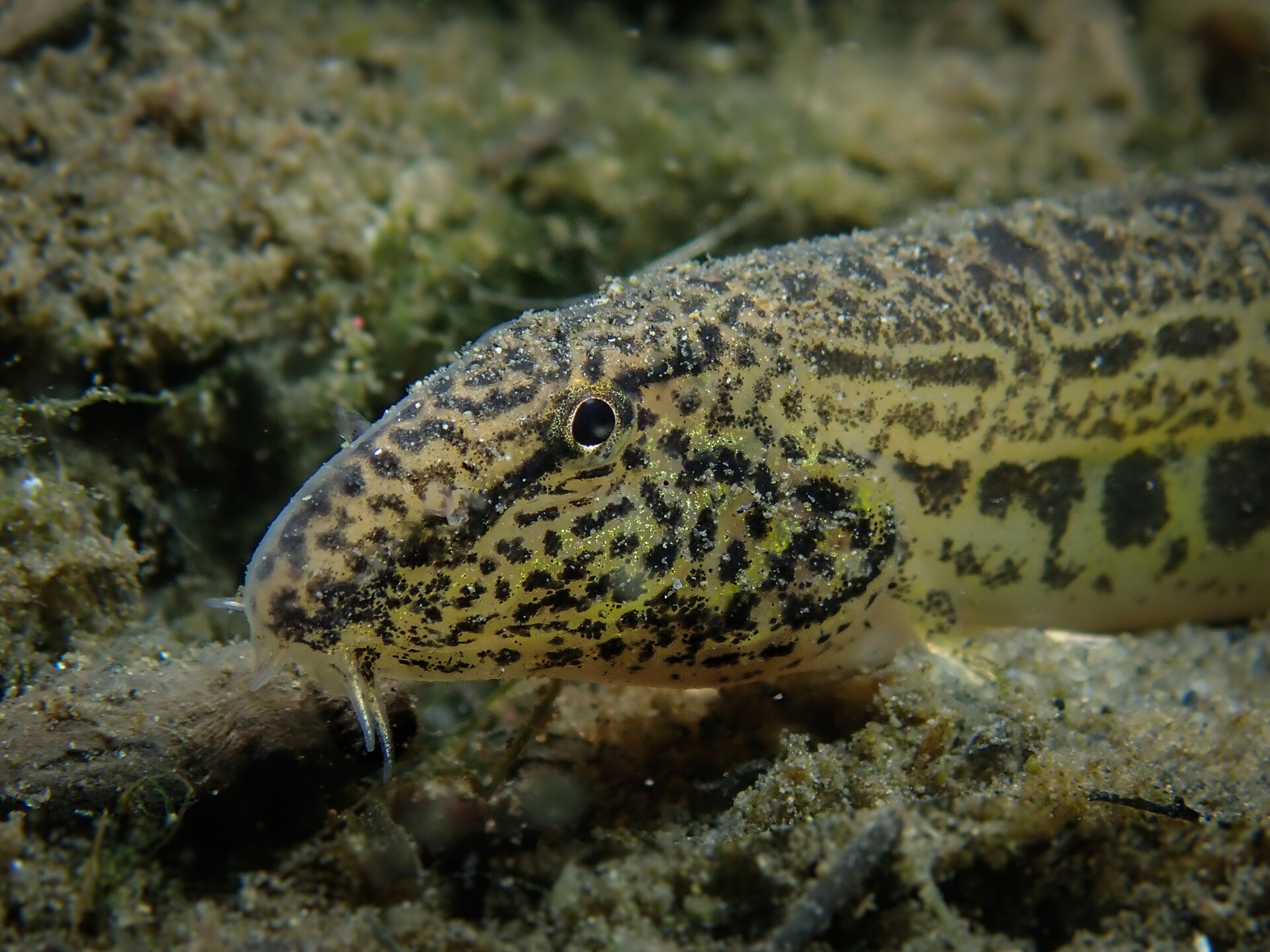
Where to see the spined loach in the Netherlands
Rare 🐟 Fish
Where and when do you see a spined loach? This species is rarely seen, all year round.
How do you recognise a spined loach?
An elongated, cylindrical little fish of at most 11 centimetres, yellow to pale grey with a regular pattern of dark spots on the flanks. Six short barbels around the mouth, and, the decisive feature, a small retractable spine below the eye.
Where do you see this species in the Netherlands?
Scattered across the whole country in shallow, plant-rich waters with a sandy bed.
Habitat: Shallow, plant-rich water with a sandy bed: ditches, canals, streams and lakes.
This is a common, widespread species: you can come across it in far more places than the areas listed below. Treat that list as a starting point rather than a full survey.
📍 Naardermeer
presence reported📍 Nationaal Park De Biesbosch
presence reported📍 Gelderse Poort & Millingerwaard
presence reported📍 Nationaal Park De Maasduinen
presence reported📍 Nationaal Park De Alde Feanen
presence reported📍 Grevelingenmeer
presence reported📍 IJssel-uiterwaarden
presence reported📍 IJsselmeer
presence reported📍 Haringvliet & Hollands Diep
presence reported📍 Zouweboezem
presence reported📍 Oostelijke Vechtplassen
presence reported📍 Wormer- en Jisperveld
presence reported📍 Ilperveld
presence reported📍 Zuidlaardermeergebied en Hunzedal
presence reported📍 Haringvlietsluizen
presence reportedThese links come straight from our database, with the chance, the source and the evidence level for each area.
When is the best time?
Green = present · orange = peak period. The bar is generated from our database.
Best period: All year; spawning from April to July.
Best time of day: Dusk and night; buried during the day.
Recent sightings
👁️ Where has this species been seen recently?
Check the current sightings on Waarneming.nl. A useful addition to our own verified information.
How to improve your chances
- Look for clear, shallow water and watch from a bridge, a jetty or a high bank.
- Polarising sunglasses take the reflection off the surface and show you what is swimming underneath.
- Stay low and move slowly. Fish are very good at seeing movement above the water.
- Early morning gives the calmest water and the best visibility.
🎒 What you need for this
A viewing box or hand net; with polarising glasses alone you will rarely reach them
Photography
By day you see at most a small head sticking out of the sand. At dusk they become active and crawl over the bed, and an underwater camera with some light on a shallow sandy bed then gives the best image
🌿 Watching responsibly
Keep your distance, stay on the paths, and never lure animals with food or sound. Leave as soon as an animal becomes uneasy.
Status: Verified · Last checked: 2026-08-07