Where to see the European Goldfinch in the Netherlands
Easy 🦅 Bird Sensitive species · R4
🛡️ No exact locations, on purpose
This is a sensitive species. We deliberately give no roosting or wintering gathering places. Why we do that.
Where and when do you see a European Goldfinch? This species is easy to see, from July to February.
How do you recognise a European Goldfinch?
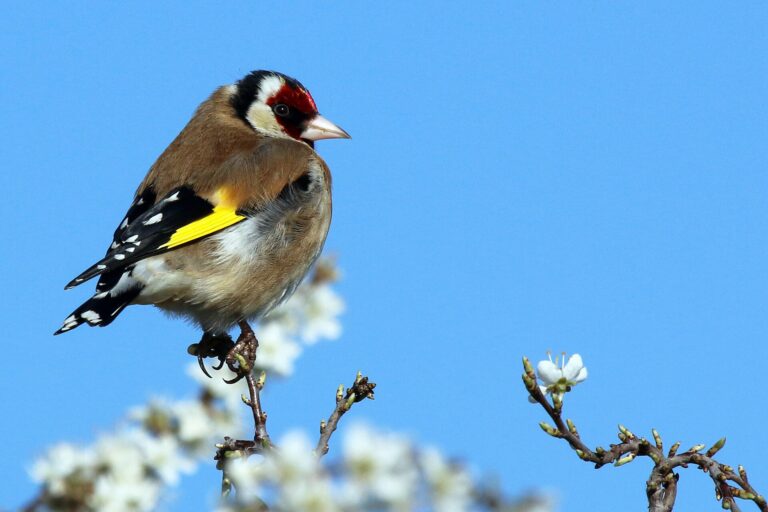
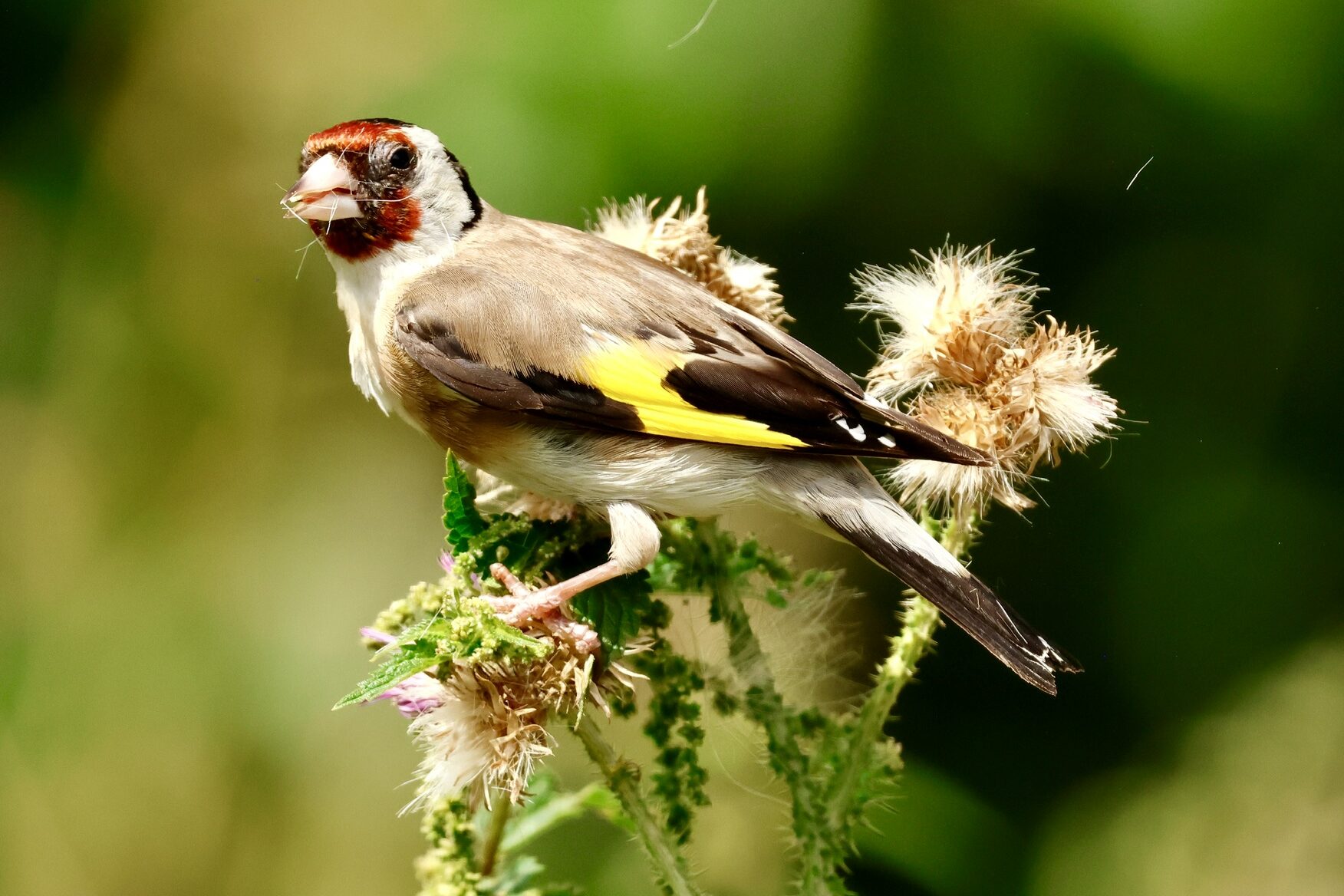
Length 10.5 to 13.5 cm. Unmistakable for its bright red face mask on a black and white head, with a broad yellow bar across the black wing. Young birds do not yet have the red and are streaked grey-brown. In flocks there is a constant tinkling sound that brings small bells to mind.
Wingspan: 24 cm an indication from Wikidata; it varies by individual, sex and subspecies · compare all birds (in Dutch)
What can you confuse a European Goldfinch with?
Looks like: Eurasian Siskin, Common Linnet
- Eurasian Siskin: Young goldfinches do not yet have the red mask; the yellow wing bar on a jet-black wing remains the difference from the siskin.
- Common Linnet: Also in flocks on thistles and rank vegetation; the linnet is grey-brown with (in the male) a red breast and lacks any yellow wing bar.
What does a European Goldfinch sound like?
Recording: Jochem verweij, CC BY-SA 4.0, via Wikimedia Commons
Where do you see this species in the Netherlands?
Almost the whole of the Netherlands, in gardens, parks, rank vegetation and verges with thistles and seed-bearing plants.
Habitat: Half-open terrain with seed-bearing herbs, thistles, teasel, evening primrose, and trees to nest in. Its pointed bill is built precisely to pick seed out of thistle heads.
This is a common, widespread species: you can come across it in far more places than the areas listed below. Treat that list as a starting point rather than a full survey.
📍 Oostvaardersplassen
With luck chance per source📍 Nationaal Park De Biesbosch
With luck chance per source📍 Amsterdamse Waterleidingduinen
With luck chance per source📍 Nationaal Park Zuid-Kennemerland
With luck chance per source📍 Blauwe Kamer
presence reported📍 Zouweboezem
presence reported📍 Oostelijke Vechtplassen
presence reported📍 Noordhollands Duinreservaat
presence reported📍 Wormer- en Jisperveld
presence reported📍 Ilperveld
presence reported📍 De Dollard
presence reported📍 Zuidlaardermeergebied en Hunzedal
presence reported📍 Landgoed Ennemaborg
presence reported📍 Meijendel & Berkheide
presence reported📍 Voornes Duin
presence reported📍 Kampina & Oisterwijkse Vennen
presence reported📍 De Maashorst
presence reported📍 Strabrechtse Heide & Beuven
presence reported📍 Loonse en Drunense Duinen
presence reported📍 Schoorlse Duinen
presence reported📍 Haringvlietsluizen
presence reported📍 Vismigratierivier Afsluitdijk
presence reported📍 De Putten bij Camperduin
presence reportedThese links come straight from our database, with the chance, the source and the evidence level for each area.
When is the best time?
Green = present · orange = peak period. The bar is generated from our database.
Best period: July to October is the best period, when thistles and other herbs are in seed and goldfinches come to them in small groups. In winter they also appear at feeding places with sunflower hearts and niger seed.
Best time of day: The morning. In late summer you see small groups hanging on seed heads in verges and rank vegetation.
Recent sightings
👁️ Where has this species been seen recently?
Check the current sightings on Waarneming.nl. A useful addition to our own verified information.
Current sightings on Waarneming.nl →
Note: for sensitive species the source already blurs or withholds sightings. We do not reproduce exact locations.
How to improve your chances
- Learn the calls first. You will hear most birds before you see them.
- Go in the first hour after sunrise, when the song is at its peak and the wind is still down.
- Use a hide or natural cover. Sitting still gets you more than walking closer.
- Keep the sun behind you. Against the light you see a silhouette and no colour.
Photography
Thistle and teasel are your natural perch
🌿 Watching responsibly
Keep your distance, stay on the paths, and never lure animals with food or sound. Leave as soon as an animal becomes uneasy. This is a sensitive species. We deliberately give no roosting or wintering gathering places.
Status: Verified · Last checked: 2026-08-08
More photos