Where to see the Eurasian Bullfinch in the Netherlands
With luck 🦅 Bird Sensitive species · R4
🛡️ No exact locations, on purpose
This is a sensitive species. We deliberately give no roosting or wintering gathering places. Why we do that.
Where and when do you see a Eurasian Bullfinch? With some luck you can see this species, all year round.
How do you recognise a Eurasian Bullfinch?
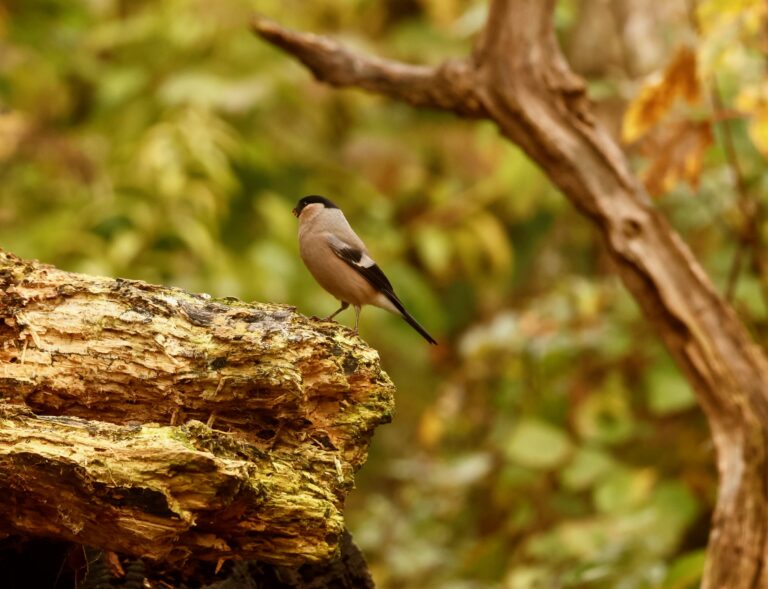
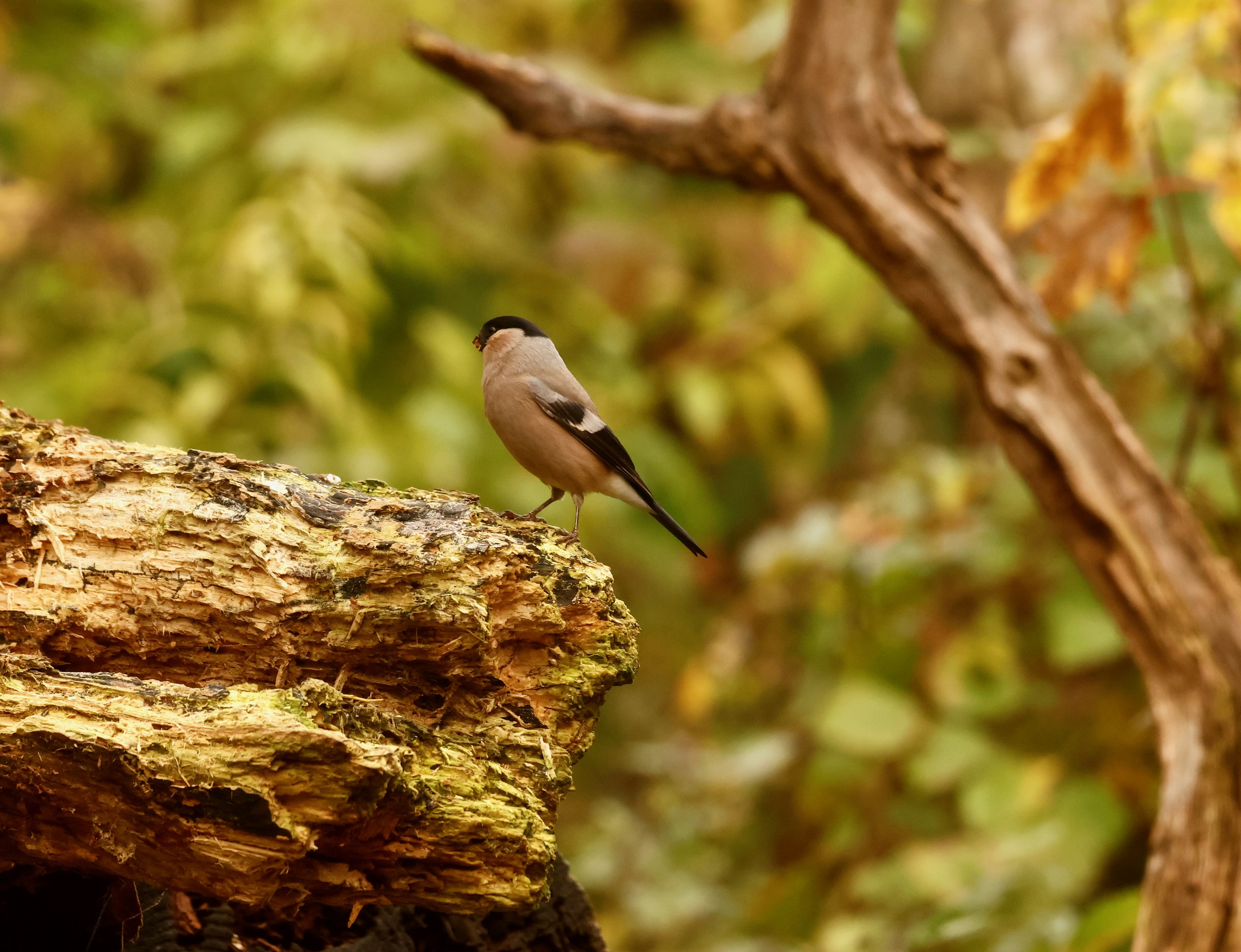
A stocky finch of 14.5 to 16 centimetres with a short, heavy black bill. The male has a bright pink-red breast and cheeks, a black cap, a grey back and a strikingly white rump that flashes as it flies off. The female is beige-grey with a grey-brown head and lacks the black cap.
Wingspan: 26 cm an indication from Wikidata; it varies by individual, sex and subspecies · compare all birds (in Dutch)
What does a Eurasian Bullfinch sound like?
Recording: Benoît Van Hecke, CC BY-SA 4.0, via Wikimedia Commons
Where do you see this species in the Netherlands?
The whole country in woodland and park-like landscape; the southern distribution has declined slightly since 1975.
Habitat: Coniferous and mixed woodland, parks and large gardens with dense undergrowth, where it also nests.
This is a common, widespread species: you can come across it in far more places than the areas listed below. Treat that list as a starting point rather than a full survey.
📍 Onlanden & Leekstermeer
presence reported📍 Naardermeer
Rare chance per source📍 Gelderse Poort & Millingerwaard
Rare chance per source📍 Amsterdamse Waterleidingduinen
Rare chance per source📍 Fochteloërveen
Rare chance per source📍 Nationaal Park Veluwezoom
With luck chance per source📍 Blauwe Kamer
presence reported📍 Oostelijke Vechtplassen
presence reported📍 Noordhollands Duinreservaat
presence reported📍 Wormer- en Jisperveld
presence reported📍 Ilperveld
presence reported📍 Zuidlaardermeergebied en Hunzedal
presence reported📍 Landgoed Ennemaborg
presence reported📍 Meijendel & Berkheide
presence reported📍 Voornes Duin
presence reported📍 Kampina & Oisterwijkse Vennen
presence reported📍 De Maashorst
presence reported📍 Strabrechtse Heide & Beuven
presence reported📍 Loonse en Drunense Duinen
presence reported📍 Schoorlse Duinen
presence reported📍 Haringvlietsluizen
presence reportedThese links come straight from our database, with the chance, the source and the evidence level for each area.
When is the best time?
Green = present · orange = peak period. The bar is generated from our database.
Best period: All year; most visible in winter at berries.
Best time of day: During the day; often sitting still for long periods.
Recent sightings
👁️ Where has this species been seen recently?
Check the current sightings on Waarneming.nl. A useful addition to our own verified information.
Current sightings on Waarneming.nl →
Note: for sensitive species the source already blurs or withholds sightings. We do not reproduce exact locations.
How to improve your chances
- Learn the calls first. You will hear most birds before you see them.
- Go in the first hour after sunrise, when the song is at its peak and the wind is still down.
- Use a hide or natural cover. Sitting still gets you more than walking closer.
- Keep the sun behind you. Against the light you see a silhouette and no colour.
🎒 What you need for this
Binoculars; listen for the soft whistle, because that gives it away
Photography
The pink of the male against a berry-bearing shrub in winter light is the image. It sits still a long time, so you can focus at leisure, but it flies off at any sudden movement and then all you see is that white rump
🌿 Watching responsibly
Keep your distance, stay on the paths, and never lure animals with food or sound. Leave as soon as an animal becomes uneasy. This is a sensitive species. We deliberately give no roosting or wintering gathering places.
Status: Verified · Last checked: 2026-08-07
More photos