
Where to see the moor frog in the Netherlands
With luck 🐸 Amphibian
Where and when do you see a moor frog? With some luck you can see this species, from February to October.
How do you recognise a moor frog?
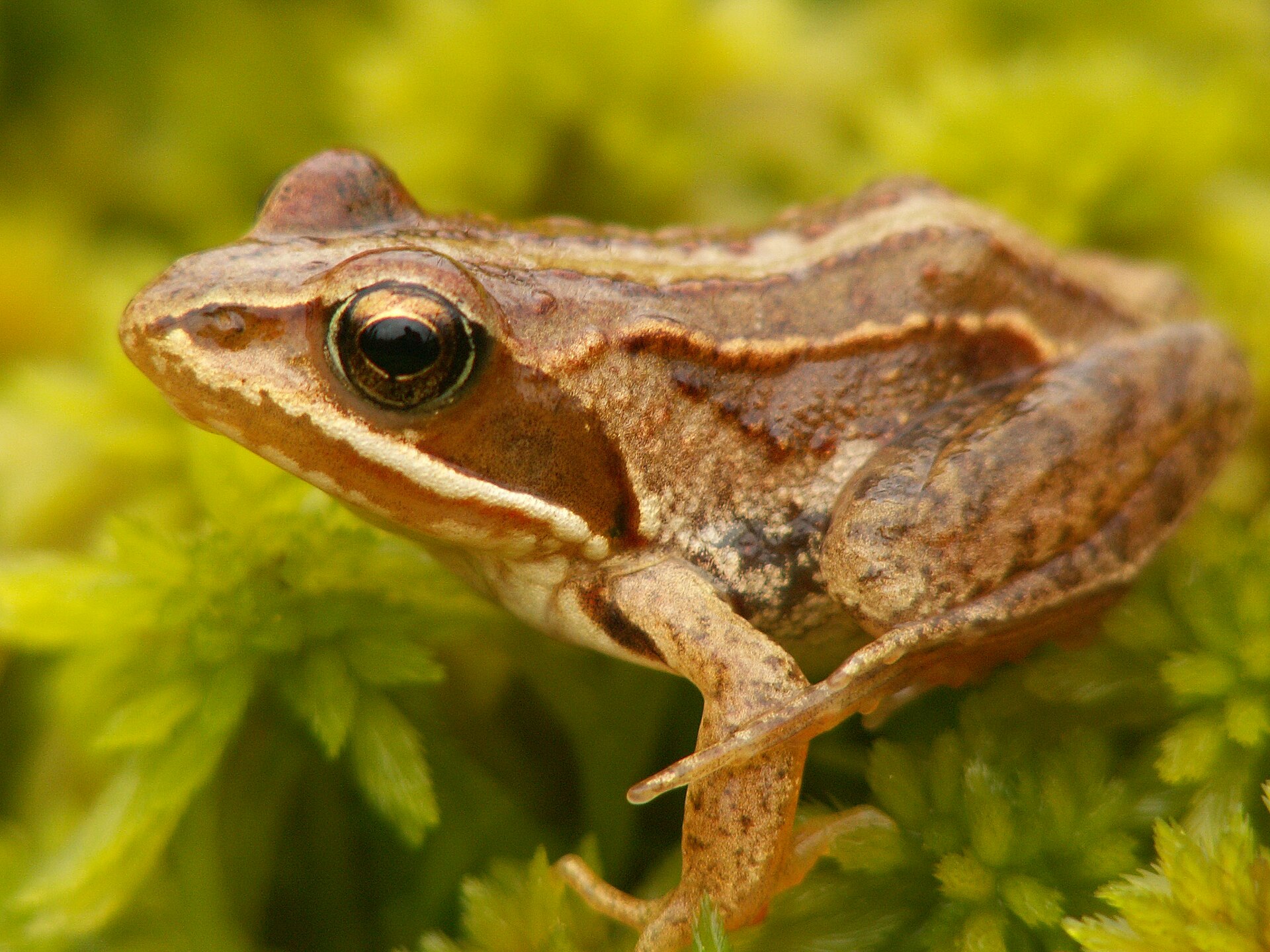
A medium-sized frog of about 8 centimetres with a slightly pointed snout, a dark patch behind the eye and usually a pale stripe down the middle of the back. The colour varies from yellow-brown to reddish green, with dark spots on the flanks and a large digging tubercle on the hind foot. In the mating season males turn a bright sky blue.
What does a moor frog sound like?
Recording: Odé, Baudewijn .mw-parser-output .messagebox{margin:4px 0;width:auto;border-collapse:collapse;border:2px solid, CC BY-SA 4.0, via Wikimedia Commons
Where do you see this species in the Netherlands?
All provinces except Flevoland, on sandy soils, in raised bog, heath and stream valleys.
Habitat: Heath, raised bog, grassland and woodland with small, isolated waters and ditches; it avoids intensively farmed land.
This is a common, widespread species: you can come across it in far more places than the areas listed below. Treat that list as a starting point rather than a full survey.
📍 Fochteloërveen
presence reported📍 Naardermeer
presence reported📍 Nationaal Park De Meinweg
presence reported📍 Nationaal Park De Groote Peel
presence reported📍 Nationaal Park Dwingelderveld
presence reported📍 Onlanden & Leekstermeer
presence reported📍 Nationaal Park Drents-Friese Wold
presence reported📍 Nationaal Park Weerribben-Wieden
presence reported📍 Nationaal Park De Alde Feanen
presence reported📍 Nationaal Park De Maasduinen
presence reported📍 Zouweboezem
presence reported📍 Oostelijke Vechtplassen
presence reported📍 Zuidlaardermeergebied en Hunzedal
presence reported📍 Kampina & Oisterwijkse Vennen
presence reported📍 De Maashorst
presence reported📍 Strabrechtse Heide & Beuven
presence reported📍 Loonse en Drunense Duinen
presence reportedThese links come straight from our database, with the chance, the source and the evidence level for each area.
When is the best time?
Green = present · orange = peak period. The bar is generated from our database.
Best period: Mating season from late February to early April, lasting ten days; active from March to October.
Best time of day: By day during the short mating season; otherwise dusk.
Recent sightings
👁️ Where has this species been seen recently?
Check the current sightings on Waarneming.nl. A useful addition to our own verified information.
How to improve your chances
- Go after dark in mild, wet weather, when amphibians are at their most active.
- Follow the chorus. In spring you can hear the calling males from a long way off.
- Shine your torch along the bank rather than into it, and keep the light brief.
- Stay on the bank and touch nothing. Amphibian skin is sensitive to whatever is on your hands.
🎒 What you need for this
Boots; otherwise your eyes
Photography
The blue males are the subject, but the colour lasts only a few days. Follow the weather forecast: after the first mild, wet nights of late February or March they move to the water en masse. Photograph low at the waterline and stay out of the water itself
🌿 Watching responsibly
Keep your distance, stay on the paths, and never lure animals with food or sound. Leave as soon as an animal becomes uneasy.
Status: Verified · Last checked: 2026-08-07