

Where to see the European mole in the Netherlands
Rare 🦌 Mammal (land)
Where and when do you see a European mole? This species is rarely seen, all year round.
How do you recognise a European mole?
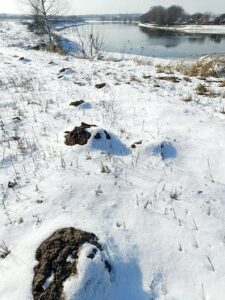
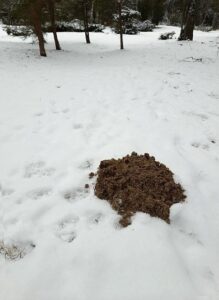
A stocky animal with a slate-grey to black, velvety coat and enormous digging hands. The eyes are small and poorly developed, but the mole is not blind. Head and body 11 to 16 centimetres, weight 60 to 140 grams. In practice you see its work: molehills, and tracks of 15 by 11 millimetres with five toes on the forefoot.
What can you confuse a European mole with?
Looks like: European water vole
- Water vole: it also makes heaps, but they are more irregular in shape and contain plant remains; molehills are loose, round mounds of fine soil.
What tracks does a European mole leave?
Track: 1.5 cm wide and 1.1 cm long, so wider than long; the forefoot leaves five dots, the hind foot five toes with long nails. You rarely find them, because the mole moves almost entirely underground. Molehills: heaps of soil at the exits of the tunnel system or where shallow tunnels have been worked upwards; the tunnels lie up to a metre deep and can run sixty metres in total. In woodland the heaps often lie hidden under fallen leaves. Droppings: 3 to 20 mm long and 2 to 5 mm thick, dark brown to black, with earthworm remains in them and usually pointed at one end.
Where do you see this species in the Netherlands?
Almost everywhere in the Netherlands, though the density differs greatly from place to place. It is absent from the Wadden islands and from town centres.
📍 Onlanden & Leekstermeer
presence reported📍 Sint-Pietersberg & Zuid-Limburg
presence reported📍 Nationaal Park Dwingelderveld
presence reported📍 Nationaal Park De Biesbosch
presence reported📍 Nationaal Park Zuid-Kennemerland
presence reported📍 Nationaal Park Lauwersmeer
presence reported📍 Nationaal Park Zuid-Limburg (in formation)
presence reported📍 Naardermeer
presence reported📍 Nationaal Park Weerribben-Wieden
presence reported📍 Amsterdamse Waterleidingduinen
presence reported📍 Oostvaardersplassen
presence reported📍 Fochteloërveen
presence reported📍 Nationaal Park De Alde Feanen
presence reported📍 Planken Wambuis
presence reported📍 Leuvenumse Bossen
presence reported📍 Marker Wadden
presence reported📍 Blauwe Kamer
presence reported📍 Zouweboezem
presence reported📍 Oostelijke Vechtplassen
presence reported📍 Noordhollands Duinreservaat
presence reported📍 Wormer- en Jisperveld
presence reported📍 Ilperveld
presence reported📍 De Dollard
presence reported📍 Zuidlaardermeergebied en Hunzedal
presence reported📍 Landgoed Ennemaborg
presence reported📍 Meijendel & Berkheide
presence reported📍 Voornes Duin
presence reported📍 Kampina & Oisterwijkse Vennen
presence reported📍 De Maashorst
presence reported📍 Strabrechtse Heide & Beuven
presence reported📍 Loonse en Drunense Duinen
presence reported📍 Schoorlse Duinen
presence reported📍 Haringvlietsluizen
presence reported📍 Vismigratierivier Afsluitdijk
presence reported📍 De Putten bij Camperduin
presence reportedThese links come straight from our database, with the chance, the source and the evidence level for each area.
When is the best time?
Green = present · orange = peak period. The bar is generated from our database.
Best period: Active all year; it does not hibernate. The mating season falls from March to May, after which the female gives birth, about 28 days later, to three to five naked, blind young.
Best time of day: By day and by night alike. The mole alternates periods of activity and rest in cycles of a few hours, so there is no best moment — there is only luck.
Recent sightings
👁️ Where has this species been seen recently?
Check the current sightings on Waarneming.nl. A useful addition to our own verified information.
How to improve your chances
- Keep the wind in your face. Most mammals will smell you long before they see you.
- Arrive before sunrise and then stay put. Sitting still beats walking about.
- Wear muted colours, skip the scent, and put your phone on silent.
- Be patient. Expect to come back more than once before it works.
🎒 What you need for this
None; look for fresh molehills
🌿 Watching responsibly
Keep your distance, stay on the paths, and never lure animals with food or sound. Leave as soon as an animal becomes uneasy.
Status: Verified · Last checked: 2026-08-08