
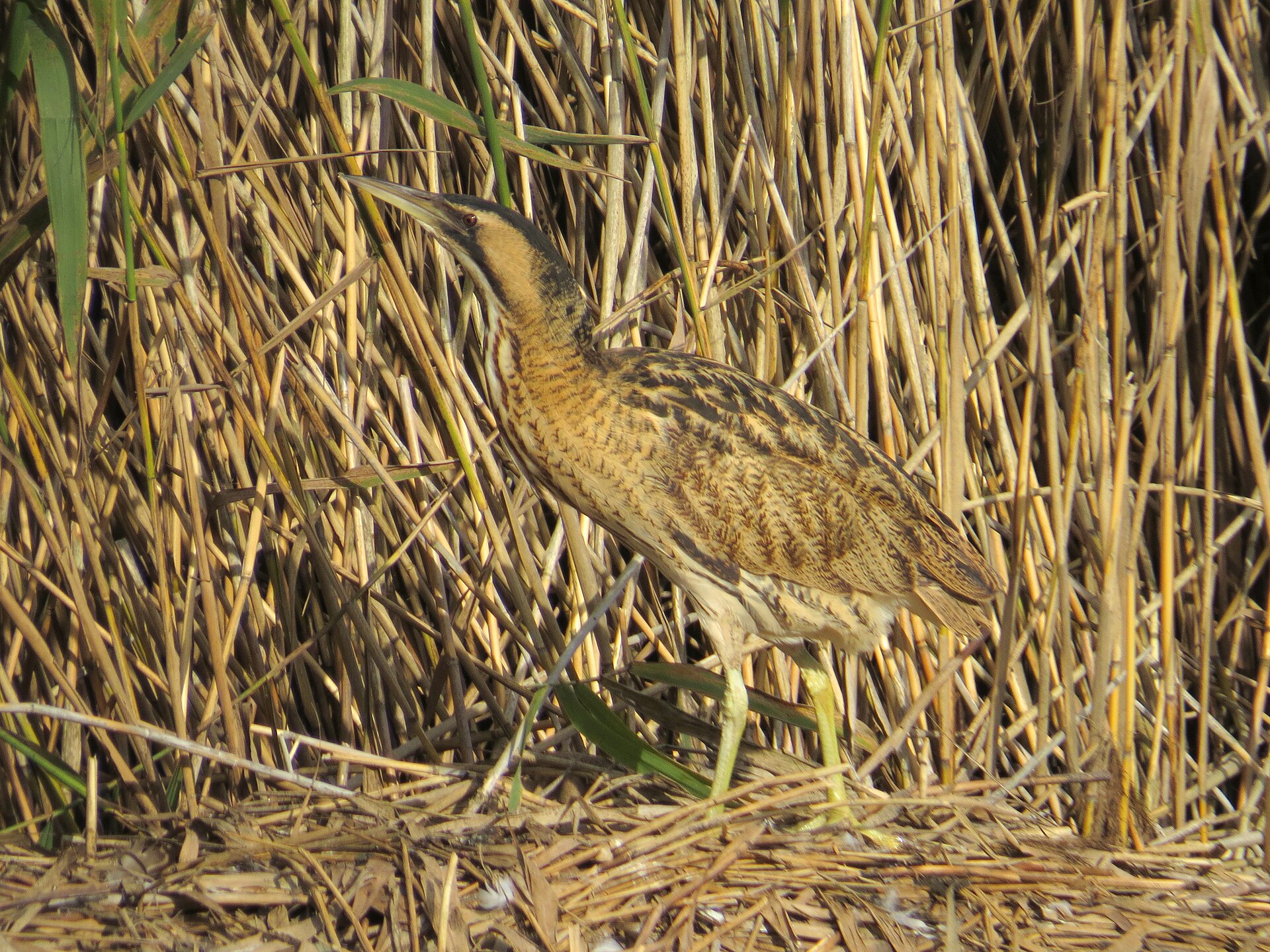
Eurasian Bittern
📷 MPF, CC BY-SA 3.0 (Wikimedia Commons)

Where to see the Eurasian Bittern in the Netherlands

Botaurus stellaris · Eurasian Bittern

Rare 🦅 Bird Sensitive species · R3

🛡️ No exact locations, on purpose

This is a sensitive species. We deliberately show no nest sites, and during the breeding season (March to July) we are extra careful about exact spots. Why we do that.

Where and when do you see a Eurasian Bittern? This species is rarely seen, from March to May.

How do you recognise a Eurasian Bittern?

64 to 80 cm long, wingspan 125 to 135 cm. A squat brown heron streaked with black, perfectly camouflaged in dead reed. When disturbed it stands upright with its bill pointing at the sky and melts into the reed stems. In practice you hear it rather than see it: a low, far-carrying note, like someone blowing across the top of a bottle.

What does a Eurasian Bittern sound like?

Recording: Miro Demko, CC BY-SA 3.0, via Wikimedia Commons

Where do you see this species in the Netherlands?

Large reed marshes, with the peat lands of north-west Overijssel and the marshes of Flevoland and the north as its strongholds.

How certain is this? verified chance per source presence reported Links that do not clear the bottom threshold are not published. How we decide that.
NDFF open data, 1.886 records 2016-2026 · Vogelbescherming
Nationwide period: March to May is when the males boom, and that is by far the most reliable way to establish that a bittern is there. Outside those months the species is present but almost impossible to find.

📍 Oostvaardersplassen

With luck verified
NDFF open data, 1.513 records 2016-2026 · the national park
Nationwide period: March to May is when the males boom, and that is by far the most reliable way to establish that a bittern is there. Outside those months the species is present but almost impossible to find.
NDFF open data, 1.438 records 2016-2026 · np-debiesbosch.nl
Nationwide period: March to May is when the males boom, and that is by far the most reliable way to establish that a bittern is there. Outside those months the species is present but almost impossible to find.
NDFF open data, 165 records 2016-2026 · npdepeel.nl
Nationwide period: March to May is when the males boom, and that is by far the most reliable way to establish that a bittern is there. Outside those months the species is present but almost impossible to find.
NDFF open data, 132 records 2016-2026
Nationwide period: March to May is when the males boom, and that is by far the most reliable way to establish that a bittern is there. Outside those months the species is present but almost impossible to find.

📍 Amsterdamse Waterleidingduinen

Rare chance per source
De Visdief · birdwatching guide to AWD
Nationwide period: March to May is when the males boom, and that is by far the most reliable way to establish that a bittern is there. Outside those months the species is present but almost impossible to find.
NDFF open data, 401 records 2016-2026 · npduinenvantexel.nl
Nationwide period: March to May is when the males boom, and that is by far the most reliable way to establish that a bittern is there. Outside those months the species is present but almost impossible to find.

📍 Nationaal Park Lauwersmeer

With luck verified
NDFF open data, 2.198 records 2016-2026 · np-lauwersmeer.nl
Nationwide period: March to May is when the males boom, and that is by far the most reliable way to establish that a bittern is there. Outside those months the species is present but almost impossible to find.

📍 Nationaal Park De Alde Feanen

With luck chance per source
Nationaal Park De Alde Feanen
Nationwide period: March to May is when the males boom, and that is by far the most reliable way to establish that a bittern is there. Outside those months the species is present but almost impossible to find.
NDFF open data, 151 records 2016-2026
Nationwide period: March to May is when the males boom, and that is by far the most reliable way to establish that a bittern is there. Outside those months the species is present but almost impossible to find.

📍 Wadden Sea

presence reported
NDFF open data, 203 records 2016-2026
Nationwide period: March to May is when the males boom, and that is by far the most reliable way to establish that a bittern is there. Outside those months the species is present but almost impossible to find.

📍 Marker Wadden

With luck chance per source
Natuurmonumenten, the site manager
Nationwide period: March to May is when the males boom, and that is by far the most reliable way to establish that a bittern is there. Outside those months the species is present but almost impossible to find.

📍 Fochteloërveen

presence reported
NDFF open data, 566 records 2016-2026
Nationwide period: March to May is when the males boom, and that is by far the most reliable way to establish that a bittern is there. Outside those months the species is present but almost impossible to find.

📍 Naardermeer

presence reported
NDFF open data, 408 records 2016-2026
Nationwide period: March to May is when the males boom, and that is by far the most reliable way to establish that a bittern is there. Outside those months the species is present but almost impossible to find.

📍 Onlanden & Leekstermeer

With luck chance per source
Natuurmonumenten · Birdingplaces
Nationwide period: March to May is when the males boom, and that is by far the most reliable way to establish that a bittern is there. Outside those months the species is present but almost impossible to find.
NDFF open data, 1.742 records 2016-2026 · Staatsbosbeheer
Nationwide period: March to May is when the males boom, and that is by far the most reliable way to establish that a bittern is there. Outside those months the species is present but almost impossible to find.

📍 Zouweboezem

presence reported
NDFF open data
Nationwide period: March to May is when the males boom, and that is by far the most reliable way to establish that a bittern is there. Outside those months the species is present but almost impossible to find.

📍 Oostelijke Vechtplassen

presence reported
NDFF open data
Nationwide period: March to May is when the males boom, and that is by far the most reliable way to establish that a bittern is there. Outside those months the species is present but almost impossible to find.
NDFF open data
Nationwide period: March to May is when the males boom, and that is by far the most reliable way to establish that a bittern is there. Outside those months the species is present but almost impossible to find.

📍 Wormer- en Jisperveld

presence reported
NDFF open data
Nationwide period: March to May is when the males boom, and that is by far the most reliable way to establish that a bittern is there. Outside those months the species is present but almost impossible to find.

📍 Ilperveld

presence reported
NDFF open data
Nationwide period: March to May is when the males boom, and that is by far the most reliable way to establish that a bittern is there. Outside those months the species is present but almost impossible to find.
NDFF open data
Nationwide period: March to May is when the males boom, and that is by far the most reliable way to establish that a bittern is there. Outside those months the species is present but almost impossible to find.

📍 Meijendel & Berkheide

presence reported
NDFF open data, 2.516 records 2016-2026
Nationwide period: March to May is when the males boom, and that is by far the most reliable way to establish that a bittern is there. Outside those months the species is present but almost impossible to find.

📍 Voornes Duin

presence reported
NDFF open data, 141 records 2016-2026
Nationwide period: March to May is when the males boom, and that is by far the most reliable way to establish that a bittern is there. Outside those months the species is present but almost impossible to find.
NDFF open data, 226 records 2016-2026
Nationwide period: March to May is when the males boom, and that is by far the most reliable way to establish that a bittern is there. Outside those months the species is present but almost impossible to find.
NDFF open data, 401 records 2016-2026
Nationwide period: March to May is when the males boom, and that is by far the most reliable way to establish that a bittern is there. Outside those months the species is present but almost impossible to find.

📍 Loonse en Drunense Duinen

presence reported
NDFF open data, 384 records 2016-2026
Nationwide period: March to May is when the males boom, and that is by far the most reliable way to establish that a bittern is there. Outside those months the species is present but almost impossible to find.

📍 Schoorlse Duinen

presence reported
NDFF open data, 206 records 2016-2026
Nationwide period: March to May is when the males boom, and that is by far the most reliable way to establish that a bittern is there. Outside those months the species is present but almost impossible to find.

These links come straight from our database, with the chance, the source and the evidence level for each area.

When is the best time?

Green = present · orange = peak period. The bar is generated from our database.

Best period: March to May is when the males boom, and that is by far the most reliable way to establish that a bittern is there. Outside those months the species is present but almost impossible to find.

Best time of day: Dawn and dusk, when it calls. During the day you will see it at most as it flies low over the reed from one spot to another.

Recent sightings

👁️ Where has this species been seen recently?

Check the current sightings on Waarneming.nl. A useful addition to our own verified information.

Current sightings on Waarneming.nl →

Note: for sensitive species the source already blurs or withholds sightings. We do not reproduce exact locations.

How to improve your chances

  • Learn the calls first. You will hear most birds before you see them.
  • Go in the first hour after sunrise, when the song is at its peak and the wind is still down.
  • Use a hide or natural cover. Sitting still gets you more than walking closer.
  • Keep the sun behind you. Against the light you see a silhouette and no colour.

🎒 What you need for this

Binoculars; mostly your ears.

🌿 Watching responsibly

Keep your distance, stay on the paths, and never lure animals with food or sound. Leave as soon as an animal becomes uneasy. This is a sensitive species. We deliberately show no nest sites, and during the breeding season (March to July) we are extra careful about exact spots.

Sources: Sovon; Vogelbescherming Nederland (vogelgids), geraadpleegd 02-11-2026
Status: Verified · Last checked: 2026-08-08