
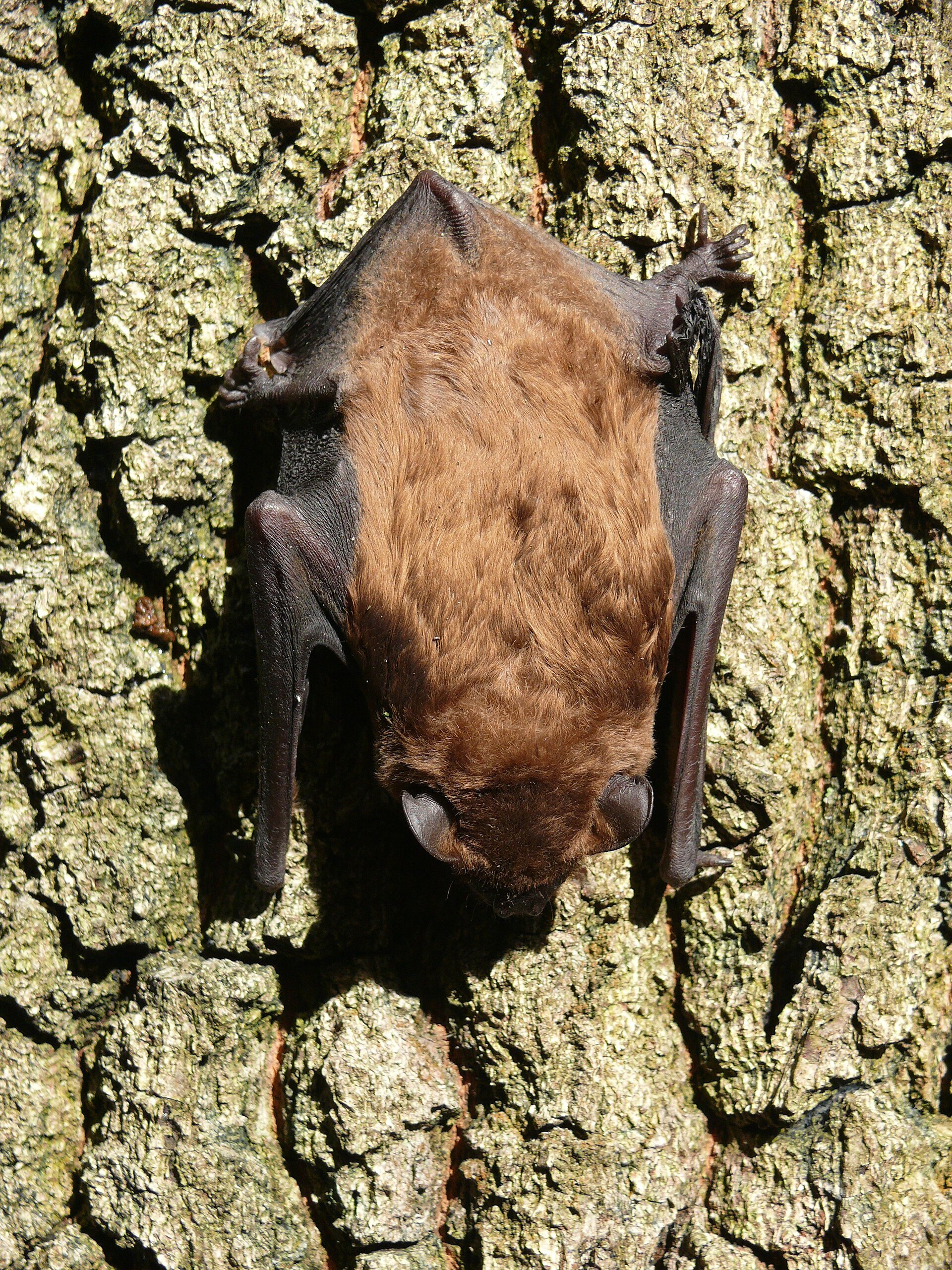
Where to see the common noctule in the Netherlands
Easy 🦇 Mammal (bat) Sensitive species · R2
🛡️ No exact locations, on purpose
This is a sensitive species. We deliberately show no resting places such as setts, burrows or winter roosts, and no photographs in which such a place is recognisable. Why we do that.
Where and when do you see a common noctule? This species is easy to see, from April to October.
How do you recognise a common noctule?
One of the largest bats in Europe: body 60 to 89 millimetres, 17 to 44 grams, wingspan 32 to 40 centimetres. Red-brown, short and dense fur with a velvety sheen, short rounded ears, a blunt dark brown muzzle and long, narrow, pointed wings.
What can you confuse a common noctule with?
Looks like: Serotine bat
- Serotine bat: Both are large; the noctule has long, narrow, pointed wings and velvety red-brown fur, the serotine broad wings and a slower flight.
What tracks does a common noctule leave?
Droppings: 2.5 to 3.5 mm across, 7 to 16 mm long. In practice this is the only trace a bat leaves, and they cannot be identified to species: Zodion calls bat droppings very hard to put a name to. Because bats eat nothing but insects, the droppings consist entirely of insect remains and not of plant material, and that is how you tell them from mouse droppings of the same size. If you want to know which species is flying, sound will get you further than traces.
Where do you see this species in the Netherlands?
Scattered across the whole country, with the emphasis on the high sandy soils and the coastal areas.
Habitat: A pronounced tree dweller: abandoned woodpecker holes in old broadleaved trees at five to 22 metres up; it hunts above woodland, water and open landscape.
This is a common, widespread species: you can come across it in far more places than the areas listed below. Treat that list as a starting point rather than a full survey.
📍 Nationaal Park De Hoge Veluwe
presence reported📍 Nationaal Park Veluwezoom
presence reported📍 Nationaal Park Weerribben-Wieden
presence reported📍 Nationaal Park Dwingelderveld
presence reported📍 Nationaal Park Drents-Friese Wold
presence reported📍 Nationaal Park Zuid-Kennemerland
presence reported📍 Amsterdamse Waterleidingduinen
presence reported📍 Nationaal Park De Alde Feanen
presence reported📍 Nationaal Park Sallandse Heuvelrug
presence reported📍 Nationaal Park De Meinweg
presence reported📍 Nationaal Park Utrechtse Heuvelrug
presence reported📍 Sint-Pietersberg & Zuid-Limburg
presence reported📍 Fochteloërveen
presence reported📍 Nationaal Park Zuid-Limburg (in formation)
presence reported📍 Kroondomein Het Loo
presence reported📍 Naardermeer
presence reported📍 Onlanden & Leekstermeer
presence reported📍 Gelderse Poort & Millingerwaard
presence reported📍 Planken Wambuis
presence reported📍 Leuvenumse Bossen
presence reported📍 Blauwe Kamer
presence reported📍 Oostelijke Vechtplassen
presence reported📍 Noordhollands Duinreservaat
presence reported📍 Wormer- en Jisperveld
presence reported📍 Ilperveld
presence reported📍 Zuidlaardermeergebied en Hunzedal
presence reported📍 Meijendel & Berkheide
presence reported📍 Voornes Duin
presence reported📍 Kampina & Oisterwijkse Vennen
presence reported📍 De Maashorst
presence reported📍 Strabrechtse Heide & Beuven
presence reported📍 Loonse en Drunense Duinen
presence reported📍 Schoorlse Duinen
presence reported📍 De Putten bij Camperduin
presence reportedThese links come straight from our database, with the chance, the source and the evidence level for each area.
When is the best time?
Green = present · orange = peak period. The bar is generated from our database.
Best period: April to October; it overwinters in tree cavities and crevices.
Best time of day: Six to 25 minutes after sunset, in the last daylight.
Recent sightings
👁️ Where has this species been seen recently?
Check the current sightings on Waarneming.nl. A useful addition to our own verified information.
Current sightings on Waarneming.nl →
Note: for sensitive species the source already blurs or withholds sightings. We do not reproduce exact locations.
How to improve your chances
- Keep the wind in your face. Most mammals will smell you long before they see you.
- Arrive before sunrise and then stay put. Sitting still beats walking about.
- Wear muted colours, skip the scent, and put your phone on silent.
- Be patient. Expect to come back more than once before it works.
🎒 What you need for this
A bat detector; already visible to the naked eye because it emerges so early
Photography
Because it emerges so early you still have daylight: stand at a clearing in old woodland at sunset and photograph against the bright sky. It flies high and fast, so focus on a fixed point rather than following it
🌿 Watching responsibly
Keep your distance, stay on the paths, and never lure animals with food or sound. Leave as soon as an animal becomes uneasy. This is a sensitive species. We deliberately show no resting places such as setts, burrows or winter roosts, and no photographs in which such a place is recognisable.
Status: Verified · Last checked: 2026-08-07