
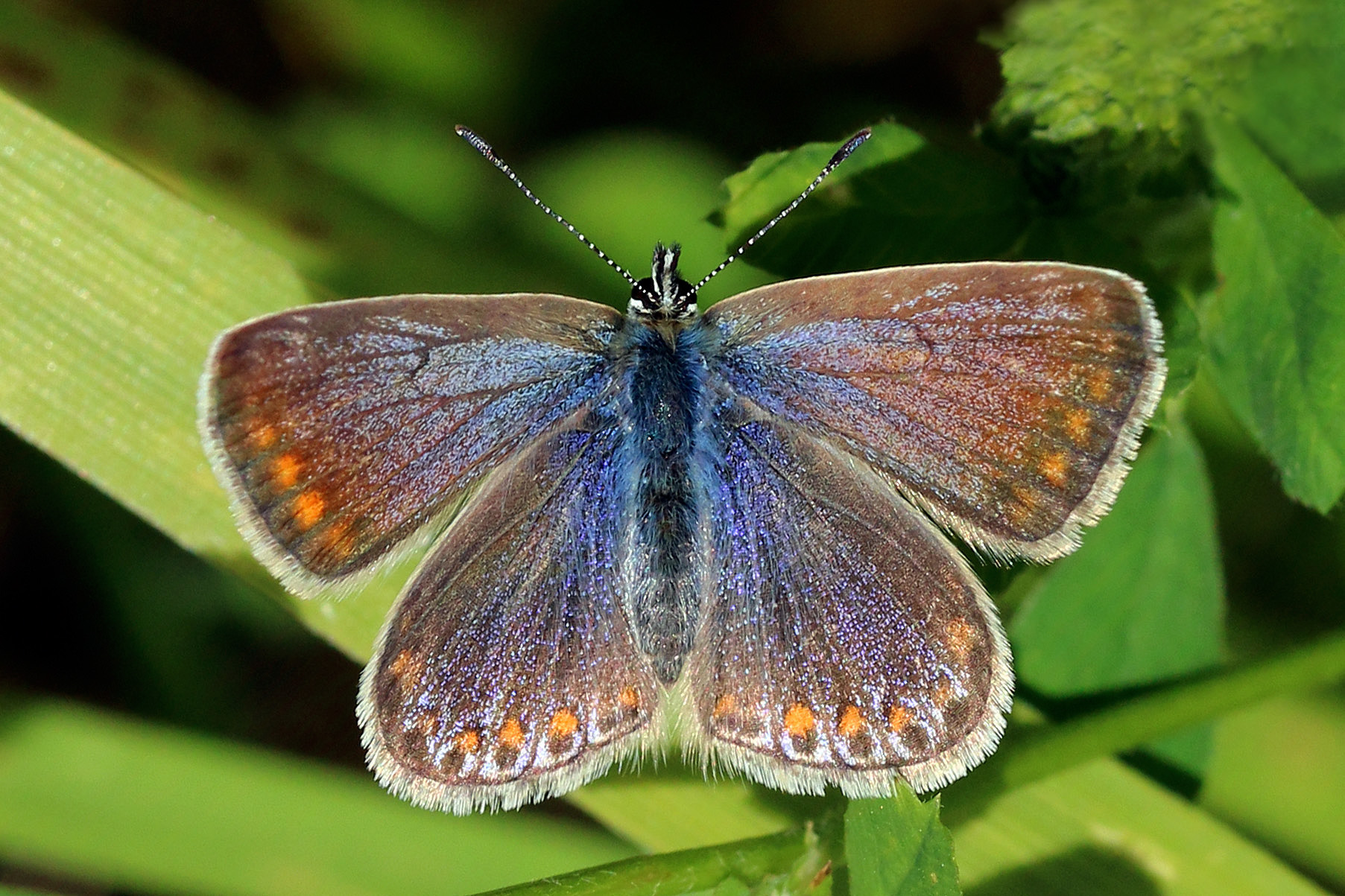
Common Blue
📷 Charles J. Sharp, CC BY-SA 4.0 (Wikimedia Commons)

Where to see the Common Blue in the Netherlands

Polyommatus icarus · Common Blue

Easy 🦋 Butterfly

Where and when do you see a Common Blue? This species is easy to see, from April to October.

How do you recognise a Common Blue?

Forewing length about 15 millimetres. The male bright blue with a white fringe, the female brown with orange marginal spots and often a dusting of blue; the underside with two basal spots on the forewing.

Where do you see this species in the Netherlands?

Throughout the country: verges, dykes, semi-natural grassland, parks and pioneer vegetation.

This is a common, widespread species: you can come across it in far more places than the areas listed below. Treat that list as a starting point rather than a full survey.

How certain is this? verified chance per source presence reported Links that do not clear the bottom threshold are not published. How we decide that.
NDFF open data, 14.926 records 2016-2026
Nationwide period: Early May to early October, in two to three generations.

📍 Amsterdamse Waterleidingduinen

Good chance in season chance per source
De Visdief · birdwatching guide to AWD
Nationwide period: Early May to early October, in two to three generations.
NDFF open data, 1.984 records 2016-2026
Nationwide period: Early May to early October, in two to three generations.
NDFF open data, 3.372 records 2016-2026
Nationwide period: Early May to early October, in two to three generations.
NDFF open data, 5.294 records 2016-2026
Nationwide period: Early May to early October, in two to three generations.
NDFF open data, 2.099 records 2016-2026
Nationwide period: Early May to early October, in two to three generations.
NDFF open data, 1.898 records 2016-2026
Nationwide period: Early May to early October, in two to three generations.

📍 Deelerwoude

presence reported
NDFF open data, 2.739 records 2016-2026
Nationwide period: Early May to early October, in two to three generations.
NDFF open data, 2.326 records 2016-2026
Nationwide period: Early May to early October, in two to three generations.

📍 Naardermeer

presence reported
NDFF open data, 2.074 records 2016-2026
Nationwide period: Early May to early October, in two to three generations.

📍 Zwin & Zeeuws-Vlaanderen

presence reported
NDFF open data, 2.173 records 2016-2026
Nationwide period: Early May to early October, in two to three generations.

📍 Fochteloërveen

presence reported
NDFF open data, 253 records 2016-2026
Nationwide period: Early May to early October, in two to three generations.
NDFF open data, 977 records 2016-2026
Nationwide period: Early May to early October, in two to three generations.
NDFF open data, 1.107 records 2016-2026
Nationwide period: Early May to early October, in two to three generations.

📍 Oostvaardersplassen

presence reported
NDFF open data, 517 records 2016-2026
Nationwide period: Early May to early October, in two to three generations.
NDFF open data, 1.467 records 2016-2026
Nationwide period: Early May to early October, in two to three generations.

📍 Nationaal Park Veluwezoom

presence reported
NDFF open data, 1.509 records 2016-2026
Nationwide period: Early May to early October, in two to three generations.
NDFF open data, 640 records 2016-2026
Nationwide period: Early May to early October, in two to three generations.

📍 Nationaal Park De Meinweg

presence reported
NDFF open data, 645 records 2016-2026
Nationwide period: Early May to early October, in two to three generations.
NDFF open data, 371 records 2016-2026
Nationwide period: Early May to early October, in two to three generations.
NDFF open data, 705 records 2016-2026
Nationwide period: Early May to early October, in two to three generations.

📍 Marker Wadden

presence reported
NDFF open data, 169 records 2016-2026
Nationwide period: Early May to early October, in two to three generations.
NDFF open data, 369 records 2016-2026
Nationwide period: Early May to early October, in two to three generations.
NDFF open data, 260 records 2016-2026
Nationwide period: Early May to early October, in two to three generations.

📍 Onlanden & Leekstermeer

presence reported
NDFF open data, 486 records 2016-2026
Nationwide period: Early May to early October, in two to three generations.

📍 Kroondomein Het Loo

presence reported
NDFF open data, 343 records 2016-2026
Nationwide period: Early May to early October, in two to three generations.
NDFF open data, 255 records 2016-2026
Nationwide period: Early May to early October, in two to three generations.

📍 Planken Wambuis

presence reported
NDFF open data, 1.943 records 2016-2026
Nationwide period: Early May to early October, in two to three generations.

📍 Blauwe Kamer

presence reported
NDFF open data
Nationwide period: Early May to early October, in two to three generations.

📍 Zouweboezem

presence reported
NDFF open data
Nationwide period: Early May to early October, in two to three generations.

📍 Oostelijke Vechtplassen

presence reported
NDFF open data
Nationwide period: Early May to early October, in two to three generations.
NDFF open data
Nationwide period: Early May to early October, in two to three generations.

📍 Wormer- en Jisperveld

presence reported
NDFF open data
Nationwide period: Early May to early October, in two to three generations.

📍 Ilperveld

presence reported
NDFF open data
Nationwide period: Early May to early October, in two to three generations.
NDFF open data
Nationwide period: Early May to early October, in two to three generations.

📍 Meijendel & Berkheide

presence reported
NDFF open data, 5.526 records 2016-2026
Nationwide period: Early May to early October, in two to three generations.

📍 Voornes Duin

presence reported
NDFF open data, 222 records 2016-2026
Nationwide period: Early May to early October, in two to three generations.
NDFF open data, 2.361 records 2016-2026
Nationwide period: Early May to early October, in two to three generations.

📍 De Maashorst

presence reported
NDFF open data, 1.413 records 2016-2026
Nationwide period: Early May to early October, in two to three generations.
NDFF open data, 1.049 records 2016-2026
Nationwide period: Early May to early October, in two to three generations.

📍 Loonse en Drunense Duinen

presence reported
NDFF open data, 6.328 records 2016-2026
Nationwide period: Early May to early October, in two to three generations.

📍 Schoorlse Duinen

presence reported
NDFF open data, 2.057 records 2016-2026
Nationwide period: Early May to early October, in two to three generations.

📍 De Putten bij Camperduin

presence reported
NDFF open data, 557 records 2016-2026
Nationwide period: Early May to early October, in two to three generations.

These links come straight from our database, with the chance, the source and the evidence level for each area.

When is the best time?

Green = present · orange = peak period. The bar is generated from our database.

Best period: Early May to early October, in two to three generations.

Best time of day: By day, in the sun.

Recent sightings

👁️ Where has this species been seen recently?

Check the current sightings on Waarneming.nl. A useful addition to our own verified information.

Current sightings on Waarneming.nl →

How to improve your chances

  • Go on a warm, windless day between about ten and four, when they are active.
  • Look for the place rather than the animal: flowery edges for butterflies, banks and open water for dragonflies.
  • Move slowly and keep your shadow off the animal. It notices that before it notices you.
  • Early in the morning they are still cold and motionless on a leaf. That is when you can get closest.

🎒 What you need for this

None; a macro lens if you like

🌿 Watching responsibly

Keep your distance, stay on the paths, and never lure animals with food or sound. Leave as soon as an animal becomes uneasy.

Sources: De Vlinderstichting, soortpagina Icarusblauwtje
Status: Verified · Last checked: 2026-08-08