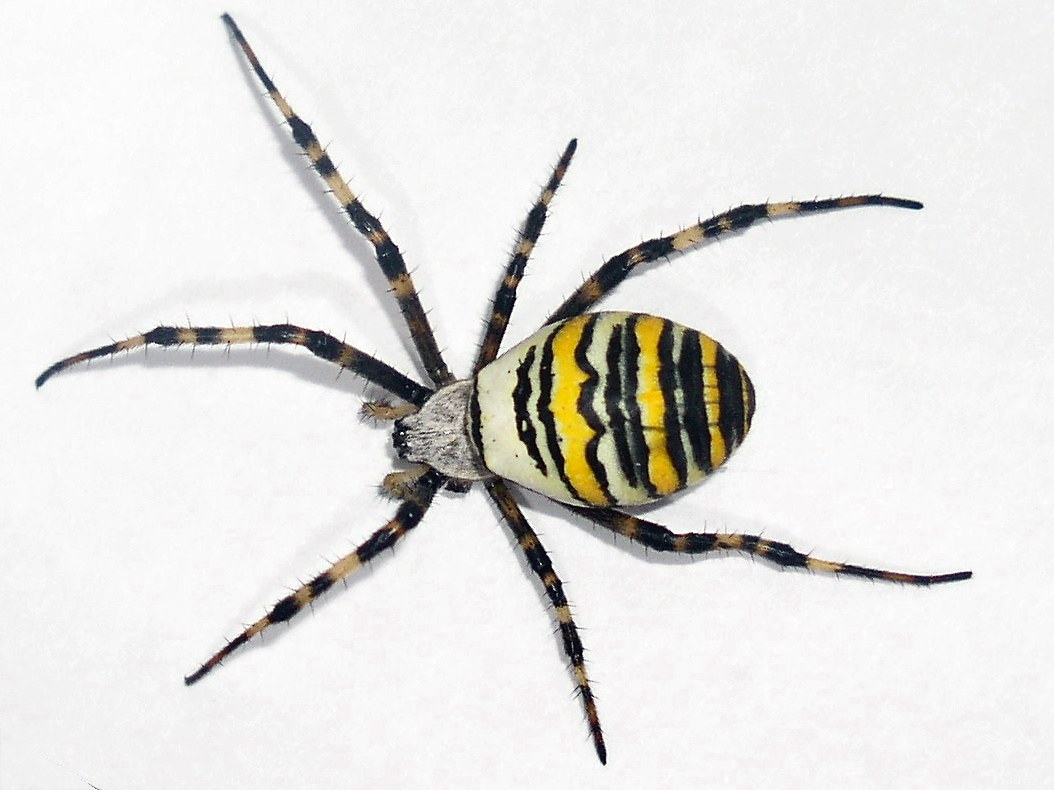
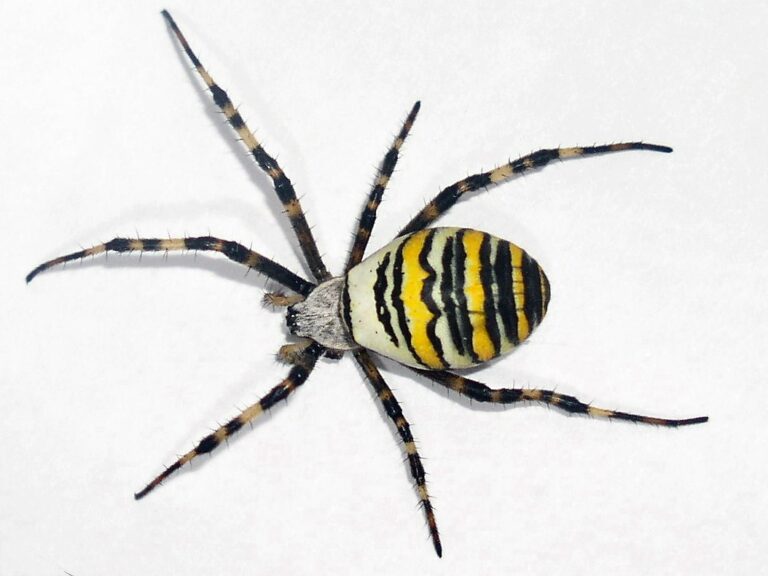
The female is unmistakable: a stout abdomen with yellow, black and white cross-bands, like a wasp. Spiders of Europe gives 9.9 to 22.0 mm for the female and 6.9 to 8.3 mm for the male. The male is small and pale brown and hardly stands out. Body lengths come from Spiders of Europe (Nentwig et al., araneae.nmbe.ch); those are European ranges, not Dutch measurements.
By now found across almost the whole country. The first Dutch record dates from 1980, at Waterop in South Limburg. By 1995 the species had already bridged at least 70 kilometres from existing sites, and the rise in the number of sites in 1998 was called outright explosive in the Nederlandse Faunistische Mededelingen. Current distribution figures from after 2000 could not be obtained from a primary source at the time of writing this page.
NDFF open data, 33 records 2016-2026
Nationwide period: Adult females mainly in August and September; the British Arachnological Society writes that adults mature in August and September. The Wildlife Trusts give the wider period April to October for the species as a whole. Note: the months come from British sources (the British Arachnological Society and NatureSpot). Dutch phenology data per spider species could not be consulted, as waarneming.nl and the Dutch Species Register blocked automated access. The climate is comparable, but this is not a Dutch measurement.
NDFF open data, 15 records 2016-2026
Nationwide period: Adult females mainly in August and September; the British Arachnological Society writes that adults mature in August and September. The Wildlife Trusts give the wider period April to October for the species as a whole. Note: the months come from British sources (the British Arachnological Society and NatureSpot). Dutch phenology data per spider species could not be consulted, as waarneming.nl and the Dutch Species Register blocked automated access. The climate is comparable, but this is not a Dutch measurement.
NDFF open data, 178 records 2016-2026
Nationwide period: Adult females mainly in August and September; the British Arachnological Society writes that adults mature in August and September. The Wildlife Trusts give the wider period April to October for the species as a whole. Note: the months come from British sources (the British Arachnological Society and NatureSpot). Dutch phenology data per spider species could not be consulted, as waarneming.nl and the Dutch Species Register blocked automated access. The climate is comparable, but this is not a Dutch measurement.
NDFF open data, 32 records 2016-2026
Nationwide period: Adult females mainly in August and September; the British Arachnological Society writes that adults mature in August and September. The Wildlife Trusts give the wider period April to October for the species as a whole. Note: the months come from British sources (the British Arachnological Society and NatureSpot). Dutch phenology data per spider species could not be consulted, as waarneming.nl and the Dutch Species Register blocked automated access. The climate is comparable, but this is not a Dutch measurement.
NDFF open data, 19 records 2016-2026
Nationwide period: Adult females mainly in August and September; the British Arachnological Society writes that adults mature in August and September. The Wildlife Trusts give the wider period April to October for the species as a whole. Note: the months come from British sources (the British Arachnological Society and NatureSpot). Dutch phenology data per spider species could not be consulted, as waarneming.nl and the Dutch Species Register blocked automated access. The climate is comparable, but this is not a Dutch measurement.
NDFF open data, 56 records 2016-2026
Nationwide period: Adult females mainly in August and September; the British Arachnological Society writes that adults mature in August and September. The Wildlife Trusts give the wider period April to October for the species as a whole. Note: the months come from British sources (the British Arachnological Society and NatureSpot). Dutch phenology data per spider species could not be consulted, as waarneming.nl and the Dutch Species Register blocked automated access. The climate is comparable, but this is not a Dutch measurement.
NDFF open data, 276 records 2016-2026
Nationwide period: Adult females mainly in August and September; the British Arachnological Society writes that adults mature in August and September. The Wildlife Trusts give the wider period April to October for the species as a whole. Note: the months come from British sources (the British Arachnological Society and NatureSpot). Dutch phenology data per spider species could not be consulted, as waarneming.nl and the Dutch Species Register blocked automated access. The climate is comparable, but this is not a Dutch measurement.
NDFF open data, 240 records 2016-2026
Nationwide period: Adult females mainly in August and September; the British Arachnological Society writes that adults mature in August and September. The Wildlife Trusts give the wider period April to October for the species as a whole. Note: the months come from British sources (the British Arachnological Society and NatureSpot). Dutch phenology data per spider species could not be consulted, as waarneming.nl and the Dutch Species Register blocked automated access. The climate is comparable, but this is not a Dutch measurement.
NDFF open data, 10 records 2016-2026
Nationwide period: Adult females mainly in August and September; the British Arachnological Society writes that adults mature in August and September. The Wildlife Trusts give the wider period April to October for the species as a whole. Note: the months come from British sources (the British Arachnological Society and NatureSpot). Dutch phenology data per spider species could not be consulted, as waarneming.nl and the Dutch Species Register blocked automated access. The climate is comparable, but this is not a Dutch measurement.
NDFF open data, 12 records 2016-2026
Nationwide period: Adult females mainly in August and September; the British Arachnological Society writes that adults mature in August and September. The Wildlife Trusts give the wider period April to October for the species as a whole. Note: the months come from British sources (the British Arachnological Society and NatureSpot). Dutch phenology data per spider species could not be consulted, as waarneming.nl and the Dutch Species Register blocked automated access. The climate is comparable, but this is not a Dutch measurement.
NDFF open data, 46 records 2016-2026
Nationwide period: Adult females mainly in August and September; the British Arachnological Society writes that adults mature in August and September. The Wildlife Trusts give the wider period April to October for the species as a whole. Note: the months come from British sources (the British Arachnological Society and NatureSpot). Dutch phenology data per spider species could not be consulted, as waarneming.nl and the Dutch Species Register blocked automated access. The climate is comparable, but this is not a Dutch measurement.
NDFF open data, 77 records 2016-2026
Nationwide period: Adult females mainly in August and September; the British Arachnological Society writes that adults mature in August and September. The Wildlife Trusts give the wider period April to October for the species as a whole. Note: the months come from British sources (the British Arachnological Society and NatureSpot). Dutch phenology data per spider species could not be consulted, as waarneming.nl and the Dutch Species Register blocked automated access. The climate is comparable, but this is not a Dutch measurement.
NDFF open data, 44 records 2016-2026
Nationwide period: Adult females mainly in August and September; the British Arachnological Society writes that adults mature in August and September. The Wildlife Trusts give the wider period April to October for the species as a whole. Note: the months come from British sources (the British Arachnological Society and NatureSpot). Dutch phenology data per spider species could not be consulted, as waarneming.nl and the Dutch Species Register blocked automated access. The climate is comparable, but this is not a Dutch measurement.
NDFF open data, 21 records 2016-2026
Nationwide period: Adult females mainly in August and September; the British Arachnological Society writes that adults mature in August and September. The Wildlife Trusts give the wider period April to October for the species as a whole. Note: the months come from British sources (the British Arachnological Society and NatureSpot). Dutch phenology data per spider species could not be consulted, as waarneming.nl and the Dutch Species Register blocked automated access. The climate is comparable, but this is not a Dutch measurement.
NDFF open data, 24 records 2016-2026
Nationwide period: Adult females mainly in August and September; the British Arachnological Society writes that adults mature in August and September. The Wildlife Trusts give the wider period April to October for the species as a whole. Note: the months come from British sources (the British Arachnological Society and NatureSpot). Dutch phenology data per spider species could not be consulted, as waarneming.nl and the Dutch Species Register blocked automated access. The climate is comparable, but this is not a Dutch measurement.
NDFF open data, 56 records 2016-2026
Nationwide period: Adult females mainly in August and September; the British Arachnological Society writes that adults mature in August and September. The Wildlife Trusts give the wider period April to October for the species as a whole. Note: the months come from British sources (the British Arachnological Society and NatureSpot). Dutch phenology data per spider species could not be consulted, as waarneming.nl and the Dutch Species Register blocked automated access. The climate is comparable, but this is not a Dutch measurement.
NDFF open data, 317 records 2016-2026
Nationwide period: Adult females mainly in August and September; the British Arachnological Society writes that adults mature in August and September. The Wildlife Trusts give the wider period April to October for the species as a whole. Note: the months come from British sources (the British Arachnological Society and NatureSpot). Dutch phenology data per spider species could not be consulted, as waarneming.nl and the Dutch Species Register blocked automated access. The climate is comparable, but this is not a Dutch measurement.
NDFF open data, 20 records 2016-2026
Nationwide period: Adult females mainly in August and September; the British Arachnological Society writes that adults mature in August and September. The Wildlife Trusts give the wider period April to October for the species as a whole. Note: the months come from British sources (the British Arachnological Society and NatureSpot). Dutch phenology data per spider species could not be consulted, as waarneming.nl and the Dutch Species Register blocked automated access. The climate is comparable, but this is not a Dutch measurement.
NDFF open data, 65 records 2016-2026
Nationwide period: Adult females mainly in August and September; the British Arachnological Society writes that adults mature in August and September. The Wildlife Trusts give the wider period April to October for the species as a whole. Note: the months come from British sources (the British Arachnological Society and NatureSpot). Dutch phenology data per spider species could not be consulted, as waarneming.nl and the Dutch Species Register blocked automated access. The climate is comparable, but this is not a Dutch measurement.
NDFF open data, 38 records 2016-2026
Nationwide period: Adult females mainly in August and September; the British Arachnological Society writes that adults mature in August and September. The Wildlife Trusts give the wider period April to October for the species as a whole. Note: the months come from British sources (the British Arachnological Society and NatureSpot). Dutch phenology data per spider species could not be consulted, as waarneming.nl and the Dutch Species Register blocked automated access. The climate is comparable, but this is not a Dutch measurement.
NDFF open data, 127 records 2016-2026
Nationwide period: Adult females mainly in August and September; the British Arachnological Society writes that adults mature in August and September. The Wildlife Trusts give the wider period April to October for the species as a whole. Note: the months come from British sources (the British Arachnological Society and NatureSpot). Dutch phenology data per spider species could not be consulted, as waarneming.nl and the Dutch Species Register blocked automated access. The climate is comparable, but this is not a Dutch measurement.
NDFF open data, 43 records 2016-2026
Nationwide period: Adult females mainly in August and September; the British Arachnological Society writes that adults mature in August and September. The Wildlife Trusts give the wider period April to October for the species as a whole. Note: the months come from British sources (the British Arachnological Society and NatureSpot). Dutch phenology data per spider species could not be consulted, as waarneming.nl and the Dutch Species Register blocked automated access. The climate is comparable, but this is not a Dutch measurement.
NDFF open data, 66 records 2016-2026
Nationwide period: Adult females mainly in August and September; the British Arachnological Society writes that adults mature in August and September. The Wildlife Trusts give the wider period April to October for the species as a whole. Note: the months come from British sources (the British Arachnological Society and NatureSpot). Dutch phenology data per spider species could not be consulted, as waarneming.nl and the Dutch Species Register blocked automated access. The climate is comparable, but this is not a Dutch measurement.
NDFF open data, 421 records 2016-2026
Nationwide period: Adult females mainly in August and September; the British Arachnological Society writes that adults mature in August and September. The Wildlife Trusts give the wider period April to October for the species as a whole. Note: the months come from British sources (the British Arachnological Society and NatureSpot). Dutch phenology data per spider species could not be consulted, as waarneming.nl and the Dutch Species Register blocked automated access. The climate is comparable, but this is not a Dutch measurement.
NDFF open data, 37 records 2016-2026
Nationwide period: Adult females mainly in August and September; the British Arachnological Society writes that adults mature in August and September. The Wildlife Trusts give the wider period April to October for the species as a whole. Note: the months come from British sources (the British Arachnological Society and NatureSpot). Dutch phenology data per spider species could not be consulted, as waarneming.nl and the Dutch Species Register blocked automated access. The climate is comparable, but this is not a Dutch measurement.
NDFF open data, 120 records 2016-2026
Nationwide period: Adult females mainly in August and September; the British Arachnological Society writes that adults mature in August and September. The Wildlife Trusts give the wider period April to October for the species as a whole. Note: the months come from British sources (the British Arachnological Society and NatureSpot). Dutch phenology data per spider species could not be consulted, as waarneming.nl and the Dutch Species Register blocked automated access. The climate is comparable, but this is not a Dutch measurement.
NDFF open data, 701 records 2016-2026
Nationwide period: Adult females mainly in August and September; the British Arachnological Society writes that adults mature in August and September. The Wildlife Trusts give the wider period April to October for the species as a whole. Note: the months come from British sources (the British Arachnological Society and NatureSpot). Dutch phenology data per spider species could not be consulted, as waarneming.nl and the Dutch Species Register blocked automated access. The climate is comparable, but this is not a Dutch measurement.
NDFF open data, 320 records 2016-2026
Nationwide period: Adult females mainly in August and September; the British Arachnological Society writes that adults mature in August and September. The Wildlife Trusts give the wider period April to October for the species as a whole. Note: the months come from British sources (the British Arachnological Society and NatureSpot). Dutch phenology data per spider species could not be consulted, as waarneming.nl and the Dutch Species Register blocked automated access. The climate is comparable, but this is not a Dutch measurement.
NDFF open data, 699 records 2016-2026
Nationwide period: Adult females mainly in August and September; the British Arachnological Society writes that adults mature in August and September. The Wildlife Trusts give the wider period April to October for the species as a whole. Note: the months come from British sources (the British Arachnological Society and NatureSpot). Dutch phenology data per spider species could not be consulted, as waarneming.nl and the Dutch Species Register blocked automated access. The climate is comparable, but this is not a Dutch measurement.
NDFF open data
Nationwide period: Adult females mainly in August and September; the British Arachnological Society writes that adults mature in August and September. The Wildlife Trusts give the wider period April to October for the species as a whole. Note: the months come from British sources (the British Arachnological Society and NatureSpot). Dutch phenology data per spider species could not be consulted, as waarneming.nl and the Dutch Species Register blocked automated access. The climate is comparable, but this is not a Dutch measurement.
NDFF open data, 220 records 2016-2026
Nationwide period: Adult females mainly in August and September; the British Arachnological Society writes that adults mature in August and September. The Wildlife Trusts give the wider period April to October for the species as a whole. Note: the months come from British sources (the British Arachnological Society and NatureSpot). Dutch phenology data per spider species could not be consulted, as waarneming.nl and the Dutch Species Register blocked automated access. The climate is comparable, but this is not a Dutch measurement.
NDFF open data, 283 records 2016-2026
Nationwide period: Adult females mainly in August and September; the British Arachnological Society writes that adults mature in August and September. The Wildlife Trusts give the wider period April to October for the species as a whole. Note: the months come from British sources (the British Arachnological Society and NatureSpot). Dutch phenology data per spider species could not be consulted, as waarneming.nl and the Dutch Species Register blocked automated access. The climate is comparable, but this is not a Dutch measurement.
NDFF open data, 166 records 2016-2026
Nationwide period: Adult females mainly in August and September; the British Arachnological Society writes that adults mature in August and September. The Wildlife Trusts give the wider period April to October for the species as a whole. Note: the months come from British sources (the British Arachnological Society and NatureSpot). Dutch phenology data per spider species could not be consulted, as waarneming.nl and the Dutch Species Register blocked automated access. The climate is comparable, but this is not a Dutch measurement.
NDFF open data, 373 records 2016-2026
Nationwide period: Adult females mainly in August and September; the British Arachnological Society writes that adults mature in August and September. The Wildlife Trusts give the wider period April to October for the species as a whole. Note: the months come from British sources (the British Arachnological Society and NatureSpot). Dutch phenology data per spider species could not be consulted, as waarneming.nl and the Dutch Species Register blocked automated access. The climate is comparable, but this is not a Dutch measurement.
NDFF open data, 207 records 2016-2026
Nationwide period: Adult females mainly in August and September; the British Arachnological Society writes that adults mature in August and September. The Wildlife Trusts give the wider period April to October for the species as a whole. Note: the months come from British sources (the British Arachnological Society and NatureSpot). Dutch phenology data per spider species could not be consulted, as waarneming.nl and the Dutch Species Register blocked automated access. The climate is comparable, but this is not a Dutch measurement.
NDFF open data, 190 records 2016-2026
Nationwide period: Adult females mainly in August and September; the British Arachnological Society writes that adults mature in August and September. The Wildlife Trusts give the wider period April to October for the species as a whole. Note: the months come from British sources (the British Arachnological Society and NatureSpot). Dutch phenology data per spider species could not be consulted, as waarneming.nl and the Dutch Species Register blocked automated access. The climate is comparable, but this is not a Dutch measurement.
NDFF open data, 13 records 2016-2026
Nationwide period: Adult females mainly in August and September; the British Arachnological Society writes that adults mature in August and September. The Wildlife Trusts give the wider period April to October for the species as a whole. Note: the months come from British sources (the British Arachnological Society and NatureSpot). Dutch phenology data per spider species could not be consulted, as waarneming.nl and the Dutch Species Register blocked automated access. The climate is comparable, but this is not a Dutch measurement.
These links come straight from our database, with the chance, the source and the evidence level for each area.
Green = present · orange = peak period. The bar is generated from our database.
Get down on your knees and photograph at the spider eye level, not from above. Include the white zigzag band (the stabilimentum) in the frame: that is the feature that explains the photograph at once. A dark grass background makes the yellow and black stand out most strongly.