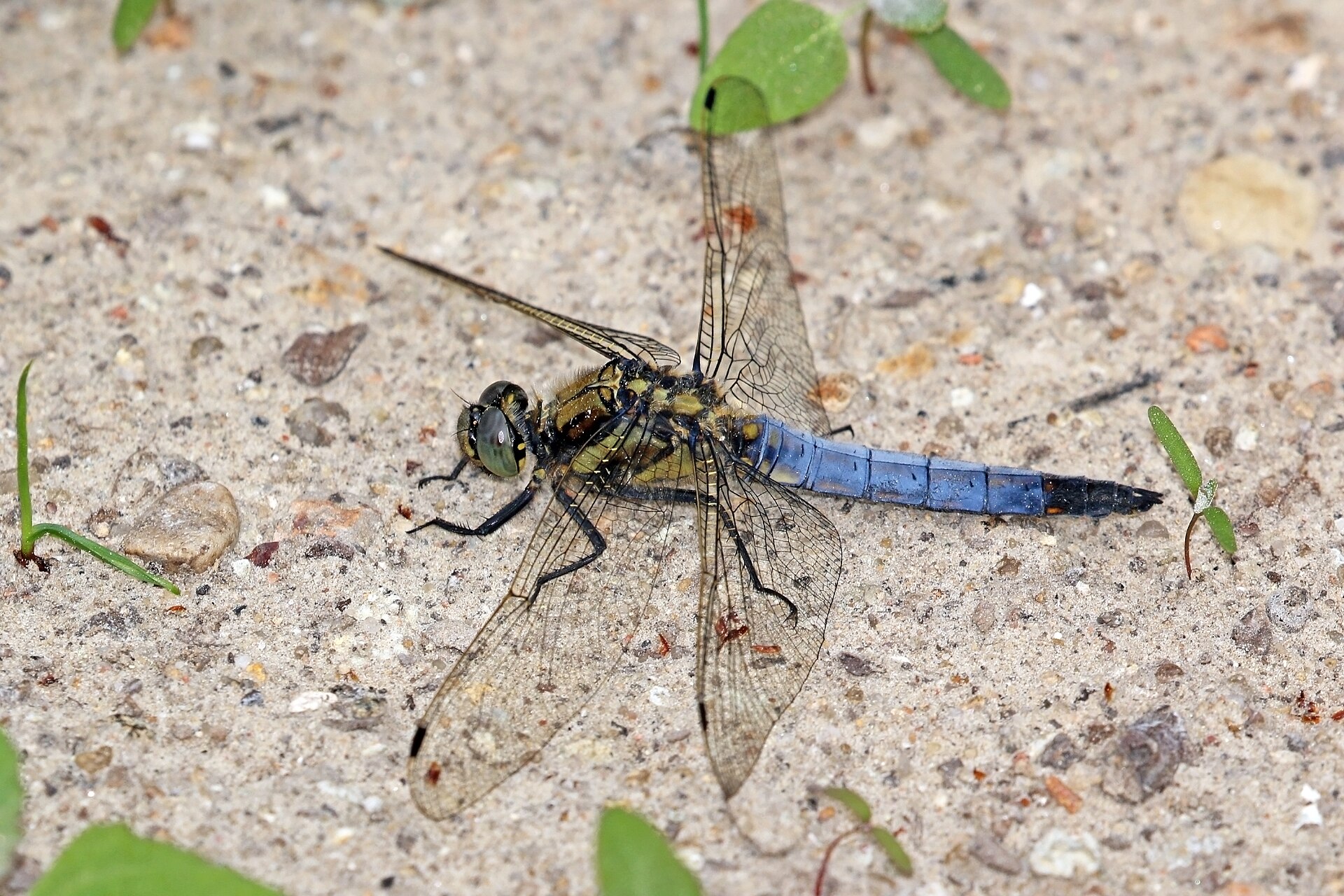
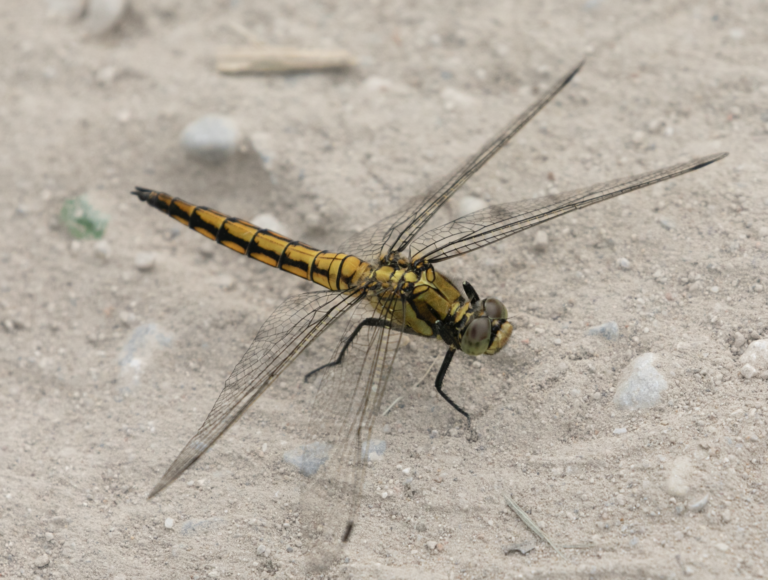
Length 44 to 50 millimetres. The male is frosted light blue with a black tail tip and dark patches at the wing bases; the female is yellow with black streaking. It likes to sit on bare ground, stones and jetties close to the water, and often returns to the same spot.
Almost the whole of the Netherlands, at almost any still or slow-flowing water.
This is a common, widespread species: you can come across it in far more places than the areas listed below. Treat that list as a starting point rather than a full survey.
NDFF open data, 178 records 2016-2026
Nationwide period: May to September, with June to August as the peak. That makes the black-tailed skimmer a species for high summer above all, when many birds have gone quiet.
NDFF open data, 1.624 records 2016-2026
Nationwide period: May to September, with June to August as the peak. That makes the black-tailed skimmer a species for high summer above all, when many birds have gone quiet.
NDFF open data, 2.584 records 2016-2026
Nationwide period: May to September, with June to August as the peak. That makes the black-tailed skimmer a species for high summer above all, when many birds have gone quiet.
NDFF open data, 824 records 2016-2026
Nationwide period: May to September, with June to August as the peak. That makes the black-tailed skimmer a species for high summer above all, when many birds have gone quiet.
NDFF open data, 2.840 records 2016-2026
Nationwide period: May to September, with June to August as the peak. That makes the black-tailed skimmer a species for high summer above all, when many birds have gone quiet.
NDFF open data, 2.068 records 2016-2026
Nationwide period: May to September, with June to August as the peak. That makes the black-tailed skimmer a species for high summer above all, when many birds have gone quiet.
NDFF open data, 265 records 2016-2026
Nationwide period: May to September, with June to August as the peak. That makes the black-tailed skimmer a species for high summer above all, when many birds have gone quiet.
NDFF open data, 3.287 records 2016-2026
Nationwide period: May to September, with June to August as the peak. That makes the black-tailed skimmer a species for high summer above all, when many birds have gone quiet.
NDFF open data, 371 records 2016-2026
Nationwide period: May to September, with June to August as the peak. That makes the black-tailed skimmer a species for high summer above all, when many birds have gone quiet.
NDFF open data, 1.052 records 2016-2026
Nationwide period: May to September, with June to August as the peak. That makes the black-tailed skimmer a species for high summer above all, when many birds have gone quiet.
NDFF open data, 1.281 records 2016-2026
Nationwide period: May to September, with June to August as the peak. That makes the black-tailed skimmer a species for high summer above all, when many birds have gone quiet.
NDFF open data, 1.744 records 2016-2026
Nationwide period: May to September, with June to August as the peak. That makes the black-tailed skimmer a species for high summer above all, when many birds have gone quiet.
NDFF open data, 716 records 2016-2026
Nationwide period: May to September, with June to August as the peak. That makes the black-tailed skimmer a species for high summer above all, when many birds have gone quiet.
NDFF open data, 165 records 2016-2026
Nationwide period: May to September, with June to August as the peak. That makes the black-tailed skimmer a species for high summer above all, when many birds have gone quiet.
NDFF open data, 640 records 2016-2026
Nationwide period: May to September, with June to August as the peak. That makes the black-tailed skimmer a species for high summer above all, when many birds have gone quiet.
NDFF open data, 1.475 records 2016-2026
Nationwide period: May to September, with June to August as the peak. That makes the black-tailed skimmer a species for high summer above all, when many birds have gone quiet.
NDFF open data, 181 records 2016-2026
Nationwide period: May to September, with June to August as the peak. That makes the black-tailed skimmer a species for high summer above all, when many birds have gone quiet.
NDFF open data, 2.767 records 2016-2026
Nationwide period: May to September, with June to August as the peak. That makes the black-tailed skimmer a species for high summer above all, when many birds have gone quiet.
NDFF open data, 1.536 records 2016-2026
Nationwide period: May to September, with June to August as the peak. That makes the black-tailed skimmer a species for high summer above all, when many birds have gone quiet.
NDFF open data, 4.388 records 2016-2026
Nationwide period: May to September, with June to August as the peak. That makes the black-tailed skimmer a species for high summer above all, when many birds have gone quiet.
NDFF open data, 3.136 records 2016-2026
Nationwide period: May to September, with June to August as the peak. That makes the black-tailed skimmer a species for high summer above all, when many birds have gone quiet.
NDFF open data, 4.142 records 2016-2026
Nationwide period: May to September, with June to August as the peak. That makes the black-tailed skimmer a species for high summer above all, when many birds have gone quiet.
NDFF open data, 1.357 records 2016-2026
Nationwide period: May to September, with June to August as the peak. That makes the black-tailed skimmer a species for high summer above all, when many birds have gone quiet.
NDFF open data, 659 records 2016-2026
Nationwide period: May to September, with June to August as the peak. That makes the black-tailed skimmer a species for high summer above all, when many birds have gone quiet.
NDFF open data, 1.355 records 2016-2026
Nationwide period: May to September, with June to August as the peak. That makes the black-tailed skimmer a species for high summer above all, when many birds have gone quiet.
NDFF open data, 1.366 records 2016-2026
Nationwide period: May to September, with June to August as the peak. That makes the black-tailed skimmer a species for high summer above all, when many birds have gone quiet.
NDFF open data
Nationwide period: May to September, with June to August as the peak. That makes the black-tailed skimmer a species for high summer above all, when many birds have gone quiet.
NDFF open data
Nationwide period: May to September, with June to August as the peak. That makes the black-tailed skimmer a species for high summer above all, when many birds have gone quiet.
NDFF open data
Nationwide period: May to September, with June to August as the peak. That makes the black-tailed skimmer a species for high summer above all, when many birds have gone quiet.
NDFF open data
Nationwide period: May to September, with June to August as the peak. That makes the black-tailed skimmer a species for high summer above all, when many birds have gone quiet.
NDFF open data
Nationwide period: May to September, with June to August as the peak. That makes the black-tailed skimmer a species for high summer above all, when many birds have gone quiet.
NDFF open data
Nationwide period: May to September, with June to August as the peak. That makes the black-tailed skimmer a species for high summer above all, when many birds have gone quiet.
NDFF open data
Nationwide period: May to September, with June to August as the peak. That makes the black-tailed skimmer a species for high summer above all, when many birds have gone quiet.
NDFF open data, 3.409 records 2016-2026
Nationwide period: May to September, with June to August as the peak. That makes the black-tailed skimmer a species for high summer above all, when many birds have gone quiet.
NDFF open data, 135 records 2016-2026
Nationwide period: May to September, with June to August as the peak. That makes the black-tailed skimmer a species for high summer above all, when many birds have gone quiet.
NDFF open data, 3.667 records 2016-2026
Nationwide period: May to September, with June to August as the peak. That makes the black-tailed skimmer a species for high summer above all, when many birds have gone quiet.
NDFF open data, 888 records 2016-2026
Nationwide period: May to September, with June to August as the peak. That makes the black-tailed skimmer a species for high summer above all, when many birds have gone quiet.
NDFF open data, 1.581 records 2016-2026
Nationwide period: May to September, with June to August as the peak. That makes the black-tailed skimmer a species for high summer above all, when many birds have gone quiet.
NDFF open data, 1.028 records 2016-2026
Nationwide period: May to September, with June to August as the peak. That makes the black-tailed skimmer a species for high summer above all, when many birds have gone quiet.
NDFF open data, 627 records 2016-2026
Nationwide period: May to September, with June to August as the peak. That makes the black-tailed skimmer a species for high summer above all, when many birds have gone quiet.
These links come straight from our database, with the chance, the source and the evidence level for each area.
Green = present · orange = peak period. The bar is generated from our database.