
Where to see the Emerald Damselfly in the Netherlands
Easy 🪰 Dragonfly
Where and when do you see an Emerald Damselfly? This species is easy to see, from May to October.
How do you recognise an Emerald Damselfly?
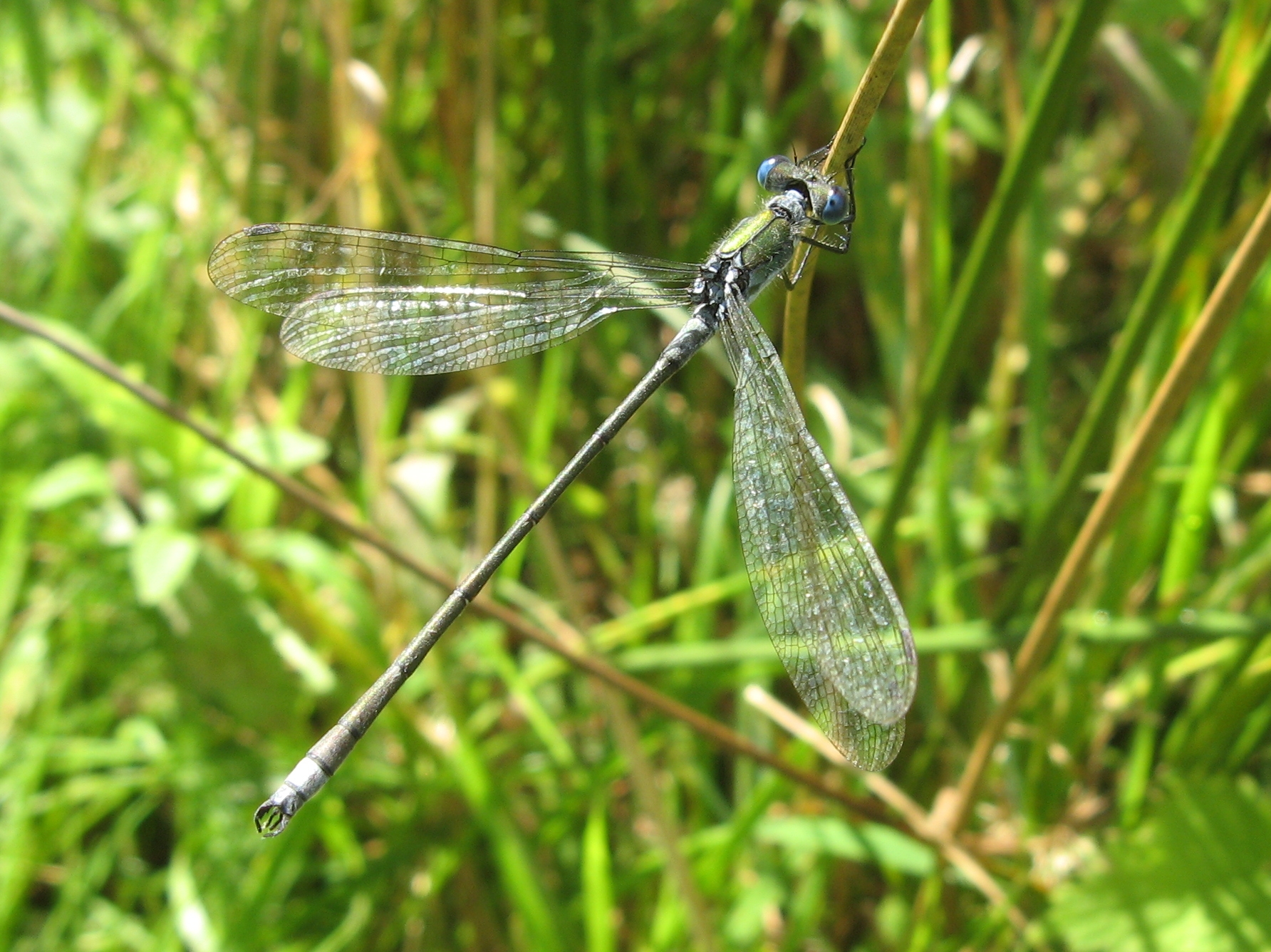
A metallic green to copper-coloured damselfly of 35 to 39 millimetres. Adult males develop a blue-grey frosting on the tip and at the base of the abdomen. Characteristic are the pincer-shaped upper abdominal appendages, and the posture: emerald damselflies sit with their wings half open, where other damselflies keep them closed.
Where do you see this species in the Netherlands?
Almost the whole of the Netherlands; commonest at heathland pools in the east, in the west mainly in dunes and lowland peat, scarce in the marine clay areas.
Habitat: Heathland pools, dune lakes and lowland peat, preferably with a fluctuating water level; sometimes also flowing or brackish water.
This is a common, widespread species: you can come across it in far more places than the areas listed below. Treat that list as a starting point rather than a full survey.
📍 Nationaal Park Weerribben-Wieden
presence reported📍 Fochteloërveen
presence reported📍 Deelerwoude
presence reported📍 Nationaal Park Dwingelderveld
presence reported📍 Amsterdamse Waterleidingduinen
presence reported📍 Nationaal Park Drents-Friese Wold
presence reported📍 Nationaal Park De Groote Peel
presence reported📍 Gelderse Poort & Millingerwaard
presence reported📍 Nationaal Park Zuid-Kennemerland
presence reported📍 Nationaal Park De Alde Feanen
presence reported📍 Onlanden & Leekstermeer
presence reported📍 Nationaal Park De Hoge Veluwe
presence reported📍 Nationaal Park De Meinweg
presence reported📍 Nationaal Park De Maasduinen
presence reported📍 Nationaal Park Utrechtse Heuvelrug
presence reported📍 Planken Wambuis
presence reported📍 Oostelijke Vechtplassen
presence reported📍 Noordhollands Duinreservaat
presence reported📍 Meijendel & Berkheide
presence reported📍 Kampina & Oisterwijkse Vennen
presence reported📍 De Maashorst
presence reported📍 Strabrechtse Heide & Beuven
presence reported📍 Loonse en Drunense Duinen
presence reportedThese links come straight from our database, with the chance, the source and the evidence level for each area.
When is the best time?
Green = present · orange = peak period. The bar is generated from our database.
Best period: Mid-May to mid-October, with the peak in July and August.
Best time of day: The warm hours in the middle of the day.
Recent sightings
👁️ Where has this species been seen recently?
Check the current sightings on Waarneming.nl. A useful addition to our own verified information.
How to improve your chances
- Go on a warm, windless day between about ten and four, when they are active.
- Look for the place rather than the animal: flowery edges for butterflies, banks and open water for dragonflies.
- Move slowly and keep your shadow off the animal. It notices that before it notices you.
- Early in the morning they are still cold and motionless on a leaf. That is when you can get closest.
🎒 What you need for this
A macro lens or binoculars with a short focusing distance
Photography
The half-open wings are the image: photograph at an angle from above so you see that V position, with the metallic sheen caught in side light. Early in the morning they sit sluggishly and let you come close
🌿 Watching responsibly
Keep your distance, stay on the paths, and never lure animals with food or sound. Leave as soon as an animal becomes uneasy.
Status: Verified · Last checked: 2026-08-07