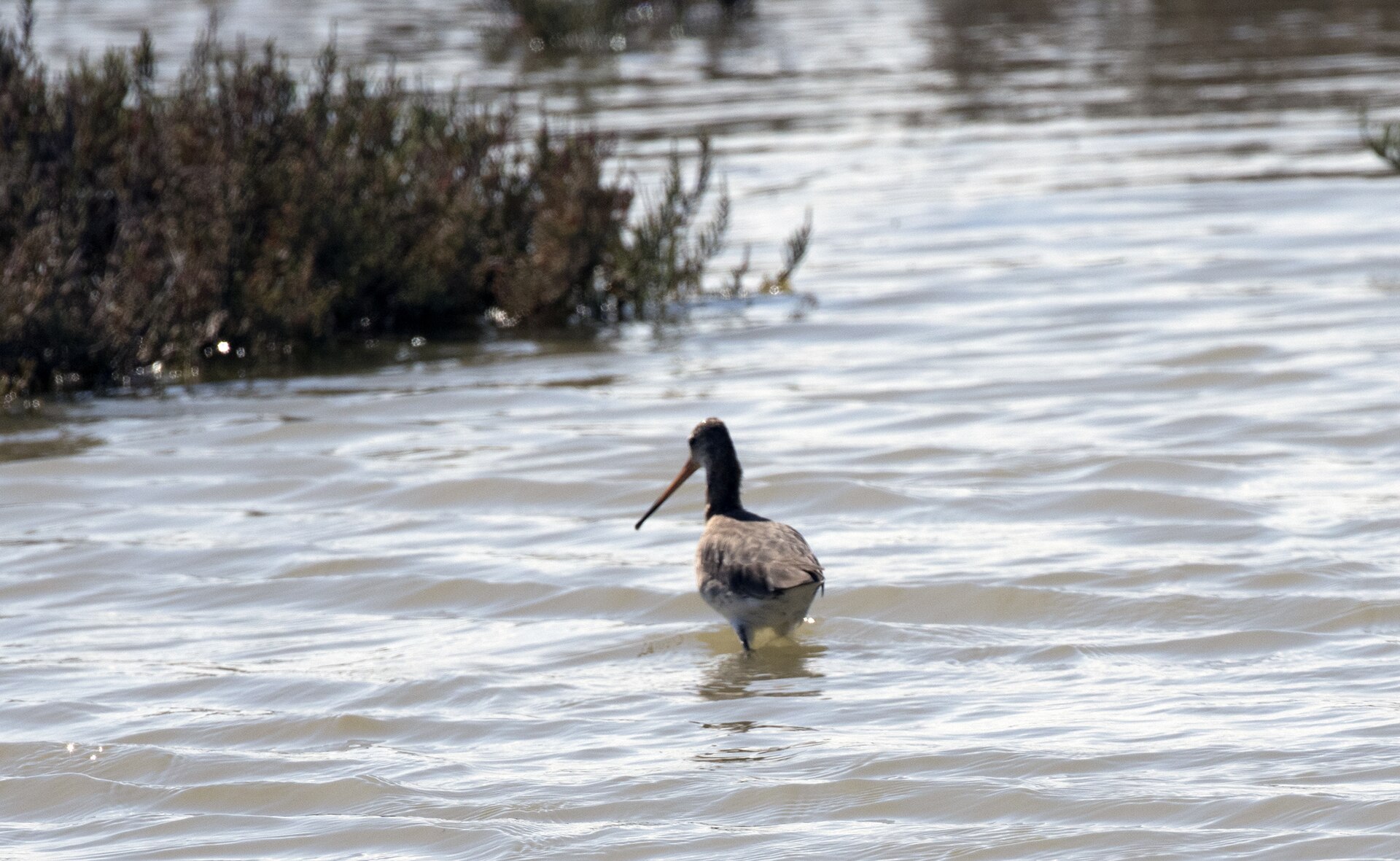
Length 37 to 42 cm, wingspan 63 to 74 cm. A slender meadow bird with long legs and a very long, straight bill. In breeding plumage the head and breast are orange-brown and the belly is barred black. In flight the broad white wing stripe and the black tail band stand out. Its call, grutto, grutto, gave it its Dutch name.
The meadow areas of Friesland, North Holland and the Groene Hart are its strongholds. The Netherlands holds a large share of the western European population.
📍 Eemland
Good chance in season
chance per source
Nationwide period: March to June. The birds arrive from Africa and southern Europe in late February and March; from June onwards the first are already leaving. Outside those months the black-tailed godwit has gone from the Netherlands.
NDFF open data, 2.220 records 2016-2026 · Sovon
Nationwide period: March to June. The birds arrive from Africa and southern Europe in late February and March; from June onwards the first are already leaving. Outside those months the black-tailed godwit has gone from the Netherlands.
NDFF open data, 4.975 records 2016-2026 · Sovon
Nationwide period: March to June. The birds arrive from Africa and southern Europe in late February and March; from June onwards the first are already leaving. Outside those months the black-tailed godwit has gone from the Netherlands.
NDFF open data, 545 records 2016-2026 · Natuurmonumenten
Nationwide period: March to June. The birds arrive from Africa and southern Europe in late February and March; from June onwards the first are already leaving. Outside those months the black-tailed godwit has gone from the Netherlands.
NDFF open data, 3.710 records 2016-2026
Nationwide period: March to June. The birds arrive from Africa and southern Europe in late February and March; from June onwards the first are already leaving. Outside those months the black-tailed godwit has gone from the Netherlands.
NDFF open data, 102 records 2016-2026
Nationwide period: March to June. The birds arrive from Africa and southern Europe in late February and March; from June onwards the first are already leaving. Outside those months the black-tailed godwit has gone from the Netherlands.
NDFF open data, 214 records 2016-2026
Nationwide period: March to June. The birds arrive from Africa and southern Europe in late February and March; from June onwards the first are already leaving. Outside those months the black-tailed godwit has gone from the Netherlands.
NDFF open data, 4.804 records 2016-2026 · npduinenvantexel.nl
Nationwide period: March to June. The birds arrive from Africa and southern Europe in late February and March; from June onwards the first are already leaving. Outside those months the black-tailed godwit has gone from the Netherlands.
NDFF open data, 6.976 records 2016-2026 · np-lauwersmeer.nl
Nationwide period: March to June. The birds arrive from Africa and southern Europe in late February and March; from June onwards the first are already leaving. Outside those months the black-tailed godwit has gone from the Netherlands.
NDFF open data, 656 records 2016-2026 · dealdefeanen.nl
Nationwide period: March to June. The birds arrive from Africa and southern Europe in late February and March; from June onwards the first are already leaving. Outside those months the black-tailed godwit has gone from the Netherlands.
NDFF open data, 220 records 2016-2026
Nationwide period: March to June. The birds arrive from Africa and southern Europe in late February and March; from June onwards the first are already leaving. Outside those months the black-tailed godwit has gone from the Netherlands.
NDFF open data, 168 records 2016-2026 · Sovon
Nationwide period: March to June. The birds arrive from Africa and southern Europe in late February and March; from June onwards the first are already leaving. Outside those months the black-tailed godwit has gone from the Netherlands.
NDFF open data, 2.683 records 2016-2026 · Vogelbescherming
Nationwide period: March to June. The birds arrive from Africa and southern Europe in late February and March; from June onwards the first are already leaving. Outside those months the black-tailed godwit has gone from the Netherlands.
NDFF open data, 1.033 records 2016-2026 · Sovon
Nationwide period: March to June. The birds arrive from Africa and southern Europe in late February and March; from June onwards the first are already leaving. Outside those months the black-tailed godwit has gone from the Netherlands.
NDFF open data, 520 records 2016-2026
Nationwide period: March to June. The birds arrive from Africa and southern Europe in late February and March; from June onwards the first are already leaving. Outside those months the black-tailed godwit has gone from the Netherlands.
Stichting Natuurbelang De Onlanden
Nationwide period: March to June. The birds arrive from Africa and southern Europe in late February and March; from June onwards the first are already leaving. Outside those months the black-tailed godwit has gone from the Netherlands.
NDFF open data, 134 records 2016-2026
Nationwide period: March to June. The birds arrive from Africa and southern Europe in late February and March; from June onwards the first are already leaving. Outside those months the black-tailed godwit has gone from the Netherlands.
NDFF open data, 276 records 2016-2026 · Sovon
Nationwide period: March to June. The birds arrive from Africa and southern Europe in late February and March; from June onwards the first are already leaving. Outside those months the black-tailed godwit has gone from the Netherlands.
NDFF open data
Nationwide period: March to June. The birds arrive from Africa and southern Europe in late February and March; from June onwards the first are already leaving. Outside those months the black-tailed godwit has gone from the Netherlands.
NDFF open data
Nationwide period: March to June. The birds arrive from Africa and southern Europe in late February and March; from June onwards the first are already leaving. Outside those months the black-tailed godwit has gone from the Netherlands.
NDFF open data
Nationwide period: March to June. The birds arrive from Africa and southern Europe in late February and March; from June onwards the first are already leaving. Outside those months the black-tailed godwit has gone from the Netherlands.
NDFF open data
Nationwide period: March to June. The birds arrive from Africa and southern Europe in late February and March; from June onwards the first are already leaving. Outside those months the black-tailed godwit has gone from the Netherlands.
NDFF open data
Nationwide period: March to June. The birds arrive from Africa and southern Europe in late February and March; from June onwards the first are already leaving. Outside those months the black-tailed godwit has gone from the Netherlands.
NDFF open data
Nationwide period: March to June. The birds arrive from Africa and southern Europe in late February and March; from June onwards the first are already leaving. Outside those months the black-tailed godwit has gone from the Netherlands.
NDFF open data
Nationwide period: March to June. The birds arrive from Africa and southern Europe in late February and March; from June onwards the first are already leaving. Outside those months the black-tailed godwit has gone from the Netherlands.
NDFF open data
Nationwide period: March to June. The birds arrive from Africa and southern Europe in late February and March; from June onwards the first are already leaving. Outside those months the black-tailed godwit has gone from the Netherlands.
NDFF open data, 366 records 2016-2026
Nationwide period: March to June. The birds arrive from Africa and southern Europe in late February and March; from June onwards the first are already leaving. Outside those months the black-tailed godwit has gone from the Netherlands.
NDFF open data, 786 records 2016-2026
Nationwide period: March to June. The birds arrive from Africa and southern Europe in late February and March; from June onwards the first are already leaving. Outside those months the black-tailed godwit has gone from the Netherlands.
NDFF open data, 2.459 records 2016-2026
Nationwide period: March to June. The birds arrive from Africa and southern Europe in late February and March; from June onwards the first are already leaving. Outside those months the black-tailed godwit has gone from the Netherlands.
NDFF open data, 325 records 2016-2026
Nationwide period: March to June. The birds arrive from Africa and southern Europe in late February and March; from June onwards the first are already leaving. Outside those months the black-tailed godwit has gone from the Netherlands.
NDFF open data, 450 records 2016-2026
Nationwide period: March to June. The birds arrive from Africa and southern Europe in late February and March; from June onwards the first are already leaving. Outside those months the black-tailed godwit has gone from the Netherlands.
NDFF open data, 2.715 records 2016-2026
Nationwide period: March to June. The birds arrive from Africa and southern Europe in late February and March; from June onwards the first are already leaving. Outside those months the black-tailed godwit has gone from the Netherlands.
NDFF open data, 288 records 2016-2026
Nationwide period: March to June. The birds arrive from Africa and southern Europe in late February and March; from June onwards the first are already leaving. Outside those months the black-tailed godwit has gone from the Netherlands.
NDFF open data, 942 records 2016-2026
Nationwide period: March to June. The birds arrive from Africa and southern Europe in late February and March; from June onwards the first are already leaving. Outside those months the black-tailed godwit has gone from the Netherlands.
These links come straight from our database, with the chance, the source and the evidence level for each area.
Green = present · orange = peak period. The bar is generated from our database.