
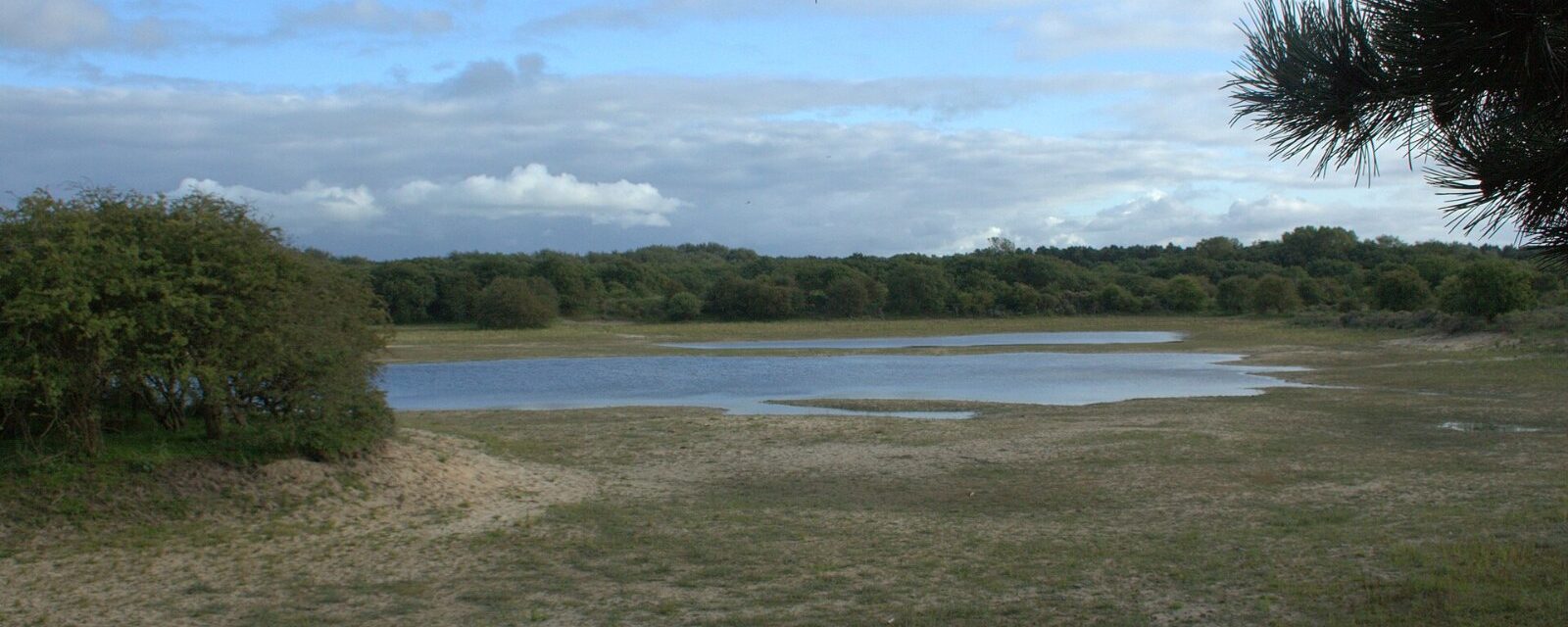
 📷 Foto: Jan dijkstra / CC BY-SA 4.0 via Wikimedia Commons.
Noordhollands Duinreservaat: where to see wildlife
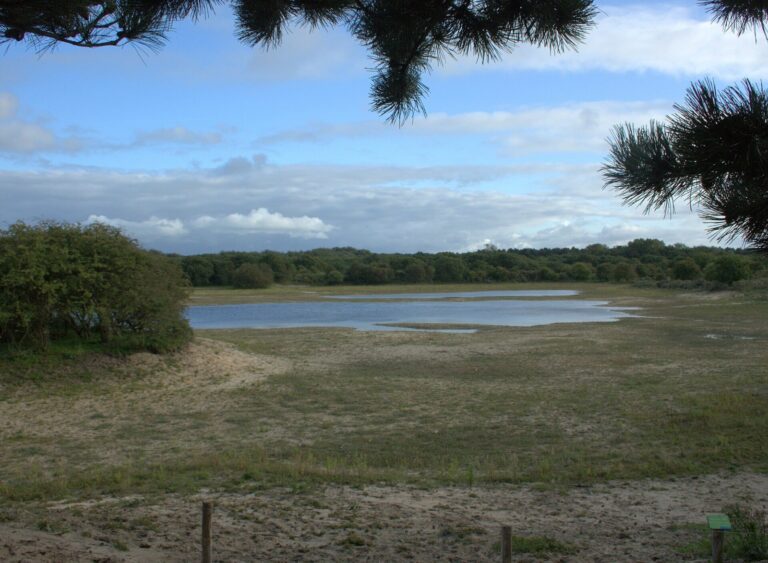
Autumn and winter for waterbirds and migration: from the hides at the Hoefijzermeer, Eurasian Bittern, Goosander, Common Goldeneye, Great Crested Grebe and Whooper Swan are seen then. Spring and summer for the songbirds, and early spring for the amphibians at the Poeltje. Dune area
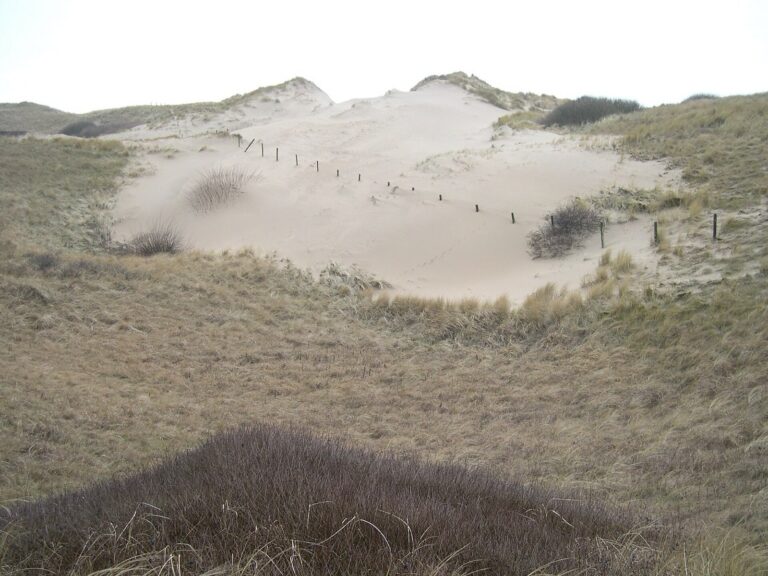
Noordhollands Duinreservaat — The reserve lies exactly on the lime boundary: the northern part is lime-poor, the southern part lime-rich. That is why you find dune heath and calcareous grassland side by side in one and the same area. PWN attaches to this the claim that 60 per cent of all plants and animals living in the Netherlands occur here; that is the site manager’s claim, with no supporting evidence in the source. Mainly here: Sovon counted more than 21,000 territories of 114 species here in 2018-2020. The most numerous: Willow Warbler 1,544, Common Chaffinch 1,335, Eurasian Wren 1,315, Common Whitethroat 1,280, Great Tit 1,176, Eurasian Blackcap 1,169, European Robin 1,097. The area matters nationally for the Common Nightingale (985 territories) and has a cormorant colony of more than 900 breeding pairs. Dune species: Meadow Pipit 445, Common Linnet 442, Woodlark 364, European Stonechat 359, Bluethroat 110, Common Grasshopper Warbler 108, Sand Martin 27, European Nightjar 7, Black-necked Grebe 5, Eurasian Spoonbill 5, Eurasian Bittern 1. Rare and vulnerable: Northern Goshawk 13, Northern Wheatear 3, Red-backed Shrike 1, European Honey Buzzard 1. Gone as breeding birds: Eurasian Curlew, Black Woodpecker, Whinchat and Yellowhammer; Grey Partridge, European Turtle Dove and Eurasian Skylark held no territory. Mammals: Highland cattle and Exmoor ponies between Bergen and Heemskerk, all year, plus wild rabbits and roe deer. PWN has also reported the stone marten. For fallow deer, red fox and pine marten we found no source linking them to this area. Amphibians in the dunes near Egmond: common toad, natterjack toad and newts. Butterfly: dark green fritillary. Dragonfly: the yellow-spotted whiteface is the only animal designated as a Natura 2000 target, alongside the narrow-mouthed whorl snail. The sand lizard is named only by a photography site, not by the site manager. Best period: Autumn and winter for waterbirds and migration: from the hides at the Hoefijzermeer, Eurasian Bittern, Goosander, Common Goldeneye, Great Crested Grebe and Whooper Swan are seen then. Spring and summer for the songbirds, and early spring for the amphibians at the Poeltje.

Which animals will you see here?
Also reported present in this area (333 species) presence reported
These species are known to occur here (NDFF), but nothing has been recorded yet about your chance of seeing them.
Amphibian (7)
Dragonfly (29)
Reptile (1)
Spider (8)
Grasshopper (22)
Butterfly (30)
Bird (207)
Mammal (large grazer) (1)
Mammal (land) (20)
Mammal (land/water) (1)
Mammal (bat) (7)
Walking routes
NS-Wandeling Noord-Hollands Duinreservaat
Rondje Soeckebacker
Rondje Wei van Brasser en Doornvlak
Hides and viewpoints
🔭 Boetje van onze Kees
🔭 Bird hide De Winterkoning
🔭 Bird screen Meertje van Vogelenzang
🔭 De Hoeptuin
🔭 De Aalscholver
🔭 Bird hide Doornvlak
🔭 Bird hide by the Vogelwater
Practical information
- Access: Only from sunrise to sunset, and only on the official PWN walking, cycling and riding paths and play areas. Leaving the paths is forbidden. Cycling on unpaved paths is allowed from sunrise until 10.30. In the breeding season certain parts are closed off with visible markers; PWN does not say which parts or on which dates. The outer dune ridge and the infiltration areas are permanently closed. An entry ticket is compulsory: everyone aged 18 and over needs a dune card (duinkaart). 2026 rates: day card 2.00 euro, week card 6.00 euro, annual card 14.50 euro digital or 18.00 euro on paper, three-year card 42.50 euro digital or 47.50 euro on paper, riding card 5.50 euro a day or 45.00 euro a year. Free up to and including age 17. Without a valid card you risk a fine of 109 euro including administration costs. Do not confuse this with Nationaal Park Zuid-Kennemerland, where no dune card is needed.
- Parking: Main entrances with parking at the Egmonden: Middenweg and De Bleek. There is also the Diederik car park halfway along the Heereweg between Castricum and Egmond, and the car park on the Churchill-laan in Egmond aan Zee. De Hoep visitor centre has parking and bicycle racks. PWN publishes no parking rates anywhere; a user source reports that parking is free, but the site manager has not confirmed that. What is certain: the dune card is compulsory regardless of parking.
- Dogs: Two PWN rules that contradict each other. The general access rules say you must always keep your dog on a short lead and that dogs may not leave the roads and paths. The dog page says dogs are welcome on the walking and cycling paths in the Noordhollands Duinreservaat if they are on a (short) lead, but also offers off-lead areas if you would rather let the dog run. PWN names eleven: Castricum (Papenbergpad and Zanderij route), Wijk aan Zee (Vuurwerk and Schulpweg), Bergen (Engelse Veld and Bergerbos). In the Bergerbos dogs must be on a lead from 15 March to 15 June. Sled-dog sport is not allowed. PWN’s own advice: always check the signs on site.
- Facilities: De Hoep visitor centre, Johannisweg 2, Castricum: Tuesday to Sunday 10.00-17.00, closed Monday except during the North region school holidays. Free entry, accessible toilet, shop; PWN does not mention refreshments. De Duinheide visitor centre, Zeeweg 2, Bergen: wheelchair-accessible with an accessible toilet, coffee and tea, and dune cards for sale. Note a contradiction: the De Duinheide page itself says Saturday & Sunday from 10.00 to 17.00, while PWN’s overview page says Wednesday, Saturday and Sunday. Ring 0251 664 411 if it matters. Public transport is excellent: Castricum station is at the start of the NS walking route, and bus 165 runs between Egmond aan Zee and Castricum.
🌿 Rules in this area
PWN, the North Holland provincial water company. Note: not everything inside the Natura 2000 boundary belongs to PWN. The Vogelwater estate near Egmond has been owned by the province of Noord-Holland since 1933; the observation hide there was built by the Vogelwerkgroep Castricum. sets its own rules here. Stay on the paths, respect refuges and closures, keep dogs on a lead where that applies, and do not fly a drone — they are banned in almost every Dutch nature reserve.
Status: Verified · Last checked: 2026-10-29
Photo: Foto: Jan dijkstra / CC BY-SA 4.0 via Wikimedia Commons.