
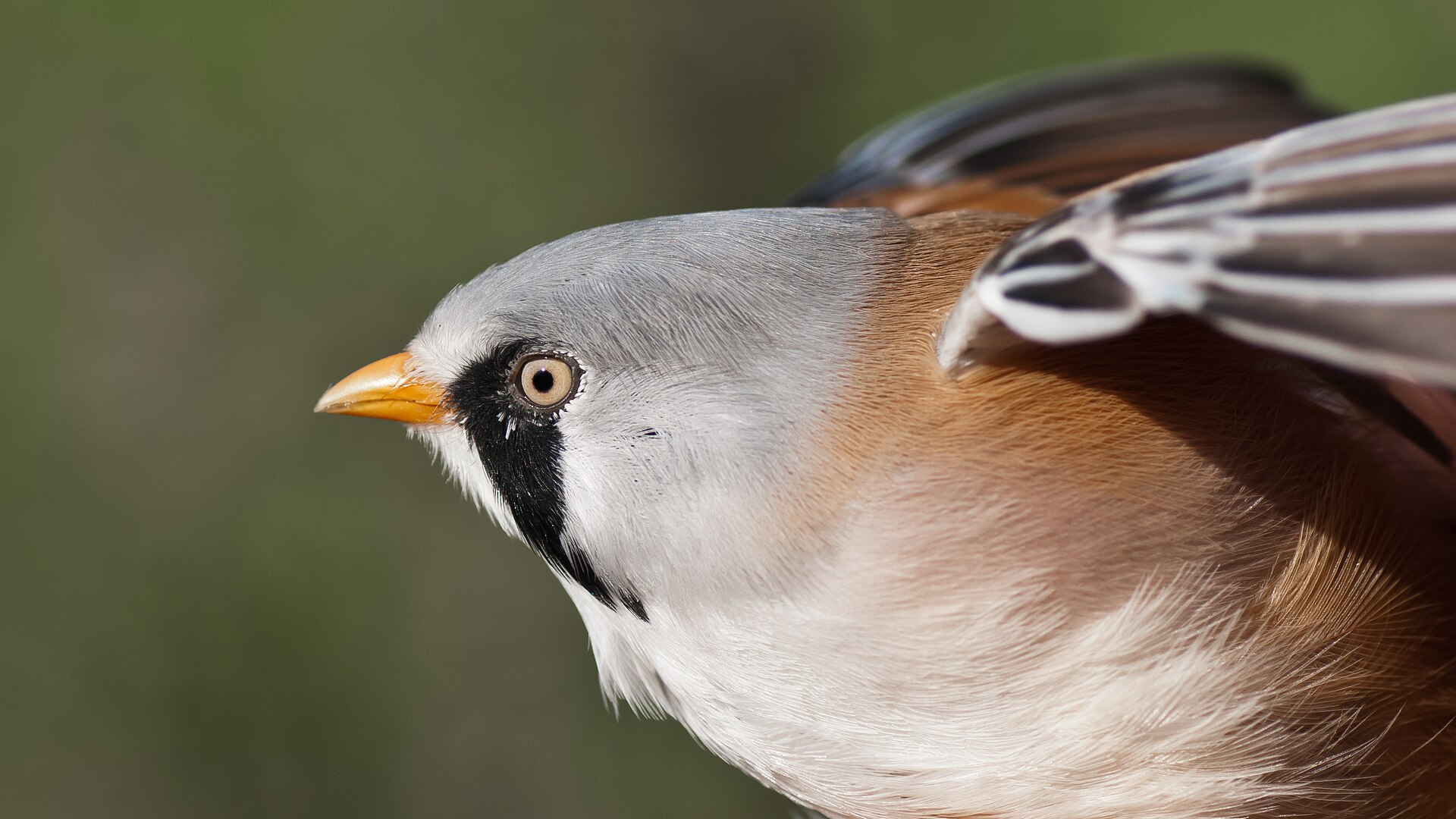
Bearded Reedling
📷 Mathias Krumbholz, CC BY-SA 3.0 (Wikimedia Commons)

Where to see the Bearded Reedling in the Netherlands

Panurus biarmicus · Bearded Reedling

Rare 🦅 Bird

Where and when do you see a Bearded Reedling? This species is rarely seen, all year round.

How do you recognise a Bearded Reedling?

14 to 15.5 cm long. A small orange-brown bird with a long tail and, on the male, a striking black moustache below a blue-grey head. It climbs nimbly along reed stems and rarely shows itself well; usually you hear a clear, metallic ping-ping before anything moves.

Wingspan: 17 cm an indication from Wikidata; it varies by individual, sex and subspecies · compare all birds (in Dutch)

What does a Bearded Reedling sound like?

Recording: Bubulcus, CC BY 3.0, via Wikimedia Commons

Where do you see this species in the Netherlands?

The extensive reed beds of the Wadden, IJsselmeer and peat regions: Lauwersmeer, Oostvaardersplassen, Weerribben-Wieden and comparable marshes.

How certain is this? verified chance per source presence reported Links that do not clear the bottom threshold are not published. How we decide that.

📍 Nationaal Park Lauwersmeer

With luck verified
NDFF open data, 5.446 records 2016-2026 · np-lauwersmeer.nl
Nationwide period: Present all year, with autumn as the most obvious period: family parties move through the reed, call a lot and regularly pop up briefly above the vegetation.
NDFF open data, 1.064 records 2016-2026 · Natuurmonumenten
Nationwide period: Present all year, with autumn as the most obvious period: family parties move through the reed, call a lot and regularly pop up briefly above the vegetation.

📍 Oostvaardersplassen

With luck verified
Staatsbosbeheer
Nationwide period: Present all year, with autumn as the most obvious period: family parties move through the reed, call a lot and regularly pop up briefly above the vegetation.

📍 Nationaal Park De Biesbosch

With luck chance per source
De Visdief · birdwatching guide to Biesbosch
Nationwide period: Present all year, with autumn as the most obvious period: family parties move through the reed, call a lot and regularly pop up briefly above the vegetation.
NDFF open data, 274 records 2016-2026
Nationwide period: Present all year, with autumn as the most obvious period: family parties move through the reed, call a lot and regularly pop up briefly above the vegetation.

📍 Nationaal Park De Alde Feanen

Good chance in season chance per source
Nationaal Park De Alde Feanen and It Fryske Gea, the site manager
Nationwide period: Present all year, with autumn as the most obvious period: family parties move through the reed, call a lot and regularly pop up briefly above the vegetation.

📍 Wadden Sea

With luck chance per source
Vogelbescherming Nederland and Sovon
Nationwide period: Present all year, with autumn as the most obvious period: family parties move through the reed, call a lot and regularly pop up briefly above the vegetation.

📍 Marker Wadden

Good chance in season chance per source
Natuurmonumenten
Nationwide period: Present all year, with autumn as the most obvious period: family parties move through the reed, call a lot and regularly pop up briefly above the vegetation.

📍 Naardermeer

With luck chance per source
Natura 2000 target · 30 breeding pairs
Nationwide period: Present all year, with autumn as the most obvious period: family parties move through the reed, call a lot and regularly pop up briefly above the vegetation.

📍 Onlanden & Leekstermeer

With luck chance per source
Natuurmonumenten · Stichting Natuurbelang De Onlanden
Nationwide period: Present all year, with autumn as the most obvious period: family parties move through the reed, call a lot and regularly pop up briefly above the vegetation.
NDFF open data, 618 records 2016-2026
Nationwide period: Present all year, with autumn as the most obvious period: family parties move through the reed, call a lot and regularly pop up briefly above the vegetation.
Nationaal Park Oosterschelde
Nationwide period: Present all year, with autumn as the most obvious period: family parties move through the reed, call a lot and regularly pop up briefly above the vegetation.
NDFF open data
Nationwide period: Present all year, with autumn as the most obvious period: family parties move through the reed, call a lot and regularly pop up briefly above the vegetation.

📍 Wormer- en Jisperveld

presence reported
NDFF open data
Nationwide period: Present all year, with autumn as the most obvious period: family parties move through the reed, call a lot and regularly pop up briefly above the vegetation.

📍 Ilperveld

presence reported
NDFF open data
Nationwide period: Present all year, with autumn as the most obvious period: family parties move through the reed, call a lot and regularly pop up briefly above the vegetation.

📍 De Dollard

presence reported
NDFF open data
Nationwide period: Present all year, with autumn as the most obvious period: family parties move through the reed, call a lot and regularly pop up briefly above the vegetation.
NDFF open data
Nationwide period: Present all year, with autumn as the most obvious period: family parties move through the reed, call a lot and regularly pop up briefly above the vegetation.

📍 Meijendel & Berkheide

presence reported
NDFF open data, 426 records 2016-2026
Nationwide period: Present all year, with autumn as the most obvious period: family parties move through the reed, call a lot and regularly pop up briefly above the vegetation.

📍 Voornes Duin

presence reported
NDFF open data, 150 records 2016-2026
Nationwide period: Present all year, with autumn as the most obvious period: family parties move through the reed, call a lot and regularly pop up briefly above the vegetation.

📍 Schoorlse Duinen

presence reported
NDFF open data, 1.069 records 2016-2026
Nationwide period: Present all year, with autumn as the most obvious period: family parties move through the reed, call a lot and regularly pop up briefly above the vegetation.

📍 De Putten bij Camperduin

presence reported
NDFF open data, 848 records 2016-2026
Nationwide period: Present all year, with autumn as the most obvious period: family parties move through the reed, call a lot and regularly pop up briefly above the vegetation.

These links come straight from our database, with the chance, the source and the evidence level for each area.

When is the best time?

Green = present · orange = peak period. The bar is generated from our database.

Best period: Present all year, with autumn as the most obvious period: family parties move through the reed, call a lot and regularly pop up briefly above the vegetation.

Best time of day: During the day, and ideally with no wind. In wind all the reed moves and you see nothing; on a still day they give themselves away by movement and sound.

Recent sightings

👁️ Where has this species been seen recently?

Check the current sightings on Waarneming.nl. A useful addition to our own verified information.

Current sightings on Waarneming.nl →

How to improve your chances

  • Learn the calls first. You will hear most birds before you see them.
  • Go in the first hour after sunrise, when the song is at its peak and the wind is still down.
  • Use a hide or natural cover. Sitting still gets you more than walking closer.
  • Keep the sun behind you. Against the light you see a silhouette and no colour.

🎒 What you need for this

A telephoto lens; patience.

🌿 Watching responsibly

Keep your distance, stay on the paths, and never lure animals with food or sound. Leave as soon as an animal becomes uneasy.

Sources: Sovon; Vogelbescherming Nederland (vogelgids), geraadpleegd 02-11-2026
Status: Verified · Last checked: 2026-08-08