
Where to see the Pied Avocet in the Netherlands
With luck 🦅 Bird
Where and when do you see a Pied Avocet? With some luck you can see this species, from April to August.
How do you recognise a Pied Avocet?
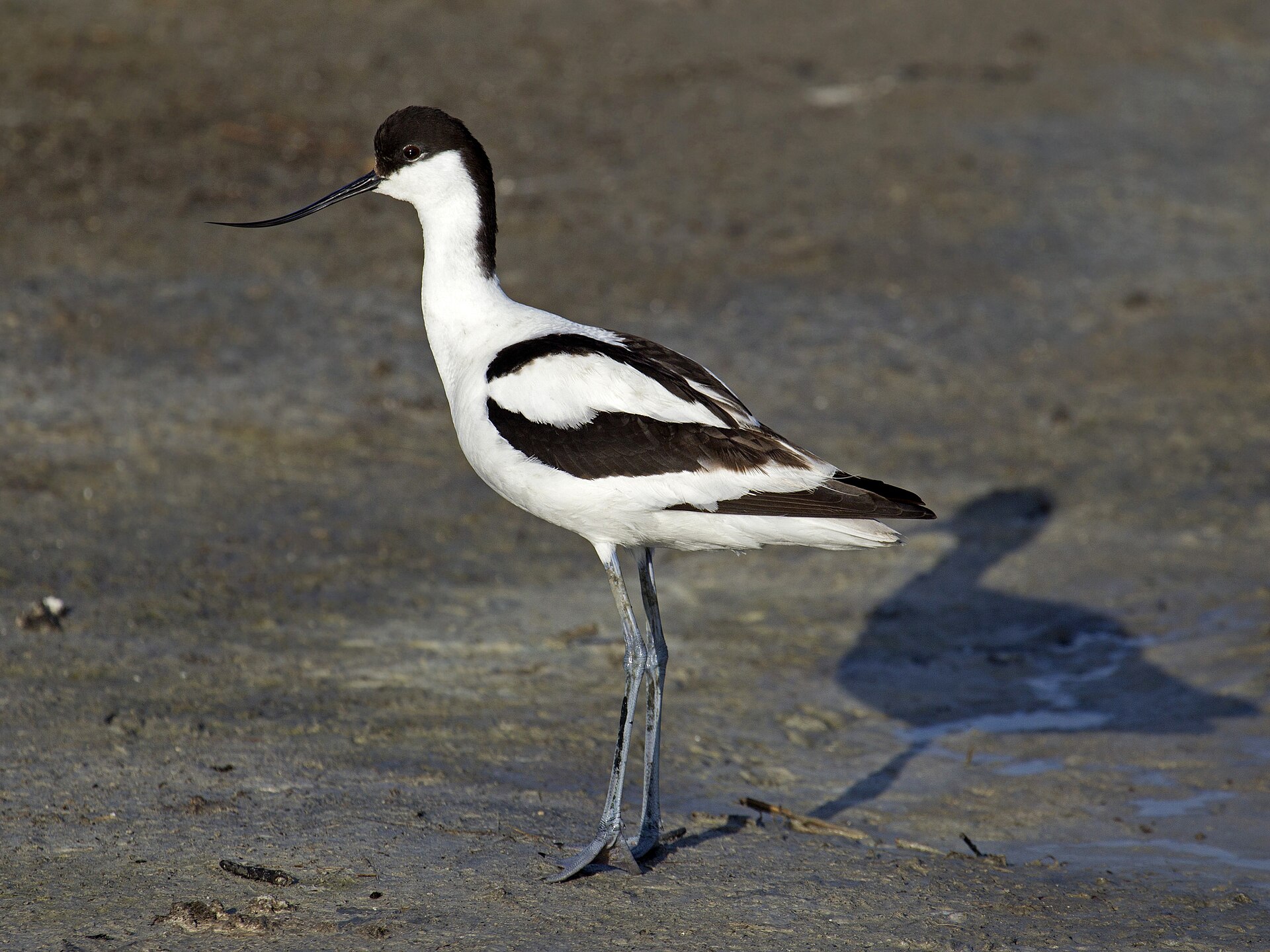
Length 42 to 46 cm, wingspan 77 to 80 cm. Elegantly black and white with long blue-grey legs and a thin, clearly upturned bill, the only Dutch bird with a bill curved up like that. With it the bird sweeps sideways through shallow water and soft mud in search of small crustaceans.
What does a Pied Avocet sound like?
Recording: British Library, CC BY-SA 4.0, via Wikimedia Commons
Where do you see this species in the Netherlands?
The Wadden area, the Delta area and Flevoland, with the emphasis on young, bare terrain and saline ground.
📍 Oostvaardersplassen
With luck verified📍 Wadden Sea
Good chance in season chance per source📍 Nationaal Park De Biesbosch
presence reported📍 Nationaal Park Zuid-Kennemerland
With luck chance per source📍 Nationaal Park Duinen van Texel
Good chance in season verified📍 Nationaal Park Lauwersmeer
Good chance in season verified📍 Nationaal Park Utrechtse Heuvelrug
presence reported📍 Nationaal Park Oosterschelde
Good chance in season chance per source📍 Marker Wadden
Good chance in season chance per source📍 Naardermeer
With luck chance per source📍 Zwin & Zeeuws-Vlaanderen
presence reported📍 Gelderse Poort & Millingerwaard
presence reported📍 Noordhollands Duinreservaat
presence reported📍 Wormer- en Jisperveld
presence reported📍 Ilperveld
presence reported📍 De Dollard
presence reported📍 Zuidlaardermeergebied en Hunzedal
presence reported📍 De Putten bij Camperduin
chance per source📍 Meijendel & Berkheide
presence reported📍 Voornes Duin
presence reported📍 De Maashorst
presence reported📍 Loonse en Drunense Duinen
presence reported📍 Schoorlse Duinen
presence reported📍 Haringvlietsluizen
presence reportedThese links come straight from our database, with the chance, the source and the evidence level for each area.
When is the best time?
Green = present · orange = peak period. The bar is generated from our database.
Best period: April to August. In spring the colonies are occupied and at their noisiest; in late summer avocets gather in flocks before they leave.
Best time of day: During the day, around low tide, when the mudflats are exposed and the birds are feeding.
Recent sightings
👁️ Where has this species been seen recently?
Check the current sightings on Waarneming.nl. A useful addition to our own verified information.
How to improve your chances
- Learn the calls first. You will hear most birds before you see them.
- Go in the first hour after sunrise, when the song is at its peak and the wind is still down.
- Use a hide or natural cover. Sitting still gets you more than walking closer.
- Keep the sun behind you. Against the light you see a silhouette and no colour.
🎒 What you need for this
Binoculars, a telephoto lens
🌿 Watching responsibly
Keep your distance, stay on the paths, and never lure animals with food or sound. Leave as soon as an animal becomes uneasy.
Status: Verified · Last checked: 2026-08-08